Leaderboard


Popular Content
Showing content with the highest reputation on 03/14/2017 in all areas
-
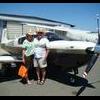
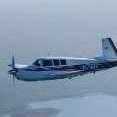
It took 3 years and about 70 hours under the hood. On Friday March 10, I passed my instrument check ride! Big day for me. Learned how to fly at 51 and now 56. Glad to have done it in my mooney. Got kicked around a lot on Friday with the wind up here in the Midwest.
 6 points
 -
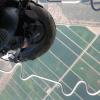
Had a great flight IFR this morning from LRO to SRQ. Took this at sunrise. There is nothing more gratifying than waking up in your own bed and being in a meeting by 10:30AM 380NM away!
 5 points
 -
Those pics bring back memories , Bisbee is my home town4 points
-
sorry I dont measure to your standards everyone, perhaps one day I will try to get the rating I never questioned the value of the rating But as I said before my Mooney is not IFR capable and an updated GPS would likely cost as much as the whole plane is worth so it might be worth every penny but depending on how many pennies we are talking about makes me wonder. Besides all I was attempting to point out to the OP is that you can enjoy aviation as a VFR only pilot but perhaps I was mistaken. Sure seemed like I was having fun.3 points
-
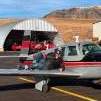
Nice trip to Scottsdale from San Marcos, TX this past weekend for Goodguys car show at Westworld


 3 points
 -
3 points
-
Mooneyspace members ROCK! While Sandy and I were in Galveston, Chuck (cnoe) flew over to KGLS and gave us an island tour in his BEAUTIFUL J model. Chuck is a great and gracious guy! His plane is a superb example. He is a very good pilot giving us a very enjoyable ride. It is also good that I know what the airport looks like from the air since we will be coming here several times a year. Thanks very much Chuck! I will look for the chance to pay it forward and give someone else a ride. Sandy is fired up now and ready to Mooney travel. Thanks a bunch Chuck!2 points
-
Last year, we were hoping to have a redbird full motion sim available for Thursday, but that didn't come together, hence the 29th was a day of bench flying for a lot of us. This year, we will once again have the companion course in the Bamboo theatre, along with new topics and subject matter experts. I am working on the agenda now, and will post a tentative agenda as soon as I have it somewhat firmed up. Next year, this event will be in the capable hands of Seth Meyers and Lee Drumheller. Seth and Lee have a lot of great ideas that will keep the Mooney Summit a "must attend" for all Mooney pilots and owners. We will have the PROTE reduced O chamber in 2018, and will have a 4 day event so that everyone can have the opportunity to learn what their tells are. Stay tuned, this will be a good one!2 points
-
Hahahah... @LANCECASPER broke this news three pages back and within minutes of the actual release. #trytokeepup2 points
-
I the relocated oil cooler on my F and don't really notice any real substantive change winter to summer at 1000' MSL or 25000' MSL. The key as others have pointed out is getting the oil hot in the first place, that is where real issue is. Multi-grade plus Reif Turbo XP is my recipe for winter flying.2 points
-
Substituted Lake Havasu last week for the Mooney fly-in at Santa Maria... (Dang forecast was completely wrong...) A bunch more pictures and short write-up on my blog. http://intothesky.us/2017/03/04/lake-havasu-anza-borrego-state-park/

 2 points
 -
The auto pilot is really handy when ATC gives you some crazy modification to your clearance. --I can't scan well and dork around with the GPS.....2 points
-
I used to thermal my C-140 on good days with the prop stopped. I've ridden the sierra wave over the top of Mt Whitney in a C-182 still climbing good at 16,000' when I pushed over. On the east side of the Sierras over the Owens Valley, you can catch the wave going N-S and ride it for several thousand feet up and down perfectly smooth, NOT A RIPPLE, just go up and down trying to hold level flight. My first instructor caught one over the Owens Valley in a DC-3 and topped out at 18,000 with the gear and flaps out and power at idle (sucking on the tube, if anyone knows what that is :-) We feel wave action in jets up high even in the 35K' region. It was lots of fun in a short Lear 24 One had to disconnect the A/P and hand fly. Flying out west brings in a new focus of thought patterns and makes the flights interesting- trying to pick the smoothest route. Sometimes no matter what you do, you get beat up.2 points
-
vintage 1975 I think1 point
-
You could do what @Samurai Husky and I did, just start a thread called "Supersoldier17's Flight Training" or something like that and when you fly put a post in there. A bunch of us here like reading about it, and you will get lots of helpful advice from the members. You will also likely get a bunch of "I remember doing that exact thing" posts too.1 point
-
Sort of a loose nut behind the yoke sort of thing... https://en.m.wiktionary.org/wiki/PEBCAK Best regards, -a-1 point
-
Expect if the static line is not connected. The static pressure the KAP gets in the cabin is slightly lower than what is in the static line... When using the KAP to hold altitude. Push the button and it holds altitude based on the pressure being read in the cockpit, as it would using the alt-static system. The important thing to know... on a usual flight, the change from using static to using alt-static will make a difference. The static and alt-static will work pretty well. But the alt static system isn't calibrated for airspeed and altitude precision. See where I'm going? PP thoughts only, not a CFI... Best regards, -a-1 point
-
My mechanic cut a piece of aluminum and drilled about 6 one inch holes in it. It slides right in front of the oil cooler and held in place with two screws. Works well and fits perfectly but the guys up in Minnesota where I bought my J just do as jlunseth said and just use a piece of taped up foam.1 point
-
Don't keep track of costs. You're a pilot—not an accountant. Nothing good comes from fiduciary diligence.1 point
-
Spoke with Brittain about the knob. The answer to the question is that it is not supposed to move in or out at all. Time to remove it and send it in for a rebuild. Not the answer I was hoping for but it is an answer so now I know.1 point
-
Bought one. My F has the step removed.. I guess for an extra 2 knots or something.1 point
-
This is an excellent, well thought out list. I believe you can get probably 80% of the way down the list in a C for $50K or less and an E at about $65K. You'll just have to wait for one to come up for sale. You might organize it a bit based on the expense involved to add certain items later. For example if you get a bird with WAAS, then adding ADSB Out isn't all that expensive. Also, an engine monitor is relatively inexpensive to add, whereas adding the autopilot would be very expensive. I bought a C that had everything on your list except for ADSB, engine monitor, storm scope, and number 8. I gave $48K for it. They are out there. You can also get on the waiting list for @Bob_Belville's E. But the list is pretty long.1 point
-
I've flown into F45 and PBI probably at least 50 times. Both are expensive. I prefer KLNA for extended trips, but if you're at risk of having to reposition, I'd just go for PBI. I don't think Signature at F45 is worth it and I've heard rumors that they've overcharged a couple people dramatically.1 point
-
Where can we pick up these parts? I would certainly buy a case and crankshaft and put it aside.1 point
-
Jokes on them, salty! I would have done the install without the rebate. Ha!1 point
-
Just a quick report back--14 hoses in total, $2400!!!! Jesus. That's a lot of $ for hoses, noses? I should make contact with my FSDO and yell at them for making us do this every 5 years.1 point
-
He delivers! Talk about high quality. I'm trying to decide if I want to get my yokes refinished before I mount these bad boys! I think I'll find a CNC shop and see if I can't get these cut out nice. Thanks, turtle!!1 point
-
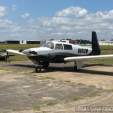
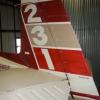
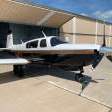
Just ask for help in the buying process. Happy to do so. I helped one guy buy a 231 a couple of weeks ago and have another guy ready to make a deal on a 252 any day now (may have happened earlier today). The 231 was priced under $70k and the 252 right at $100k. Both well equipped, good maintenance, etc.1 point
-
Saves on those expensive commuter lane tickets1 point
-
Well done, old man! I can call you that cause I'm only 55 ;-) Dave Sent from my iPhone using Tapatalk1 point
-
No..keep posting all your lessons, we're still learning1 point
-
I tried to steer with the yoke (on first taxi) and hit the tail on first rotation (first lesson)... You are killing it. Have fun. Instructors have a self preservation feature installed.1 point
-
I never could find any documentation of the cold weather kit for the J model but I do know from experience taping off half of the oil cooler with silver tape does raise oil temperature 20° or so which is helpful in colder climates. Also another thing to make it more cold-weather friendly is to run multigrade oil. Cold 50W makes very high oil pressure when cold, and takes too long for my comfort to reach all the engine bearings and oil galleries. Remember The Lycoming pressure sensor is right at the oil pump.....it does not indicate if the pump is getting oil pressure to all the bearings. Is it opposite way on the Continental engines, the sensor is at the end of the oil gallery.... that's why they allow you a full minute to show oil pressure. I have a feeling both engines behave the same it's just the Lycoming gauge indication shows oil pressure much sooner than continental1 point
-
There's another thread here - something like Walked Away from Mooney Crash that deals in detail with "real" CO detectors that are under $100.1 point
-
Hook up with your local Mooney brothers to get more local experience and share some hood time... Staying current can have some social aspects to it. Best regards, -a-1 point
-
Hate you Congrats!!!1 point
-
I wouldn't describe it as an upsell. The focus on teeth has shifted dramatically over the last few decades. I went through 4 years of dental school and a 3 year residency, and I have never placed a veneer. They simply weren't very common back in the late 90's. Back then, most dental work had a heavier bias toward function, but people have started placing a much larger emphasis on esthetics. Go watch an episode of Charlie's Angels or any show from the 80's with well known movie stars. You'll notice that yellow, crowded teeth were very common. You'll also notice that breast augmentation wasn't as common either. lol Getting back on point, dentists do A LOT of cosmetic work nowadays, but I wouldn't say it's an upsell. The American consumer wants it. My wife visited a friend in Germany, and someone asked if she was from the US. She asked how they guessed, and they said her teeth were so pretty. As far as income, I believe the average dentist today makes more than his counterpart from a few decades ago. The options available today are unbelievable, and patients have much higher standards. In aviation terms, is a manufacturer upselling the public by making autopilots and GPSs standard on new planes? If you want something that looks great and holds up longest, veneers are hands down the best way to go. As you mentioned, they do have a finite life time depending on how well they are prepped and maintained--I've seen veneers that have held up decades. My wife's original set of veneers held up great and only had to be replaced because she fell and broke and edge to one. If someone is prone to decay and has a history of constantly replacing fillings, I don't recommend any restorative work that isn't necessary.1 point
-
One minute of pure pleasure in a Mooney video... Nicely done, KMYfm20s Best regards, -a-1 point
-
Ok I didn't look at it that closely. Hey under this I say an autopilot is a non-required safety enhancing equipment.1 point
-
None of us "need" to get somewhere. When we as pilots think/feel that way it can become dangerous. VFR or IFR. I think there are safe pilots and irresponsible pilots, the ratings held don't necessarily matter. The type of VFR pilot that runs out of fuel or gets into trouble in IMC, is that same guy who gets his IFR ticket and finds a thunderstorm or severe icing. A safety conscious VFR pilot that gets an instrument rating will continue to be a safety conscientious IFR pilot. He wont get his ticket and immediately blast off into bad weather. Many of us that fly IFR use your same argument, we enjoy the journey as much as the destination. Actually that saying probably holds true for all Mooney owners. I hope you pursue the IR, for no other reason than it's fun. I'm assuming your Mooney is at least minimally equipped for IFR. If it is, you can start the training with little investment. If you find you don't enjoy it, let it go. The training won't be wasted as everything is applicable to VFR flying. Good Luck, Dan1 point
-
I'll contribute my perspective on the usefulness of an IR in a traveling airplane which might be representative of several MSers. While flying with "reference to instruments only" skills will rust with disuse, as with riding the proverbial bicycle the skills, habits, and instincts ingrained in 40 or more hours of training never goes away completely. I did not fly from about 1990 to 2011, but before 1990 I had flown well over 2500 hours and my logbook indicates that about 10% of those hours were IMC. When I came back to flying in 2011 I found that landing a PA28 was about as easy as ever. Holding heading and altitude did not take much practice either. When I prepped for an IPC I found that those "aviate" skills were still there as were the "communicate" skills. "Navigate" took a little longer largely because GPS was completely new technology to me. I conclude that even if a pilot does not exercise her privileges the skills obtained may well save her life when weather does what weather does. Further, filing IFR when traveling over 50 miles, even in CAVU conditions, has several benefits: I'm talking to someone in the case of an emergency; I will not inadvertently enter a restricted area or a hot MOA; I will have another set of eyes looking out for traffic conflicts... I just checked my logbook and note that my IMC hours are still running about 10%. Once in a while I find it "necessary" to shoot an approach to near minimums (ceiling under 400). Being willing and able to do that got us into KGGG for MooneyMax and into KERV for a plant tour last year. (MooneyGirl was with me on the latter, perhaps that flight was part of her motivation to get the IR she's working on now!) I had to do an approach into both Madison WI and Fredricksburg VA to do Mooney Caravan. Likewise Panama City Beach for Summit a couple of years ago. I fly NC to ME every year - I'd guess that at least 1/2 those flights involve some IMC. I'm 74 and I've been retired for 16 years. I do not "have" to be anywhere on any schedule but being "qualified and equipped" is useful and personally satisfying.1 point
-
I appreciate your comments and the lively discussion. I'm certainly no expert on the subject of mountain flying but am instead a perpetual student. This was my 4th trip into the area in the past 3 years but I still realize I'm not yet ready to venture somewhere like Leadville or the high ranges of central Colorado. I'm a firm believer in progressive experience. With that being said I still believe that I was well prepared and prudent in my planning for this particular flight. The climb-out at Durango was much more concerning to me than the ridge crossing due to icing concerns. I approached the ridge at a 45 degree angle making an escape turn quite feasible, and I crossed in an area where my AGL was at least 7,000' the entire time. Even traversing the highest peak I'd have had ~5,000' of ground clearance. If I'd been flying 3,000'-5,000' lower I would certainly have deviated around the area. While mountain waves can provide great lift and sink rates they are often smooth when encountered at sufficient altitude. Rotors on the other hand can be a beast but typically reside at the ridge height or lower and rarely exceed 2,000'-3,000' above that height. With 7,000' of ridge clearance I didn't feel in danger of a rotor incursion. And at 15,000' I was well above the conservative recommendation of 50% higher than the ridge for wave activity. You are correct that I could have been carried higher by wave action but the biggest danger is being too low. I was already on O2 and regularly checking my O2 saturation. Had I not been on an IFR altitude assignment I would have been better off riding the wave "up" on the windward side but the altitude-hold had no problem maintaining altitude on the windward side. I DID have to hand fly the first lee-side wave to avoid a low-airspeed issue and that was a lesson not just for me but for anyone else reading this thread. As far as the "engine-out" scenario you suggested, that's a total non-issue in my opinion. If I venture high enough that my engine will no longer run I'll simply pitch for best-glide and take her back down to an altitude where she lights up again. I encourage everyone to get comfortable with managing an engine-out. Running a tank dry, or pulling the mixture to idle-cutoff at altitude is truly a non-issue in these planes. So in answer to your question... no, I think I was well-prepared rather than lucky in this instance. Sent from my iPad using Tapatalk1 point
-
Thanks to what you do for the fleet.1 point
-
Following up on Dan's suggestion, the Mooney Summit will purchase the necessary equipment and provide calibrations at no charge at the Summit in Panama City Beach (http://www.mooneysummit.com).1 point
-
The asking price was $57K, I initially offered $54K pending a Maxwell pre-buy. After the pre-buy, and consultation with Don, my final offer was $48K which was a better reflection of the value. I was looking at two different C's at the time and while 6XM was my preferred choice, I was prepared to go to the second one. The offer of $48K was accepted and I bought the plane. I'm not suggestion you shouldn't negotiate. Everything is negotiable. And in this case Don actually told me I "should buy this plane". In spite of the issues. But one should also realize that airplane ownership is fraught with uncertainty and one must be prepared to spend and to loose money. The situation with my 252 is a perfect example. It was not the most expensive 252 on the market at the time, but it was the best equipped, and in the best condition of any that were available. The corrosion issue could not have been discovered by anything short of a full tank strip. That is never going to happen during a pre-buy. So it's just bad luck. But if I wasn't fortunate enough to be able to handle the cost of such an issue, I wouldn't own such an airplane. My experience owning the C was excellent and very affordable. I effectively logged 400 hours at somewhere less then $50/hr. The experience with the 252 has been enjoyable, but obviously much more expensive. And I'll have to fly her for a long time to get the costs down to something reasonable. But it's all part of ownership, and I wouldn't change a thing. And finally, the beers on me, I'd love to hear the full saga... :-)1 point
-
Needs more adel clamps/standoffs :-) Not sure I would run thermocouple leads with the spark plug wires. Seems like a recipe for bad telemetry. Make a separate bundle.1 point
-
Mine put me on my butt a couple of times before I realized that the angle of the foot to the handle was slightly obtuse. After a little adjustment in a vice making that angle slightly acute I've had no problem with the bar slipping out of the axle. Duh.1 point
-
Bob I'm a little disappointed, with that beautiful interior you need to get that tow bar powder coated : )1 point
-
I would stick with TKS if I had an Ovation with all the goodies too. But like Aaron and John, I dream of possibilities. When Ute and I were in Quakertown, PA, last year, Brian was hosting us at a little BBQ and his friend (and CEO of Lancair) came back from Reno in this. It has all the bells and whistles, probably sucks up 30 gph to fly at 30,000' and also probably has heavy duty de-icing kit of some type or other. A very capable aircraft, but out of my price range, as is a TKS equipped long body Mooney.
 1 point
 -
My famliy andd I flew to Destin, FL to eat at McGuires (awesome hickory smoked prime rib!!!) and walk around the Harbor walk. We waited until the sun set to fly back (west bound) and it was beautiful, cool and uncrowded in the air.1 point











.thumb.jpg.de0f7acb15742926c3502e9c5fccc284.jpg)