Leaderboard



Popular Content
Showing content with the highest reputation on 11/29/2022 in Posts
-
Don, this is an excellent idea. I just called them but they said that those types of questions are referred to a specialist and they needed my name and callback number. So, taking your advice about not giving my name and aircraft number out I gave them yours. Do you mind letting me know what they say? Just kidding! They did say they would call me back later today, though. I know they’ll find out anyway when I turn in the bill of sale so I’m not worried about being anonymous. They were also able to see my “blocked” caller ID so I get the feeling that if they want to find me they will. Thanks again for the suggestion.5 points
-
That is what I was thinking - could he have incorrectly set the altimeter? He was way low way far out. That said - what the heck was he doing flying in that in the first place? But once he was there near KGAI in below mins conditions - what the heck was he doing trying the approach anyway - were all the nearby airports below min too? KFDK is very nearby and has better approaches, a bigger airport environment, tower and multiple runways. Or heck - Dulles and BWI in a pinch - or just fly somewhere else entirely but I do not know the fuel status. I am a Professor in a department of electrical engineering and several of my colleagues are power transmission specialists. I was talking to one of the profs who is also a pilot - and we were just talking how amazingly unlikely this accident was a survived outcome. First - how many controlled flight into terrain accidents in night low ifr conditions are survived. Almost none. Obviously he found a nice springy metal tower with cables that arrested them from 100kts to zero in short order like a carrier landing but maybe more abrupt. I wonder if he had airbags. But here are the miracles - -they found a springy tower instead of a hard building or the ground or a hillside or a big tree. -the springy tower actually caught them at the right spot so they were decelerated sufficiently but not too strongly to break the humans inside but not too springy to bounce them off so they would fall backwards 100ft to the ground. -here is the part that amazed the power transmission engineer I was talking too - he told me exactly the voltage and capacity of that specific tower just by looking at it and he declared it a miracle that the entire airplane structure didn't just melt/dissolve/catch on fire - I mean aluminum on fire not to mention fuel - somehow it didn't arc etc. Yeah the birds landing not grounded thing but they are tiny plus dont touch the tower structure itself. -the tower didn't collapse in which case they would have been mechanically crushed and electrically fried simultaneously. I would guess if this was a computer simulation you could crash this airplane a thousand times and none of them would end up with this outcome - even if you crash it into the tower - something lined up just right to make everything work. This is what collapsed towers look like - an incident of an ice storm overloading their weight in 1996 I think near Montreal. https://www.inmr.com/looking-back-on-the-great-ice-storm-of-1998/ So overall a miracle these guys are alive and also the weirdest survived accident we are likely to ever see.5 points
-
I think he was talking about Dan Bass:4 points
-
Mooney M20J Service and Maintenance Manual (#123 December 1998) uploaded to the documents section and here. Have fun. Mooney Service Manuel M20J Vol. 1 of 2.pdf Mooney Service Manuel M20J Vol. 2 of 2.pdf
 4 points
 -
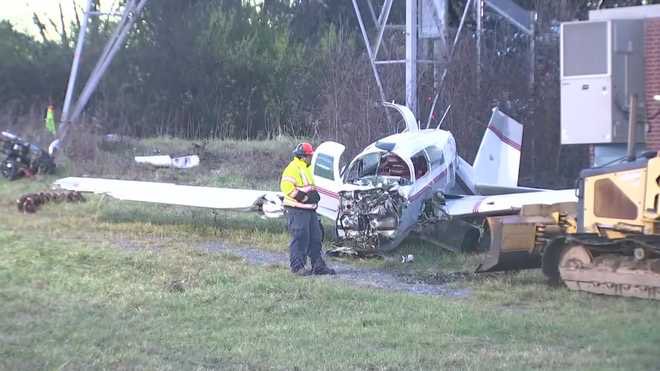
I read a report this evening that said their worst injury was from the cold. Go Mooney! Love that steel cage! And one-piece wing!4 points
-
After all this, the cabin and baggage doors still functional!
 4 points
 -
When I was based in Baltimore, I did a lot of flights to GAI including dozens of instrument approaches in actual IMC. Always said that it was just a matter of time before someone hit those power lines. I just don’t see how anyone survived this, much less two people and that nobody on the surface was injured or killed.4 points
-
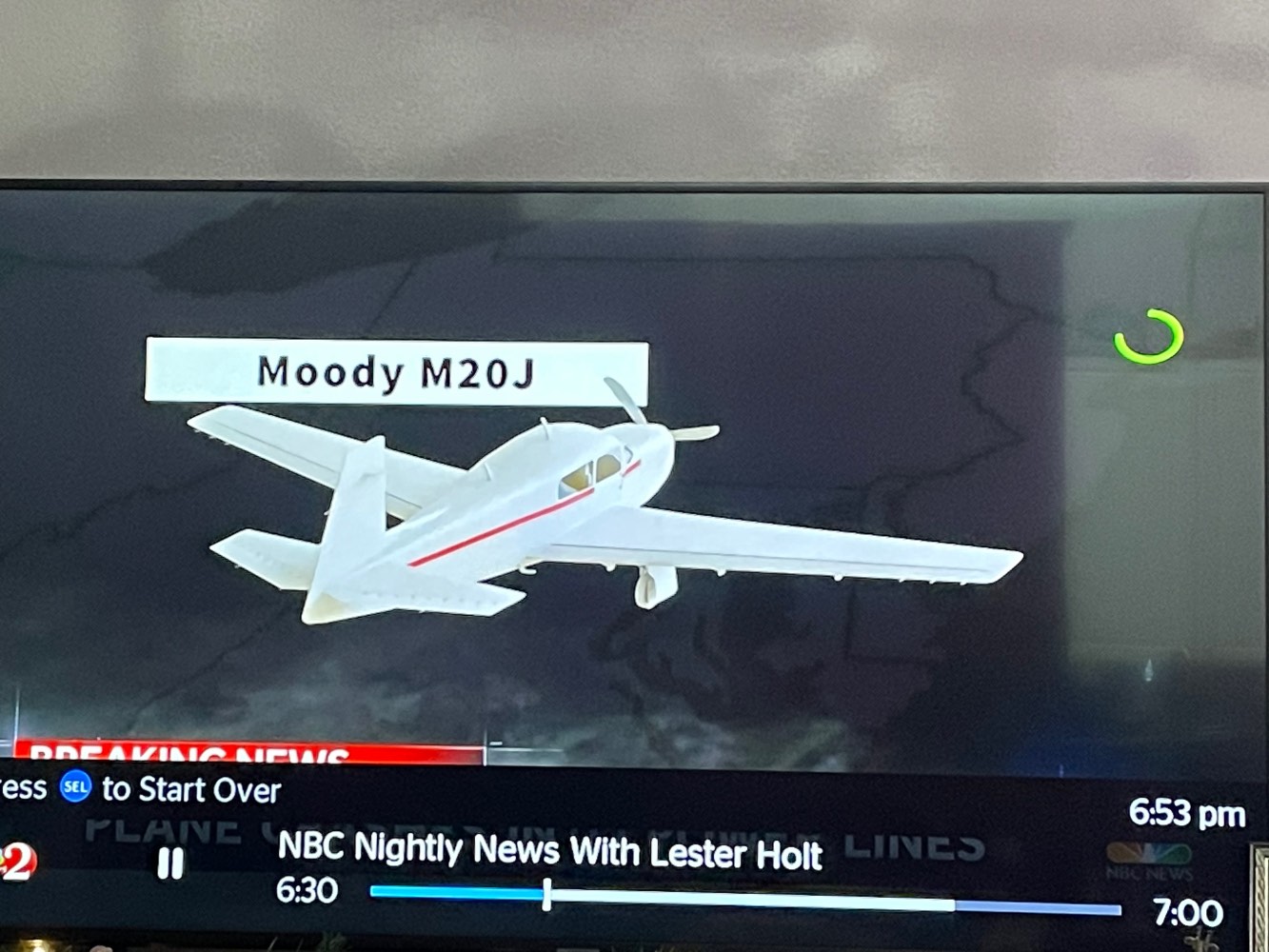
YIKES she’ll still fly it’s a Moody!!3 points
-
If your primary motivation is the tach is going bad, have it overhauled and buy I don’t know $4,500 worth of fuel3 points
-
Wouldn't matter on an LPV approach. Follow the needles to the ground. Would have crashed on the runway if all the needles were centered, not 1-2 miles short.3 points
-
Not necessarily related to our Mooney’s, but I just installed a PAR200B radio/intercom in my Citabria. I chose this radio because of the panel space limitations in the Citabria. The radio is remotely mounted which saved space. Of course I knew the PS engineering intercom would be good but I have been presently surprised at the quality of the radio. It sound better than the radio in my GTN650. - end of my product review- Lee
 2 points
 -
If the STCs have any value, wouldn’t it be simpler to reverse engineer them and apply for a new STC?2 points
-
Many are saying that the probability of an engine issue in cruise are lower so the worry of LIFR enroute is low. Perhaps. But I have had exactly one issue in my flying career and it was exactly that - I had a complete engine failure at altitude enroute, but with altitude and VMC in my favor I made an uneventful dead stick landing at a runway that was maybe 15 miles from my location of failure. Even before that issue I would cancel a flight if it was LIFR enroute, but now, even more so.2 points
-
On the way there .... I wish what they know now would find it's way into the next generation of engine analyzers for on-board warning https://youtu.be/blJhSQQNfn02 points
-
I thought about this too. Even if he had an incorrect baro - he still should have been on the GP to (incorrect) DH closer to the runway. If he was doing the LNAV he should not have been lower than the approach mins for that type (980 msl)2 points
-
You can zoom in on his gi275 ADI and see the airplane pitch oscillate a degree or two. Doesn’t look like altitude is really changing but id bet it’s annoying and uncomfortable.2 points
-
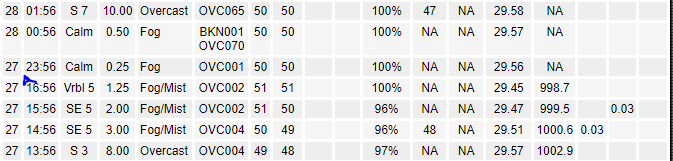
The alt setting had a spread of .13 on a period spanning 6 hours before and after the accident. That equate to 130ft, no? I don't think there was any strange phenomenon. Also, as stated earlier, LPV doesn't rely on the BARO for vertical guidance. This assuming that the pilot was flying it with a WAAS GPS, which supposedly he had in the AC.
 2 points
 -
If you are considering two CGR30's, you should consider a single JPI EDM 900. It clobbers two holes, but frees up a bunch of panel space too. Probably for the same cost.2 points
-
Based on this complete blog, reading all the insight, planning or lack there of and all other recommendations seems to make no difference when the pilot fails to make correct decisions. The weather that day was no secret the pilot also had a good look at it in real life since this was a return flight. Another BLACK EYE pitched our way. I agree this is a terrible look for GA most of us on this sight follow the rules, regulations airman decision making proper maintenance of our planes and so on. My main thoughts although are for the pilot and passenger to have a good recovery.2 points
-
I also note that this was this pilot's second flight of the day - returning from West Chester, NY. Flew up, departing at 8:40 am arriving at 11 am. See post with Flight Aware log. Then starts back at 3 pm. Long day, on top of the weather. I am wondering if fatigue may have been a factor.2 points
-
You could say that about areas of corrosion found anywhere on the airframe....and it'd be true as there is no question there are many aircraft out there flying around with undetected corrosion. It's only when one has verifiable structural failure or said corrosion is discovered that we take notice. On this forum we've literally seen tons of planes condemned that were operating beautifully just days before they became salvage. They would have continued in service for quite sometime with no one the wiser if the rot was not discovered. To each there own...my take is if 1) If you have a bird with hybrid weights that show no signs deterioration, I'd say go fly without hesitation. 2) If you have a bird with hybrid weights that show cracks, bulges and obvious signs of deterioration, I'd say it’d be a good idea to consider not only the risks but if your understanding of the risks is adequate. Maybe limit the aircraft to pattern work until a solution is found. 3) If you've a bird with hybrid weights that show cracks, bulges and obvious signs of deterioration...and you've posted detailed images on the internet of the cracked and bulged weights that match the the images and definition of the unairworthy condition put forth by the factory in the the SB, I'd say revisit #2 with greater vigor and consideration.2 points
-
I am working on organizing a club here in Kerrville. I have the trainer lined up and am working on a local J owner to supply the traveler. Wish me luck. David1 point
-
Carl & Ann Sharon here at Houston Tank Specialists/Houston Mooney Services. We have come up with a way to do two of the fun things we love to do! Fly in our Mooney and Cruise the seas! This was the cruise we announced at the Mooney Max in June. This is a Royal Caribbean Cruise. They are one of the elegant cruise lines! Not a booze cruise! The cruise leaves out of Galveston Texas and ends in Los Angeles by way of the Panama Canal. This will be an exciting way to see a piece of history we have all read about! These prices may only hold through mid-December. *** We have an update, these prices will hold until December 22! These prices are about $500 below the advertised rates!!!!! Once leaving Galveston, the itinerary will be stops in: Georgetown Grand Cayman, Cartagena Colombia, Colon Panama, San Juan Del Sur Nicaragua, Puerto Vallarta Mexico and ending in Los Angeles! Check this out! Talking Mooneys and cruising! What could be better! Flyer 4 - Panama Canal 2023[77344].pdf1 point
-
When running a tank dry your wing gauges will stop moving for a while before you actually run out of gas. They stop being accurate under 6 to 7 gallons and stop indicating anything. Then usually you have another 30 minutes give or take until you run the tank completely dry. The g1000s should show it at 0 when the tank runs out of fuel. My engine starts to stumble about 30 seconds to a minute after my G3X fuel gauge jumps from 1 gallon to 0.1 point
-
Odd question because they don't provide the same information: The wing gauges are calibrated to tell you how much fuel is in the tanks ON the Ground (where nose is pitched up) The G1000 gauges are calibrated to tell you how much fuel is in the tanks in Level Flight Thus they should not agree, but close - but both are accurate, usually very accurate else they need attention.1 point
-
Well, that’s basically the current state of events in a nutshell.1 point
-
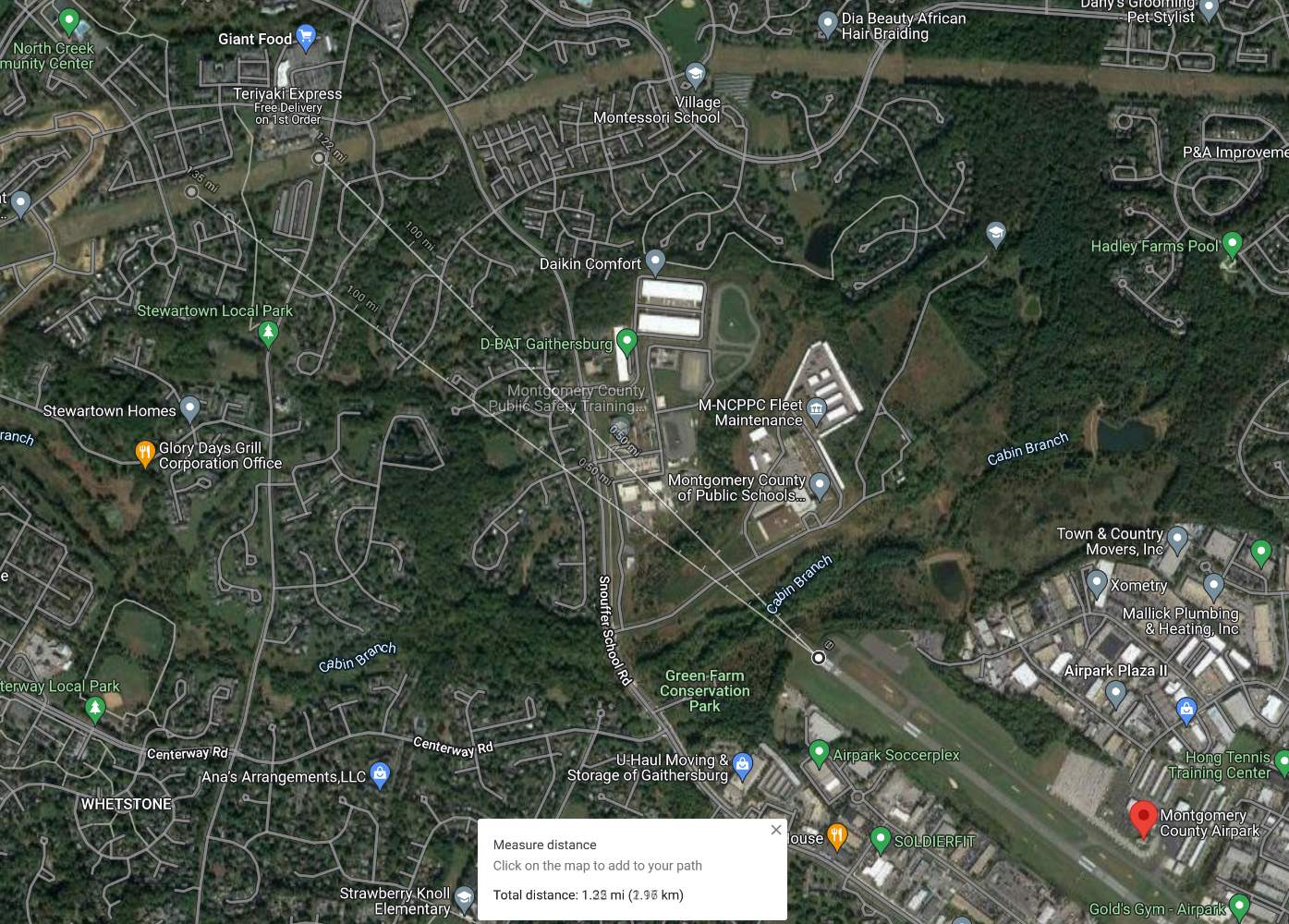
Here is the position and distance from the runway where the plane impacted the tower vs the straight in approach. The lower line is the straight in and the upper line is the distance to the impact site. My understanding is that the minimum crossing altitude at JOXOX is 1280ft at 2.4nm from the runway. Given a TDZE of 520, at 1.2 miles the altitude on glidepath should be 900ft which is 380ft AGL. This is 111ft above minimums of 789ft MSL which won't be reached until a bit closer to the runway. Perhaps someone with some math skills can share with us at what exact altitude the airplane should have been at this position 1.22 miles from the runway given the approach profile. And what kind of deviation one might expect on the CDI and glideslope in such a position. Are we talking about one dot off or major deflection?
 1 point
 -
Many people here use the Sensorcons because there is specific history with the company and Mooney owners, one in particular. (Thanks, Dan!) They are good units. I've had one since that wave started and it's been great. A buddy I fly with periodically has one, too, as do others around my area. They are very good for knowing what your "normal" levels are and in what phase of flight, so that you know when something changes or is just too high. My friend's Cherokee recently started showing much higher concentrations than normal, so we've been looking for what changed and where the leak might be. One advantage of the Sensorcon is that it is movable, so you can have somebody move it around the cabin and try to localize a leak source. They can be difficult to find. Coincidentally just posted in another thread:1 point
-
Perhaps I am talking out of school. I've only done snap rolls in a Stearman with an instructor leading me on the controls. Yes there was some energy loss but not as significant as I expected. They were rapid maneuvers that ended crisply on track. The first few times, the maneuver was over long before my brain had finished processing the inputs. Entry speed was around 90kts. I don't recall speed being degraded significantly...but then that's power on and in an airplane that is very draggy no matter it orientation. My point was that a split second, reactionary yoke yank as the windshield fills with steel is not likely to do much except alter the impact attitude slightly...which may or may not be helpful.1 point
-
A good bit. Try multiple snaps a lowered powered plane. And energy is proportional to velocity squared. So even a small amount of speed reduction greatly reduces the energy a lot1 point
-
Well.... Moody does accurately describe how I feel when I don't get to fly....1 point
-
Just an opinion from another owner of a '65 Mooney - You could replace the tach or its cable if that's the problem and fly on happily ever after. But then again after doing that, one of the other original 58-year-old engine gauges could (or most likely will) fail & then another, ad infinitum. Shoot me a PM and ask me how I know this. I have a CGR-30P & C on order. EI runs frequent $800 rebates & that will pay for part of the $1200 cost of two CiES fuel senders. Go big or go home, right? With a new monitor I'll be sending engine data to Saavy Aviation for analysis with the goal of catching very early indications of future, more expensive problems. That buys a lot of peace of mind. That was my solution but YM+$MV. It's sort of like the old Fram oil filter commercial - "You can pay me now or you can pay me later." Uuuuggggghhhhh, airplanes ....... !!!!! Cheers, C.J.1 point
-
I’ll add that if you have an engine monitor and know how to use it, it’s extremely rare you’ll experience a catastrophic engine failure without plenty of warning. Sure there are exceptions like an oil hose bursting but even then you’ll still get advance warning seeing your oil pressure decay probably minutes before the engine seized. But most failures don’t have to become catastrophic failures by seeing what’s happening on your engine monitor and responding appropriately; including declining oil pressure. Also Altitude = time when you are having most emergencies except for being on fire! Sent from my iPhone using Tapatalk1 point
-
There is no news anymore, just propaganda.1 point
-
As Christmas presents, or was it Memorial Day presents?1 point
-
And in another 50 years, we will know if the replacement weights are any better….1 point
-
Sorry but not likely to matter much. You should go try snap rolls with an acro pilot and see how much energy is dissipated.1 point
-
This sounds like the best solution. Set the Aspen to MPH, put in all the numbers, then set the Aspen to display knots.1 point
-
Yes, the holes in the Swiss cheese lined up for.him to have an accident. Even more holes lined up for them to both survive. I hate to even think about sitting in that plane, tangled in the electric lines, for several hours waiting to be rescued . . . . The strangest Mooney accident I ever heard of was about the time I bought my C, when I was reading everything I could find. An NTSB report described some poor soul who ran out of gas at night, in the Florida panhandle. He set the plane down gently in the tops of the pine trees, and it came to rest there. His only injuries were sustained climbing down and stumbling through the woods until he found a house, and those nice folks called an ambulance for him. I hope these two recover fully from their injuries, and explain just how things went so wrong!1 point
-
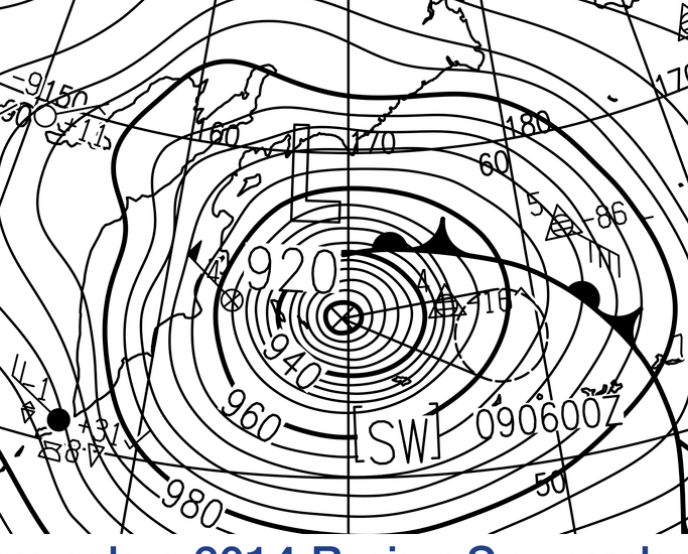
yes, inside a cyclone
 1 point
 -
Another interesting thing was on that audio from ATC. There was a plane that the controller called out at being at 2,300 with an altimeter setting at 29.44. The pilot responded that he was at 3,000. Can a strange atmospheric condition exist where barometric pressure can be different in a small geographical area? Sent from my iPhone using Tapatalk Pro1 point
-
Planes doing great -- will go into annual end of December -- LHS, IFR Certs, and Fuel Flow are on the list. I spoke with Don Maxwell about fuel tank patches and looks like March/April in 2023 -- Don says it needs to be over 60° in order to allow curing -- says it will take about a week. Still waiting on the Front windshield from SWTA -- I'll get that done after the annual -- once I know its in. I missed a couple of great IFR days due to work -- just couldn't get out there before the holiday break and too many honey-dos ;o) Once the Fuel leaks are taken care of next year, I'm hopeful the Auto-Pilot situation becomes clearer. I favor the AeroCruz but the GFC500 would give me better IFR capabilities -- time will tell. Plans remain 5-10 hours a month of flying. -Don1 point
-
My big takeaway is we fly a very structurally sound plane and when equipped with shoulder belts our chances of surviving a crash are high. Any other aircraft and this likely would have resulted in two fatalities. In this case a BRS would not have helped.1 point
-
Generally speaking, it is pretty hard for anyone to catch us without a turbine of some kind.1 point
-
Hi gang - been a long time since I posted. Aircraft is owned by an entity and a few shares, usually 3 to 5 are owned any time be different people. Kind of like a club Mooney. I have flown in this aircraft before and know two of the previous owners. I’ll grab the ATC live link and post it later. They were on the GPS 14 approach to GAI on the way from HPN (White Plains NY). A Cheyenne ahead of them went missed, diverted to a nearby airport with an ILS and landed safely. The power line tower hit is left of centerline and well below glide path. The two occupants were rescued about 7 hours after impact and taken to the hospital with serious injuries. They were in communication with fire/rescue via cell phone. Glad they are alive. -Seth1 point
-
I just did AUS to Wilmington NC today. We waited out the cold front but much of the NE was LIFR this afternoon ahead of and behind the system, behind that front is a strong low level shear (I had a 64kt tailwind at 7k 200 miles south of there). On the way down the ILS just now I had to remind myself to aim for L/D max and stay on the front side of the power curve. Got +20/-15. One of those days. LIFR with all that shear ain’t fun. Dark is another complicating factor. Also not sure the path - presumably he was on the RNAV GPS 14... In which case he had a screaming tail wind and was a potential set up for a behind the curve stall wind shear event. Either that or he tried to peak under. Glad they are ok. I’m pretty confident get there itis is going to play heavily in this one given the approach opposite prevailing winds.1 point
-
I paid for the analysis of the metal of my blocks, paid to have a CNC drawing, chose the material to be used -- which was FAA approved, evaluated the CNC results and had it compared to my original. I'd say I complied with the spirit of OPP. I happened to work with a resource who had connections to get this done. Others who participated also paid for the drawing and analysis of the block and chose the new block's material. That was for my old B. AS a note, I have Lasars blocks in my C... -Don1 point
-
Hi All I am Dennis Pendergast and the owner of Sky Avionics in Sanford, FL. Our strengths are with Aspen, Avidyne, PS Engineering, Electronics International and Genesys (S-Tec). I'm sure that we will learn as much as we might contribute here!1 point
-
My Mooney has bad balance weights. I’ve found a set of solid weights, but I am still tracking down the rivets. However, Mooney advised me I am not permitted to install them until the engineering solution is released. I am not sure why, but he did say it would require a new weight and balance, but the data was not ready for release yet. I’ve spoken with Mooney and the said they’re working with the FAA and are very close to releasing a solution Fingers crossed it is released very quickly! Sent from my iPhone using Tapatalk1 point