Leaderboard




Popular Content
Showing content with the highest reputation on 12/03/2025 in all areas
-
A lot of good comments above but I just wanted to add another to emphasize the correct recovery technique when ever getting so slow in the pattern. The pilot began with the correct recovery in lowering the nose and the NTSB report has it as well but its a bit buried in the many bullets: Its critical to recognize pitch is immediate and lowering the nose will instantly regain flying speed, it doesn't matter whether the wings are level either at this point Notice as well that power isn't even mentioned as that may not even be necessary. The plane supposedly making its base to final turn when this happened and ideally it would have been at ~500 AGL - plenty of altitude not to yet panic. But once the pilot realizes they won't make the runway then certainly adding power is necessary, but it shouldn't need full power after lowering the nose, not even a lot of power, and there is no evidence that recovery was delayed to the point of a wing drop - quite the opposite. But what the pilot reported after he lowered the nose and after adding power is that: "The airplane then “violently” pitched up and to the left." Any increase in power needs to be matched with right rudder otherwise the plane will roll to the left uncoordinated from all of 5 turning tendencies we all learned as Private Pilots (Torque, P-Factor, Gyroscopic Precession, Spiraling Slipstream and Adverse Yaw - or lack of rudder while turning). It pretty much requires full or near full power to get the aircraft to pitch up like that violently when trimmed for landing as we're all familiar with when doing a go around and advancing full power. So plain and simple the pilot had to over react with the power and wasn't prepared for the out of trim forces that ensued. Over use of power has been mentioned a couple times above but I just wanted to emphasize the correct reaction is to lower the nose immediately; power is a secondary consideration not the immediate one; especially at 500' AGL I wasn't able to review the ADS-B ground track data to see if he might of been really low on that base to final turn but might have spawned adding so much power but in the narrative the pilot stated he thought he was about 500 AGL (per his handheld GPS) in the turn that shows excellent situational awareness IMO. But he also stated that on the down wind he had gear down, 1 notch of flaps, prop forward at 70 mph which we all know couldn't be true. The pilot was not a new pilot, but a VFR Private pilot with near 1500 TT and 376 hrs in type, flying with his wife passengers. I am thankful and amazed that both he and his wife survived with only minor injuries with only a Lap Belts!! It a testament that he never gave up. I hope if he fly's again, and I hope he does, that he never does so again without shoulder harnesses. I personally do not fly in any aircraft without them because most aren't so lucky.
 6 points
 -
11/30/2010 - my 15 year anniversary was just 2 days ago! Maybe I'll have an extra dessert tonight in celebration Nah I have to work on that useful load4 points
-
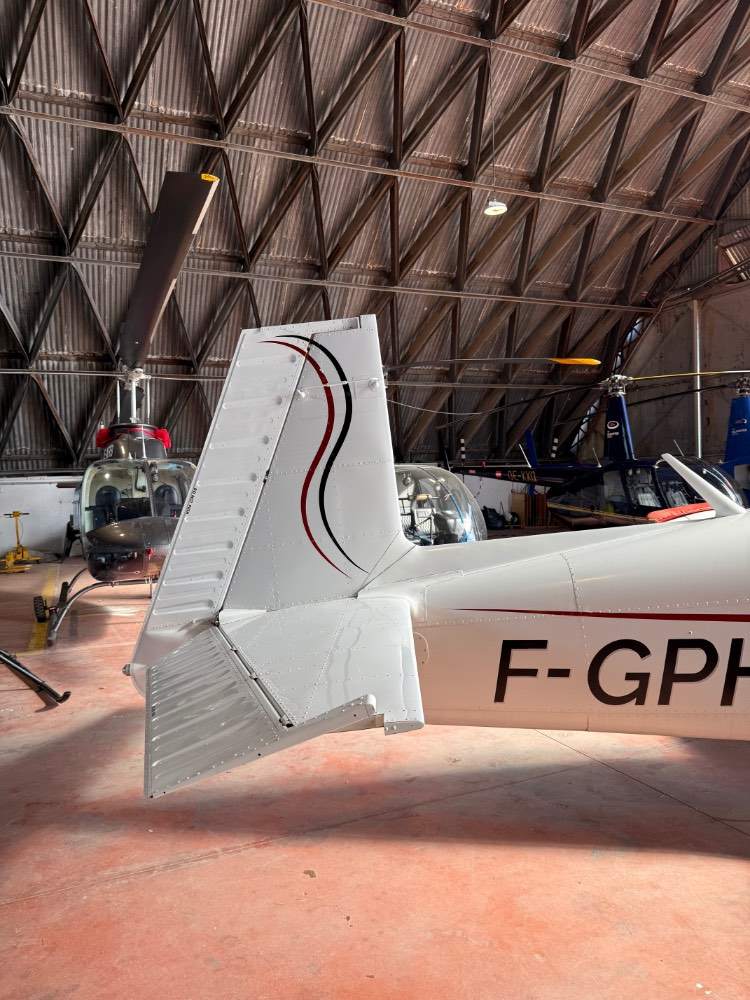
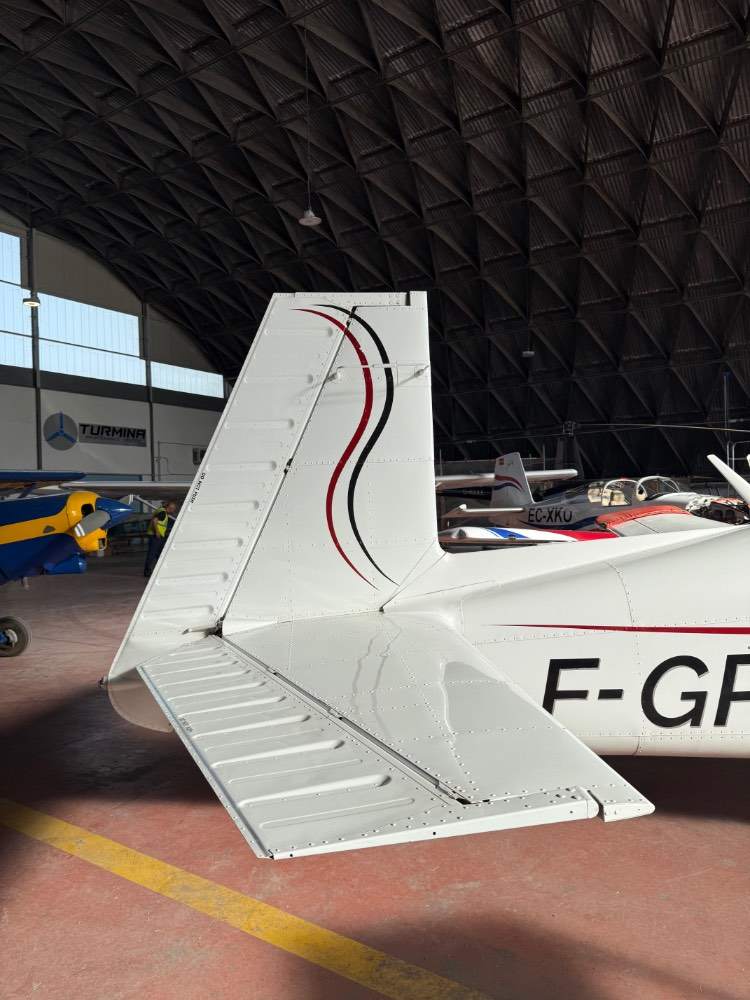
The trim-rigging issue was eventually resolved by my local mechanic, who measured a 4.5-degree off-trim condition. This is significant, because on landing with two people on board the trim was fully at the trim-up stop, and during takeoff it was obviously far outside the takeoff trim band. I therefore want to highlight the importance of checking the correct trim rigging whenever work is performed on the system, especially when installing a GFC 500 autopilot, as was the case for my aircraft. Following this incident, I completed an occurrence report form — for whatever it’s worth, at least the Spanish authority has been informed. Improperly rigged rigging (trim indication in the take-off band): After proper rigging:
 4 points
 -
I’ve found you don’t have to bend it. If you oil the outside, it gets in. As far as the pig tail is concerned, I’ve heated music wire till it is red and you can bend it into any shape you need. Just be quick about it. It is usually the wire that goes bad, usually by rusting through. The wire is easy to replace, just measure the diameter and order some from McMaster or McFarlane. Just cut off any kinks on one end and pull it out the other end. If you need to form one end, do that before pushing it through. Coat the wire with Aeroshell 6 before pushing it through.3 points
-
Thank you, fellow Mooney pilots. FAA approved ferry permit and I flew my Mooney from KTBN to KOZS to undergo an annual inspection. Logged the first two landing attempts as TGOs, so I now have three (3) landings for daytime passenger carrying currency. My Mooney is tucked securely into a heated hangar and I’m anxiously awaiting her annual. Please wish me luck. Thanks again.3 points
-
To bend a pigtail: if you need a 1/4 inch pigtail, chuck a 1/4 inch drill bit in your vice with the but end sticking up. Set your propane torch next to the vice. Grab the long end with your left hand and the short end of the wire with a pair of pliers. Heat the wire about 4 inches from the end with the pliers. When it gets bright red, quickly move the wire to the drill bit and wrap it around the number of turns you need using the pliers. When it cools, tap the drill through the pig tail and cut the excess wire off with some dikes. If it looks like crap, cut it off and try again. You will be an expert after a few try's.2 points
-
It’s a big jet thing. In every Boeing / Airbus I’ve flown, landing lights on at 10, turnoffs on with approach clearance, and taxi on with landing clearance. Makes it easy to confirm with a quick glance up to the switches on final that you’re clear to land.2 points
-
Hmm, doesn't work so well when you only have a landing light. Which I have on from takeoff to landing. I've never had an issue with a simple, "Confirm Mooney XXX cleared to land runway YY" request if I'm a bit unsure.2 points
-
I have had 3 alternator failures during flight. And one voltage regulator failure. Two of the alternator failures were caused by a broken field wire and one was from a bad brush holder. All happened in VFR conditions, the brush holder happened on an IFR flight. For all of the alternator issues, I landed and fixed it. For the VR issue, I landed and bummed a ride home and returned with a new VR and fixed it. When my VR quit, I landed at Ramona CA. After I figured I couldn’t fix it, I walked into the FBO and asked everybody in the lobby if anybody was going to Phoenix? A young guy with a Bonanza said he wanted to do a practice IFR flight and would take me home. That’s a 3 hour round trip. He took me right to my hangar. I offered him fuel money, he refused to take it. I love GA.2 points
-
That's interesting because I used it as its much easier for me to read than the basic font. Maybe its just my eyes I'll take another look for something else if its hard for others to read2 points
-
I mentioned the seat rollers going from $10.64 in 2024 to $116.57 in October 2025 in another thread recently. I guess the fine folks at LASAR read that thread and didn't like us complaining and want to teach us a lesson. They have since raised the price even higher to $139.89 per each seat roller. What LASAR is doing here is absolutely harmful to the Mooney community and I believe that any financial contribution to them only contributes to making Mooney parts harder to obtain. -David2 points
-
If you have a single piece belly panel, make sure it is lapped correctly, tucked under the bottom cowling. I’ve had my plane returned to me after service twice like this.
 2 points
 -
My first thought would be to replace the incandescent landing light with LED. That should reduce your draw by several amps.2 points
-
But it doesn't say to land with flaps anything less than full flaps. As Ross pointed out so well, Mooney only published data for landing with full flaps. That is the definition of a Normal Landing and the only kind of landing we have POH numbers for. Note even the latest POH's form the Acclaim and Ultras provide a lot more details on performance for landings including Density altitude, proper approach speed based on weight, landing distance based on weight, plus both head winds and tail winds and both positive and negative runway slope and sometimes grass runways. But the one thing they still don't provide numbers for is less than full flaps. Its also kinder and gentler on the airframe to land full flaps since it represents as slower landing. I am sure most of us would agree that landing in a strong xwind; especially one that exceeds the maximum demonstrated xwind component may not not merit full flaps, but its also not a normal landing either.2 points
-
I do wonder a bit about ability to control for the "span" of training set. Do you mean that the candidate data is from a larger (unsampled) set of data than is represented in the set used for training? So it looks weird simpler because it hasn't been seen before, rather than that it is representative of the Known-Proven-Bad examples. Thanks, guys, for all the tips. I went by after work and looked at it. The valves looked fine, very even signature on the exhaust valve. Good, since it was a new cylinder. FWIW to others, no need to pull any plumbing for the bottom plug on cyl #1, straight shot with an extension and spark plug socket. I did use an offset (kind of a funny crows-foot socket I got from another boarder at my last FBO) to torque the wire cap, but you could also probably wiggle in a few wrenches, too...2 points
-
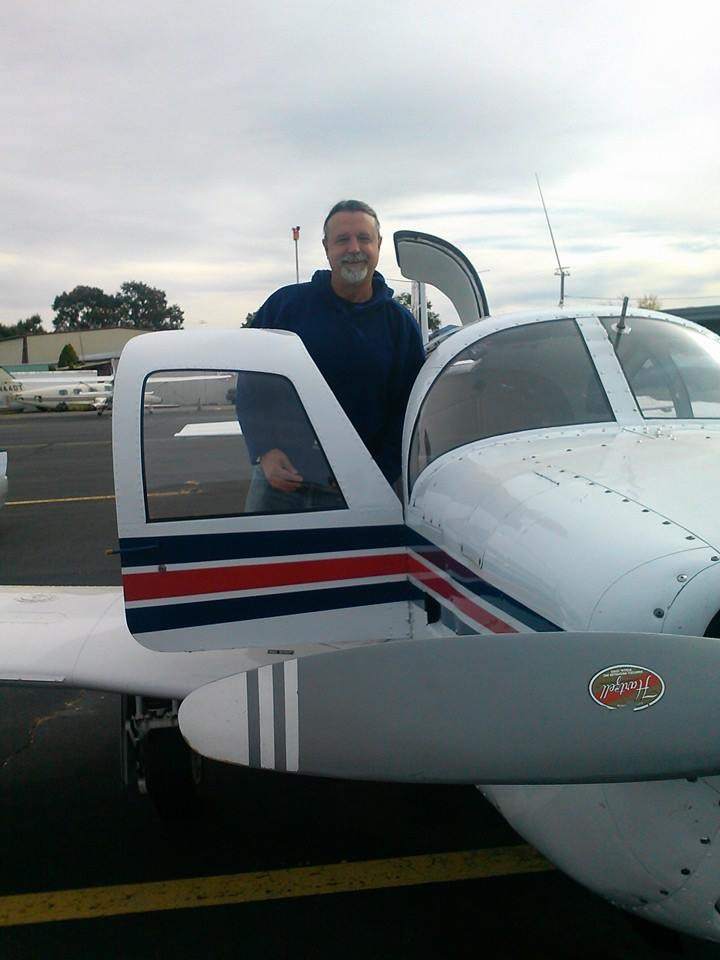
It’s been 12 years since we bought our D seems the only thing that flies faster is the time that we experience in life. Didn’t know about Mooneyspace before we purchased joined some time after when we were sorting out the issues on it. Would search google about a problem and it would always list this site called Mooneyspace sooo… I guess I should just join into this group of fine folks. Sadly like others have mentioned there have been a number of regulars that have left for various reasons and the site has suffered some because of it. If any of you are still visiting it would be nice if you would make a post just to say hello and let us know how you’re doing. Still love flying our D/C and after a good bit of initial work it has turned out to be an extremely reliable fun to fly aircraft. 2013 shortly after purchase
 2 points
 -
Satellite movement (degrees/min) on a constellation that is about 450 miles up must be interesting to engineer for considering the antenna (in an airplane) and the satellite are both moving at the same time. After reading on how the stationary antennas actually track (active not static) it makes it an even more interesting subject. Hadn't thought about side lobes Cut a few Smith charts while airborne way back when. All my antenna design and experience goes back 50 years ago when I was working for an ECM company during the Viet Nam war. All our magic stuff back then is Model T stuff today- not applicable I guess. We put every antenna on the F-111 and the jammer antennas on the B-52 when they were getting shot down. Interesting story on the delivery of the first of those antennas but for another time.2 points
-
Surely this price isn’t correct? Unfortunately I think it is correct. But that still doesn’t give you the right to call me Surely2 points
-
A great example for all members new and old. Come to learn, then give back your experience in the spirit of service. A parallel to life. rock n roll2 points
-
Hey! thanks for inviting me down memory lane with you fine people… it was y2k when I acquired a very worn in M20C… it fit like a glove, especially with baby seats in the back… stumbled upon MS while looking for a replacement… M20Js were an easy choice, Missiles were next on the list, Ovation was a stretch goal… ending up with a Standing Ovation… took the help of MSers to get there…. one day I was helping a new guy define differences between an Eagle and Ovation, a few months later he was giving me a ride in the coolest Screamin’ eagle ever..! Shortly after that, my plane suddenly needed a prop replacement… our friend @Cris (rip) helped me with a few contacts… and get some flying time… Getting to meet as many MSers as possible makes my day. And confuses my family…. one of those times.. meeting up with @Mitch at the mapa tent in kosh…. Where Lemonade is a tradition! ’dad, how do you know that guy?’…. MS! I started here with a member number just over 100… and read every post generated. not hard, there weren’t very many posts to read even day… as we near 20 years of MS… I hope to get that 50,000th post before then… Happy Saturday! Best regards, -a-2 points
-
During installation of the trim servo, the shaft between the front and rear trim gearboxes has to be disconnected in the tail. If the shaft is rotated while disconnected, it causes this problem. The trim system needs to be re-rigged per the Service Manual. BTW, the easiest way to avoid this is to run the trim all the way to one of the stops before disconnecting the shaft and make sure its all the way at the same stop before reconnecting. The stops are at the front gearbox.2 points
-
Installing the pilot’s side clamp takes 99% of the total time required to do the complete front shoulder harness installation.1 point
-
Presuming I can get it done, you are more than welcome to see it. My IA is checking for clearances in the next couple of days and then I will attempt to get the DER to do the paperwork. I'll let you know how it goes.1 point
-
Reminded me of this: https://www.missionarybushpilot.com/buddycheck?srsltid=AfmBOoqK2XJHq_feueIa596u1xcZCqm4n22HjdZawL34Xy2AhlSbO1Nv Simple box with switches on the dash1 point
-
One things that's not obvious on bowden cables is that you can lubricate it along it's length if you can flex it. When you flex it the outside circumference opens up a bit and will admit some lubricant if sufficiently flexed. Sometimes it's tough to do this while installed, but also sometimes there's a bend in the middle that's enough that it'll let a little oil in. It makes it a lot more effective to lube than just trying from each end, especially if it's a long cable.1 point
-
I was flying IFR this summer, fat and happy at 6000' over East Tenn. and talking to Memphis Center. Came time to descend, I tried to ask and my G430W reset itself when I hit the PTT to ask for lower. It eventually finished and I heard chatter, so I tried again with the same results. So I tried Comm 2, a King unit, and it reset itself to 120.0. So I set 7600 in the transponder and descended anyway, way late by now requiring me to orbit my destination ti reach pattern altitude. Flaps went down slowly, gear had to be hand-cranked, 52 turns down below my left knee. Guys ran out of the FBO when I stopped, and the local police were sad to not help with a dramatic rescue. It was just a broken field wire. The rental car home from my ~90-minute flight cost 3X my repair bill. If you've never done anything to your alternator, and don't see anything in the logbook, check it soon.1 point
-
I read something similar a number of years ago and incorporated it into my flow. The taxi light comes on when cleared for the approach, landing light comes on when cleared to land. In fact when I replaced my panel I moved the taxi and landing light switches next to the boost pump switch and use them as a physical “checklist” before landing. Works for me. I do the same kind of thing when VFR into a non-towered field. Taxi light on with first CTAF call, landing light on when entering the pattern. It keeps the habit pattern consistent.
 1 point
 -
another option for cutting through the window sealant is to use two short 1/2 diameter dowel rods with heavy safety wire wrapped around with about 12 or more in between. It takes two people (one inside and one outside) but you can get the wire started between the window and outside skin then wrap around dowels and saw your way around the window. Still not easy but if done correctly will not damage aircraft skin.1 point
-
It has been installed on Lycomings as well and I'm currently speaking with B&C about installing it on my IO-360-A3B6D. It will require approval but I think I found a DER to enable that.1 point
-
perfectly fine to run it for 2 days if airport lets you plug it in, when in doubt bring your own extension cord1 point
-
Mine has a strikefinder, but I never thought the static wicks were just for that. I thought flying IMC could build up static and affects COMs/NAVs radios.1 point
-
$10 of derlin rod and a drill will get you going.1 point
-
I’m not sure I understand the full vs partial flaps discussion. There may be some light singles that publish landing distance data for various flap settings but I don’t recall if I’ve seen any except for full flaps. That kind of makes sense to me. If available runway is critical, that’s the information you need. But I’ve never taken it as a limitation requiring full flaps for landing or a caution against landing with partial or no flaps.1 point
-
Good luck!1 point
-
5/7/2011, right behind you.1 point
-
A lot of Camloc products have gotten crazy expensive. I usually buy Skybolt now.1 point
-
We are in a paradigm shift in general aviation...getting less for more is the new norm. Pricing has spiked across the board, but at least things are taking a lot longer.1 point
-
This antidote is from the late 1980s. Next up is the story of how microwave ovens got started.1 point
-
One thing to consider: On the ground what do your cowl flaps look like when they are at the "closed" position that's shown on the instrument panel indicator? If I remember correctly they should be about a 1/2" open. If not you will run too hot and lose a couple knots. In the test flights when developing the 252 they found that 1/2" open at the indicated "closed" position gave it the best cruise speed since the air going into the cowling had to have an exit to be efficient. Sometimes a well-meaning mechanic or owner will adjust the cowl flaps so they are really completely closed, which they shouldn't be. Also if you have a known TIT probe (meaning new) you won't hurt anything if you set it at 1580 and it bumps up to 1600 as it varies. However I would be very suspect if it's an old probe since the probes indicate low after they are burned up.1 point
-
I second @Flyler's suspicion, having experienced a MIF (maintenance-induced failure, to borrow from Mike Busch) when a mechanic bent a connector pin while disconnecting and reconnecting the previously perfectly-functioning pitch computer of my autopilot. Did your plane undergo annual just before it started happening?1 point
-
This report could have been more precisely written. Here is my guess after 25 years of flying an M20F. With two up front, little in the baggage compartment and a few hours of fuel on board, the trim would likely be near full nose up if not at the limit. My F will hit the nose up limit when light with nothing aft of the front seats. If one goes from power off, full nose up trim to full power, full nose up trim, it's conceivable that they could be overwhelmed by the control forces and depart controlled flight if already at the ragged edge of a stall.1 point
-
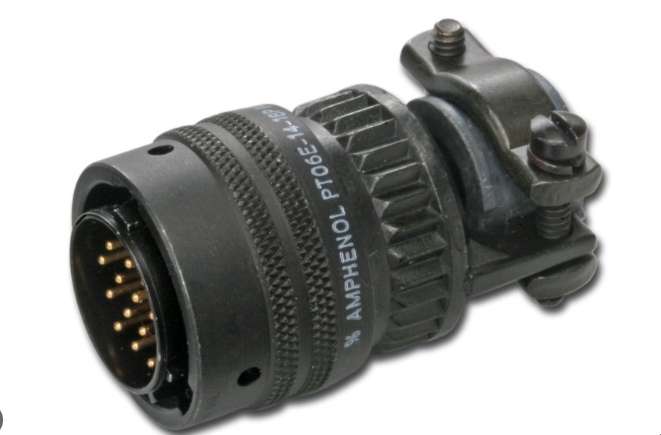
I would check for chaffed wires, specifically at the connectors. I have a Century 41 AP and found a corroded pin at the DG connector, but while I was in there I realized there is ample opportunity for the insulation to rub away between wires, especially near the clamp connection (right side of the image below). It would be a good idea to carefully disconnect these and inspect the pins as best you can while you're at it.
 1 point
 -
David, you were the first Mooneyspacer I met in person. I bought an Encore in February 2014 and had Dugosh do a few things to it after I bought it. You'll probably remember that in April 2014 you drove me from 5C1 to Kerrville to pick up N40FM when they were finished. I appreciated it then and still do!1 point
-
Guys. You do realize that @LANCECASPER will get a big head after all this praise??!! So cut it out!1 point
-
Moonyspace has helped me work my way up to my forever 1986 252! I grew up maintaining/rebuilding motorcycles and automobiles. Then I discovered airplanes and couldn't stop wanting to work on them. As a student pilot in the early 1980's I helped the local FBO in Twin Falls, Idaho convert a Mooney from wood to metal wings. Seeing how the airframe was built, etc. I was hooked. I have rehabbed Mooney's G/E/231 and 262, and finally worked my was into my 252. You all on this forum have been an invaluable source of information and are keeping the Moony dream alive - THANK YOU!!!!!1 point
-
You are kinda obtuse aren't you Jack? I'll try and remember and give grace.1 point
-
The KFC225 has two lines on the display. The top line indicates the present mode, the lower line shows upcoming mode(s) that are armed. The simplest way to use the APR mode is probably to use autopilot in HDG to intercept the localizer and then to switch to the APR mode when the localizer begins to move. The GS Arm message should appear on the lower line of the KFC225 display. When the glideslope is intercepted and the needle centers the KFC225 display should show GS on the upper line indicating the AP has captured the GS. If your 430W is in GPS tracking and you switch it to VLOC to fly an ILS the KFC225 cancels the active mode and reverts to ROL function. Select VLOC on the 430W first and then set the KFC225. If the approach is RNAV GPS then you leave the 430W set to GPS for the entire approach. if you have a Garmin 650/750 instead of the 430//530 then there is an extra step: A message prompt will appear on the navigator, and you must open the message page and then press the “activate approach guidance” soft key before you can set the KFC225 to APR mode. I’m not sure if the KFC225 can be in VS mode to a preset altitude below the GS intercept altitude and simultaneously be armed in APR mode. I suspect not. in any case—If you don’t see the “GS Arm” message on the lower line line of the KFC225 then it will not capture the GS.1 point
-
I got my D 28 years ago for $41,000 :-) So the inflated pricing lately has paid for my clean Dynon panel :-) :-) I can get 100% back out of it. Just took mine from St George UT (KSGU) to Houston TX and back a week ago. As they used to say (for those old enough to remember Western Airlines) "The ONLY way to fly"1 point
-
Congrats on that milestone and on owning some fantastic Mooney aircraft. I have had a much different voyage over the years on Mooneyspace over the many many years aboard. I have ruffled many feathers here including you Lance, but have enjoyed the ride largely because of quality people such as yourself on the site. I hope you achieve another 10k. Scott1 point