Leaderboard




Popular Content
Showing content with the highest reputation on 02/02/2026 in all areas
-
That is standard chain. You can get it and master links from McMaster Carr. I believe #25 is the chain size. And yes, the master link works just like a bicycle chain. https://www.mcmaster.com/products/roller-chain-and-links/roller-chain-trade-number~25/roller-chain-and-links-34 points
-
Oh…and double check the valve cover gasket and the oil return line. Oil has a strange habit of migrating…3 points
-
I did oil change and decided to fly VFR pattern with hangar neighbour after the rain has stopped: VFR takeoff, ATC called me on downwind to let me know it’s SVFR, on base leg he asked me if I can fly LPV procedure or IFR circling? I told him I already have runway in sight and he cleared me for landing. While taxiing to parking, it was VIS 1sm - 1/2sm with broken < 300ft Lot of things happens in less than 20min



 3 points
 -
2 points
-
We wired up their light, MX said it was an easy install. Our battery was in need of replacing so honestly it was an very affordable upgrade. I don’t know a cheaper way to gain 25# of useful load.2 points
-
It was right at 4 hours all in. Pretty efficient work.2 points
-
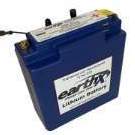
Just finished up installing our EarthX battery, so far I've seen charge rates after start in the range of 7-10 amps. With the 10 amps being after the 10 amps being after a hot start. From what I've seen so far I have no concerns about it destroying my charging system.2 points
-
To address OP’s question, the KFC150 is typically tied to a KCS55a with a number of lines duplexes into the kfc- and some of those may be compromised. the GI275 and GNS430 sounds like it may be a configuration and a port issue. OATs don’t take long to install. I’m surprised voltage isn’t showing - it’s one of the primary connections on the EIS: Our avionics shop rate is $140 in beautiful Southern California. We just finished another Dynon install with 3 screens (2 10” and a 7”) driven by an Avidyne 550 and a Trio AP with a Trig Panel Comm and transponder. Dynon can be driven by just about any GPS/Nav Comm. Separately, the HDX comes with a VFR GPS integrated antenna. It’s super easy to swap between the internal GPS to the external GPSs on the dynon touch screens to drive the HSI. When customers realize that ADSB-in runs about 1AMU, the engine monitoring runs a little north of 2, and IFR integration runs around .5 AMU, many lean towards Dynon. It is extraordinarily capable at a fraction of the Garmin price, and not everyone clamors for “auto land.” Now that the autopilot has been released for Mooneys, Bos and Cessnas, it’s an option worth visiting. We have a J model getting 2 10” and a Dynon autopilot driven by Avidyne that just came in, with a K model right behind it. Pardon the crappy picture taken of the lance…
 2 points
 -
QAA is qualified but their quality sucks. The only good thing about them is they have capability to overhaul most everything. Suggest you contact https://aircraftaccessoriesofok.com/ ask for the fuel shop and you can talk to the guy that will repair or OH it for you for a rough estimate and shop time. They do good work, are reasonable and provide prompt service. Please don’t fly it like that. Sent from my iPhone using Tapatalk2 points
-
Scott, Do you have any pictures that are a little further back for situational awareness? I think I know where I’m looking. Could be your intake gasket failed. As the valve guides wear, the intake valve will leak a little oil into the tubes. Usually ends up in the sump, but if the intake gasket is bad it could leak there…and also cause a slight inlet leak with associated change in mixture. Would start there before going for full cylinder..2 points
-
Pulling this thread from the depths to post a Mooney nickname I have never heard before but provided a great chuckle. I was talking to a Canadian Solar Installer to arrange a site visit and he noted he could get to my house in less than an hour because he flies from his local airport. Of course, I asked him what he flies (Cessna 150) and the conversation progressed to him asking what I fly. "Mooney M20E" I proudly replied. "Ah! a Log Splitter! Those are slippery; I bet you can make good time." I laughed, but it took me time to figure out the reference. Anyone ever hear that one before? Cheers, Seymour
 2 points
 -
There are addional points to consider in the WAAS vs non-WAAS discussion beyond LPV approach capability. Non-WAAS navigators were certified under TSO C129 as supplemental navigation systems and have some limitations worth noting. WAAS units were certified under TSO C146 as stand-alone navigation systems and remove these restrictions. AOPA has a good summary here: https://www.aopa.org/advocacy/advocacy-briefs/air-traffic-services-brief-wide-area-augmentation-system-waas2 points
-
If you are asking about EarthX, we are in good old Colorado USA, and a veteran owned business too if that is of interest.2 points
-
That's a Cirrus.2 points
-
I always thought the mint odor of MMO was a gimmick. But, it turns out that methyl salicylate (aka oil of wintergreen) has a known beneficial effect on rubber seals.1 point
-
Just like a Toyota (at least in my experience).1 point
-
We just got past TBO on our 231; 1840 now, I've had it the last 400 hours before our ownership it was a completely stock LB1 with stock gauges to boot. I spoke with the previous owner about his operation of the plane, it didn't sound as he took particular care of the engine. Middle to mid-upper range of the stock CHT gauge and oil temp in the middle were his parameters but flew it about 250-300 hours a year in his ownership. Since we've owned it added an EIS, an intercooler, and gami's to make operations much easier. (below 380 CHT oil below 190.) With that being said the engine is running strong. A cylinder did need replaced due to blow by, (this was identified during prebuy) but that's been all it needed. I think that it will continue to provide us with service for years to come based monitoring the engine closely with Borescope, Oil analysis, cutting the filter open etc.1 point
-
Thanks for the comments on my side question about dual GPS units. It's given me some excellent ideas.1 point
-
EDM900s are perfectly fine - we install them often. That said, last month JPI quoted 8-10 weeks to PROGRAM one which was simply too long - we program the EIS GI275 ourselves, no wait. integration with glass is fantastic for many. That said - when a 930 is around 7-8k, many feel that’s a substantial amount of the way towards a Dynon HDX where the engine monitoring is only a 2400 or so option.1 point
-
I can't answer your question, but I believe that, at least on the M20K, there is a master link. This is from the IPC:
 1 point
 -
According to the Concorde Component Maintenance Manual (CMM), constant potential (voltage) charging is the preferred method of charging a healthy battery. That manual further tells us that the output current (amps) of the charging equipment (either the charging system in your airplane, or an external charger) should be as high as possible, up to 8 times the C1 current of the battery. For the Concorde RG-35AXC the C1 current is 33, and 8x 33 is over 250 amps. So the battery prefers and, because of its low impedance design, will take over 250 amps while charging. For example, if your charging system can put out up to 90 amps, the Concorde RG-35AXC, if sufficiently discharged, will suck all 90 amps until it approaches a full charge. I don't know how much current an EarthX battery likes, but the fear that it will somehow ruin your charging system seems unfounded to me. Nobody at my airport has a charging system that can come close to the 250+ amps that the Concorde RG-35AXC prefers, nor whatever the preferred charging current is for the EarthX -- what's the difference?1 point
-
Recent usage history of flying regularly, and regular inspection intervals (100 hr/annual), would suggest the previous major repairs are inconsequential. The ‘rear spar kit’ is likely the service bulletin to beef up the aft spar where the flap actuator induced cracks. A thorough inspection for corrosion on the pre buy by someone who knows where to look would be required, given the history of this aircraft.1 point
-
As an another data point with the Concord axc 35 battery - I see very little pull from the alternator on the amp meter with a “good” start. Meaning second blade kind of start. In the instances where I botch things and I end up doing two longer cranks from under or over priming I remember seeing about a 20 amp charge rate but only for a very short amount of time. I have a concord ACX 35 battery currently. I would be very surprised to see a 60-70 amp charge rate from an earth X battery unless it was heavily discharged but I am willing to look at any available data. So far we seem to only have one example of a problem from an experimental aircraft. There are more variables than the battery so I think we need a larger data set. I imagine EarthX has that data set. Because there are so many variables I am sure there are cases where the introduction of a new variable will cause problems but I look forward to trying one when they are approved for the firewall forward applications. I’d be happy to come back and post what charge rate I’m seeing.1 point
-
2 g3x, a Garmin 650, gfc500 AP, remote audio and transponder, installed is north of 100k. I would use what you can as long as you can. I didn’t read all the responses but man I do love the garmin ap!1 point
-
I personally may be alone here, but I just added a 7 inch g3x engine monitor and really don’t love it. The jpi was a much better engine monitor to me. Just easier for me.1 point
-
It'll be very difficult to find a 50-year old airplane that hasn't had a major repair somewhere along the way. Anything done that long ago has little to no impact on the current condition of the aircraft.1 point
-
Hard to say. Replacement of the stub spar, if done correctly may not even be a major repair if using factory parts to factory standards. Only a pre-buy can tell you if it was localized or more extensive. If you move forward, I would be sure my prebuy mechanic understands Mooneys and that you want extra time spent on corrosion inspection and the spar replacement. With some shops it might be as good as new.1 point
-
Thanks, y'all for the responses and ideas. I think the higest priority is the flying couple approaches with vertical guidance. Also, reading at another post, I think it would be really cool to add GPSS, as it sounds like a great bang for the buck, specially to fly holding patterns. Any recommendation of a good shop in the houston area? I'm based in KSGR.1 point
-
I have decided to call it quits. At 87 years old, no insurance company will offer me a quote, liability or hull coverage, in a Mooney. Worse yet, I have not been flying enough to even begin to justify the costs (as if I ever could). But worst of all, the frequency of my flying does not allow me to remain proficient. I am not likely a danger to myself or others in good VFR conditions, but somewhere, sometime, I know that I would extend a little too far with weather considerations, and I just don't need that risk. My plane is up for sale, I will still be keeping up with Mooneyspace, and all my friends here. I still plan on continuing "Visors By Muncy" and hawking my wares (Visors, cabin light timers, tugs). Don1 point
-
Sent from my iPhone using Tapatalk1 point
-
We got a couple in Southern California1 point
-
Great looking bird!1 point
-
I flew an instrument approach into KCLM RNAV GPS -9 to adjust the auto pilot RC on the KFC 150. I noticed the last few flights the CDI was off a few needle widths . Easy adjustment with a small screwdriver s
 1 point
 -
These pictures are terrible but still want to share how picturesque the Smokys are in the winter. Winds kept us low from Gatlinburg to Thomaston (south of Atlanta) yesterday so I flew down the river valley offset from the foothills. I'll work on my photographic technique and get better pictures next time.

 1 point
 -
I've had a good experience with Andy at Airframe in Woodland, O41. https://www.airframemxg.com/1 point
-
Thanks for that. Even though a few of us seem a little skittish about the new battery technology in our old airplanes, you can be sure we appreciate your efforts. As you said, having options is a good thing, and competition among different companies is good for us as consumers. Some of us might be a bit scarred from the ongoing debacle/debate about G100UL potentially (or likely) causing leaks in our old airplanes. That too went through an extensive STC process. So forgive us for asking all the questions and potentially wanting our friends to try it first (thanks @Oscar Avalle!). I Personally would love to see your m20k loadmeter / ammeter during/after an engine start when the alternator is turned on. I also have an m20k with two alternators and think it’s a good application for your battery.1 point
-
We appreciate that using a lithium battery in your Mooney may seem novel and new and raises questions. That’s exactly why we are here on this forum, to address your questions directly and provide clarity. Advancing technology often feels uncomfortable because it challenges what we’ve always known. We welcome questions, but it’s important to base discussions on facts, not assumptions. LiFePO₄ technology is proven and trusted in aviation. LiFePO₄ batteries have been in use for over 50 years, starting with the U.S. military, and EarthX alone has logged more than 25 million flight hours across tens of thousands of aircraft over 12 years. Every safety and compatibility consideration has been addressed. LiFePO4 batteries use the same charging profile (voltage) as lead-acid, so no alternator or regulator changes are needed. The internal resistance of the ETX900-TSO is approximately 4mOhm. The internal resistance of the Concorde RG-35AXC is also approximately 4mOhs. We hear your concern that this new technology might damage your 50+ year old alternator. The EarthX Mooney’s typical peak charge is 15-20 amps that lasts about 3 minutes. EarthX is particularly fond of the Mooney aircraft and is a proud owner of an M20K with an EarthX battery in it for 3 years now. Up until now, you had no choice but to use a lead-acid battery in a certified aircraft, and the companies that cornered this market had no competition. Competition is good. It breaks monopolies and creates opportunities for better solutions. When companies compete, they strive to create better products that improve safety, reliability, efficiency, and deliver advancements.1 point
-
The script sounds AI written1 point
-
First, thanks for all who post helpful material on this forum, especially diagnostic ideas. You saved me a lot of time (and probably money as well) with a landing gear problem. Yesterday I flew from my home field to work, about 25 nm. All was normal. On the return flight, the gear only came up part way. No breaker popped, and rather than try to get it to retract for the short flight, I put the gear lever down and thankfully had a green light in a second or so. On the jacks, I could not get the gear to retract no matter what I tried, so off with the belly panels. Per the suggestions on this thread, I focused on the 2 relays first. They appeared normal, almost new, and they had power to them when the gear handle was up. I then went to the "up" limit switch. There are 4 wires going to the switch, but only 3 have the terminals visible. When I went to check whether there was power to any of the terminals, simply touching one with the probe (with the ground not yet established) energized the motor. Strange. I ended up removing the switch, and sure enough, the one terminal I could not see had a loose screw. Touching the other terminal apparently moved things just enough for contact to be reestablished. I cleaned everything, reattached the 4 terminals, and everything works as it should. Once again, thanks to those who are willing to share their expertise. It is much appreciated.1 point
-
A respectful +1 on this from me. Data point: our airplane is hangared in the Denver area where temps occasionally reach 100 in the summer and below zero in the winter. We don't have a Battery Minder or any similar gizmo. We rarely hook up any kind of charger, not even when the airplane sits in the maintenance hangar for a week or two with the gear being cycled for an annual inspection. Throughout all this "abuse", we've been averaging 7 years of life on Concorde RG batteries over the last 20 years. And yes that includes actual capacity tests, not just "it was strong enough to start the engine". Air temperature inside our hangar is probably a bit more temperate than atmospheric OAT, and the airplane rarely sits more than a week or two between flights that charge the batter, so our use case is not particularly extreme. Still, based on our experience, I think a lot of owners running Battery Minders are taking on unnecessary trouble for not much benefit.1 point
-
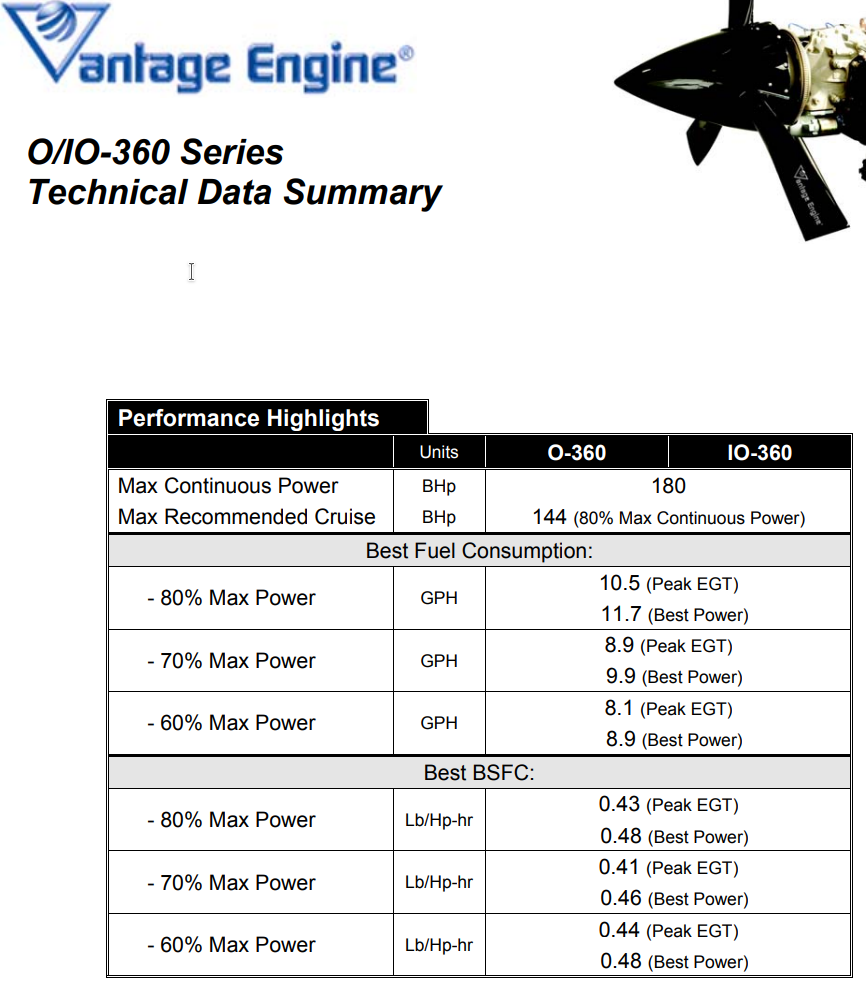
Found this bit of marketing on the interwebs:
 1 point
 -
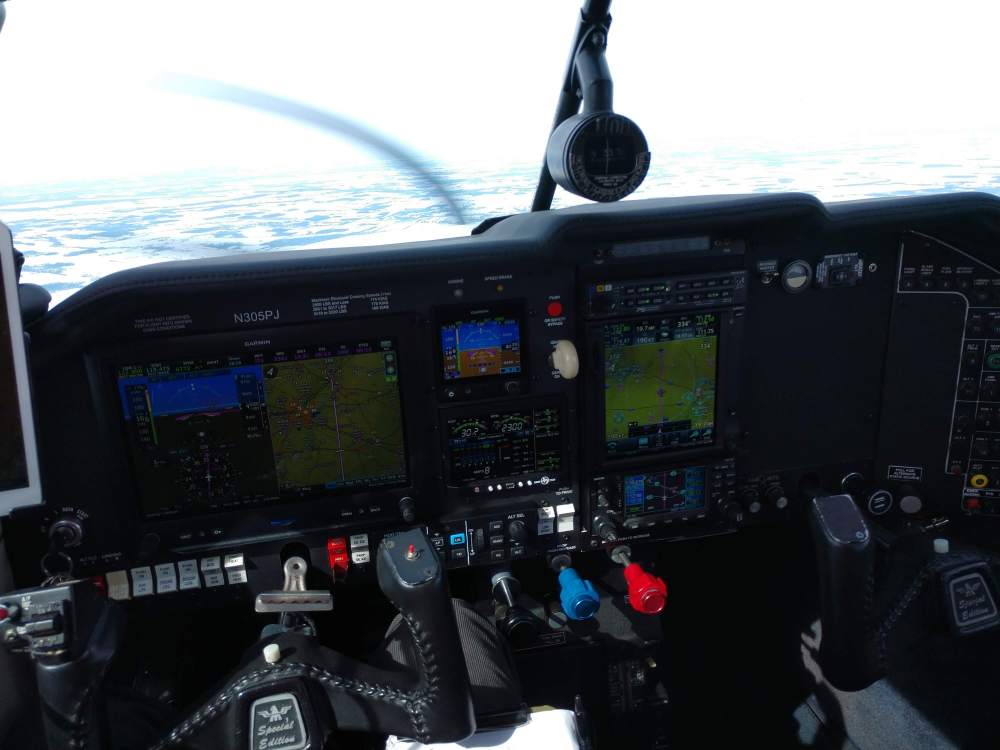
My actual cost at AATG, parts, installed, flown away complete: G3X touch 10.6" $13,500 GFC500 2 axis $10,742 Pitch trim installed: $3011 G5 backup installed: $3253 Total $30,496 Reading it right off the quote and I paid not a dime more. Not shown above was a GTN750, GTX345R, EDM900 Primary, all installed at the same time. Paid exactly the quoted price for all.
 1 point
 -
I've never heard of an I.T. specialist Killer, so I should be good!1 point
-
Yeah, but the pit is too big.0 points