Leaderboard



Popular Content
Showing content with the highest reputation on 01/15/2026 in all areas
-
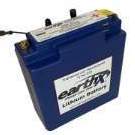
We appreciate that using a lithium battery in your Mooney may seem novel and new and raises questions. That’s exactly why we are here on this forum, to address your questions directly and provide clarity. Advancing technology often feels uncomfortable because it challenges what we’ve always known. We welcome questions, but it’s important to base discussions on facts, not assumptions. LiFePO₄ technology is proven and trusted in aviation. LiFePO₄ batteries have been in use for over 50 years, starting with the U.S. military, and EarthX alone has logged more than 25 million flight hours across tens of thousands of aircraft over 12 years. Every safety and compatibility consideration has been addressed. LiFePO4 batteries use the same charging profile (voltage) as lead-acid, so no alternator or regulator changes are needed. The internal resistance of the ETX900-TSO is approximately 4mOhm. The internal resistance of the Concorde RG-35AXC is also approximately 4mOhs. We hear your concern that this new technology might damage your 50+ year old alternator. The EarthX Mooney’s typical peak charge is 15-20 amps that lasts about 3 minutes. EarthX is particularly fond of the Mooney aircraft and is a proud owner of an M20K with an EarthX battery in it for 3 years now. Up until now, you had no choice but to use a lead-acid battery in a certified aircraft, and the companies that cornered this market had no competition. Competition is good. It breaks monopolies and creates opportunities for better solutions. When companies compete, they strive to create better products that improve safety, reliability, efficiency, and deliver advancements.8 points
-
If you are asking about EarthX, we are in good old Colorado USA, and a veteran owned business too if that is of interest.5 points
-
I love my Earthx battery. I modified my M20C and installed a IO-360 per LASAR´s STC. Among other things it moved by battery back. I ran the W&B and my CG was WAY back. So the EarthX battery helped me increase my useful load and by CG. The battery works great, it cranks much better than my old Concord. Now, with regard to the 15Amp... My plane is now full electric. Glass cockpit and electronic mags. Obvioulsy, this is a concern as the power consumption is way up (lets also not forget the electrical gear that needs to be lowered...). I also had one electrical power outage (the grounding cable of the alternator went lose). So how to solve this issue if to the equation you add my long x-countries... without any close by airports? I went the route of a back up alternator. I believe from a risk perspective this is the most effective solution. You have two alternators and if everything fails an EarthX battery that should get you to where you need to go... And I also have a smaller battery for the ignition (but the weight is neglible). So, if you ask me EarthX worked well for my mission. Oscar4 points
-
You will still be able to run FF on ios 17. You won’t be able to get updated versions (maps/charts will still update). This is fairly common as older iOS versions don’t support new features on the app. I’m still using a mini from ~2014 and ff (old version) works fine.3 points
-
Thanks for that. Even though a few of us seem a little skittish about the new battery technology in our old airplanes, you can be sure we appreciate your efforts. As you said, having options is a good thing, and competition among different companies is good for us as consumers. Some of us might be a bit scarred from the ongoing debacle/debate about G100UL potentially (or likely) causing leaks in our old airplanes. That too went through an extensive STC process. So forgive us for asking all the questions and potentially wanting our friends to try it first (thanks @Oscar Avalle!). I Personally would love to see your m20k loadmeter / ammeter during/after an engine start when the alternator is turned on. I also have an m20k with two alternators and think it’s a good application for your battery.3 points
-
Well that sucks. I have met a few of their developers at different aviation events. They all seemed very good and dedicated. I will stick with it till it turns to crap. I think I will download my logbook just in case.3 points
-
This is often the fault of the CFI who provided initial training. And flight schools which don’t allow students to practice stalls solo. It’s easy to see why a product of either would think stall = death. Some years ago, I did a flight review for a CFI friend. His recovery from a simple power off stall in a 172 was to shove the stick way forward. Sensation was being pointed directly at the ground. I thought I was going to lose my lunch from the initial negative G.. I asked him, “are your students afraid of stalls?” When he replied, “yes,” I said “I think I know why.” I feel very fortunate to be a product of neither. In fact, my private CFI and I did a lesson just after solo which specifically included practicing stalls (yes, in the dreaded Tomahawk!). BTW, I did not receive spin training as a private pilot. I don’t even like spins. The ground going around in circles in front of me is just not my idea of a good time. But I’m not afraid of them and had no trouble recovering (incipient) from the two clients who have put us into one (I actually saw the first one developing and I allowed it to happen - it ended up being a great lesson).3 points
-
I practice steep turns, slow flight, and stalls every few months. My rationale is that I want to maintain a feel for the performance edges of my aircraft; I personally think that skill/ability atrophies. While I don't intentionally fly in that regime on normal flights, I also believe that distractions and events might put me in a less than ideal flight regime. That's when recency of training and the feel it imparts might just save my ass. Yes, all you ace-of-the-base pilots know that you're too good for that to ever happen to you. I acknowledge it could happen to me, so I plan to LIVE with that limitation.3 points
-
I’m still trying to wrap my head around the irony that someone named Colgan doesn’t see the need to practice slow flight and stalls. https://en.wikipedia.org/wiki/Colgan_Air_Flight_34073 points
-
You’re following slower traffic again, but this time it’s after a long day, you’re a little tired, and there are strong winds. You retard the throttle a little bit because the wind has increased your ground speed and you’re catching up to the slower traffic. Because you’re a little fatigued, you don’t notice your airspeed is decaying as you turn base to final. You start to hear the stall warning, but because you’re tired you think it might be the gear warning because you retarded your throttle. As you double check your gear, you stall because you haven’t practiced slow flight in so long you don’t recognize the warning signs until it’s too late. There’s a reason professional pilots practice all of this stuff, even though there is almost no chance they will ever “need” it.3 points
-
I’m mean no offence, but it reads like you’ve created a boogie man where one does not exist. What you’ve described really isn’t a big deal provided the maneuver is conducted with adequate altitude. A stall break is not a potentially unrecoverable situation nor is a wing drop. In my experience, people who are uncomfortable with stalls tend to build them up in their mind to be something far more dramatic then they actually are. I’ve heard lots of new pilots tell, “there I was flat on my back” stories about practice departure stalls with a 40° wing drop in a C150 that has turned into a 110°wing drop by the time they’re back in the pilot’s lounge. Mooneys can have aggressive power on, stall characteristics. A poorly rigged airplane can exhibit unexpected behavior as well. That being said, the airframe is not scary to stall. With practice, one can recover from a full break, power off stall in <200 feet. The aircraft is docile in slow flight. In the clean configuration, I have held my aircraft in a falling leaf for nearly 1000 feet of altitude loss while holding the wings within ~30° of level. Everyone has a right to operate as they see fit, but I think it’s a bad idea to scare others away from working towards proficiency. Avoiding slow flight does not make for proficiency, especially in an airframe that the statistics show is prone to being floated down the runway in ground affect and off the departure end in a blaze of tire smoke.3 points
-
Dumping the logbook now is likely a very wise move. I'll do that this weekend. It won't turn to crap overnight, but over time it surely will fail to innovate and set the bar. It will get lapped by one or more competitors. Since it was created by pilots and many of there staff are/were pilots, they'll lose that intuitive sense of what is useful and what is not since the offshore workforce will with 99% certainty NOT be pilots. They're not cranking out an app for a bank or e-commerce site and eventually that will show up in product quality.2 points
-
Just wanted to chime in to let you know that the first issue has been by now discovered independently and resolved in the latest release: https://github.com/rdamazio/efis-editor/issues/352 In as far as the second point is concerned, we're happy to improve validation and/or introduce symbol conversion if needed. The problem is that the software is not supported by avionics and/or app manufacturers, and as such the formats are reverse-engineered through trial and error without any official documentation... We're happy to improve if we can as long as we are made aware of the problems in the first place.2 points
-
It’s not the airspeed safety switch if the override button didn’t allow retraction (I’m assuming that you used it correctly and held it pushed rather than momentarily pushing it). I would not allow anyone to fool with it as that just introduces more confusion. It’s not necessary to tap the brakes on a Mooney for proper gear retraction. With airplane on jacks, I would clean the plunger on the up limit switch as these sometimes stick. Power must pass through this switch to enable retraction.2 points
-
It sounds like the problem isn’t that the student pushed the yoke full forward, but they delayed the recovery to level flight. I always recover by simultaneously applying full power and pushing the yoke full forward. As soon as the airplane is flying again I bring the nose to the horizon. Usually with about 100 feet of altitude loss. This is from a full stall. The nose never gets very far down.2 points
-
I would talk to Lycoming and ask them, for a crankshaft like yours where hardness testing was performed, where should the minimum space be measured, at the slightly indented area or in the rest of it. Seems weird that the shop says that there was an improper repair made to the crank when said part was installed by Lycoming.2 points
-
No, you don’t have to fly it slow, but there are lots of times you can end up slower than you prefer and it’s good to have practice at a safe altitude before you find yourself there. Avoiding it is great until you don’t. Just my opinion, but if you can’t fly the basic private pilot maneuvers with some confidence, you should probably practice until you can.2 points
-
I mentioned the incipient Mooney spin earlier. One personal practice it has led to is, if I am not familiar with the airplane - I mean that specific N-Numbered airplane, not just make and model, we climb up higher than usual and the first stall is mine.2 points
-
Hello all, After a rough couple months of spam-bot invasions I have decided to make some critical changes to the way new users to the community are validated and how Supporter level memberships work. Here are the key changes: When a new account is created here it will be placed in a group called Unverified Members. This group can browse the site but cannot create any new content. To upgrade this account to a Verified Member you have two options: a) pay a $2 fee for instant validation which is good for the life of the account or b) contact me @mooniac58 with a picture/scan of your valid ID to prove you are who you say you are. The old manual $10 minimum donation for upgrade to Supporter level has been replaced with a $25/year automatic subscription system that will renew every year on its own unless you cancel it. No more waiting for me manually upgrade your account, etc. Those that purchase the $2 instant validation will get a $2 credit towards their first year of Supporter level access...so $23 for the first year and $25 thereafter. Generic Donations: Separate from the membership plans, users can still donate arbitrary amounts to support the site using the new donations page. Those that donated prior to today with the old system will continue to have Supporter access until 12 months from your last donation as long as that was $10 or more. These are the current membership levels for members: Unverified Members - New accounts, can browse site, cannot create content or message others. Verified Members - Either paid the $2 fee or proved in another way that they are a real person. Can post new content but not in classified forums. Limited to 200MB total storage for attachments, photos and other files. Supporter Members - Signed up for $25/year subscription. Do not see advertisements on site. Able to post non-commercial topics on the classified forums. Storage limit of 1GB. Sponsor Members - These accounts have paid a fee to have a limited number of commercial posts on the forums (usually 1 per month limit). Some final notes: While I am confident new spam-bots are not being registered on the site, I am quite sure that they have dormant accounts that were created in the past that still exist undetected. For this reason we have and will see brief uprisings where they rise up and make a bunch of spam posts. We will ban each of these as they occur and wipe the content. I don't expect much of this and the past few days have been clear skies here. If you created an account prior to August 5, 2025 and did the normal email based activation then you are in the Verified Member group. No one was downgraded during this process and you don't need to do anything to validate your account. Please do not do the $2 validation process (I am still working on hiding this option for everyone except unvalidated accounts in the site). I will be making small changes here and there to try and make it more clear how new users validate their accounts. For now I hope newly registered members find their way to this topic to get the instructions. Eventually I hope to figure out how to customize the site more to guide new members through the process better. And lastly a big thanks to everyone who has supported this community over the past 17 years! Craig1 point
-
I saw this a bunch of times with a crew of 20-somethings who all wanted to leave their mark but were so focused on some localized behavior of the code, they missed the bigger picture. This is especially true when the code is not the best in the first place, but it works. It's the law of unintended consequenses.1 point
-
They have an extra-long "tail" that prevents the slots that engage the screw from eating the soft tubing -- that's the "lining". If the hose is tougher, you don't need them but apparently the silicone hose needs them.1 point
-
Thanks Skip, ordered the material right away — the lengths fit perfectly.1 point
-
Just picked up my ‘76 Ranger from Aero Valley LLC in Paul’s Valley OK with its freshly installed Aero Cruze. I’ll do a better PIREP after a couple more flights to gain experience in regular use. Flying OK to OH, I just wanted to get straight home and let it fly the magenta line all the way back. Initial impression is it’s worth the money I spent. All in about 10k. G500 with associated equipment was 30+. So about 60-70% of the performance of the Garmin at roughly a third the cost. Real test will be support five years from now.1 point
-
What’s with all the “sky is falling” doom and gloom? It doesn’t mean ForeFlight is going to disappear, perhaps they’re just “trimming the fat” now that they’re part of a larger company, there may be a lot of overlap with other redundant positions.1 point
-
it goes up from 27 cold to 29 amp hot. But With the electronic mags my cranking has improved significantly.1 point
-
If you are referring to my post just above this, it wasn't a student, it was a CFI. I never push the yoke full forward for a simple stall recovery. When I have a pilot who is fearful of stalls, I do one or both or all of three power-off stall exercises with them. One is falling leaf, where there is no "recovery" until the maneuver is completed. That bobbing of the nose is the airplane attempting to recover by itself, which you are preventing by continuing to hold the stick back. The second is a power-off recovery. The third was the one my CFI went over with me all those years ago for solo stall practice. Just letting go of the yoke while maintaining rudder coordination.1 point
-
Are there any more plans? I just purchased my m20k in March 2025, based at Sanford, and ready to meet other Mooney owners. Thx.
 1 point
 -
If I recall, it’s hard to torque the plate down with a normal socket. I had to grind the end of the socket so it had a sharp edge.1 point
-
In most cases it's a lot less Orwellian. The industry is just full of engineers who both want to "do something", and are also convinced they're some of the smartest guys in the room. They're often led by managers who are willing to let them try things, because that's how you learn. In some cases you learn not to touch stuff, but to be fair it's also how you learn to maintain stuff when it breaks due to underlying changes in the hardware, O/S, or whatever. I've been both the developer and the manager in my career, and even having seen what I've seen, it's still challenging to leave things alone. It's also very tough to recruit for a team with a mission statement like, "Please maintain this existing, well-loved software, exactly like it is", so efforts to do so often cause the app to fall below critical support mass. Combine that with the nature of most engineers to (1) tinker; and (2) be introverted enough to avoid asking others' opinions about what's best, and you wind up stacking the deck against simply letting good things stay status quo.1 point
-
It’s a GE1813. These guys make really nice products. https://www.aero-lites.com/web-store -Matt1 point
-
That piece is pushed by the shaft with the eccentric to unseat the 3/16 ball to let the flaps up.1 point
-
You should start using it to find out! If you start getting emails asking for your credit card to invest in "spectacular" time-share opportunities in North Korea, then you will know for sure........1 point
-
If it was me, I'd have the Fig. 7 dimension re-measured by someone else (I might try myself, but that dimension looks tricky to measure to 0.001" with home shop tools). And measured in the undisturbed area, not around where the dimples are. You might even ask the shop that rejected the crank exactly where they made the measurement. What I'm getting at, is that if this is a first run crank, which given the factory dimples are still there, it appears to be. Then, I don't see how the Fig. 7 dimension could have become out of spec; the gear locates on that surface and is fixed by the locating pin, so I struggle with how it would get worn beyond the limit.1 point
-
I can fly them. I just don’t think it is worthwhile. Nor can I think of any times I would absolutely have to fly slower than I prefer. Divert, change plans, adapt. Training used to require spins, but that was abandoned after it proved dangerous. The standards can be changed, but until they are I will comply while believing the slow flight portions are not helpful.1 point
-
Yeah, I was wondering if that was the case - but then he talks about Acclaim(s)...1 point
-
I’m glad to hear you’re such a good pilot it could never happen to you.1 point
-
Best of luck with getting this sorted out and back in the air.1 point
-
The engine started making metal.1 point
-
Or maybe you configure and tower asks for a 360 for traffic. You had the throttle back. There’s a good reason that you had to learn these for your ppl. They are basic skills that will keep you and your passengers alive.1 point
-
Probably more accurate to say it's "largely" about security. Long, boring, nerdy post follows... Speaking as a grifter er, "development specialist" who works in the software industry, much of the public just doesn't (nor should they be expected to) think about compatibility test matrices and the need to keep them finite. It's all well and good to say a particular piece of hardware or software is "backward compatible", but no successful software company actually relies on that. They all employ a Regan-esque "trust but verify" strategy. Every change to the product must be tested on every combination of supported hardware and software. Let's use Foreflight as an example. Latest production Foreflight is 17.11, presumably 17.12 is in the works. Latest production iOS is 26.2. Foreflight has a test suite they use to prove functionality, and they're certainly running it on iOS26.2 and Foreflight 17.12.XXX as I write this. Well, you've got to run the 17.12.XXX testsuite on iOS26.1 too, because not everyone has upgraded to 26.2, and it's not a winning strategy to force everyone to upgrade to the latest iOS on every Foreflight update. So the verification process has two dimensions: Foreflight version and iOS version. Fine. Actually, there's a third dimension because Foreflight's version history is branched rather than linear. 18.XXX versions are co-developed simultaneously with 17.XXX (and 16.XXX and so on), and customers expect all of them to work. Actually, there's a fourth dimension because iOS version history is also branched rather than linear. iOS 26.xxx is co-developed with iOS 18.xxx and other iOS 18.xxx releasess. Actually, there's a fifth dimension because different iPads have slightly different CPUs and other hardware, and sometimes that triggers corner-case problems. Actually, there's a sixth dimension because Foreflight has to run on iPhones as well as IPads. Actually... well, you get the idea. There are surely additional dimensions I don't know about. Software validation engineers at Foreflight have almost certainly automated test matrix management. They don't have to write a whole new testsuite or hire a new person to push a particular button every time a new test element or test dimension is added. But... they do have to buy, set up, install, and maintain the additional test hardware and operating systems. They also have to hire more (or smarter) people to write the meta-software that reviews test results, identifies all the failing cases, filters "real" failures from nuisance failures (e.g. someone tripped over the power cord of one of the test devices), triages the failures, doles them out to individual developers for debug, etc. At the modern pace of new hardware, operating system, and software development, this rapidly gets out of control, because there's only so much test budget and manpower to go around. The obvious solution is to roll supported combinations off the back end more and more frequently. But since the manufacturers know this is a bitter pill for the public to swallow, they'll happily imply the changes are out of their control. And "security" is a good fence post to lean on, because it's not really a lie - there are indeed new threats all the time that exploit gaps in older hardware and software. Having said that, as an decaying engineer with retirement on the horizon, I'm aging out of my enthusiasm for it, and I certainly don't mean to imply anyone should be sympathetic to the test matrix problem I blather about above. The admittedly impressive technology that allows for continuous updates to everything in the universe has a dark side, which is that dumb updates that do as much harm as good are a lot more likely to make their way to the public than in the "old days". It also damages the whole concept of documentation, help, and support, because so much of the information about your product applies to a version of the product you are not running. I've tired of it, and the cynic in me feels like much of modern software development is just a jobs program for wanna-be tech bros who aren't actually very good at their job. And, uh... stay off my lawn too!1 point
-
It is very green - as in more greenbacks in the pockets of sellers of the new gizmos . Not so good for the environment, but who gives a s%$# about that when all all of this is greenwashed by the politicians. Car manufactureres are doing the same thing. after few years, you can no longer get update to the nav systems that the cars came with and, in some cases, the connectivity goes away as well. It will be interseting when this forced obsolescence will hit the electric car market - one day, the manfufacturer will send out a notice that suport for certain model is ending and users may find themselves with a heap of scrap in their garage that will not turn on.1 point
-
Personally, I would not be comfortable flying any airplane for which I was fearful of performing any private pilot maneuver. Repetition is what builds confidence, and I would want to get a competent instructor and repeat any maneuver that made me uncomfortable until I felt confident. The flight review provides an opportunity to explore the entire envelope of the airplane every two years.1 point
-
Digital tachs can be pretty accurate, or not, but the governor itself is just a mechanical device that doesn't have the means to be super accurate over all realms of temperature, oil pressure, viscosity, wear, etc., etc. They're generally pretty consistent, but sometimes I think people expect too much of them.1 point
-
Yeah that is great. I had some minor issues after about $28k worth of work at a big reputable shop and they couldn't be bothered to call or email me back after multiple friendly attempts. Everyone makes mistakes, I couldn't care less about the minor issues. The no call/time for little old me, that's lame. I don't plan to give them any more business. I'm sure they don't care about that either. Sounds like you have a good A&P to work with. Hang on to them and be a good customer!1 point
-
This is hyperbolic. Per the M20C POH performance tables, the difference between 2600 and 2700 RPM at the same manifold pressure is about 2% across a broad range of takeoff altitude and temperature. 2640 RPM is in the middle of that, so call it a 1% degradation in power developed, assuming all gauges are perfectly precise and perfectly accurate. That number is so small as to be completely lost in the noise for actual takeoff performance. Unrelated factors such as density altitude, runway slope, minor cam lobe wear, dirty air filter. etc. are all going to have a much greater effect than 2640 vs. 2700 RPM. Bear in mind also that even if this is "fixable" with a governor adjustment in the field, you must have realistic expectations about what can be achieved. Odds are that tweaking the max RPM adjustment screw in situ is not going to give you exactly 2700 RPM, but rather something like 2680 or 2710 (with a flashing red indication on your G3X), etc. Such is the curse of modern digital instrumentation. Be careful what you try to fix, lest you create a bigger problem than was there in the first place.1 point
-
Not a huge deal, imho. Prop governors aren't perfect. Do have it looked at at annual just to make sure nothing is going awry.1 point
-
I think we all really appreciate the time, effort, and money everyone at EarthX has put in to bring new technology to our aging fleet. And the time you've take to help improve our understanding through this forum. Not many companies take the time to help the consumer in that way. Thanks!1 point
-
If true, we could make book on how long until it closes again.1 point
-
Yeah, I think it's a matter of what works best for you. I really wasn't a fan of the on-screen checklists until I used the one on the G3X. The previous electronic checklists were on my iPad/EFB or in one of my radios, like the GNS 430W. To me they felt cumbersome to get to and cumbersome to use, and really weren't an improvement over a checklist I could hold in my hand as you described. But the G3X Touch is way different in that I can get to the checklist page with the easy muscle memory of two turns of my wrist (big twist clockwise, one click back counterclockwise), and I've tailored all but the emergency checklists to fit on a single page. I'm a "flow first - checklist confirm" guy and I don't necessarily physically tick off each item on every checklist as I read through them but I DO sequence to the next checklist I'll need as I complete each checklist. That way when I do my twist-click the next time I'm on the page I need for that phase of flight. I've really grown to like using it. It has centralized and simplified my work flow.1 point
-
A few comments: 1) The Bravo is faster at higher altitudes than lower altitudes. It shines in the high teens given the tradeoff between survivable atlitudes in event of O2 loss, engine cooling, and no traffic (usually). At FL200, at my normal cruise settings, I see 198 kts on 18.5 gph. 2) Bob Kromer is the guru - his advice is well founded (at least for me). I never cruise at more than 30/2400 with 80-100 ROP. LOP doesn't seem to work in the TIO-540 for most. You should burn around 18-19 gph regardless of altitude. Turbo piston engines burn the same fuel for a given power setting regardless of altitude. 3) CRQ-DVT is a perfect flight for a Bravo. BTDT. Eastbound go into the low- to mid-teens and get the benefit of the tailwind (usually); coming westbound, with any headwind, I do that trip at 10k or 12k. You'll make good use of the speedbrakes if IFR into CRQ....some controllers treat the Bravo as if it was a t-prop and figure you can get down and slow down at the same time. 4) Manage the engine by TIT and CHT mostly. First, never go above 1650 TIT for more than 60 seconds. Second, keep the CHTs below 400...sometimes you need to leave the cowl flaps open a bit even in cruise in the summer out in the desert southwest. 5) Utilize cruise climb at 34/2400 at 140 kts IAS...usually around 23.5 to 24.0 gph with flaps in half trail....set fuel flow with TIT at 1550. Just my opinions but after 11 years of Bravo ownership....1 point