Leaderboard



Popular Content
Showing content with the highest reputation on 11/24/2024 in all areas
-
Update on the autopilot. We finally figured out that the instrument shop messed up the overhaul. The output from the gyro was reversed which led to the immediate pitch up or pitch down. Frustrating couple of months but it is working again. Sometimes perseverance pays off! Thank you to Bob Weber for his help as well. Sent from my iPhone using Tapatalk5 points
-
So the interesting thing about this thread is that sometimes we get caught in the minutiae and it obscures the objective. I think everyone here has the same desired outcome, which is less accidents and better pilotage. the simple fact is that all of these things mean both, better training, more frequent training, spending more time looking outside and utilizing new technology to boost awareness. I took two flights today, both showed traffic on Adsb that o would never have seen and I wasn’t flying, I was earnestly looking. Three planes were within 100 feet of our elevation and the closest one to our position was under two miles. even knowing where it was and where to look, it was extremely difficult to locate. The contrast of the horizon, the sun, distant clouds etc. I would agree that Adsb isn’t “necessary”, the “Spirit of St Louis “ didn’t have a windshield or a window in the front of the plane, so we can obviously fly around without anything more than Lindbergh had, but why would we? Do you think he would have scoffed at the tech or embraced? Anything that improves situational awareness has to be good, but it shouldn’t be a substitute, just a compliment.4 points
-
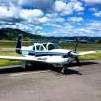
Lake of the Ozarks on a beautiful fall day for taking Myrtle for a flight.
.jpg.8ae6d856e4b9ace8159325596abea48a.jpg)
.jpg.9fb07568d975413cc067ca30857ed2ac.jpg)
.jpg.b24a93231542542f49596138847fe46e.jpg) 3 points
3 points -
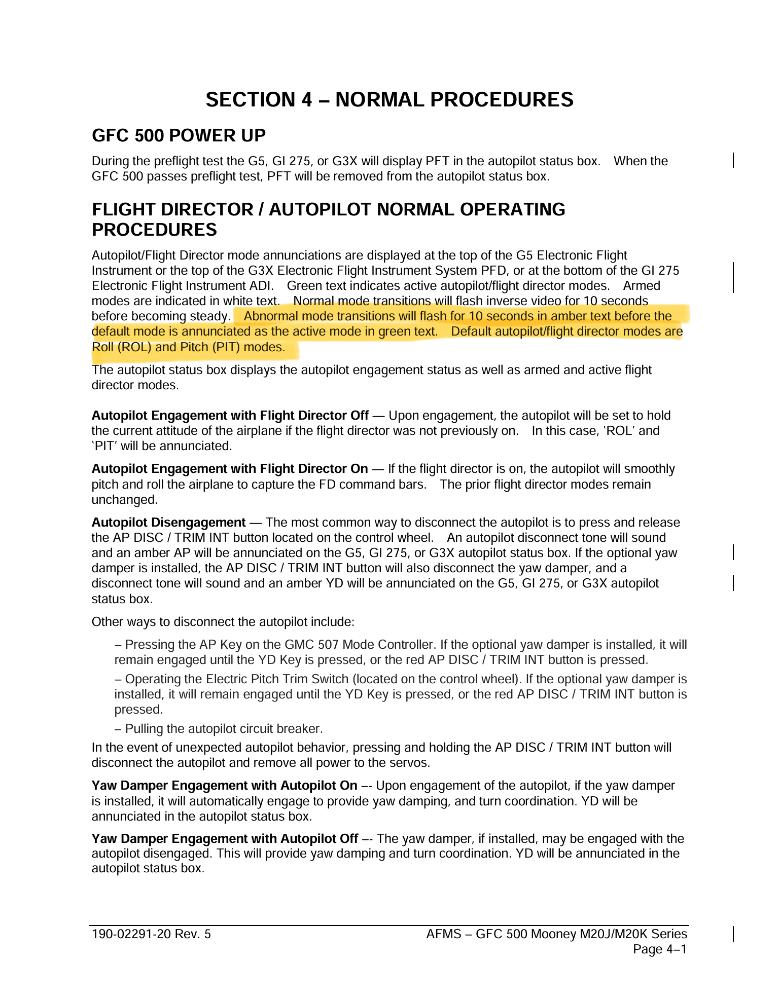
What does the airspeed tape do on the standby instrument when the G3X is acting up? If it’s not doing the same thing, I would suspect a GSU 25D issue. You could try pulling the GSU CB the next time it happens which will disconnect the GFC 500 and cause the G3X to revert to the standby ADAHRS (G5 or GI 275) to see if everything then operates normally. Be aware that if your installation is wired per the STC you will lose the magnetometer and the G3X HDG indication will drift or may revert to TRK. This is because the STC has both the magnetometer and the GSU 25D on the same CB. (I talked my installer into a minor mod to put them on separate breakers). This may not be a bug - it may be an intermittent GSU. If it works on the standby ADAHRS, I would just replace the GSU 25D. The GFC 500 AFMS describes the flashing annunciations here:
 3 points
 -
Thought I would post this to the group for anyone diagnosing a gear won't come up after takeoff problem. This was an intermittent problem, gear not coming up on an early M20J when gear up was selected, about half of the time. Sometimes not coming up for quite a long time but usually after about 20 seconds of selection. I read through alot of the "gear won't come up" (or down) threads and I hadn't seen anyone describe this, so for the next victim who might be searching, here's something to think about. The gear up limit switch is a DT-2R-A7 micro switch, encased in a separate actuator. The actuator has a double action spring loaded plunger that makes contact with the switch, as well as the paddle on the pushrod tube. When the paddle hits the actuator, it stops the system (gear is up). What was found is, the plunger in the actuator assembly is prone to getting stiff. 50 years of dirt and grease, will partially seize the actuator plunger and prevent the microswitch from disengaging the circuit. It basically holds the switch down telling the system not to come up any further (at all). Below is a picture of what the actuator looks like. It is easily disassembled and cleaned, making it slide like butter once again.
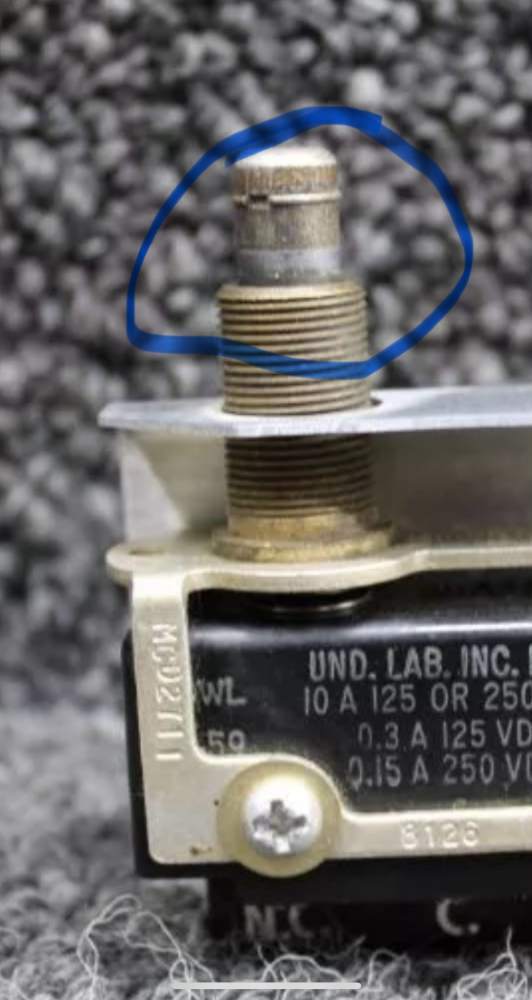 2 points
 -
Any of the electric gear systems have up and down limit switches. They're in the belly. One of the pushrods has paddles on it that actuate the switches at the travel limits.2 points
-
An oil filter is critical single point of failure component. Not only do we not need a 337 if we change brands, but owners are allowed to do the work.2 points
-
I have had that happen once as well. Gear switch down, nothing… maybe 30” later, it came down normal. I exercise/clean both plungers now. It hasn’t happened since, but then im not sure exactly what caused that issue.2 points
-
Thread resurrection. I’ve started changing my own oil after local shops are now charging about $500. Like many other things, once you DIY, you pay more attention. I find that when I fill my J up with 7 qts (any more gets blown out first flight), it will stay golden until about 15-20 hours. Once it starts to turn black with contaminants, it starts loosing volume. I suspected it’s at this point that the 15-20 hour old oil is breaking down. I’ll add one quart about every 5-8 hours there after until I get to 25-35 hours then change (and replace filter). 500 hours since overhaul at purchase and no issues.2 points
-
lol I hope this guy isn’t still looking for a shop 2 years later but the suggestions keep coming! Lol2 points
-
Sorry, I should have mentioned I’ve combed the data on the G3X data card after every flight and all that is there is the A/P fail messages. No other data aberrations that would have contributed to the failure. No indications of GPS faults either. I haven’t looked at the G5 data but I’ll do that tomorrow. I do have an SD card in the G5 but I never look at it. As for the airspeed trend indicator, Barry has seen it without the autopilot engaged (the pic in my first post) but I have not. Also, both airplanes here have had recent pitot static checks and are good. We’re both going to concentrate on watching what the G5 is doing on our next flights. Barry is going up tomorrow, and I have a trip on Monday.2 points
-
That is the drain for the boost pump. Fuel dripping there means an internal seal is leaking and the boost pump needs overhauling. The similar drain for the engine driven pump is a rubber hose that comes out the left cowl flap along with the crankcase breather, sniffle drain and maybe a vacuum pump outlet.1 point
-
I absolutely love this photo. It should be something... A movie poster? Our banner? I don't know, but this photo is... just... captivating...1 point
-
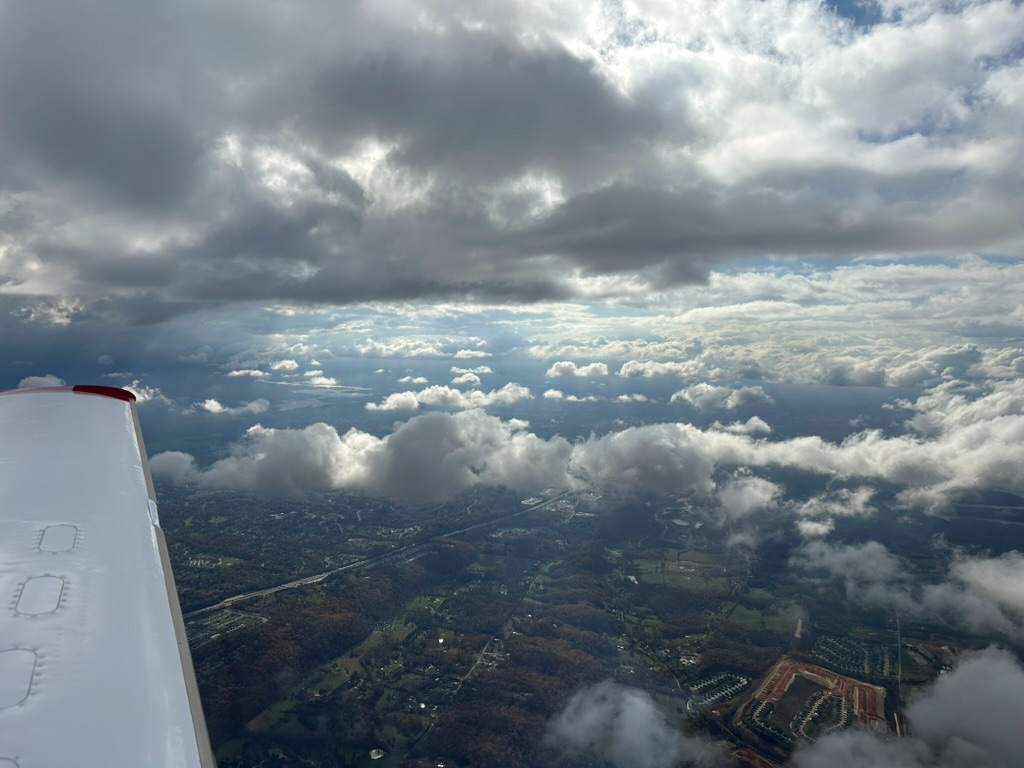
No, I was IFR. I asked for a block altitude 6000-8000 and deviations left and right of course and they gave me the clearance. So I cloud surfed for almost an hour avoiding the ice. And yes, the pictures don't do it justice. The dark spots look a lot darker in real life.1 point
-
Any ia that would raise a fuss over a previously installed Pma switch by a previous A&P, simply bc it wasn’t the original part number and for no other sound logical reason, is an IA that would never touch my airplane again. Can not stand some of the idiotic interpretations that get raised by some mechanics trying to raise questions of intricate legal interpretation for something as simple as an electrical switch (Where none of said switches were ever PMA parts to begin with). Enter the lightbulb discussion. Lol1 point
-
This is a dukes setup. I don’t know how different the other systems are but this one, the up limit is a micro switch encased in a mechanical actuator. I don’t know why they did it. Every other limit switch in the system (down limit, and squat switch) are fully self contained switches with no seperate actuator.1 point
-
question, back in my ol hot rodding days, we'd want the oil in the 200 - 220 is range, why is it different for aircraft ?1 point
-
I used some translucent plastic sheet for that purpose.1 point
-
One thing to consider is if you have an out only such as @Pinecone gtx-335 and you use a portable device for “in” such as a stratus, you may be missing out on some traffic (tis-b). It would depend on the gtx-335 configuration set by the avionics shop. I think most of the portable devices are dual in but if not, you could also miss ads-r. I believe it’s possible to set up a grx-335 to report “dual in” if you go into the config which would then get you the tis-b and ads-r (depending on “in” setting) on your portable.1 point
-
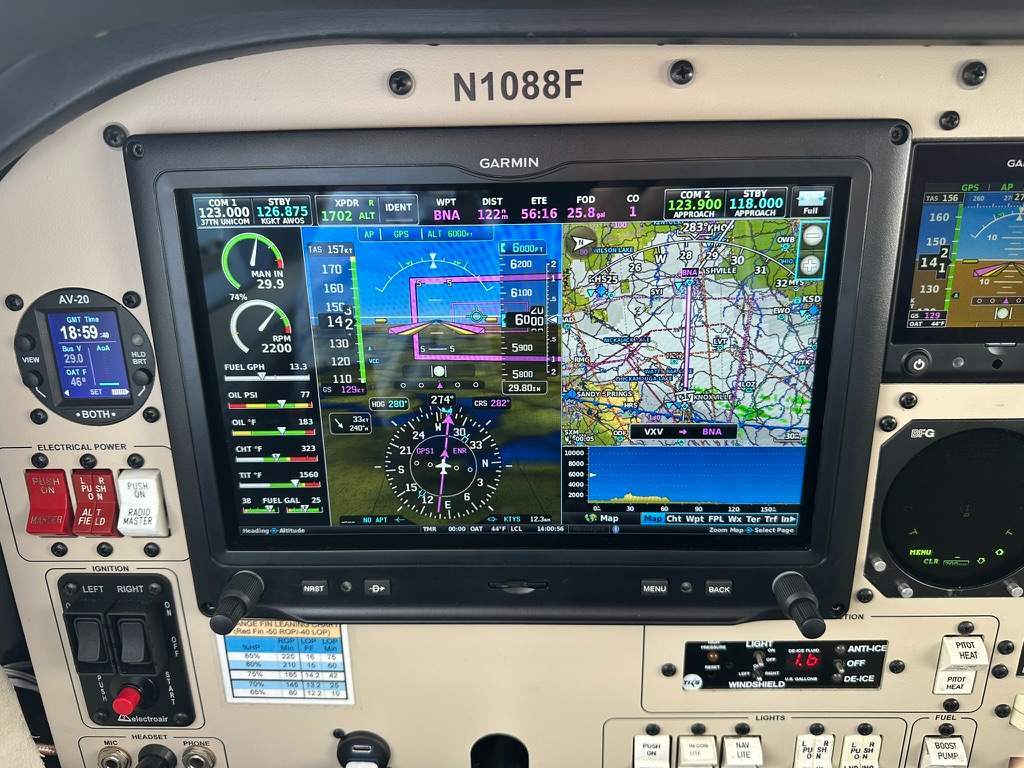
A bit sporty this past Wednesday climbing over Knoxville on my way to St Louis. Thar's ice in them thar clouds! I was able to maneuver around most of the broken and overcast to avoid it. I didn't get any pictures but the trip home Thursday afternoon was just as, if not more, fun. It's that time of year. And the winds weren't my friend either. They only got worse the higher I went. Although the trip home on Thursday saw 200+ all the way. All in all a good trip!
 1 point
 -
Here’s what it looked like in the Midwest yesterday. Sent from my iPhone using Tapatalk1 point
-
One other thought, I know you replaced baffle seals, but be sure that the lower forward seals to the cowl are good. There are often big leaks around the starter and alternator. These leaks could have an impact on oil cooler flow even more than the cylinders. These are harder to see if you have a cowl closure, but would still be a leak…. What are your cylinder temps? I would expect an F to be under 350.1 point
-
Is this the stock oil temp location? Do you still have the original gauge and does it match the digital? Do you have the little metal shield between the exhaust and the cooler lines? I have seen between 170 and 220 over the years. 170 on coooold days. 220 on hot days, down low with higher power. It runs a nominal 180. At one point I sealed the top and bottom of the oil cooler to keep air from spilling passed. That seemed to help on the hot days.1 point
-
Talking to Paul Löwenstein-Jensen, in testing Lasar found the air thru the stock oil cooler came thru the cowling top and then out the cooler. Sounds illogical though. I install the relocation cooler kit and a new cooler in my 69f, this helped a little, but the engine was getting past 1500 hrs. I have sold the plane and do not have recent information. Ron1 point
-
If you use clear (scotch) tape, it gives the same view as being in a cloud.1 point
-
Thanks Skip, I missed the paragraph in the AFMS. The GSU 25 is my number one suspect for both airplanes. My trip Monday is to my avionics shop for some other minor stuff so I may ask him if he’ll do a warranty swap on the GSU 25 as the most likely cause. Of course that will require a call to Garmin for approval, so who knows.1 point
-
The more I fly airplanes with Garmin autopilot systems the quirkier they seem. I just flew a C182 with an NXi G1000 with ESP and it did some really weird stuff, and I'm used to C182s with the older G1000, non-NXi, systems (and they're quirky enough on their own). The guy I was flying with owns an Arrow with a GFC500 and ESP and says it behaves differently in his airplane. His does pitch oscillations just like the Mooneys do, too. I'm sure it's an engineering problem at Garmin to try to mix and match all of the possible different box configurations that the various systems have to deal with to try to still integrate successfully, but it does seem like they aren't sufficiently hitting the corner cases in the regression testing. If an issue is hard to reproduce or the fix in one application will interfere in another, it may just get deprioritized. This stuff just comes up often enough that I really wonder about how smoothly the product integration and update gears mesh at Garmin.1 point
-
One option is to add a Brittain dynertial and altitude hold. It is a bit of a scavenger hunt, but can be done. The STC can still be acquired. I added it to my plane a few years ago and am happy with it. I recently picked up a number of partial systems (less Mooney servos) that I will go through to insure operation and offer for sale. The holy grail is the servos, which are somewhat uniquely sized and are hard to come by.1 point
-
Carbon deposits are not unusual. If the compression is good it's not a big deal. If the compression isn't good, carbon that's keeping the valve from closing completely can often be treated by "staking" the valve, which is basically just giving it a few whacks with a mallet with the rocker removed to try to break the carbon loose. That's often effective and is pretty easy to do. If you want to minimize deposits, run it a bit closer to peak EGT and/or at higher power levels. Leaning on the ground helps, too. Whatever it takes to get it closer to burning more of the fuel charge and not running too cool.1 point
-
Since the GFC500 is dependent on a GPS signal in NAV mode, I’m curious if there was any GPS degradation at the time of these errors.1 point
-
I never advocate going full rich for landing unless it’s a sea level airport or near that. Even with the turbo it’s easy to be overly rich at idle depending on DA with full rich. But it’s really bad form to land LOP IMO opinion. You want the engine ready to go to high power without any stumbling. If and when you do go to full power, besides gradually advancing throttle, just be sure to remember mixture and prop are also need to be full. (One can get away with jamming in the throttle on a 4 cyl engine but it’s very poor form and harmful to a large 6 cyl engine. ) Sent from my iPhone using Tapatalk1 point
-
Here, read this one. Tis-b and ads-r are only transmitted to “client aircraft” and depend on their out/in status. Now, that doesn’t mean that you can’t pick up the uat sent to other aircraft, you will if they are close to you. in contrast, fis-b (weather) is not client based and is just broadcast to all. https://www.faa.gov/air_traffic/technology/equipadsb/capabilities/ins_outs#:~:text=Traffic Information Services – Broadcast ( TIS,and be within radar coverage.1 point
-
Liquid cooled engines maintain almost an exact temperature to the point most cars don’t even have a temperature gauge anymore. Air cooled engines are wildly impacted by the temperature and the flow of air. There is no thermostat to regulate the temperature (vernatherm on oil cooler to some extent). I love this thread every year because it reminds me winter is here. Then I wait for its brother and the 5000F CHT while climbing out of Leadville at +25ISA, then I know it is summer. Got to say spring and fall are pretty boring.1 point
-
In flight weather is a distraction. There’s a lag and you get fixated. TIS-b and XM causes fixation. In all seriousness there is a time and place for an iPad and for me that’s mostly preflight. But my panel makes the iPad completely unnecessary for flight.1 point
-
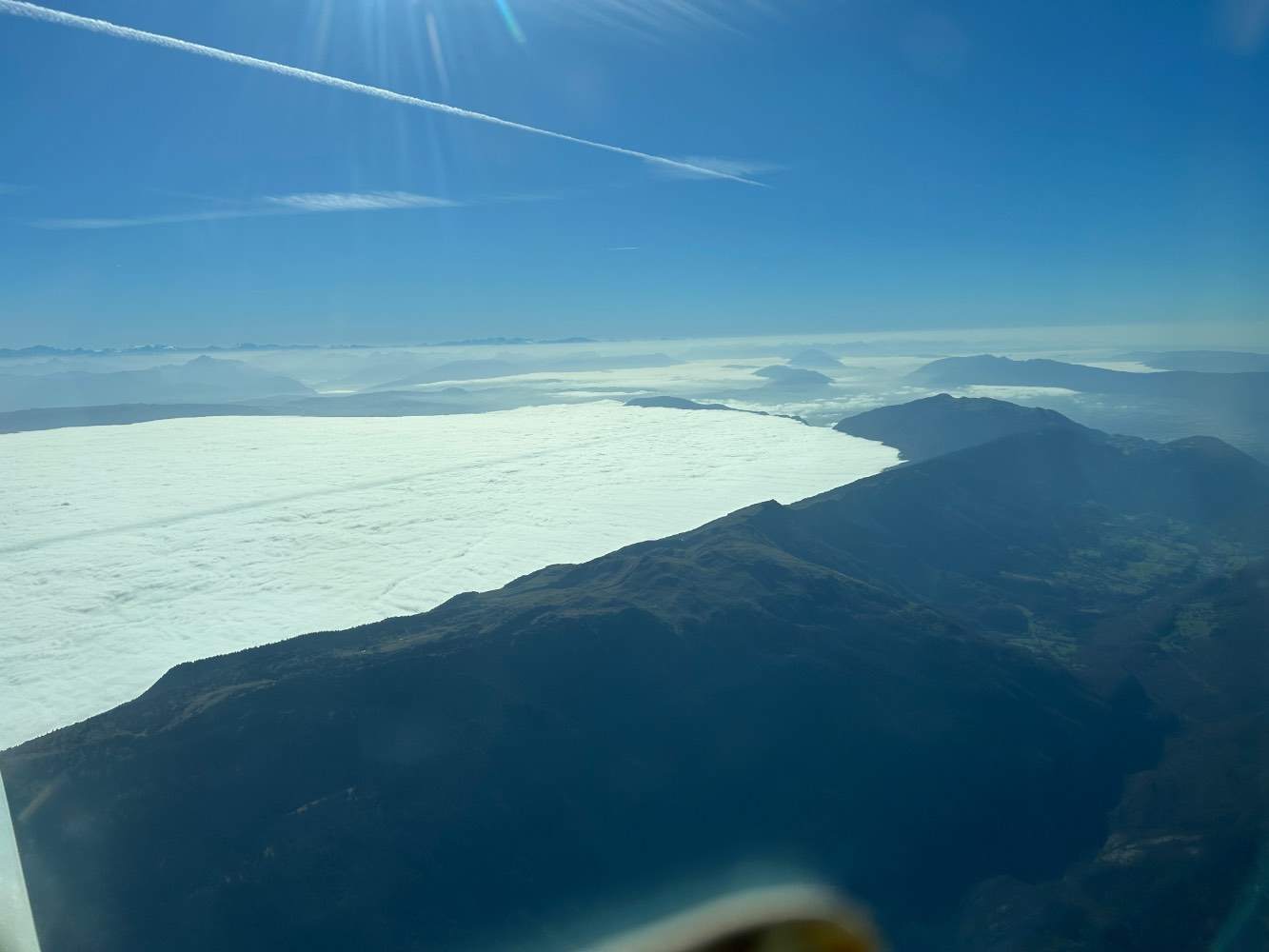
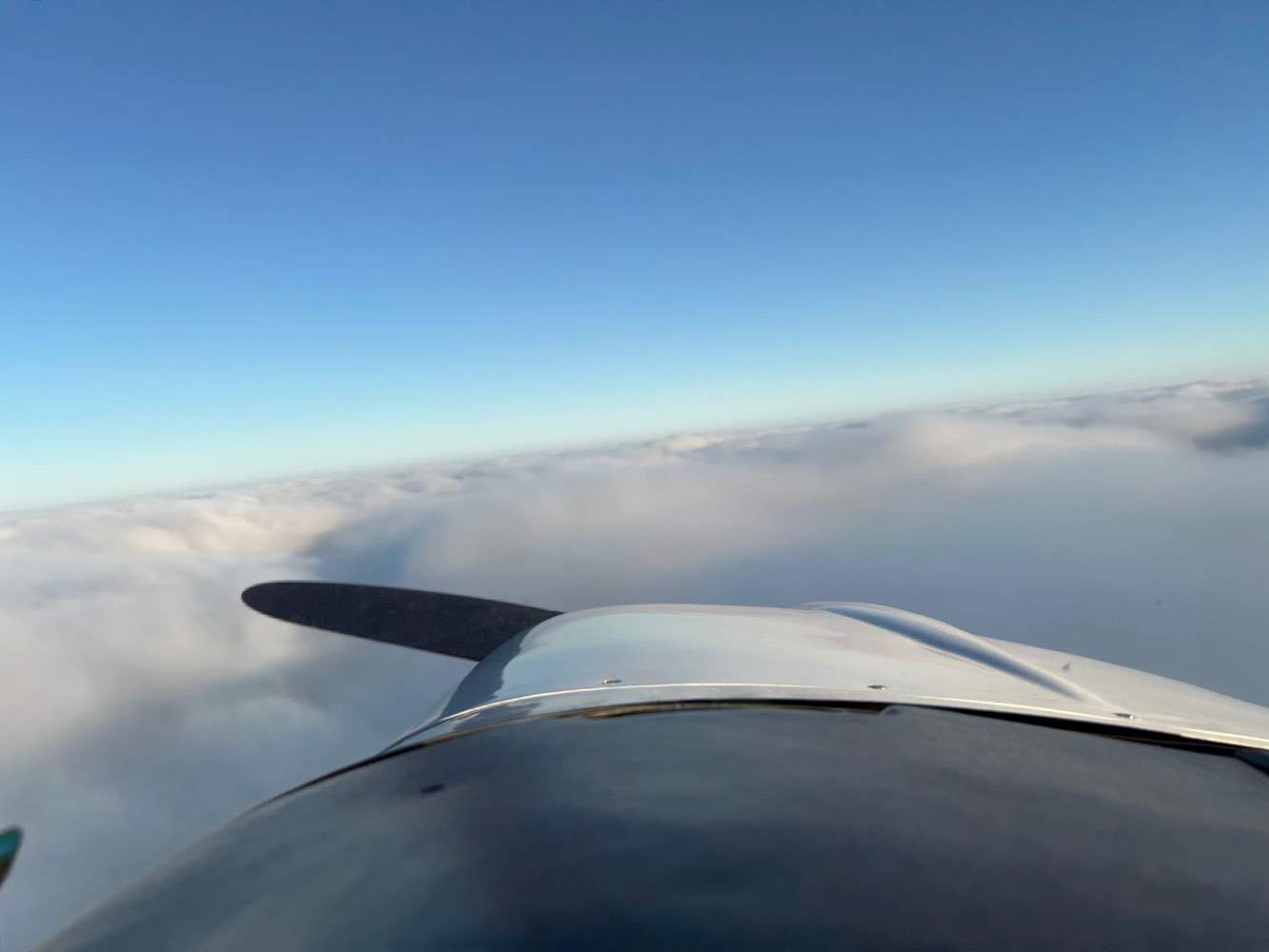
I flew to Biarritz, then north to Deauville - Normadie, east to Saarbrücken and then home with basically the same view Hours and hours for three days of nothing but high fog to the horizon in every direction. It was eerie...

 1 point
 -
I just finished up with the install of only the auto pilot to my already existing Dynon system, I paid for 60 hours for the install. oh, and just a sidenote, I love the auto pilot1 point
-
I just dropped my plane off at Cole Aviation in dalton, ga. He’s always struck me as a good guy.1 point
-
25 hrs, and four(ish) months. My typical flight is less than 2 hrs. If I’m on a long cross country, I’ll extend the hours until I get home. I cut the filter and pull the sump screen every time. I had an engine shop tell me that even more important is to get a paint filter (that goes over the top of your pail) from Home Depot and screen the oil as it drains. I also use a clean pail and inspect the bottom for shiny stuff after I dump the oil into my haz waste transport can.
 1 point
 -
Whenever it turns black, 25+ hours1 point
-
[emoji15] 25 hours change oil. I change filter every other oil change (@50) Sent from my iPhone using Tapatalk1 point