Brian E.
-
Posts
356 -
Joined
-
Last visited
Content Type
Profiles
Forums
Blogs
Gallery
Downloads
Events
Store
Everything posted by Brian E.
-
My tongue in cheek response to the 1st question--Bernoulli, Newtown and the PP ACS As you recall in that configuration you're in the area of reverse control. The power setting controls your altitude--mo' power more altitude, less power less altitude. And, since the prop is full forward the MP directly controls the RPM. How long are we talking about? It really should be a 5 - 10 minute evolution. The ACS expects the applicant to demonstrate "coordinated straight-and-level flight, turns, climbs, and descents with the airplane configured as specified by the evaluator without a stall warning." As you can imagine a seasoned pilot could do that pretty quickly but mock students would take a bit more time as would a real student.
-
Fellow Mooniacs - with the Winter upon us I'm on the slow train for completing my CFI training in our beloved C. One of the challenges I am facing is slow flight and the prop no continuous operating range (65C, B hub, 2 blade hartzell, 2000 - 2250 rpm red arc). If I recall correctly, configuring the plane for 75 MIAS (1.3 * VSO), gear extended, full flaps and prop full forward requires ~16.5 or 17 in. MP giving me just about 2150 - 2200 RPM on the prop--solidly in the red arc. When I did my commercial training in the Mooney I never hung out in that zone, I just transited it on the way to power off stalls. Now I'm having to instruct mock students on slow flight and find that it requires sustained flight in the red arc to demonstrate proficiency while in this configuration. Anything I'm missing? Do you just not perform slow flight training in your aircraft? Appreciate your insight.
-
@Andy EdsonCould you post the answers here as well? These are good questions for respective buyers that we all could benefit from.
-
Glad to have you on MS Corey.
-

Single Piece Avionics Access Panel STC? (Pre-J)
Brian E. replied to Trenta's topic in Vintage Mooneys (pre-J models)
You have "wings" on your oil access screws! I need a flathead screwdriver to open mine. I'm jealous and calling the Feds as well -
Emergency Landing | Baggage Door Blow Off Mid Flight | Model K
Brian E. replied to RedSkyFlyer's topic in General Mooney Talk
Agreed--not happening. I've busted many a car window and plexi/lexan windows from the outside and they are challenging. The glass piercing hammers work well on...glass. I haven't tried them on plexi or lexan from inside but I'd be surprised if they work better from inside the plane. -
Before-During-After Panel Upgrade Thread
Brian E. replied to 0TreeLemur's topic in Avionics/Panel Discussion
Yes you are--very nice! -
Damn...the orange was nice but that is slick!
-
Thinking about putting my 252 up for sale
Brian E. replied to xavierde's topic in Aircraft Classifieds
1. Don't do it. 2. If you must offload the K and if you really twist my arm I would do a fellow MSer a solid and swap you straight up for my C. Same color scheme -
Current Fluctuations in Cruise -M20C
Brian E. replied to 0TreeLemur's topic in Vintage Mooneys (pre-J models)
@0TreeLemurI'm similarly equipped as you: EDM900, generator and a zeftronics regulator. Most of my lighting is LED aside from the wing tip strobes. I commonly see fluctuations from a low of 4 - 7 amps to a max of 15 - ~20ish amps with everything on. Voltage always remains constant at 14.1 or 14.0 volts. If i saw a 30A or greater charge I would start looking for the smoke to be releasing from something. -
Can we cross the border to pick it up? Curious if a plane purchase qualifies as essential. Wish I had the funds
-
Please update us and let us know what the tab for this epic circuit was!
-
Need one of those! That and a pile of cash. Good luck.
-
My old C is going to be on the market again...
Brian E. replied to ragedracer1977's topic in Vintage Mooneys (pre-J models)
Good looking plane--well equipped for the price. And perfect with the J-bar! -
Before-During-After Panel Upgrade Thread
Brian E. replied to 0TreeLemur's topic in Avionics/Panel Discussion
Before. Certainly you'll note the RMI and state of the art LORAN. During: After will be once the GFC 500 is installed!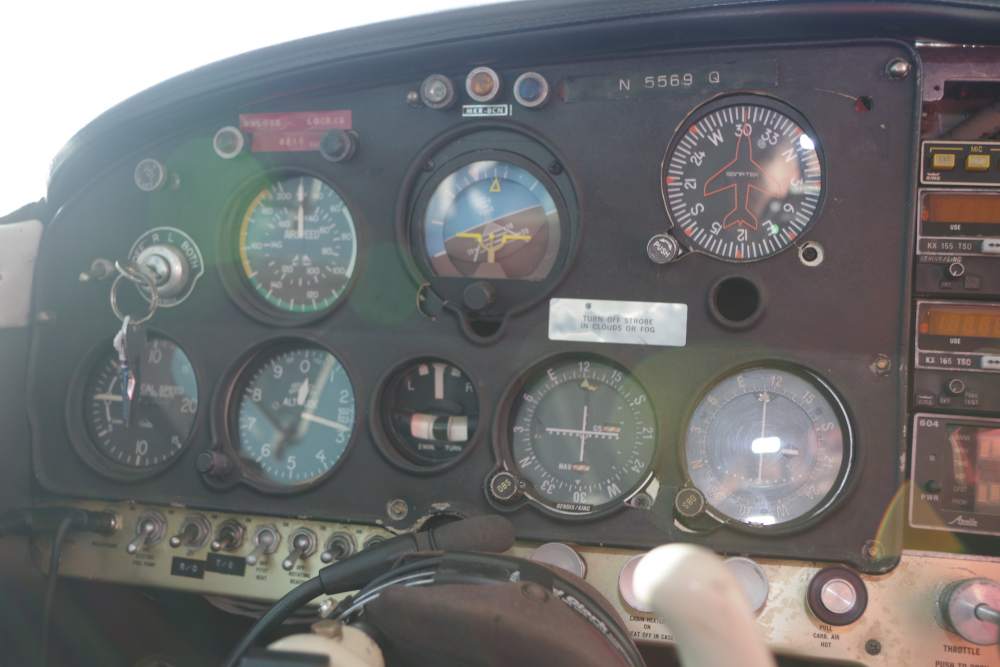
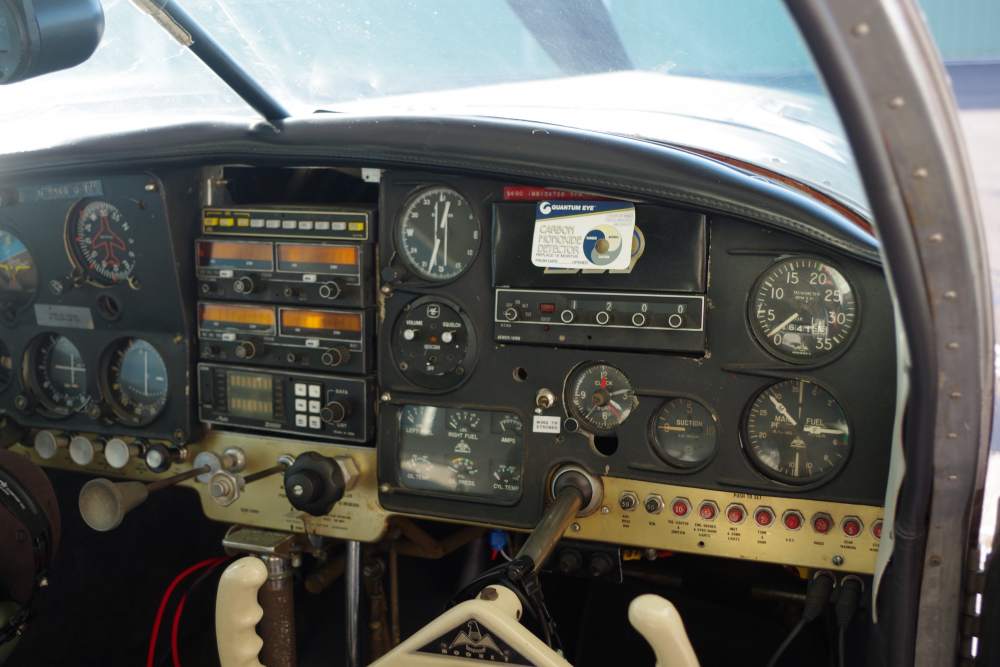
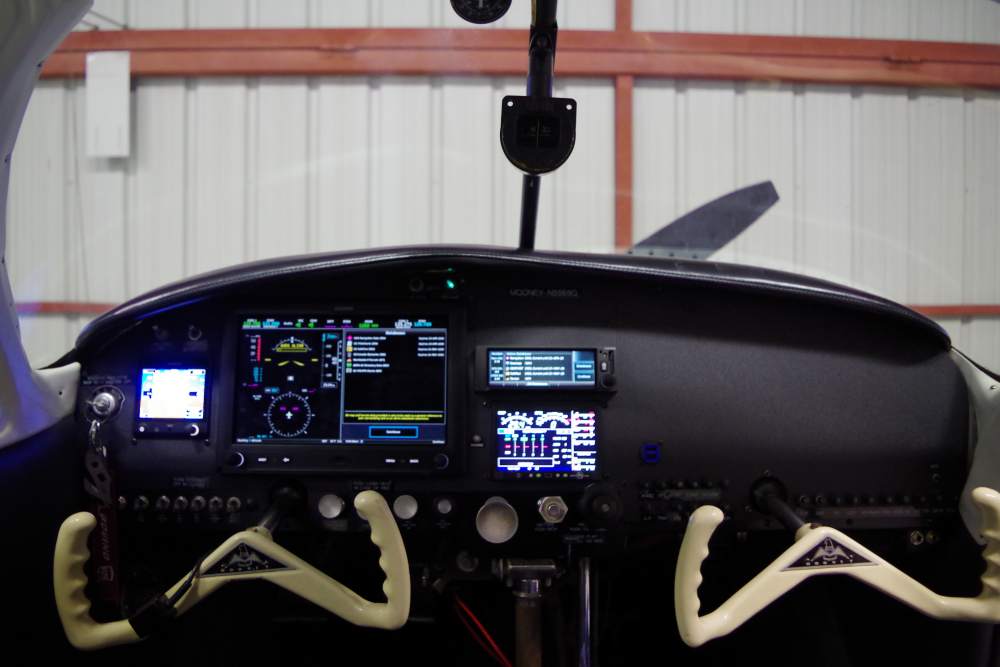
- 76 replies
-
- 13
-

-

-
Damn--that's rough. Hope they're not flying today.
-
PA24 long distance flight ends in a dwelling
Brian E. replied to tigers2007's topic in Mooney Safety & Accident Discussion
With ADSB out all of my flights show up on FlightAware. He did cruise at 8k so I would assume that he was flying IFR. I haven't listened to the audio to verify or determine if he was just cruising at an IFR altitude versus IFR services/flight plan. Edit: I just listened to the recording and he was receiving IFR services, cleared approach VOR or GPS-A approach and advised of the low ceilings (300 is what I heard). Certainly too low of a ceiling for a circling approach. Time will yield more answers. -
How do you Hangar, "Tail In", "Nose In", "Taxi Nose In"?
Brian E. replied to RLCarter's topic in Miscellaneous Aviation Talk
Tail end T-hangar plebian here. When I was passing through N79 I followed a Senecca who taxied into his hangar. Yes, I was jelly! -
I live in New England and would fly around here if you're ever in the area. What kind of profession works 14 days on? Merchant marine or oil work???
-
So awesome--congrats. Keep 'em flying!
-
3434X is finally airborne again! (Video)
Brian E. replied to Nukemzzz's topic in Vintage Mooneys (pre-J models)
Well done. Congrats! -
I'd like to see a Mooney on floats!
-
Do you prefer to be called a hoarder, packrat or an archivist?
-
I've done a number of p-offs bombing in at mid-90s/almost 100 and can pretty much say that is too fast/too much energy. That's the game here-energy management. My technique is similar to Paul's is except I withhold flaps and use flaps only once I know I have enough energy. This Fall I practiced a lot with LLWS and stronger winds (40 downwind push at pattern altitude and 15 - 20 at airport elevation) that required turning base within 3 secs of being abeam the landing point. Early flap deployment would have precluded from making the runway. My only absolutes are that I would never turn base without the gear down and I would never pull the prop back to stretch the glide--everything else is fair game. Disappointing that your DPE feels a needs for copilot brakes. I'd find another DPE before going back to the 172 as the Mooney is way easier to fly. Where are you out of @Pilot boy?
-
Yes for sure. I'd done it before with a CFI in an RV and felt very comfortable doing it be myself. Additionally while practicing Power-off 180's I'd become very comfortable flying the aircraft at idle using all the energy management techniques. At my home airport I'd take off RWY 33 perform a normal takeoff (gear up, flaps up, etc) to the designated altitude, pull power back (carb heat as needed), wait 4 seconds to simulate reaction time, turn into the cross wind and begin the approach. I retain gear up until runway assured and added flaps to assist with descent rate as needed. Then I'd perform a touch and go on RWY 15 and do it again the opposite direction and do it again. I'm sure I glazed over some key points. Such as not loading the aircraft, 35 - 45 degrees of bank and not skidding the turn. Finally recommend using an experienced CFI. The bottomline for me is that I always briefed a turn around altitude but had never tried it out, now I am confident on what altitude will work and that I can safely recover the aircraft.