Leaderboard




Popular Content
Showing content with the highest reputation on 01/28/2026 in all areas
-
When I got my 231, the logbooks showed 4 cylinders had been replaced. Before I learned better, at an annual, the shop replaced a cylinder due to "low compression". After that I studied up on Continental's recommendations on low compressions; ie. fly it an hour or so and check again. I never replaced another cylinder.4 points
-
@kehdri: My paper copy of the M20K Illustrated Parts Catalog shows the Optional Equipment Group - Oxygen system. Attached is a file with the info that may assist you. The last page in the file (pg. 452) shows the effectivities symbols appropriate for your aircrafts serial number. Jeff M20K Oxygen System Parts Catalog.pdf4 points
-
I maintained a Turbo Arrow, and took the engine to 2600 hours without a cylinder replacement. I put new rotocoils on the exhaust valves every 800 hours. By 2600 hours, the decision was made to overhaul because the oil consumption was a quart every 3-4 hours, and the compressions were in the 50's. We used Camguard on this engine, and did a ring flush at the same time as protocol replacement. The key to Continental longevity is replacing the rotocoils on a regular basis, so the valves will stay spinning.4 points
-
@MikeOH I installed a surefly in my tsio550. Hot starts were a one shot or wait before the surefly, even then it was not a 100% success rate. Warm starts were always very difficult. Prior to the surefly, LOP for me was fair, but I have had engines that operated smoother . Once the surefly was installed all the roughness I felt with mags went away. I also did not see any elevated temperatures like others have reported. I changed one mag to a surefly because I had a mag failure and I was pulling the interior anyway, the labor was going to be a good bit less, so figured now was the time. I also liked the fact that the ignition would be from two different modalities. In the acclaim I have two batteries, and two alternators so it would have to be a pretty catastrophic event to lose all of those power sources at once. If they can get an STC for variable timing, I would seriously consider putting two surefly, but with fixed timing I don’t see a benefit and I like having a standard mag and emag. One other thing I have noticed is that I see no rpm drop with the emag when the standard mag is off. My other rational was that while an electronic magneto may be new to airplanes, electronic ignition is NOT new by any definition. I’m willing to bet that 2400 hours was a very conservative estimate.3 points
-
I have decided to call it quits. At 87 years old, no insurance company will offer me a quote, liability or hull coverage, in a Mooney. Worse yet, I have not been flying enough to even begin to justify the costs (as if I ever could). But worst of all, the frequency of my flying does not allow me to remain proficient. I am not likely a danger to myself or others in good VFR conditions, but somewhere, sometime, I know that I would extend a little too far with weather considerations, and I just don't need that risk. My plane is up for sale, I will still be keeping up with Mooneyspace, and all my friends here. I still plan on continuing "Visors By Muncy" and hawking my wares (Visors, cabin light timers, tugs). Don2 points
-
If you’ve updated all the accessories as well as you say, looking for a field OH from a good shop in advance of being forced into overhauling is probably a good idea. One of the benefits of factory reman is getting all the accessories oh as part of that, but if you’re happy with yours, a shop could just focus on the engine and probably be “cheaper” than factory. Cheaper is in air quotes though….2 points
-
Gibson has been around a long time and they are the cut-rate place. Around here (TX) if someone is selling an airplane they use Gibson. If someone is keeping an airplane they use J & J in Pleasanton TX (https://www.jjairparts.com/?gad_source=1)2 points
-
Sure, but in the context here, of high-time engines I posit a heretical question: Is there really any data that even shows correlation, let alone cause and effect, that over TBO engines fail catastrophically at a higher rate than low time engines? IMHO, I'd be more nervous about a catastrophic failure on a new engine or fresh overhaul.2 points
-
MIke Busch has replaced cylinders (only when absolutely necessary) on the TSIO-520s in his 310, but one of his engines is now more than 5,000 SMOH. Busch is a fan of using the borescope regularly, lapping the valves if necessary, and replacing rotocoils as necessary, but refuses to split the case based on hours. Not the same engines, but the 360s and big-bore Continental's have a lot in common. https://www.savvyaviation.com/the-great-beyond-tbo/2 points
-
@Z W I believe in on-condition, but with the amount of time on the lower half of this engine, this is a good suggestion. This is not a nearly-bullet-proof Lycoming O-320 or O-360 that regularly go to 3000 hours. There are a lot of the Continental TSIO-360 engines that don't come close to TBO. The way you've flown it has paid off, but the present engine doesn't owe you anything and as fast as engine prices are going up, you might actualyl save money in the long run, even if you don't squeeze the last 100-200 hours out of it. Getting stranded somewhere with an engine failure limits your options on overhaul and you probably won't get a core value at that point. Plus I doubt that putting it down in a field is a lot of fun either. It isn't an easy decision to make, since this is the point in ownership that, once you overhaul or buy an engine, you will for sure have more into it (purchase price, upgrades and engine - not maintenance) than you can sell it for. But that's not counting the "free" hours (1000 past TBO) you got from it already. Someday when the time comes to sell, you'll have to account for a 2800 hour engine one way or another. Peace of mind is worth a lot also. New engines do have infant mortality, but Continental and Lycoming have really improved quality control on new engines. On way-past-TBO engines you're prone to hearing sounds that aren't there at times - wondering when it will fail. (I bought my first airplane, a C-172 at first run TBO and ran it 500 past but was always wondering where I was going to put it down if it failed. It was unfounded though since I heard many years later that it had 4000 hours on the bottom end and only one top overhaul during that time. But again yours is not a 4 cylinder Lycoming) Talk to Continental at Sun N Fun or Oshkosh, sometimes there are some deals or accommodations that aren't published . . .2 points
-
Tooling cost low production high cost 99% of the emails I receive are asking about cost and not quality. My turbine customers never ask cost .2 points
-
I absolutely guarantee that most were replaced unnecessarily. I sold a plane about four years ago. In the prebuy they said a cylinder needed to be replaced due to low compression. I acquiesced to get the deal done but was very skeptical. They buyer took the credit, but didn’t replace the cylinder, two new owners, four years and 360 hours later it is still flying on that “bad” cylinder.2 points
-
I know this reads like sad news, but there is a bright side here that's worth celebrating. You made it to 87, healthy enough to fly, with a lifetime of aviation behind you. Even more impressive, all those years and all that experience haven't dulled your judgment: you recognize that flying less often, especially in IFR, can put you in a place where "just one more push" with weather could end badly. That level of self-awareness is rare and admirable. I hope someday I'm in your position: able to look back on decades of flying and savor every moment, knowing I did it on my own terms and with a clear head. One more positive side to it: now you will be “flying for free” with fellow mooniacs who would gladly cover the gas just to spend a few hours in the cockpit with someone who carries even a fraction of your wisdom.2 points
-
Hey guys. Recently had my tank on my 1980 M20K replaced with a new composite and the regulator rebuilt. The guy was able to use my old regulator from the steel tank and put it into the housing for the composite tanks. Gave me all the paperwork so a nice clean job. I was told by many of the suppliers that there was no option for a composite tank on my TC aircraft. Turns out, they were wrong. Although I don't know how many people there are that would be willing to do what he did. He was amazing and very fair. If anyone needs contact info, let me know. But, turns out I have a leak. My mechanic was working on the re install in my hangar and sent me the pic below. I dont have any other pics because I am out of town for a few weeks and he is waiting on me to find parts. I'm trying to source this part, but it doesn't look like it exists. Lasar found the part number, but never called me back. The repair will likely have to be done on the existing pipe, or customize a new one to fit. Part number he gave me is 870007-009 As far as I know, that is the tube that runs from the front of the rear O2 outlets, makes 2 90 degree bends, then runs to the front O2 outlet. It appears there is a small crack on the ferrel and I assume the leak is coming from somewhere in that connection. I have spoken to a Mooney service centre and the guy told me that they normally repair these using Swagelok fittings. On their website I have only been able to find SS fittings and I have no idea which ones I need, or even if they include the ferrels or not. I am told these lines are aluminium as are the fittings, although someone has previously repaired mine (before I owned it) with a brass coupling. I assume I will need to replace the damaged one, then likely have to cut one down either end of the tube and then couple in another section further down the line possibly relocating the brass coupling, or eliminating altogether. Any advice on where I can get the required material to do this kind of repair would be greatly appreciated.
 1 point
 -
We just got a couple of Gibson cylinders in that the customer supplied for a bonanza, they painted all of the flanges, but they didn’t paint the barrels black, and they also painted the exhaust port. So by the time we stripped the paint under where all the base nuts go, and we stripped the paint off the exhaust flange that takes time to do. And then we had to put the cylinder on the second day to get the paint stripper time to work. The honing looks like it was done with a bottle brush by hand, and the scratches were 45 degrees at the bottom of the barrel and 30 or less at the top of the barrel. We didn’t even have time to check the choke and out of roundness and the bore diameter but I bet you that stuff wasn’t straight either. It looks like a bottle brush hone was used on the cylinder and then they painted it with a rattle can in nine minutes and sent it out. I wouldn’t put a Gibson cylinder on my Neighbors weedeater.1 point
-
Dang, that’s awesome! I use to stare at one they have on static display near the main gate at Wheeler AAF on Oahu. I was stationed there for a while and it was where the few AAF aircraft that got airborne for Pearl Harbor took off from.1 point
-
To stir the pot, my engine doesn't run smooth LOP, so these are all ROP hours. I do keep the CHTs under 380 at all times, easy to do with adjusting the cowl flaps. 120KIAS full power climbs to cruise altitude. Always have kept TIT under 1625, but lately I keep it a little lower, under 1600, at the price of .3-.5 GPH. Usually cruise 70-75% power. No idea if this contributed to the engine's successful run or if I've just been lucky. Your mileage may vary.1 point
-
I mentioned infant mortality in my post and for sure it could happen on any new or overhauled engine. On most engines I agree with you on over-TBO engines having proven reliability, but not the TSIO360, if you personally haven't flown all of those hours from new. I've had a couple of them and if you fly them very conservatively (CHT 380 or lower) you stand a better than not chance of hitting TBO with a set of cylinders half way. But early on Mooney and others marketed these as speed demons and put in the POH very high temperatures as being acceptable. The redline on the factory CHT was 460!!! On a hot day with the cowl flaps closed and not-so-good baffles you had a hard time keeping it in the low 400's. At least I did when I first bought my 231, until going to my first MAPA convention and sitting in on a the K model forum. High temps didn't turn out so well for most owners, as described in the post i made yesterday with the Dropbox link to the history of the TSIO-360 engine. On this engine, the more times the airplane has changed hands the greater the chances are that it has been flown incorrectly by a new owner. @Z W has flown this one correctly and that's why he has been able to run it to 2800. But personally at 2800 hours TT I would feel more comfortable changing out the engine with a factory engine and feel that my chances would be better with the new engine. Others may feel differently. We all make our own choices. One of the reasons I traded my '83 231 for a Bravo in 1996 is that mine was getting very close to TBO and it was using more oil than I was comfortable with and once I ran the numbers on a new engine, even back then, plus all of the improvements on the M20M it helped me justify trading for a new airplane. (You need a lot of justification to do that, and I'm pretty good at convincing myself . . lol). Ironically the next owner of the 231 converted it to a 262, just like @Z W's airplane, which, thirty years later now belongs to @geoffb on here. My 1996 Bravo now belongs to @Patrick Horan on here. . . the list goes on . . lol.1 point
-
No Mike likes straight weight mineral oil for turbo's same as NA engines. However, its the Turbo airframe POH's that will recommend using multi-weight because the multi-weight oil's viscosity will change less as temperature changes which translates to more stable automatic wastegate performance with less tendency to overboost with cold oil and under boost with warm oil. Mike though would rather have the better corrosion protection of straight weight oil and is less concerned about MAP variation. I on the other hand prioritize minimizing MAP variations use the multi-weight oil. Its a trade-off. Otherwise, Mike only recommends multi-weight oils for those that need to do colder starts without pre-heat. Here is some more detail on why he actively discourages the synthetic oil: The one oil that we actively discourage our clients from using is the semi-synthetic multigrade oil Aeroshell 15W-50. This oil has a number of problems: Poor anti-corrosion properties. History of producing high copper readings in oil analysis. History of aggravating TCM starter adapter slippage. History of aggravating oil leaks. All these symptoms are caused by the synthetic PAO (polyalpholefin) that makes up 50% of Aeroshell 15W-50. PAO works fine in automotive engines that have very low blow-by and operate on unleaded fuel. For piston aircraft engines that run on highly leaded fuel, we don't like the stuff. Mineral-based oils without synthetics work much better. For all the other details and his recommendation to stick to 100% mineral oil with Camguard see his most recent guidance on oils and oil changing here:1 point
-
Prior to our ownership 2 cylinders were replaced due to low compression. Logs didn’t have specifics on why they had low compression. The one we replaced was low compression more specifically past the rings we tried using Mike Busch’s ring flush procedure but it didn’t help. The amount of blow by was outside the tolerances allowed by what the continental crank case pressure test said was acceptable. So we replaced the cylinder with an overhauled one. (We had purchased an extra cylinder when we bought the plane. Still coming down off covid parts delay at the time, there were several months lead time and we figured we would need one eventually and figured it was a cheap way to insure against long periods of downtime.)1 point
-
Have you tried calling a shop like Western Skyways who does a lot of engines and see what parts are long lead time? I actually thought the OH time for TCM TSIO-360 engines was coming back down towards a couple months except for maybe cylinders and those could be pre ordered. Of course all bets are off if you need any major internals. Another good option is to just order that factory reman sometime in the next 100-200 hours. When it arrives, replace the engine. Maybe you gave up the last couple hundred hours you could have squeezed out of the current engine, but you have very little downtime as the tradeoff.1 point
-
Don, my wife and I met you at MooneyMax 2024 in Fredericksberg, TX. A group of us, along with you, stayed up late one of the nights in the lounge having drinks and telling stories. If I recall correctly, you closed down the place with us, but didn't have any alcohol while I think I paid the consequences for my behavior the next day. I guess that's why at 87 years old, you can still fly an airplane- you make good decisions. See you at this year's MooneyMax. - David1 point
-
If Gill is def saying no availability, try KTME or KIWS. KTME is kinda like an aircraft HILTON1 point
-
My business partner went with me to pick up the airplane after it was deregistered in Canada and all squawks fixed. He generated all the flights from flightaware and overlayed them in some program that I don't know about.1 point
-
A note on cylinder replacement - 3 of the 4 cylinders we replaced, I think were maybe done prematurely or even unnecessarily. It was earlier in plane ownership and at annual the shop would just say, "Compressions are low, recommend a new cylinder." Not once did the shop talk about Continental's recommended procedure to go fly the plane and re-measure it. Either the shop didn't know, or was taking advantage of an owner who didn't know. Wouldn't use that shop any more but the people involved are gone anyways. The last cylinder we replaced did have compression in the 40's that wasn't fixed by lapping the valves. After lapping them it actually had high CHTs (about 410 in climb) and I just turned around, landed, and said replace it. That's the only one I'm pretty sure actually needed to be replaced, though I've since wondered if the CHTs and valve lapping were even related. Replacing them is a cost but not that big of a deal. I have wondered how much of the reputation of these engines "needing new cylinders" is from this type of thing.1 point
-
My TSIO-360-MB was installed new in 1988, 2828 hours ago. It got an "IRAN" in 2004, 1436 hours ago, which included all new cylinders, lifters, and main bearings. No idea why they didn't do whatever else was necessary to call it a major overhaul. Since then, we have replaced 4 out of 6 cylinders again. We've overhauled the turbo, wastegate, turbo controller, fuel pump, prop governor, exhaust in the last 14 years. Have replaced all the fuel lines, almost all of the oil lines, a few seals and gaskets every year it seems. Replaced 20+ aged adel clamps under the cowling last annual. Now overhaul the starter and alternators pre-emptively every 500 hours. Currently changing the oil every 25 hours, checking the filter, watching oil analysis, and hoping that engine shops get less busy so that the downtime won't be too bad when the time comes. Burns a quart every 5-6 hours, compressions are good, no issues. Considering trying to find an engine core to get rebuilt, or ordering a factory new to swap, then selling the current engine as a core, or even keeping it for spare parts, but the TSIO-360-MB is rare and never seems to be for sale on the salvage sites. Having the current engine overhauled with 9+ months of downtime is essentially taking a year off of flying. All options are expensive. I do want to overhaul before it starts making metal and fills the case with debris to damage the internal parts. I'm thinking in the next 400 hours or so, which would be "TBO" from the engine's major IRAN. At my rate that's 4-5 years of flying. The engine has been strong and reliable. The accessories, less so, but often those aren't replaced during major overhaul, or are only really expected to get 500 hours or so. You see planes for sale with "fresh overhauls" but 20+ year old hoses and rusty accessories. The devil is sometimes in the details. True of all aircraft engines as far as I can tell. I now try to replace each component about the time it hits its expected end of life. This has greatly improved dispatch reliability.1 point
-
This has been talked about extensively over the past 2 years on this forum. There was a guy on here who took the task to a respectable level as he reverse engineered the boot and worked through alternative materials for production. He gave up, lost interest, or went underground with his work as there was plenty of skepticism and questions regarding legalities from fellow Mooney owners. This part is a obviously a critical part that will have catastrophic consequences upon failure. https://www.msn.com/en-us/news/technology/plane-crashed-after-3d-printed-part-collapsed/ar-AA1RJalY -David1 point
-
...In every phase of flight it is a really great improvement in performance and in cylinder temperatures! Last Year I bought a Turbo Plus intercooler kit from Jeff Shapiro for my Mooney M20K 231. First, the delivery was very fast and second he gave me a special price for me as member of MAPA. When I unpacked the kit, I was very happy about the really great quality of all the parts. Welding, tolerances and so on. I installed the kit in two days and it was a great pleasure to do. The fiberglass work at the cowling is also very easy, but needs a little bit of trim. When I had finished all that work and the final adjustment of the TCM injection system, I went flying to see what it will improve. First was, that the intake air immediately cooled down about 30 deg. Celsius in the takeoff run. I operate my Mooney from a 750 meter asphalt strip. After takeoff, in the climb it was cooling by 45 deg. Celsius and raised to 55 deg. in higher altitudes. I think the NACA duct is at the optimum position. Much better and more efficient than by the 252 model, because it gets directly cool air from the outside and not via the cylinders inside the cowling on the right side in the engine compartment. In cruise I have now much cooler cylinder head temperatures , mostly about 320 deg. Fahrenheit with 75-85 percent of power. I was flying now for approx. 9 month with the intercooler and in every phase of flight it is a really great improvement in performance and in cylinder temperatures!! So finally I think that is one of the best mods for a 231 model. Regards, Alex Haselmann D-EMLL Mooney M20K

(1).thumb.jpg.037202eda3e765225099acc7b7747cbb.jpg) 1 point
1 point -
I installed my surefly years ago. Hot starts are much easier, I can go very LOP if I want, and It's smooth. It also has not created any noise in my radios. When it's time for my magneto to be rebuilt, I'll do a second surefly.1 point
-
Which is which again?1 point
-
Negative, just went through annual and had them inspect it they said it looked good.1 point
-
Which way did HAL lean?
 1 point
 -
Not on long bodies (especially with extended range tanks left nearly full) . I think Don Maxwell was mentioning that on heavy long bodies that they don't pass the test after about 6 years.1 point
-
I think that is THE distinction between a true professional and 'amateur hour': fixing vs creating problems1 point
-
If I was in the market for a 231, I would get in touch with Don before this hits the market and the sharks start circling. He has owned it since the 90's and it has been maintained well. I'm sure he would like it to go to a Mooneyspacer, so he could follow it.1 point
-
I can't help you on the part. but on my 1966E the same area around the flap and trim indicators were coming apart. I removed and patched/repaired (from the rear side) with fiberglass. Sand paint done. It came out decently. My surfboard repair skills while not the best came in handy. the most difficult part was dealing with the cables and fasteners for the flap/trim indicators.1 point
-
The wooden tail is not banned but requires repetitive inspections. Very few left but one located by me and still airworthy. David1 point
-
I was told by a VERY reputable MSC that old, compressed discs are more likely to contribute to fuel tank leaks due to landing loads not being absorbed as well as new discs. So considering the cost of a tank reseal, these jacks seem like a good idea.1 point
-
I just installed a SureFly on my 1970 F, left mag, replacing the Shower of Sparks magneto. So far have been happy with it, but only a few hours flown. Starts nearly instantly cold - almost 'first blade'. Don't know about hot starts yet. Right mag was overhauled. Maggie harnesses installed (highly recommend them). No radio noise from the ignition. Hoping for a long life on this unit....1 point
-
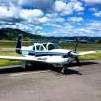
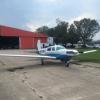
I installed the Turbo Plus intercooler in Myrtle a couple of years ago. In the summertime I will occasionally still need to run with the cowl flaps in trail. I typically fly in the mid-teens or lower flight levels and rarely can I keep the cowl flaps completely closed in the summer. With the cowl flaps closed the temps will get above 380, but in trail they will typically run around 350 degrees.1 point







(1).jpg.8df8cbd4f91fc5dff4349d43d58610a6.jpg)
.thumb.JPG.3f268b2d012c9aee0a0bf2a4f41e7faa.JPG)