Leaderboard




Popular Content
Showing content with the highest reputation on 12/09/2025 in all areas
-
@TaildraggerPilot you can always rely on that guy to show up. I’ll take dealing with a motor needing service every 50 years well before I fly around like a hobo yanking on a stick.4 points
-
Got my complex endorsement on Friday, took her for a quick solo flight Saturday, and finally brought her home to the hangar for the first time Sunday. It was a great weekend.
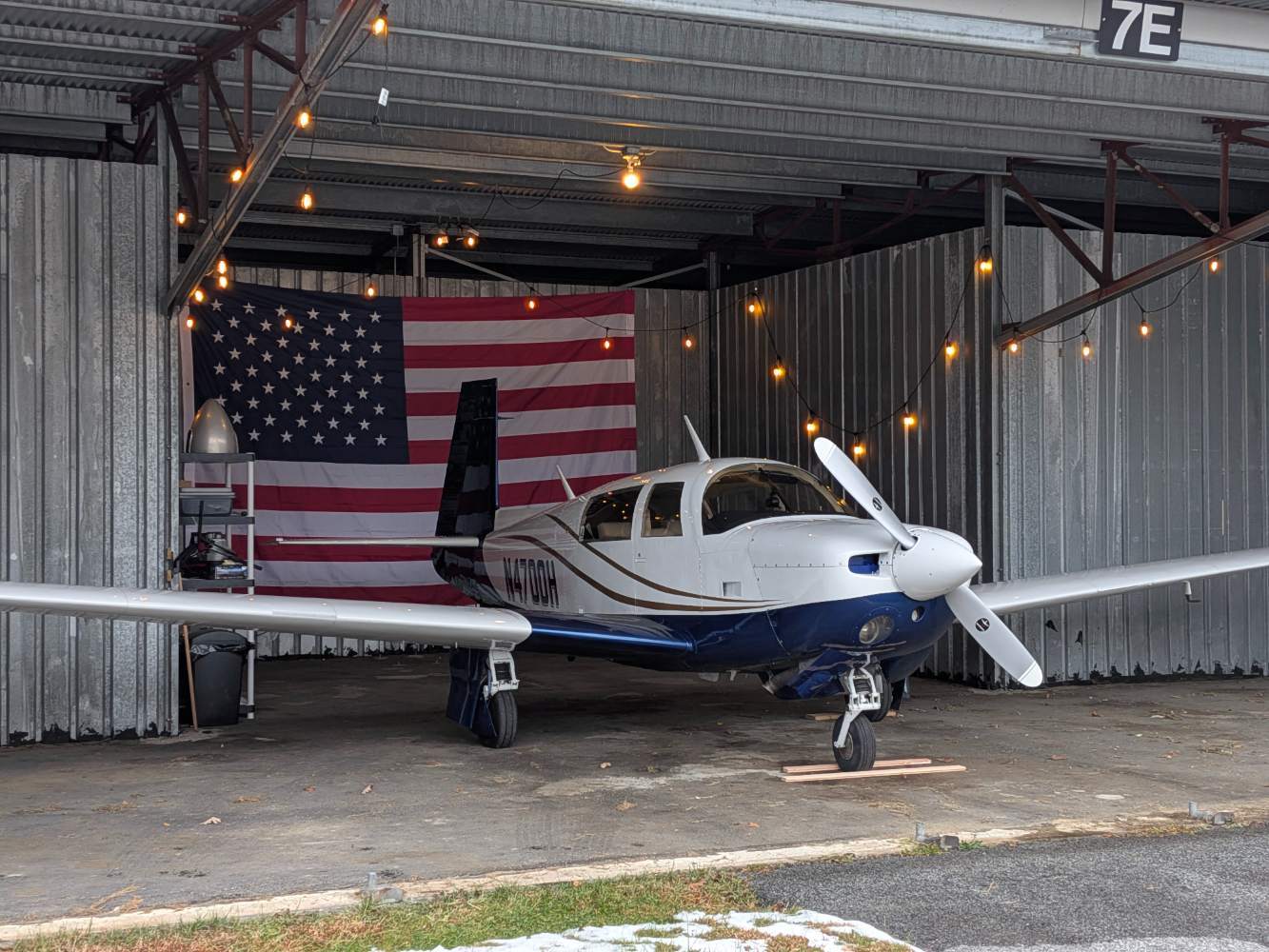 4 points
 -
Whoops i mixed up rocket with missile. I will go back under my rock now.3 points
-
The biggest failure mechanism isn't the actuator -- it's the pilot. Just look at all the gear ups. And, it's not that people are stupid or careless -- a lot of very experienced pilots have gotten distracted and missed the gear. I used to be in a club in San Jose that had a manual gear M20C that managed to get bellied in twice.2 points
-
Put a small load on the battery when out of the aircraft; maybe a small 28V bulb. If the voltage collapses you'll know it's the battery.2 points
-
CTRL-ALT-DEL it.2 points
-
I think I've heard of more gear collapses due to lock block or other J-bar failures than I have electric actuator failures that led to damage. I think Skip is on the nose that the most likely failure mechanism is the pilot.1 point
-
Thanks Skip, I'd never reverse bled a brake system, but alas, this old dog has been taught a new procedure / technique ( I hate the terminology of trick}. After reverse bleeding the "bad side" I had to do my "good side". NEVER have i had such solid brakes in many years of flying. Thanks Again & Merry Christmas !!1 point
-
I went thru this last year and would advise you not to mess around with a used one unless you bench-check it first for leakage. Seals are not available for many of these old ones, unfortunately. I had Century Instruments in Wichita mark a freshly-overhauled United ASI for my J and would recommend that course vs. gambling on some salvage/used ones.1 point
-
I got it done and it was relatively easy, although it took two people. I combined the advice from MikeOH and N201MKTurbo. I got a heat gun (Home Depot) and a skin wedge (Amazon) and [from the outside] had my son use the heat gun while I used the skin wedge to separate the plexi from the metal skin. It went pretty quickly once we got a rhythm. I then used the heat gun again on the inside to scrape off [using a putty knife] the residual sealant. Thank you for the advice everyone - I appreciate it! - Matt1 point
-
Yeah, the landing gear motor / gears need attention every 50 years. Well, guess what, 50 +/- has now arrived, or will soon enough, for a lot of Mooneys and the parts aren’t there or they are at LASAR prices. I’ll keep flying around like a hobo with my well maintained and balanced J-Bar, and you all can…… sit on the ramp. Enjoy!1 point
-
I switched to Concorde from Gill after buying my plane. Never had an issue. I tend to replace them after 4 or 5 years regardless if I feel they need replacing. This is probably a bit premature on my part.1 point
-
22 V open circuit voltage would be a 0 charge state. In a M20J, there are overhead lights connected to switches in the overhead. These are wired directly to the battery and will deplete it when left on. If the battery is dead, it might show 0 V in the airplane if the switch to the lights is still on. After removing the battery it might recover a bit which might be why it showed higher voltage outside the airplane. The test @MikeOH suggested would confirm. You can try charging it and then performing a capacity test to check the battery’s health. However, as others have said, Gill sealed batteries don’t seem to last long and your best bet might be to replace it with a Concorde.1 point
-
Makes sense since the GFC software resides and executes in the GI 275. The GI 275log file should show what errors occured.1 point
-
Lol. I agree Steve. Don't feed the trolls...1 point
-
I post this another forum but thought it would get more exposure here. Just got my prop balanced and oil changed when my plane was in for avionics next door. Started at 0.20 IPS @ 2400rpm Ended at 0.01 I'll upload the sheet if anyone wants to see it. Added 9ish grams in one place. Question: Oddly enough, after my first flight my prop stopped in different position, 2 and 8 o'clock. After my test run up a couple weeks ago (the fog has been killer here) it stopped at the normal 10 and 4 position. I don't remember it ever stopping like that before but I've only owned it since February. I always push it backwards the same way so I would have noticed the prop stopping in a different position before. Do your props always stop in the same spot without fail or is the occasional odd stop normal?1 point
-
Same speed in a 201 at 6000. If higher altitudes aren’t required, a 201 ER can do 1000nm with comfortable IFR reserves (landing with close to 3 hours fuel). 150KTAS nonstop is comparable to 170 with a stop (on 1000nm). Basically triple priced Mooney is the price of pissing on the ground instead of in the air1 point
-
My Ovation's sweet spot is ~10k MSL, when I start climbing above 12k I notice the performance drop and try to avoid doing so. I end up cruising 165 TAS LOP @ ~11 GPH. My daydreams are Turbo/Turboprop specifically to fly higher, faster, and farther. I couldn't imagine spending the Turbo money on an Acclaim or Rocket and then flying it low. Talking with Turbo plane owners the low FLs are where it's at. My "long" mission charts at the 928nm mark. But with MOAs and weather is always longer (1,153.9 and 7.9 hours last time). Hence my daydreams of flying higher and faster to get over those MOAs and weather. While a non-stop pencils out at 928nm it definitely doesn't over 1,100nm. The Ovation is a comfortable plane to be in, but I notice myself really wanting a break after four hours. I find flying 3-3.5 hour legs is much more reasonable and comfortable. Instead of the one-stop I'm likely going to switch to a two-stop in the future.1 point
-
You can make brushes by finding a larger brush with a similar flexible wire coming out the back and machining it down to the desired size. Springs and contacts can be salvaged from the warn out brushes or fabricated.1 point
-
That will do nothing to stop their ability to sap and impurify all of your precious bodily fluids...1 point
-
I replaced mywindows in my first Mooney years ago. I say this with the most compassion, If THIS is a roadblock you are way out of your comfort level and need to get assistance. Removing the old plexi is the easy part in the process.1 point
-
Take pictures and copious notes please. I'm going to be tackling the same on my 1970 F in the spring. Supervised by my A&P/IA, of course...1 point
-
Earlier this evening, after crossing the Mississipi River on a flight from Santa Fe, New Mexico, to Tuscaloosa, Alabama. Average g.s. at 11,500.... 194 knots! Hit 214 knots g.s. at top of descent. A new personal best.
 1 point
 -
Awhile back on Mooneyspace someone was torquing their silicone fuel sender gaskets and wondering why they were leaking. They were using foot pounds, not inch pounds and mutilating the gasket by using 12 times the force needed.1 point
-
Flying over Mt Ventoux on the way back from Corsica, this was right after sunset (before official night)


 1 point
 -
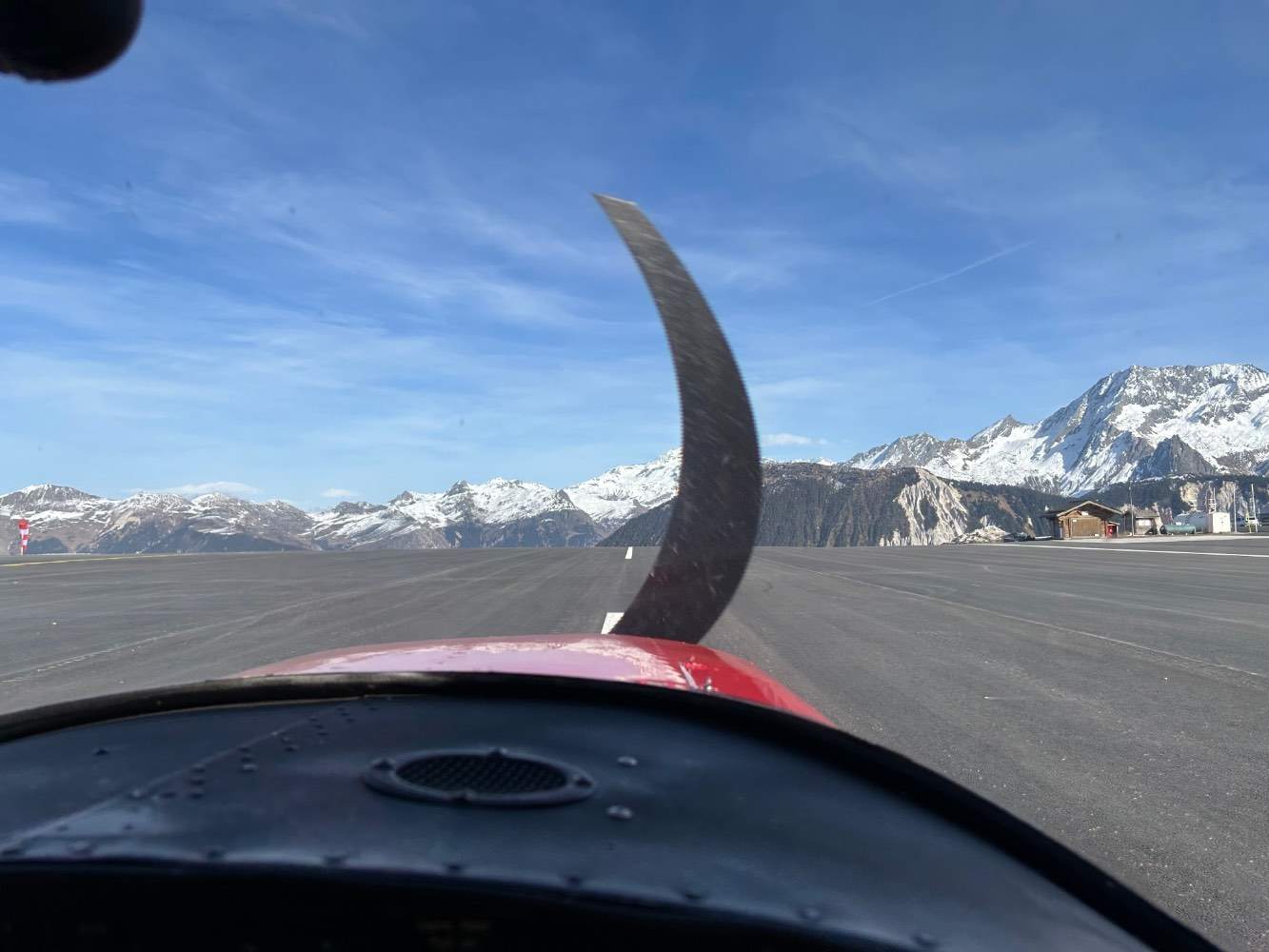
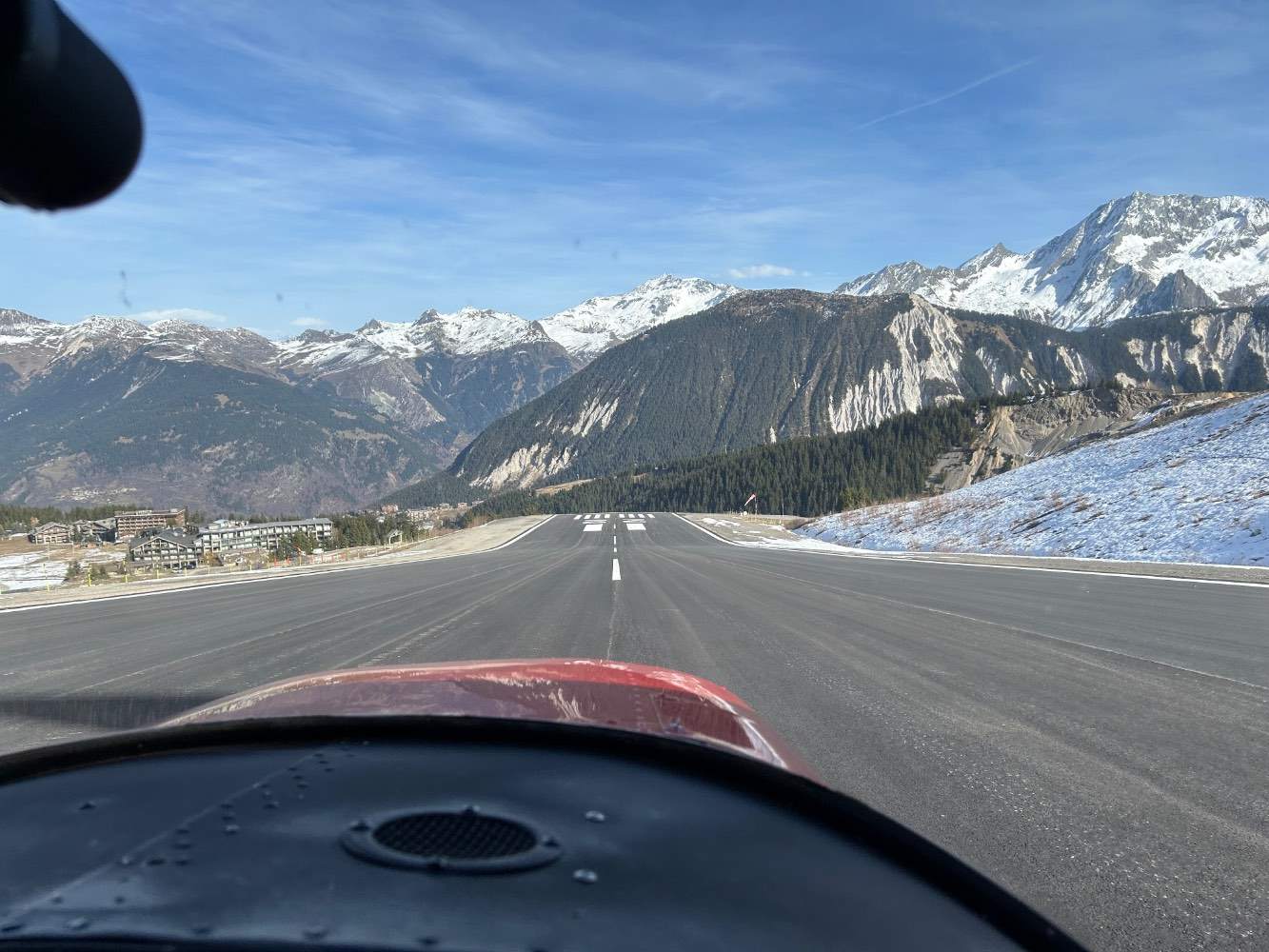
I flew to Courchevel airport with a friend of mine today in his C150. It's nuts. The runway length is 1762 feet and has an 18.6% incline after the first 25 yards or so. You need training and certification to land there and my friend's was due to expire in a few days, so we went for two landings and a coffee. He promised to take me in my Mooney once I get the propeller back, so I'm a bit nervous, but excited. Anyway, check this out: (Runway is to the left, sloping up the hill...) Here it is cropped....


 1 point
 -
There is no downside to prop balancing. Many folks that do it, if they can't improve on your balance, will not even charge to check. But reducing vibration is good for the engine, your airframe and even the pilot will be less fatigued on longer flights! Get Jim to do it if you can.1 point
-
Prop balancing is one of the most underrated bangs for the buck in GA1 point
-
Update: Put a couple of hours on the airplane since annual. I had the prop rebuilt with new bearings and to replace some leaky seals, and figured I'd have it dynamically balanced once it was reinstalled. Before balancing, the prop checked out at 0.25ips. Its important to note that I don't know if it was that bad before the prop rebuilt, but that was the starting point, which is pretty terrible. After 6 iterations, they got it down to 0.05ips at 2500 RPM. They attempted to get it dialed in even further, but wound up just chasing the same amount around the plot. I am happy with 0.05ips. After flying the airplane, I can confirm a VERY noticeable difference in vibration. Especially now when transitioning through the "forbidden range" on short final, the glareshield doesn't vibrate nearly as bad as it used to. I was charged 4 hours labor. I tried several cruise RPM's yesterday, and everything from 2700 down to 2200 is smooth as silk. For anyone else considering a balance, it's well worth it.1 point
-
A buddy was having one of our local prop balancing guys do his airplane, so while he was here I had him do mine, even though I didn't really have any complaints. He said mine was pretty good to start with, but he did manage to get it better. On his instruments it wasn't a huge change (I don't remember the numbers), but it was a difference. Interestingly, even that small change was noticeable in the airplane. It really did make a noticeable difference, which I thought was pretty cool.1 point
-
I'd recommend getting a dynamic balance done now that you've had that many hours put on the installation. It is likely to be improved, even if you can't feel it in the seat. A good balance will help everything on the airplane last longer and reduce human fatigue on long flights.1 point
-
It was repositioning the switch and cleaning contacts. the door was not actually opening, I was just getting erroneous indications that it was.1 point
-
I think they are just super duper fussy for some reason....hardly a real answer. Mine leak sometimes, using the real gasket brand, following the instructions, etc. Sometimes they leak and sometimes they don't. The ones that leak, I just tighten up the screws a bit and revisit, if that doesn't work, remove and clean them. Sometimes it works, sometimes it doesn't. I haven't found any rhyme or reason. Mine have been trouble free the last year or so but this posting will probably cause them to start leaking again.1 point
-
What setting on the air hammer do you recommend?1 point