Leaderboard


.thumb.JPG.7c8f553f9b70b716c2f121952b603f8c.JPG)

Popular Content
Showing content with the highest reputation on 04/19/2025 in all areas
-
I have had my surefly for little over 3 years and had put over 250 hours on it when it quit. Not a good reliability record. I had noticed an electrical noise on my radios about 6 months ago that when I did an in flight mag check and turned off the surefly the noise would go away. This got progressively worse to the point on some frequencies I would have to turn off the surefly just to understand ATC. Out of annual my A&P could not find anything wrong with spark plugs or spark plug wires or p-lead or ignition switch. After the surefly failed I sent it in and surefly inspected it and said they found an internal failure of their coil they had not seen before and that even though my surefly was out of warranty, they replaced it free of charge with a refurbished unit. I asked if the failure was heat induced as I put the surefly on the right side mag location as it is much harder to get to as there is the inter cooler next to it and I wondered if the heat from that had any effect, but surefly said they did not see any heat related issues with my unit. My unit was revision D and my refurbished unit is revision H. I test flew it today and then made a 2 hour trip with no issues except I do hear a faint more static noise on my radios when running on surefly compared to running on just the magneto. Because I had this issue I’m not sure if the slight noise was there on my original surefly when it was first installed as it is very faint but it is enough that I can tell the mag is more quiet on the radio than when running on the surefly. Here is to hoping this one goes for 2000 hours. So if you start getting loud radio noise from your surefly it might be an early indication of the unit is about to fail. As a question to other surefly users, do you hear any noise increase that you can tell when you turn off your surefly compared to when you turn off your mag? P.s. the electrical check surefly has you do with connecting a 9volt battery to the surefly passed both the timing led and the flash of the led for dip switch settings. They honestly thought it was not an issue with Bos itself and thought more of a power issue or grounding issue as it passed the LED test. They said you can send in the box but if there is nothing wrong with it they would charge a $200 service fee. So it was a risk to send it in but I felt like after verifying the box was getting 24volts at terminal and that the radio noise had stopped when the surefly quit working it was worth the gamble to me to send it in.7 points
-
Agreed. I had the same questions and my attorney told me that usually any thing can be unraveled. Just get good insurance, and plenty of it! It's the best thing you can do to shield you from liability.5 points
-
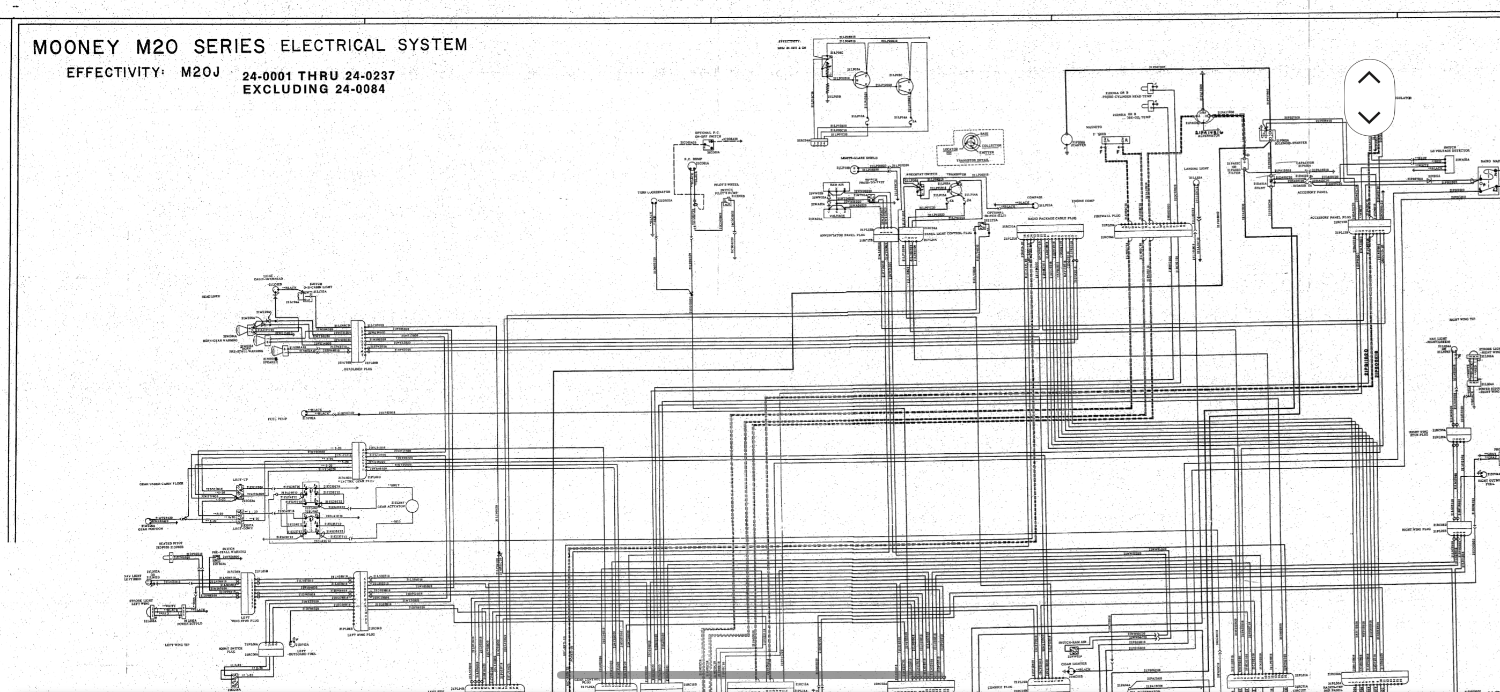
There are no electrical installation instructions because the use of the B+, F1, F2 and case ground are standard. The Aux terminal provides a low current output and it's use varies with the installation. Per the Mooney schematic above, it is not used on this model. Some later M20Js used it for driving the Hobbs meter. Sometimes it is used for powering an idiot light or the voltage regulator. But it is NEVER connected to a ground. Older alternators had a single field terminal and the other end of the field winding was grounded internally. When there are two field terminals, one is connected to the field wire and the other is jumpered to ground (it doesn't matter which is power and which is ground.) The schematic in the troubleshooting guide above shows a generic connection diagram.2 points
-
For me, current pressurized Slick mags are prone to failure and mine had issues around 400 hrs. You need to do 500 hr IRANs religiously. So a Surefly that didn't require pressurization/moisture/corrosion, and had a 2400 hr TBO, with no typical timing drift that occurs with mags seems like good pros that offset any cons. Of course with all new equipment, time will tell if the 2400 hr TBO is problem free for most or not. That being said, I feel that so far it's been an overall plus, quick starts (wasn't an issue before), deeper LOP smoothly, and mag checks seem similar to previous (my revision is past the boot up lag issues). (edit: but to qualify the above...I like the idea of one mag and one Surefly...seems best of both worlds...I don't think I'd be ready to have a dual Surefly install.)2 points
-
You are right that it's not difficult to sue an LLC and find out who are the people behind it. But it's not always as easy to "pierce the corporate veil" as many people think. The the way I see many single-member or family-only LLCs work, most of the elements of piercing, which come down to, "the member didn't treat the LLC as a separate person, so why should we?" can be discovered right away. Co-ownership LLCs, which do provide some degree of protection to the member who is not flying and to the asset itself, are often just as bad. Except for the fact that I've been seeing it for about 50 years, I would find the amount of misinformation on this subject amazing. I actually had a client once who wanted an LLC for "liability" reasons but refused to do anything to treat it as one, not even something as basic as a separate checking account.2 points
-
I would get a new mechanic.2 points
-
They are a standard part. They are a mil spec part. Tomgo has parts built to the mil spec for about $500.2 points
-
In this area, we are typically talking about revocable family trusts in which the “settlor’ (the person who creates the trust and adds property to it) is also the beneficiary and can undo the trust at any time while alive. Like any revocable family trust, its two major functions are (1) avoiding probate and (2) providing for assert management if you are incapacitated. I’m not aware of any state in which it provides any liability protection. I suspect that, kind of like LLCs, lots of people think it provides personal liability protection for bad things we do, but it doesn’t. Whether this or any other estate/financial planning mechanism provide you any benefit at all is a discussion between you and a legal professional.2 points
-
Hello, I am in search for a 600115-005 intake duct for a m20f. Would anyone happen to have or know one that is available for immediate purchase?1 point
-
I’ve only seen that much oil come from an oil filter that didn’t seat quite right. But considering that the pump was replaced, I would check that too.1 point
-
Search for whatever you're looking for. Here's are 133 pages searching for "G1000": https://mooneyspace.com/search/?q=G1000&quick=1 Here are the results for "G1000 NXi": https://mooneyspace.com/search/?q="G1000 Nxi"&quick=1&updated_after=any&sortby=relevancy1 point
-
The -20’s also preferably should not come out a diamond. Some have had issues getting them to work in the Mooney. I did not know this and the ones I got last time were from a Diamond. I got lucky and they worked, but others have not been as successful.1 point
-
Looks like you need one for a '68 model. Link below. The downloads section of this site has this doc and many more.1 point
-
Only the GIA63W with an -01 or a -20 suffix are compatible with the system in the Mooney. There has been much discussion on here about the G1000 NXi. Mooney has to initiate it and pay for it. Figures have been thrown around as far as what Mooney would have to invest. I've heard $200,000 plus whatever outstanding money that Mooney already owes Garmin.1 point
-
Ironically, this statement also indicates a fundamental misunderstanding of operational principles. Voltage is not current. How many amps might have flowed from AUX to ground in this mis-wired installation depends on the load through the complete circuit, as well as the ability of the center point of the stator wye to actually supply current. It is extremely unlikely that 50 amps of current every flowed in the circuit, the "burning smell" Grant describes not withstanding. @PT20J says above this is a "low current" output. Not sure how he knows that, but there is no one on the forum better informed about the movement of electrons than him. The thread you linked to above is mine, and my mechanic made exactly the same mistake as Grant's. Your own confusion about the operational principles, as well as mine (I am a degreed electrical engineer), as well as an identical mistake by two entirely separate mechanics, and the presence of multiple threads asking how all this works, means that the problem is the design and documentation of the system rather than the humans maintaining it. It is apparently impossible to find a manual specific to the Hartzell ALY-8520 (I had the same trouble doing so as Grant). Said alternator relies on a case ground which is not shown in the Mooney schematics because it's "implicit", but this is easily confused with the shield termination for the shielded wires in the system. The Mooney schematics also just ignore the presence of an AUX terminal on the alternator rather than explicitly marking it N/C, which is counter to good design principles. So what we have here is actually bad design/documentation, and it's no wonder that even well-trained, competent people are confused by the system. The mistake by Grant's mechanic is entirely forgivable, and accusations of incompetence in making it are weak. For what it's worth, our airplane was ground run for several minutes in the mis-wired configuration with the AUX terminal grounded. Once this mistake was corrected, the alternator began operating normally, and has continued to do so for the entire 5 years and several hundred flight hours since I made my post. I can't say whether Grant's alternator may or may not have been damaged internally, but my own experience shows that this mistake is not necessarily immediately catastrophic.1 point
-
The fact you are going to buy another one for your new plane tells me you really like the Surefly. I've been very skeptical of introducing the need for powered electronics into such a critical system for what I view is very little benefit. So, my question is what are the benefits you have received that outweigh the risk of failure? Or, is it just you're comfortable flying on one mag should the Surefly fail?1 point
-
I Have only one landing and take-off at the Edinburg airport1 point
-
Yes you are correct. I miss that.1 point
-
I think you mean ktas. Yes my true airspeed is much higher too, maybe ~8 knots higher than you indicate above. But my kias (indicated) is right around 141kias.1 point
-
Also extremely important to make sure you have no air induction leaks. When I first got my gami injectors I did not realize I had a small induction leak on #3 cylinder and when I fixed that then my number #3 cylinder was outside .5 spread and I had to get a replacement gami injector. This was maddening as the air leak didn’t really show itself at low altitudes but the higher you go the more the turbo works and the bigger the pressure differential from ambient and that air leak would in fact make that cylinder richer which when flying lop would mean that cylinder would creep closer to peak as I would fly higher and thus the cht on the cylinder would rise up especially with the thinner air at higher altitude. So to save you some frustration make sure you have no upper deck air leaks before you send that data to gami. Garbage in gets you garbage out.1 point
-
It only shows 2 wires off the alternator but mine has like 5 different ones albeit one is a jumper. One says plus and looks like a 2 maybe for F2 idk.With everything else I’ve always been able to find an install manual but I couldn’t find anything for the alternator. Every mechanic makes mistakes eventually. At least this one was on the smaller scale of them. Good mechanics are hard to find unless you are your own.

 1 point
 -
This is a question for your lawyers and accountants, not one for internet strangers. -dan1 point
-
Good points all1 point
-
I had my tanks resealed. All of the fuel access panels are opened and were previously covered in original paint with original screws. I don’t think that reseal is so damaging as much as you can tell those panels have been opened and touch up paint never looks completely like original. But the paint is only affected on the panel seams and screw heads.1 point
-
Hey all, In an attempt to find a new to me pitot probe, AN5812-12's are either grossly expensive or the used parts market for them is dried up. There is another variant, AN5814-12 which appears to be slightly longer and also has a static source on it as well. Being that the mounting stem is the same as the 5812 that is usually fitted on the J, does anyone know if the 5814 model is a viable replacement? I take it this would require a field approval and the FSDO signing it off? If anyone does happen to have a 12 volt pitot probe laying around, feel free to take my cash -KC1 point
-
Of course I totally agree. My comments where from the perspective of getting a field approval from the FAA for a G1000 that is still supported. I don't see the FAA sticking their neck to approve a replacement suite for G1000 without going through the STC process - which is neither cheap nor quick. But with respect to the G1000 version that Mooney chose to certify they have pretty much always chosen earlier versions that latter version with more functionality. For example when they offered a WAAS upgrade they picked the version that had the issue with about 160 LP approaches that couldn't be loaded because they had a zero VDA that broke that version of the WAAS. These days they are back to non-zero VDAs so I think that resolved itself over time. There where other limitation with Weather I recall too. But I agree with you, I'd rather keep my state of art upgradeable avionics that are not tied to the TCDS to be able to update.1 point
-
Hmmm! Sounds like a perfect idea. Thanks1 point
-
I would imagine you want to reseal, let it cure for a while and then paint and then let that cure. This is the general advice I have been given by many and was my plan of action once my plane visits MN. Not sure about how long to wait after resealing tanks but I am sure someone can chime in. What in the tank sealant can cause paint to get damaged if cured properly?1 point
-
I appreciate everyone's responses. This is all great information. I did have a great call with Kevin yesterday. So much knowledge and just a really nice person. Thank you taking my call Kevin! I've decided I'll take a wack at restoring the system. I do need the trim valve in the yoke, it's missing, and at least one aileron servo/boot. I still need to test the rest of the system to see if the other boots are ok. But if it becomes a PIA, I won't worry about just removing the system and going without. Maybe an Aerocruze 100 is in the future . Thank you everyone!1 point
-
Yeah, sure, of course! Some lawyer is going to spit out the bit of pursuing a 7 figure litigation because it is too hard to track down the LLC. Do you really believe this?1 point
-
Did you have an instructions/SB/ etc showing how to disassemble, clean, replace O rings, and reassemble the check valves? I'd like to clean out my return check valve before spending the $1400 on a new one, but I'm not sure my mechanic will want to disassemble it? Also, @kortopates was correct about the yellow clamps being specified by TCM. Here's the documentation. I just noticed that mine are the wrong ones (they are the normal black clamps). backorderd new ones from spruce. better check valve clamps M87-14R1.pdf1 point
-
The gami spread is as important as your good ignition. What is your spread? If you haven’t checked that, likely that’s where you should start. Cylinders need to peak pretty close together (at about the same ff). Mine runs well at 65% lop. I’ve been using 30”, 2300, 10.4 and seeing about 141kias at all altitudes.1 point
-
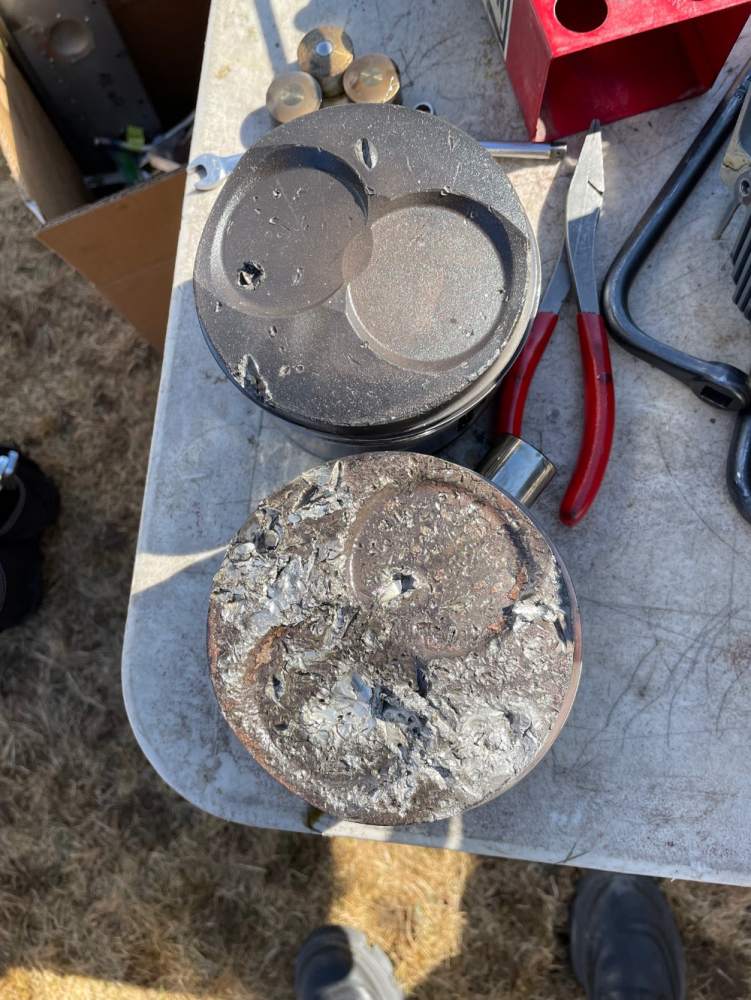
Toast, as far as I’m concerned. Trashed two jugs. The engine kept running with the #3 exhaust valve gone, and that beat the crap out of everything in that cylinder. With the exhaust valve never closing it got pressurized by back pressure from the other cylinders. The valve head was beaten into pieces, and when the intake valve opened some of those pieces were blown upstream into the intake manifold. From there a couple of them found their way into #4 cylinder and trashed it as well. Despite all that the engine continued to run until pulled to idle after landing, when it immediately died. I’m assuming the valve hung or stuck instead of closing and the piston knocked the head off. Could’ve just had the head break off for unknown reasons but that seems crazy, unrealistic. Don’t have logs to check if that jug was ever replaced, the logs went with the engine for overhaul, but I don’t recall changing it since I’ve owned the plane (2.5 years). Engine was midtime on service hours, about 1100 iirc, so I’m assuming that was time in service on that valve. Although it could’ve been more… The local mechanic that helped me diagnose the failure recommended replacing all four jugs and returning it to service. Thing is, approx 1100 service hours but last overhaul was at least 35 years ago. And that may have been IRAN after prop strike not a full overhaul (logs show extensive engine work in 1989 but do not include the word “overhaul”; airframe logs show nose gear repairs and belly skin replacement at the same time). In light of that I decided to bite the bullet and get it overhauled. It’s out getting a full overhaul now.

 1 point
 -
Step one hope step two pray. do a lot of waiting in between.1 point
-
Only green when IMC no yellow red or purple. i will fly around it. If vfr i will avoid it visually even when wx is painting yellow as that is rain. If a wall of red or worse will land if too far to fly around or if i break out of imc before landing i will fly below avoiding down drafts of rain showers. One thing to keep in mind the lower you are 4000 ft or lower to agl the less updrafts there are so generally smoother flight but higher risk of downburst that could push you into the ground so not for big fully mature cells. Flying a caravan back in the day my worse rides were 5000 to 15000 feet as you are in the vertical up and down drafts which can tear a plane apart. And i only fly above a building cb if i can clear it by more than 3000ft so that leaves out 15k and bigger.1 point
-
It doesn’t look like they struck the prop, should be a relatively easy fix???1 point
-
What exactly are you trying to achieve? Avoid liability? That won't work - you are the pilot and it goes right to you personally, trust or no trust or even if you don't own a plane and are renting. Avoid tax? - don't see how. Estate planning? I am not a lawyer but if you are the Owner and the Trustee and the Pilot then the whole thing looks like a sham. Here are the 2 biggest issues highlighted by BizJet Law.com: There are two downside considerations regarding holding your aircraft title in an owner trust: (1) cost and (2) separation of ownership. 1. Costs As with all operations, there is a cost associated with using an owner trust. The cost varies by provider and trust type. From our experience, normal owner trust costs start at a little over $4,000 for the setup and nearly $3,000 per year. Thus, for a normal owner trust, you should expect to pay around $7,000 at the closing for the first full year and then around $3,000 yearly. For a double-blind owner trust, the setup cost tends to be around $5,500 with a yearly fee of $5,500, meaning at the closing for the first full year, you should expect to pay $11,000. 2. Separation of Ownership By putting your aircraft in an owner trust, you are placing a separation of ownership between the true owner of the aircraft and the asset. The aircraft is not registered to the true owner but to the owner trustee. Further, any communication from the FAA regarding the aircraft is sent to the owner trustee, who is responsible for forwarding the information to the beneficiary. So long as the relationship between the true owner and owner trustee is positive, this should have no downside. However, suppose the true owner is concerned about a lack of communication or a negative relationship with the owner trustee. In that case, this could be a disadvantage of holding the aircraft in an owner trust.1 point
-
To protect the starter adapter you want the heavier Energizer starter (#646275). The other lightweight starters have some kickback and take out the adapter. Your symptoms could very well be the adapter, on its way out, needing to be rebuilt.1 point
-
I’ve had 4 “alternator failures”. First thing I’ve done is reset the alt field circuit breaker. It will reset the VR, either causing it to come back online (as indicated by voltage) or not. That gives you an idea. 3 of the 4 events was broken connectors on the back of the alternator. One the field wire and twice the field wire jumper. the fourth event, still broken wires, just way more tricky. I was convinced it was the VR going bad so I bought a Zefftronics VR (which by the way, their install instructions tell you exactly where to read resistance and voltage and what value it should be at each point if you want me to track it down for u). While installing, I had a sneaking suspicion about the canon plug that plugs into the VR. I disassembled the cannon plug on my back from underneath the panel (pain in ass) and voila- smoking gun. The field wire had chafed off insulation and was grounding against the wire shielding. I went ahead and used the new VR since I had it already, but I could have sent it back and re-used my original VR. Had I not been up there replacing the VR and taking the additional time to inspect the guts of the cannon plug, it would have been a nightmare never ending diagnostic. I was proud of my curiosity that day1 point
-
Those crimp connectors lead a hard life in a hot, difficult environment. They don’t last forever. Connector failure is far more common than alternator failure.1 point
-
If it's out of the country it's priced that way for a reason. By the time you pay a ferry pilot to bring it here, after you go over and inspect it and supervise a pre-buy, plus have the GTX-345R and the WAAS boxes installed, you're better off to buy one here that has those items already. (A WAAS upgrade at Maxwell, assuming they have the boxes, by the time you get it up to the latest software version will cost you roughly $35,000. A GTX-345R installed at the same time will set you back another $9000.) Although one without these things may appear like a great deal, if they didn't upgrade when WAAS became available and was much more reasonable, what else have they been too cheap to maintain? A "cheap" Acclaim might not feel that way after getting all of the deferred maintenance caught up.1 point
-
An easy sanity check is before you start the engine, check the CHT and EGT temperatures to see if they match the ambient temperature.1 point