Leaderboard



Popular Content
Showing content with the highest reputation on 12/22/2025 in all areas
-
This is the only relevant advice in the thread. I'm sure everyone here touting their great experiences with the various brands is sincere. But honestly, it doesn't tell you anything about the experience you'll have in your own airplane. All the major vendors have excellent return policies, and most pilots have friends willing to loan. Plan from the start to try a bunch of different options, then pick what works best for you.4 points
-
If the propeller and governor are correctly set up. Seeing less than 2700rpm on takeoff off would indicate that the engine is not making full power. There are alternative scenarios where a healthy engine might not make rated RPM or a sick engine might make full RPM, but all of those scenarios would require that the propeller and or governor be mis-adjusted. So the short answer is that if @MikeOH’s airplane makes full rated RPM, during takeoff, at sea level on a standard day, than he is in all likelihood making full power.4 points
-
Could you please cite the relevant CA law that mandates aircraft insurance for part 91 aircraft operations? It would also be helpful for all of us here to cite the specific laws in the other 10 states you mentioned. That way we can make better choices about our aircraft and risk management. Thank you,4 points
-
Please don't take Mooneyspace that direction. Leave the politics out of this forum and let's just talk about things related to airplanes, specifically Mooney.4 points
-
I had to wait until Monday to call Hartzell, but I got their answer: The phone number @PT20J gave above is good, and according to Hartzell the latest part # that fits the Prestolite ALU series alternators is the ALU-3045BS. They also said the older ALU-2045BS brush assembly would work as well, but the 3045 has been redesigned with longer brushes. @N201MKTurbo per your advise I asked about brushes while I had Hartzell on the phone, and they said the ALU-3045BS assembly comes with new brushes so I should be good to order the one part number and replace everything with new. Thanks for the help!3 points
-
I know there’s a lot to read below. The TLDR version is that I think you’re oversimplifying the dynamic and mechanical aspects of how a constant speed propeller system works (not uncommon, by the way). In simple terms there are three things that limit maximum RPM: 1) Power (torque, or lack thereof to be more precise) 2) The fine pitch stop in the propeller hub 3) The propeller governor During a static RPM test with the prop full forward, the blades should be against the fine pitch stop. The propeller governor should be completely off-line (min oil pressure to the hub) with the spring holding the blades against the fine pitch stop. This is why the engine does not go to redline during a static RPM test; for all intents and purposes, the propeller is a fixed pitch, climb prop, during the test. Max static RPM should be slightly less than redline (~2% less is typical). This demonstrates that the prop blades are against the fine pitch stop, if they weren’t, the governor would allow the pitch to go finer and the engine to achieve redline during the static RPM test. A propeller with the governor and fine pitch stop set correctly will typically not go to max RPM during a static test. Back to @MikeOH’s comment with regards to takeoff RPM. If he is seeing 2700 RPM during takeoff, the propeller is either being limited to 2700 RPM by the fine pitch stop in the hub or by the prop governor increasing pitch to prevent overspeed. In either case, that would indicate that his engine is making full rated power or as near enough to full rated power as makes no difference. Perhaps I am wrong, but I inferred from your post that you believe that the governor can somehow allow the propeller pitch to become finer and finer to allow a sick engine to make max RPM. This is simply not true as it is constrained by the fine pitch stop in the propeller hub. The governor simply provides an opposing force (oil pressure) to a strong spring in the hub that pushes the blades towards fine pitch. When the engine is running and an RPM is set via the propeller control, the oil pressure from the governor and the spring in the hub provide counteracting forces that seek a blade pitch that maintains the desired RPM. Max pressure from the governor will move the blades against the course pitch stop. Minimum pressure from the governor allows the spring to move the blades to the fine pitch stop. In short, the prop governor will limit a strong engine to 2700 RPM on a cold, high pressure, day when it’s able to make more than 100% power. But it cannot do much of anything to allow a diminished engine to achieve max RPM. If you have a detailed explanation that counters what I’ve written above, I’d love to read it.3 points
-
I bought 2 of the Bose A30 about 1 year ago and I am happy with them. The noise cancelling is far better than 2 pairs of my 20-years old pairs of Bose X. Although I did not think I would use it, I do like the Bluetooth and have answered or made more than a few calls using the headset. I can connect to the panel and provide music for all, but I also like that I can connect my bluetooth to my phone and listen to music without disturbing the queen while she sleeps. If she is not sleep within a few minutes in cruise, I just climb a little higher.3 points
-
It’s not codified in the regs (thankfully) but by returning the aircraft to service with his signature he is deeming the aircraft airworthy. Mistakes happen and things are missed whether work is being performed by mechanic or under supervision. Negligently returning an unairworthy aircraft to service as airworthy could be cause for an investigation and major administrative action. I have seen a few suspensions over the years for careless behavior.2 points
-
2700 SNEW. 9 hours/quart.2 points
-
Interesting, we fly ours typically between 8,500-11,500 on VFR trips and have been as high as 13,000 on a IFR plan. Even up to 11,500 I'm still getting 300+ FPM without doing a step climb. These were a couple recent trips where we went to 11,500 with the climb slowing as we started to level off.

 2 points
 -
I’m not sure why I’m even responding. I have probably taken 10 IQ tests in my life. The results have a range of 30 points. It doesn’t give me a lot of confidence in the results.2 points
-
A few notes about foam plug passive headsets (Halo, Clarity Aloft, whatever) that have garnered praise in this thread: - Many folks, including me, find them more comfortable overall than an over the ear headset - I used one for years until my hearing started waning, and I took a deep dive into the data on noise attenuation by foam plugs. - Their high frequency noise attenuation is excellent, superior to over the ear passive headsets, on par with good active noise cancellation headsets - Their low frequency noise attenuation is poor, certainly no better than a cheap passive over the ear headset - In contrast to jets, the serious, hearing damaging noise made by our piston planes is in the lower part of the spectrum, which is protected poorly by foam plugs - The low frequency noise in our Mooneys is destructively loud and adds cumulative damage to hearing each time we fly with a passive headset, be it over the ear or foam plug-based. The decreased fatigue with a good ANR headset is also dramatic vs. any passive headset. I very much regret the 7 years or so that I spent flying with a foam plug headset. I recall seeing Phil McCandless, founder of Quiet Techologies (Halo headsets), at Oshkosh this year standing under a banner saying something like "ANR quality sound attenuation at a fraction of the cost." For piston planes, this is egregiously false advertisting that is contributing to lasting hearing damage for pilots like us. Dr. McCandless also has a doctorate in audiology and should certainly know better. His website also contains various related falsehoods. Here's an old thread that contains links to relevant data:2 points
-
My Zulus are GREAT passive, as in there are times i've forgotten to turn them on2 points
-
And, once again, your ignorance is demonstrated. That wall of text you cited deals with financial responsibility which is NOT an insurance mandate. Quote the text in your cite that states that insurance is required. I'll bet you cannot; prove me wrong. Telling people they are wrong seems to be your entire raison d'etre, after all. Where California law references financial responsibility, it does not mandate insurance as the exclusive means of compliance. California law does not require all aircraft owners or operators to maintain liability insurance. Instead, California employs limited, activity-based financial responsibility statutes, including provisions applicable when aircraft are rented or leased for compensation, operators engage in commercial or for-hire activities, or operators fall under specific state regulatory jurisdiction. California has not adopted an aircraft insurance regime analogous to the compulsory automobile insurance scheme found in the California Vehicle Code, reflecting a deliberate legislative distinction between motor vehicles and aircraft. Private Part 91 operations fall outside the scope of California’s insurance-triggering statutes. Aircraft are not classified as motor vehicles and are not used for routine public transportation. Courts and legislatures recognize material distinctions, including the discretionary and infrequent nature of aircraft operations, heightened pilot licensing standards, and extensive federal certification and inspection regimes. Because of these distinctions, compulsory insurance models developed for automobiles have not been extended to private aviation. That is quite apparent.2 points
-
Apparently, some California CDL holders cannot drive either2 points
-
^that I don’t know a single pilot who can’t drive Yet most with a auto DL can’t fly Landed a older 2 place tailwheel at a airport that has a onfield diner, I walked out and a guy walking to his newish Silverado 4 door asked me about flying and I must be rich thing. I asked him if he bought the truck new, he did, I explained for that price he could have bought the plane we flew in on and got his PPL. I asked if he financed it for 48mo or more, he did, I explained he could have also got his commmerical plots license with money to spare. The idea it’s just money is laughable2 points
-
True dat! I've.had driver's licenses in GA, AL, GA again, NC, OH and AL again over the last four and a half decades. I've taken three (3) written tests (20 questions each) and one driving test with a trooper (at age 16, lasted about 6 minutes), but my last written test I didnt even read the pamphlet for. I got a boating endorsement by taking a 20-question written test after reading the pamphlet twice, without even showing a picture of my boat. I've been flying for 19 years; I've taken two lengthy written tests; had two multi-hour oral exams; had two 1.5 - 2 hour checkrides with DPEs; three checkride prep flights with various CFIs; looks like eight (8) BFRs, and probably five or six IPCs (I voluntarily do one every year now), plus one voluntary ride with a CFI to assess my ability during a difficult medical experience (during which I kept driving daily), two MAPA PPP ground and air weekends, and probably seven or eight Mooney Summits for additional training and education. It takes a lot more mental work to fly than to drive . . . . I've even finished long drives (500+ miles, 10 hours or so with fuel and food stops) where there are parts that I don't remember because I got sleepy, further proof that driving is easier than flying.2 points
-
Apologies, I was replying to this personal attack2 points
-
Im starting to gather headsets is something that needs to be tried for fit before bought. I've been rocking sennheiser momentum 4 and I love the fit. But the anr isnt made for aircraft so while it's amazing for consumer and pax jets, it's wonky as hell in the Mooney.2 points
-
And that’s where it’s made abundantly clear you have no qualifications in science.2 points
-
Nah it’s a fact not even joking for 80% of people Ifs not just a matter of money, the average ground dweller spends tons more of a new crap box car that they are so rich they don’t even take care of. It’s a matter of if discipline, grit, IQ, not eating pills or needing drugs, etc. Going to a group of non pilots, say a NFL game, new years even party, vs a pilot pancake fly in, the conversation etc it’s often a different breed, I would bunch pilots into groups like sailing, skydiving, long range shooting, SCCA etc2 points
-
Sure I do. I said they will absolutely ding you if you have losses. But where is the question about my near total absence of losses? Ballpark, I would say over my lifetime, all insurance premiums combined have been close to $8,000,000.00 in paid premiums. (All but healthcare premiums and claims) In that 40 year span I have had less than $50,000 in damage claims, and 0% of those were a result of my error or fault. This is irrelevant to insurance companies, there is no column for those statistics. I know agents have no role in this, I do not envy them having to deliver this ridiculous news to people, it must suck. My beef is with the people making the regulations.. They do so with zero regard for efficacy. They may have the best of intentions, but they aren’t stake holders, and they don’t personally suffer the consequences of their idiotic legislation, so they make a stupid ineffective law that hurts more than it helps, then they pat themselves on the back move on, while we are left with the mess. This is why I will never contribute to AOPA. They are feckless and in my opinion, do little for the causes I feel are important. I am sure at one time they did good work and were dialed into pilots needs, but no longer. They have suffered the fate of most organizations that get well funded. They get comfortable, they rub elbows with the powers that be, get intoxicated with the influence and do less and less for the people they are supposed to represent. Insurance needs a top to bottom overhaul on the rules, and a LOT of deregulation needs to occur, so that rules which actually protect the consumer, and provide a path to profit and solvency for insurance companies can be passed, but today it is broken, and getting worse. I am neither anti insurance, nor anti government. I just believe too much intervention is just as bad as none.1 point
-
^that Pilot incapacitation resulting in a crash, despite being sexy for the big screen “is anyone a pilot?!” Is really really rare Most crashes are pilot error, not using the rudders, not being on reasonable speed and path, or just bad big picture decision making skills (lack of common sense)1 point
-
100% agree. But it is not causative data. By that I mean it is NOT data that shows aircraft accidents are a result of pilots having heart attacks behind the yoke. My angst is based on premiums being set because it might happen vs actuarial data showing old pilots have had heart attacks while flying which resulted in a claim. Put another way, if there have been no such accidents/claims for pilots over 60 (or, more fairly, at a rate no higher than those under 60) then raising premiums merely based on a general likelihood of the overall population just rubs me the wrong way. I keep ‘hearing’ that claim. But insurance is a business and I just can’t see any reason for any company to continue with a ‘loss leader’ product. It’s not a supermarket where you ‘lure’ customers in and make your money with other products they buy! You either stop offering the product, sell it off, or raise the price. You don’t accept losing money ‘for decades’! I suspect you’re right. Not a good business model either way! That’s a shame. While it would be a small dataset, you are a ‘front line’ source. Don’t misunderstand me, if I truly represent a higher risk as I age I most certainly expect to pay a higher premium. It is that premiums for older pilots are raised simply because they are older, and not because they actually have a demonstrable higher claims rate is that which annoys me.1 point
-
You’re over complicating it. From a logbook signature perspective, a supervised, non-A&P is the same thing as an A&P. The signature returning the aircraft to service is the A&P’s whether he personally completed the work or supervised a non-A&P’s completion of the work. The A&P‘s signature in the logbook is supposed to signify that the work was completed I/A/W AC 43.13. If said A&P signed off work as airworthy and it was not then he has opened himself up to liability whether he did the work or someone else did it under his “supervision”.1 point
-
This saddens me greatly! Such a nice guy here, and I expect even more so in real life. He seemed to do everything right taking care of himself and it is not fair to leave so soon!1 point
-
Same experience for the last 30 years for me, same broker, almost always the same insurance company (especially for the last 8 years or more now as they are always the lowest or close and I was to keep with the same company as I'm getting older and want to see if I can encourage longer coverage with loyalty.1 point
-
I have said for years that the FAA operates from the top down in aviation- everything is based on 121 and large TC holders. Small GA is only an accommodation to those positions. One only has to look at ADSB to see how the FAA world revolves. If you don't know the back story to ADSB look it up here Its Federal and all about GDP! Support for small GA airports? It used to be a way for small communities to bring in business but now with the ever expanding availability of commercial air transport small GA is pushed aside (unless the airport sponsor wants air service). I have also felt for years that AOPA is falling behind in their previous role as the leader in their role as the voice of GA. For this, one only has to look at the proliferation of "RAMP FEES" and the consolidation of major city hubs into a few (3) FBO chains. I personally talked to the previous head of AOPA at OSH a few years ago and as we all see it went nowhere with them. Every FAA supported airport should be required as part of their Grant Assurances to provide a given number of tie downs (with a reasonable RON fee if used for RON), an accessible toilet facility and airport gate access 24/7. I do keep AOPA for the legal insurance (and their airplane insurance can be good for some) but they seem to be too wound up in marketing Tee shirts than their basic job of supporting GA JMO after 60 years watching them. The hard reality is that small OLD GA is a dying breed. ALL of our wonderful Mooneys will die and go away just as most other legacy airframes will. 20 years from now there won 't be many Mooneys around at 75 years old or more (remember- we kill'm faster than we build'em). How many 75 year old cars are on the road today and who wants them? only a small group of antique collectors who trailer them to events. Even in that world (of which I am familiar) they admit in 20 years they won't be around any more. The world is changing, the population and its desires are changing and we (old GA) will move along (or out of the way) for it. Again JMO1 point
-
Let's give you the assumption that the pilot subset has a mentally sharper starting point. They will *still* decline from that higher starting point. Is a 70 year old more or less likely to have a heart attack or stroke anywhere in the world (including while seated, operating an airplane), than say a 31 year old? Yes. Could a heart attack or stroke result in a claim? Yes. We know these 2 things are true. Therefore, it's data. Insurance underwriting takes discernment. I've seen an aircraft owner with the same insurance company for 20-30 years keep getting renewed, but at lower liability limits over time. He may have started at $2MM Smooth, but over time be reduced to $1MM Smooth, then $1MM/$100K. What's going to happen when a bunch of adverse risk starts getting pooled together? Everyone pays more. Personal aircraft underwriting has been a loss leader for many insurance companies for decades. It's not. And sometimes the pricing is too low based on feeling. I have anecdotes but have not compiled anything formal.1 point
-
We have a 2700 hour one here, it’s about 4 or 5 hours for a quart1 point
-
If someone with an IQ of 80 can pass the private pilot written and pass a checkride, they certainly can get a private pilots license. My wife used to be a teacher. She said a highly motivated dumb student could outperform a lazy smart student.1 point
-
Thanks for the encouragement. I’ll be 69 in a few months.1 point
-
It's personal. I was at FXE the other day at the Banyan pilot shop and a store employee was instructing a new hire and she said, "The choice of a headset is highly personal, we have this display so they can try them all." That is what I recommend. Go to a shop that has them all, try them all on, try listening through them and decide what you like. Me I am happy with my Bose A20, don't see the need to upgrade to the A30. Agree about BT. Must have. I operate out of an uncontrolled field so the ability to phone for clearance and to cancel IFR is important to me. The best headset I ever had was experimental made by Terma, a Danish defense contractor. It had two custom molded earpieces with the mic pickup built in to the earpiece. It used the jawbone as a sound reflector. It was amazingly clear, no boom hanging around. The earpieces acted as passive noise reduction. Unfortunately they could never pass the FAA TSO requirements so they gave up and recalled them all. I wish someone would pick up the design.1 point
-
love my lightspeeds, i have hte 20xl, sierras and the zulus, all are excellent. 20xls i bought new something like 16 years ago, they still sound awesome. sierras i purchased as a passenger headset but i wear them as often as i wear my zulus zulus, awesome, work just as good passive as they do turned on, quiet, most important they don't clamp my head.1 point
-
I use these earbuds, I think they are called "Axel Ghost Strike", something similar. They both filter out loud noises (gunshots) and act as hearing aids. It's like cheating in the woods, I can hear a deer walking from miles away. I have a set of A30s but always assumed the Zulus would be a bit better at passive filtering due to their size. Is that the case? The ANR does a decent job on the Bose but boy can you tell if the battery goes dead... Do you think the Zulus make a big difference in the passive department?1 point
-
You are incorrect. The copilot was also seriously injured and there were delays in extracting him due to the damage to the cockpit area. The cockpit was not "mostly still intact" as can be seen here.1 point
-
Not to mention they're designed to be stashed in a pocket with the cables on the same side of the battery/control box.1 point
-
What a joke. First off last I checked CA doesn’t have preemption over the rules of the sky. That’s a law I’d just not comply with, as I feel it is my duty as a American to not follow unconstitutional or immoral “laws” Second forcing folks to buy insurance is as child like as thinking you are OWED a “fair” life, but it isn’t fairrrrr waaaahhhhhh If you can tolerate the risk, YOU are free to buy insurance to mitigate said perceived risk onto. (Not saying you personally).1 point
-
In California you ARE required to have at least liability insurance in your aircraft if registered in the state. I believe there are 11 states with this mandate.1 point
-
How much cross country will you actually be doing and figure 10 kts difference on the outside. Will that amount of time each leg really make any difference? In a 3 hr flight that's 30 miles difference or maybe 10-12 mins? In 3 hrs? Had my D for 26 years and never needed more and I've been clear across the country several times with it. And I enjoy flying and just sitting back and watching the world roll by underneath me. I've done Florida the New Mexico at 1500' AGL just for fun. The difference between the Cs and the Es is bragging rights. In reality unless you are going a Looog way it really doesn't make that much difference in time for the average owner. Its not a quantum leap in speed. But what ever you buy buy it equipped the way you want an airplane to be equipped. Its always cheaper to buy what you want than try to build what you want.1 point
-
Not sure why you feel the need to twist what I said, but here is an example. I paid 750k for my house. I owe far less than that, in fact, the dirt is worth almost double that amount, but since I have a mortgage I am required to insure the house for whatever arbitrary amount the insurance company says it costs to replace. (Even though you would have to litigate to get them to pay that amount…). So the insurance company says that by statute I must insure for 2 million. On top of this the law requires me to carry contents insurance for not less than 25% of the total value of the house. I do not have a 500k worth of contents inside my house, but wait, it gets better. anything of value over 1,000 I have to declare and pay additional premium or it is not covered! this is NOT because the insurance underwriters have to keep the lights on. This is 100% regulation induced. Why can’t I buy fire only? The dirt is worth 3x what I owe, and there is no scenario where the real estate is destroyed. Because it isn’t legal. so my renewal went from 4800 a year to 9800 in one year, then two months after the premium was paid, the insurance company sent a letter saying they made a mistake and it is now actually 12k a year. Pay it or cancel the insurance with no refund. If the premium doesn’t go down next year, I will likely pay off the mortgage and tell them to pound sand. Only reason I haven’t so far is because I have a 2.2% interest mortgage. The issue was even worse on my commercial property. my insurance went from 19k with a 50k flat deductible, to 119k with a 250k deductible, and an additional 20% in the event of a named storm. Again, I owe less than 20% of the value of the dirt alone, statute compels this ridiculous formula. I had no choice but to satisfy the mortgage and self insure. there is no free market in insurance. It’s a racket. If you feel otherwise we can agree to disagree. No regulation is not the answer, nor what I suggested. What I said is the regulations are not performing as intended, and have become the problem, not the solution.1 point
-
@Paul Thomas Thanks for that summary. I've been an AOPA member for nearly 50 years. They are definitely NOT the advocate for the 'little guy' they were decades ago. Your story infuriates me. I can't think of a more appropriate use of AOPA resources; that they wouldn't lift even a virtual finger (send out emails) is unconscionable and unacceptable! Frankly, I'll likely not renew next year based on this. My EAA membership seems better suited to my GA flying.1 point
-
While NOT true of aviation insurance, yet, here in Kalifornia it is a law that you MUST purchase automobile insurance. Yeah, I'd blame 'regulation'!! Pretty naive to think insurance lobbyists weren't involved in getting that law passed! Or to think being FORCED to buy a product doesn't affect rates! NOT what'd I'd call free-market capitalism at work.1 point
-
I think the blunt force was the result of the cabin intrusion. I think you're moving the goalposts.1 point
-
Cs are nice, flexible aircraft. I've taken mine to Cody, WY; Niagara, NY; Ft. Lauderdale, FL; and hundreds of places in between, ranging from 8 n to 505 nm legs. Both C and E are grass-field friendly. On any Mooney, verify that the tanks don't leak (seeps are OK), and that engine baffles / doghouse seal well. My C with standard exhaust gets ~135 knots down low, and ~145 knots at 7-10K. Look at flightaware and see what the real-world speeds are on planes that you're interested in.1 point
-
You could tell by his posts he was a genuinely nice guy, even on the internet. He will be missed.1 point
-
Back seats located1 point
-
I'm in my late late 70s and just got renewed but with a $200 kicker over last year Full coverage but bear in mind I fly 60+ hrs a year and have 19,000+ hrs retract. I've been with the same company for years. I kind of feel (no empirical data ) that advanced licenses (ATP, ME, Type ratings ) and lots of hrs helps along with currency beyond 10 hrs a year. Quite frankly, if you're not flying more than 50 hrs a year when over 70 you need to rethink doing it. Not only is flying ability a fragile commodity that dies away from low use but the thought process doesn't recover as fast after a layoff. Cognitive processes start to slide after 60 or so. You can't avoid it. Set your own reasonable limits (for me its now day VFR only) and stick to them. One might look around at some of us "older" pilots and our "personal limits" and see a trend in limiting our liability after decades of experience. There is a reason. Ya' all be safe out there.1 point
-
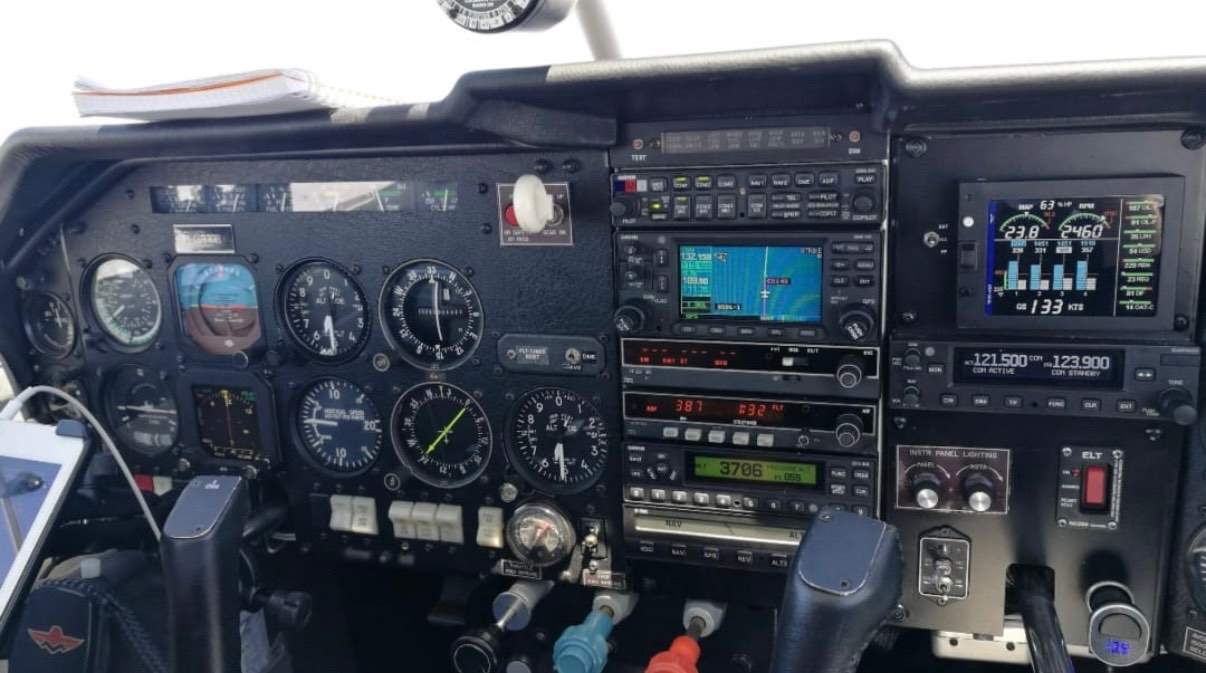
Hi all, After a long upgrade process, my 1980 M20J is finally back in the air with a completely new panel. Here’s the clean factual list of everything that is now installed in the aircraft: Primary Flight Display / Backup Garmin G3X Touch (PFD/MFD) Garmin G5 backup (EADI/EHSI) Remote GPS antennas for both the G3X and the G5 Navigation / Communication Garmin GTN 650Xi (NAV/COM 1 + GPS) with FlightStream 510 Garmin GNC 255 (COM 2 + VOR/LOC/ILS) Garmin GMA 245R remote audio panel SIRS Navigator Compass Autopilot Garmin GFC 500 with: AutoTrim Yaw Damper Smart Glide dedicated button Engine & Sensors Full Garmin EIS integration GAP-26 Angle of Attack via GAD 26 New blue annunciator light for the electric fuel pump, now wired into the annunciator panel ADS-B / Weather / Traffic Garmin GTX 330ES retained (ADS-B OUT) Garmin GDL 50R (ADS-B IN) ADL-150B (Iridium weather) – displayed on the G3X Additional Avionics L3 WX-500 Stormscope (direct to GTN650Xi) LHS-200-C radio altimeter (audio) DME retained Panel Work One-piece custom metal panel Removal of KI-87 ADF Complete rewiring Updated breaker table Happy to answer questions about the install or config details if useful to anyone here. Before the avionics retrofit:

 1 point