Ragsf15e
-
Posts
6,393 -
Joined
-
Last visited
-
Days Won
33
Content Type
Profiles
Forums
Blogs
Gallery
Downloads
Events
Store
Everything posted by Ragsf15e
-
In my opinion, here’s the bottom line on your question… a turbo & FIKI Mooney will greatly increase your dispatch rate over the Cascades between September and May, but expect to fly very high (low 20’s) and expect to cancel for weather much more often than the airlines. If you’re flexible enough, then I would definitely opt for the FIKI as you will be unlikely to cross the cascades often in winter without it.
-
One thing to be cautious about is if the headsets can pair Bluetooth for phone calls or for music. Apparently they can be different. In fact, (and I could be wrong), old A20s only do phone calls where new ones pair to all sound output through BT.
-
It’s real nice to have the altitude displayed on the G5 exactly matching the altitude (with baro correction) transmitted through the transponder. With the old encoders, your altimeter and transponder might not be exact but still within tolerance. My g5 has been perfect for that.
-
I fly between Spokane and Seattle often in a FIKI airplane. Without FIKI, forget September through May. I don’t cruise in icing, in the winter you’ll typically be able to get above it around 20,000’. I usually cruise around 23,000’ but I’m pressurized. Count on icing fall winter and spring. Sometimes it’s there, sometimes not, but more often it is. You could fly that route pretty often in the few summer months without FIKI but that’s about all in my opinion.
-
I have a gtx-345, and I didn’t think it has a built in encoder? When installed, they asked if i wanted to keep using the old grey box encoder or the G5s I also installed (i opted for the g5). I guess I thought the Garmin transponder gets the altitude from the PFD. Possibly I’m mixing up the terms though? So what other avionics does the OP have, and what is supplying the altitude input to the transponder?
-
Sensitive nose wheel steering
Ragsf15e replied to Jpravi8tor's topic in Vintage Mooneys (pre-J models)
One important thing covered above that’s related to steering… there’s usually not a reason to use brakes until you’re preparing to turn off the runway. Land on speed and on your aim point, you’ll find it’s still a very short roll without brakes. Wait until definitely less than 50, maybe closer to 30 and everything’s easier. -
#3 is commonly the hottest. The baffling is pretty tight against the back of it and can restrict airflow. There are several tricks to open up airflow around the back. #1 is usually coolest. Mine will have a difference of ~60 degrees or so depending on power setting and oat. 2/4 fall between 1/3. His #2 temp and oil temp both seem unlikely.
-
Read through this one, theres a lot of good advice in there…
-
There’s a previous thread about some JPI fuel pressure sensors doing this as well. Mine was not fixed with a snubber, however I created a small leak somewhere when I installed the snubber. While taking out the snubber I made sure all the fittings were snug and sealed… the oscillation stopped. I have no idea why. I probably had a very small air leak somewhere, but who knows? This was months ago and it’s still good. It had fluctuated for several years.
-
The one I’d like to see is flying level in turbulence damper on/off. It will likely have to be done with the autopilot off, but just trimmed level, seeing what turbulence does in yaw without it, then turning it on. In the Meridian i fly with a gfc700, I typically turn yd back on after disconnecting the AP because it makes such a difference in passenger comfort by reducing/eliminating yaw oscillation.
-
One other thing… for optimal cooling you’ll find faster is better and thin air doesn’t cool as well. So what do I mean by that? Well on climb out you definitely want the cowl flaps open to give max airflow over the engine, but most people climb out faster than Vy once clear of obstacles. Try ~115-120mph. You’ll get better cooling than at Vy. When you fly up above about 10,000’, you’ll notice that it might try to get real warm. Your Calibrated airspeed is less and it’s real thin air. You’ll want to keep a close eye while climbing and setting the mixture to keep the CHTs down. Climb with them open, cruise with them closed will work for most if your baffles are good and you have good techniques. If you need them open in cruise, do it but there’s probably something else (mixture, baffles, rpm) that could keep your temps in check.
-
Depending on what type of radio 2 you have you could potentially display that on the g5 as well and ditch obs. Has to be a compatible digital radio (sl30 works).
-
Jeez, this one looks pretty awesome! Tank reseal too. Seems like a low price point for a solid F that’s clearly been taken care of.
- 10 replies
-
- 2
-

-
- m20f for sale
- m20
- (and 1 more)
-
Just so it’s clear ( @carusoam said it above), some of them are wired “fail safe” so that the loss of power to the avionics master causes the avionics relay to be powered on. I’m just reiterating this so that you and your mechanic take a good look at how it’s wired before digging in there.
-
I’d definitely call new horizons and get a “Maggie” harness. They are good quality, and they will make just one side if you want to keep the other. I’ve used them twice and they are good. Youll want to tell them Slick like you said, and I also confirm which plugs the leads are going to since there’s apparently 2 different setups possible on an A1A. I have the alternate setup and they understood perfectly. https://www.newhorizonsmaggieaircraftignitionsystems.com
-
BK/TT CANCELLS ALL AEROCRUZE ORDERS WITH AC SPRUCE
Ragsf15e replied to cliffy's topic in Avionics/Panel Discussion
Especially if you don’t have a realistic place in your panel for the controller, then cost will grow quickly. TT had different form factors to work in different parts of the panel. -
Mooney down near PIA
Ragsf15e replied to The Other Red Baron's topic in Mooney Safety & Accident Discussion
And so does the non flying general public. Or in this case they get to see the video of an airplane careening down a road. -
It also sounds like the curse of a good engine monitor. You probably wouldn’t notice 20-30rpm on the analog gauge, but now you see every single rpm, amp, and psi.
-
Where do you mount your fire extinguisher?
Ragsf15e replied to RobertGary1's topic in General Mooney Talk
Older airplane with emergency gear on the left sidewall. This looking down and right from pilots seat. Just behind the trim wheel.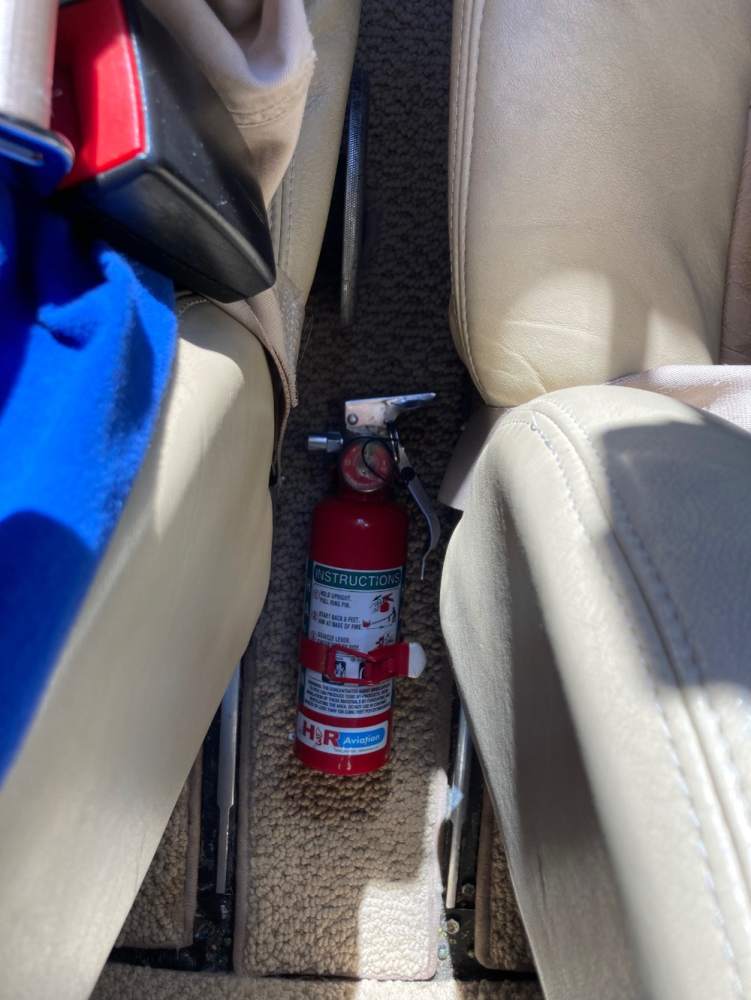
-
If the emergency gear extension is still engaged at all, it will affect the gear for sure. Maybe not your problem but worth checking.
-
Where do you mount your fire extinguisher?
Ragsf15e replied to RobertGary1's topic in General Mooney Talk
It works ok, but the seatbelts can get tangled in it when you take them off and let them fall down there. It’s disconcerting to have the seatbelt wrapped around the trigger, but there is a pin… -
Nope, that covered it pretty well. Exactly like that starts mine right up whether 30 minutes or 3 hours.
-
Where do you mount your fire extinguisher?
Ragsf15e replied to RobertGary1's topic in General Mooney Talk
On the older models, emergency gear extension is on left side near the pilots left knee. It leaves the area behind the trim wheel open. -
Where do you mount your fire extinguisher?
Ragsf15e replied to RobertGary1's topic in General Mooney Talk
Yeah I have it there too and it seems fine. The seatbelts fall onto it sometimes but there’s a pin in the extinguisher handle so it seems good/safe. -
Mine is more vote than knowing… you’ll see “yes” often because it can actually interface with a -150, but only to provide heading. As an attitude source, no. You’re gonna need a gi-275.