Ragsf15e Posted January 12 Report Posted January 12 6 minutes ago, Fly Boomer said: I don't know much about lithium batteries, but if my alternator craps out after 5 minutes of continuous draw at 70 amps, there is a problem with my alternator. I suspect all batteries will draw whatever they can get from the charging system until the state of charge comes up. Maybe one of our EEs can weigh in here? On their faqs, they say a typical lead acid battery will draw ~40amps for 4 minutes immediately after a normal start. I don’t think I see quite that high, but maybe? 1
Crawfish Posted January 12 Report Posted January 12 2 hours ago, EarthX Inc said: Thank you all for your participation in this thread and all the questions. Please note we provide answers to your questions via the manual; FAQ page; FACT SHEETS; and YOU TUBE channel to educate users on their charging system and the role of the battery to provide understanding and information. The extensive process and expense for any manufacturer to receive a TSO (Technical Standard Order) approved product, is a deep dive into the DESIGN of the product and verification of its functionality, reliability and safety. The next step in the process is receiving an STC (Supplemental Type Certificate) for retrofitting existing aircraft (such as the Mooney’s here) or a TC (Type Certificate) for new aircraft (such as the Cirrus G7 and SR20’s aircraft). This is where the real expense and time comes in as it must be completely and thoroughly tested to work as designed within the system it will be used in which includes the alternator and regulator, starting performance, and critical situations, such as an alternator failure for examples. This process requires FAA DAR’s (Designated Airworthiness Representatives), DER’s (Designated Engineering Representatives) and a plethora of other experts. The barrier to bringing new technology and improvements to the certified aircraft market, from regulatory, to the expense, to the time involved, is why many manufacturers choose not to pursue it. EarthX currently has over 350 airframes with STC’s and more are on deck for 2026 and you will see many new aircraft come standard with an EarthX battery in the future. We believe in the certified aircraft market and have committed to the process of what it takes to bring this technology to you as an alternative. The EarthX battery that is TSO’d and STC’d for your aircraft has been thoroughly designed and tested to work in your aircraft. (it does not “eat” your alternator). I think we all really appreciate the time, effort, and money everyone at EarthX has put in to bring new technology to our aging fleet. And the time you've take to help improve our understanding through this forum. Not many companies take the time to help the consumer in that way. Thanks! 12
EarthX Inc Posted January 12 Author Report Posted January 12 2 hours ago, Crawfish said: I think we all really appreciate the time, effort, and money everyone at EarthX has put in to bring new technology to our aging fleet. And the time you've take to help improve our understanding through this forum. Not many companies take the time to help the consumer in that way. Thanks! You are welcome and thank you for taking the time to say this, it does mean a lot to us. 4
ttflyer Posted January 13 Report Posted January 13 IMO, what the good rep from EarthX is saying, essentially, is that a 70 amp alternator should be able to put out 70 amps and if it can't, that's not their problem (this is basically what they told me on the phone when we had our RV-6 issue). The problem with that logic, as has been pointed out, is that these antique airplanes don't always play by the rules. With a normal lead acid or AGM battery, the alternator is just never asked to work that hard. The EarthX battery asks it work as hard as it possibly can. And, at least in our application, the battery absolutely DID "eat" the alternator. Your mileage may very. But that was our experience. 1
Schllc Posted January 13 Report Posted January 13 5 hours ago, Ragsf15e said: On their faqs, they say a typical lead acid battery will draw ~40amps for 4 minutes immediately after a normal start. I don’t think I see quite that high, but maybe? Even in my early days of mastering the hot start, I have never seen anything close to 40amps coming out of my alternator. Even running the ac on the ground at low rpm’s with a dead battery and a nearly dead battery (yes I drained a battery and almost a second one trying to hot start when I first got my plane). Even then I only saw high 20’s and only for a short while. I have 100amp alternators in my Aerostar and nearly ran that battery down once with fouled plugs and a flooded engine and again running ac and all normal load I was at 5amps on one and 16 on the other. has anyone actually see 70amp draw on your alternator?
Ragsf15e Posted January 13 Report Posted January 13 1 hour ago, Schllc said: Even in my early days of mastering the hot start, I have never seen anything close to 40amps coming out of my alternator. Even running the ac on the ground at low rpm’s with a dead battery and a nearly dead battery (yes I drained a battery and almost a second one trying to hot start when I first got my plane). Even then I only saw high 20’s and only for a short while. I have 100amp alternators in my Aerostar and nearly ran that battery down once with fouled plugs and a flooded engine and again running ac and all normal load I was at 5amps on one and 16 on the other. has anyone actually see 70amp draw on your alternator? No, however, I do believe they could be high at times. After starting the Meridian (which is a significant draw), it will go to around 100amps for a minute or two and then come down to the normal ~38. That’s a much bigger 24v battery but it gives an idea. That gen is rated at 170amp continuous.
MikeOH Posted January 13 Report Posted January 13 9 hours ago, Ragsf15e said: I might be a fence-sitter on this one and see how it turns out. I think that's a prudent approach to new technology, or even to a new application of existing technology. Especially as it relates to a critical application such as an aircraft electrical system. This has a bit of the G100UL feel to it....if your plane is perfect you shouldn't have any issues, but if your plane is old, poorly maintained, etc. then it's 'your fault' not our product. Despite having been 'tested' and having been issued an STC, designed around and for a different technology, this, IMHO, is a real risk for a new tech/application. I have no personal knowledge of the internal construction or BMS design of these EarthX products. The following is only general information comparing AGM lead-acid with typical LiFePo technology. The key figure, IMHO, regarding charge is the internal impedance of the cells. LiFePo have much lower impedance than a similar capacity (A-hr) AGM lead-acid cell; LiFePo can be less than 1 milli-Ohm per cell whereas lead-acid is more like 3 milli-ohm, and as high as 10 milli-Ohm. Beside the obvious ability to draw significantly more initial current, the consequence of the higher impedance in lead-acid cells is that the voltage jumps up (due to the higher resistance) which then tends to limit the current, even further as the resistance increases with temperature; this is the cause of the 'tapering' off seen after the initial charge surge. AGM lead-acid charge rates are usually limited to C/5 to C/3 (6.5 Amp to 11 Amp for a 33 Amp-hr battery) vs 1C being acceptable for a LiFePo. To be clear, I am happy there is a new company developing products for GA. I have no animus towards EarthX. I am only advocating caution and an 'eyes open' approach to adapting LiFePo technology to our small corner of GA. Too many years as an EE seeing the introduction of 'new' stuff uncovering unintended consequences. Until you field a product to a significant population for a reasonable time, you just don't know what's going to happen. 2
Schllc Posted January 13 Report Posted January 13 8 hours ago, MikeOH said: Until you field a product to a significant population for a reasonable time, you just don't know what's going to happen. The devil is always in the details… sample size as well as time in service are what is needed. The company started in 2013, started seeking certification for aircraft in 2017, and got the first approval in 2019. I do not know how many they have had in service, nor the status of complaints/comments they have received. As far as the vans that lost an alternator, I would be cautiously suspect of any experimental aircraft’s issues. I am not directing this to the poster who commented, but more broadly to the genre. I am certain that there are many disciplined and competent builders who do as good, or better than certified airframes. But based on what I have seen over the years, this is not the norm, it would be the exception by pretty large margin. I also don’t believe the majority of the crazy things I have seen were done to be cavalier or in disregard of best practices. Most have been rationalizations or shortcut math that attacks a challenge from only one perspective. Point being all alternators are not equal, and with a certified aircraft you pretty much know the components limits. With experimental it really is the wild wild west. I am eager to try the batteries simply for the UL, my only concern was fire, the potential for alternator issues is new, and my alternator is NOT cheap. With two batteries, I don’t really concern myself with the time I have to get on the ground in the event of a failure. If I lost both alternators and both batteries I would be landing at the closest airport. perhaps @EarthX Inc would share some of their statistics with us, with regards to battery interactions and alternator failures, fires, overheating etc etc. 2
Fly Boomer Posted January 13 Report Posted January 13 16 hours ago, MikeOH said: AGM lead-acid charge rates are usually limited to C/5 to C/3 (6.5 Amp to 11 Amp for a 33 Amp-hr battery) vs 1C being acceptable for a LiFePo. Concorde says their RG series prefers 8xC1 (8 times C1). 1
1980Mooney Posted January 14 Report Posted January 14 On 1/12/2026 at 5:17 PM, EarthX Inc said: You are welcome and thank you for taking the time to say this, it does mean a lot to us. I will ask again. Wouldn’t a LiFePO4 specific regulator with a tapered charging profile (rather than a step function full max alternator charge) installed in conjunction with a LiFePO4 battery be the best of both worlds? 1
Ragsf15e Posted January 14 Report Posted January 14 1 hour ago, 1980Mooney said: I will ask again. Wouldn’t a LiFePO4 specific regulator with a tapered charging profile (rather than a step function full max alternator charge) installed in conjunction with a LiFePO4 battery be the best of both worlds? Do these exist? And if so, I’m betting they have a reason, but I agree, id be interested to know why? 1
MikeOH Posted January 14 Report Posted January 14 5 hours ago, Fly Boomer said: Concorde says their RG series prefers 8xC1 (8 times C1). I wouldn't say 'prefers'. In context, as excerpted below, it will accept up to 8C if under constant voltage charging, but that will rapidly decrease. For conditioning charge (section 9) Concorde indicates C/10:
ttflyer Posted January 14 Report Posted January 14 13 hours ago, Schllc said: As far as the vans that lost an alternator, I would be cautiously suspect of any experimental aircraft’s issues. I am not directing this to the poster who commented, but more broadly to the genre. I am certain that there are many disciplined and competent builders who do as good, or better than certified airframes. But based on what I have seen over the years, this is not the norm, it would be the exception by pretty large margin. Broadly speaking, I would tend to agree with your assessment about experimental aircraft. So much so, that I was happy to have sold our RV and buy the Mooney. In fact, I will never own an experimental aircraft again because of thier "garage built feel." That being said, I don't see how your logic applies in this case. The fact is the EarthX battery has VERY different charging characteristics to our normal batteries. By its design, it will put a MUCH higher load on the charging system REGARDLESS of where the airplane was built. That is a simple fact. I was just trying to share my actual experience with this very battery in an aircraft and I think it's valid. If you don't, fair enough... 2
Schllc Posted January 14 Report Posted January 14 8 hours ago, ttflyer said: Broadly speaking, I would tend to agree with your assessment about experimental aircraft. So much so, that I was happy to have sold our RV and buy the Mooney. In fact, I will never own an experimental aircraft again because of thier "garage built feel." That being said, I don't see how your logic applies in this case. The fact is the EarthX battery has VERY different charging characteristics to our normal batteries. By its design, it will put a MUCH higher load on the charging system REGARDLESS of where the airplane was built. That is a simple fact. I was just trying to share my actual experience with this very battery in an aircraft and I think it's valid. If you don't, fair enough... In our mooney’s we know which of two batteries will be installed and which alternator, we also know the configuration of the install. With the experimental there is more unknown than known about all three of those factors. I don’t doubt that you lost your alternator. I am unclear as to why, and while your evidence is plausible, it is also somewhat anecdotal. I would think discharging and charging with the systems is a pretty big part of certification.However, I’d still like @EarthX Inc to address the question because my alternator is not cheap.
ttflyer Posted January 14 Report Posted January 14 I think we are saying the same thing. Alternators are expensive. I would like to hear EarthX's take on the charging side of this as well. But when I asked that question years ago, it was very much "a 60 amp alternator should be able to put out 60 amps." I'd be surprised if that isn't the justification for the STC in our case as well. And I stand by my assertion that if that is the case, it's putting a lot of stress on our very expensive alternators. Look, I'm thrilled EarthX is giving us options. I'm sure there is a solution to this problem that gets us a much better, lighter battery. But, I'm not sure we are quite there yet, regardless of there being an "approved" STC. That doesn't guarantee there will be no problems. 2 1
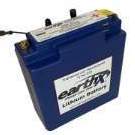
EarthX Inc Posted January 15 Author Report Posted January 15 (edited) We appreciate that using a lithium battery in your Mooney may seem novel and new and raises questions. That’s exactly why we are here on this forum, to address your questions directly and provide clarity. Advancing technology often feels uncomfortable because it challenges what we’ve always known. We welcome questions, but it’s important to base discussions on facts, not assumptions. LiFePO₄ technology is proven and trusted in aviation. LiFePO₄ batteries have been in use for over 50 years, starting with the U.S. military, and EarthX alone has logged more than 25 million flight hours across tens of thousands of aircraft over 12 years. Every safety and compatibility consideration has been addressed. LiFePO4 batteries use the same charging profile (voltage) as lead-acid, so no alternator or regulator changes are needed. The internal resistance of the ETX900-TSO is approximately 4mOhm. The internal resistance of the Concorde RG-35AXC is also approximately 4mOhs. We hear your concern that this new technology might damage your 50+ year old alternator. The EarthX Mooney’s typical peak charge is 15-20 amps that lasts about 3 minutes. EarthX is particularly fond of the Mooney aircraft and is a proud owner of an M20K with an EarthX battery in it for 3 years now. Up until now, you had no choice but to use a lead-acid battery in a certified aircraft, and the companies that cornered this market had no competition. Competition is good. It breaks monopolies and creates opportunities for better solutions. When companies compete, they strive to create better products that improve safety, reliability, efficiency, and deliver advancements. Edited January 15 by EarthX Inc 9
Oscar Avalle Posted January 15 Report Posted January 15 I love my Earthx battery. I modified my M20C and installed a IO-360 per LASAR´s STC. Among other things it moved by battery back. I ran the W&B and my CG was WAY back. So the EarthX battery helped me increase my useful load and by CG. The battery works great, it cranks much better than my old Concord. Now, with regard to the 15Amp... My plane is now full electric. Glass cockpit and electronic mags. Obvioulsy, this is a concern as the power consumption is way up (lets also not forget the electrical gear that needs to be lowered...). I also had one electrical power outage (the grounding cable of the alternator went lose). So how to solve this issue if to the equation you add my long x-countries... without any close by airports? I went the route of a back up alternator. I believe from a risk perspective this is the most effective solution. You have two alternators and if everything fails an EarthX battery that should get you to where you need to go... And I also have a smaller battery for the ignition (but the weight is neglible). So, if you ask me EarthX worked well for my mission. Oscar 4
Andy95W Posted January 15 Report Posted January 15 Hi, Oscar. Thanks for the write up. Have you ever noticed how high your amperage gets after startup? Any difference after a hot start of your IO-360 when you had to crank a lot? Thanks!
Oscar Avalle Posted January 15 Report Posted January 15 1 hour ago, Andy95W said: Hi, Oscar. Thanks for the write up. Have you ever noticed how high your amperage gets after startup? Any difference after a hot start of your IO-360 when you had to crank a lot? Thanks! it goes up from 27 cold to 29 amp hot. But With the electronic mags my cranking has improved significantly. 1
Ragsf15e Posted January 15 Report Posted January 15 15 hours ago, EarthX Inc said: We appreciate that using a lithium battery in your Mooney may seem novel and new and raises questions. That’s exactly why we are here on this forum, to address your questions directly and provide clarity. Advancing technology often feels uncomfortable because it challenges what we’ve always known. We welcome questions, but it’s important to base discussions on facts, not assumptions. LiFePO₄ technology is proven and trusted in aviation. LiFePO₄ batteries have been in use for over 50 years, starting with the U.S. military, and EarthX alone has logged more than 25 million flight hours across tens of thousands of aircraft over 12 years. Every safety and compatibility consideration has been addressed. LiFePO4 batteries use the same charging profile (voltage) as lead-acid, so no alternator or regulator changes are needed. The internal resistance of the ETX900-TSO is approximately 4mOhm. The internal resistance of the Concorde RG-35AXC is also approximately 4mOhs. We hear your concern that this new technology might damage your 50+ year old alternator. The EarthX Mooney’s typical peak charge is 15-20 amps that lasts about 3 minutes. EarthX is particularly fond of the Mooney aircraft and is a proud owner of an M20K with an EarthX battery in it for 3 years now. Up until now, you had no choice but to use a lead-acid battery in a certified aircraft, and the companies that cornered this market had no competition. Competition is good. It breaks monopolies and creates opportunities for better solutions. When companies compete, they strive to create better products that improve safety, reliability, efficiency, and deliver advancements. Thanks for that. Even though a few of us seem a little skittish about the new battery technology in our old airplanes, you can be sure we appreciate your efforts. As you said, having options is a good thing, and competition among different companies is good for us as consumers. Some of us might be a bit scarred from the ongoing debacle/debate about G100UL potentially (or likely) causing leaks in our old airplanes. That too went through an extensive STC process. So forgive us for asking all the questions and potentially wanting our friends to try it first (thanks @Oscar Avalle!). I Personally would love to see your m20k loadmeter / ammeter during/after an engine start when the alternator is turned on. I also have an m20k with two alternators and think it’s a good application for your battery. 3 1
bonal Posted January 15 Report Posted January 15 Agreed it’s good to see anything new that adds choice to our heavily regulated airplanes, just curious what country are they manufactured in? 1
EarthX Inc Posted January 15 Author Report Posted January 15 5 minutes ago, bonal said: Agreed it’s good to see anything new that adds choice to our heavily regulated airplanes, just curious what country are they manufactured in? If you are asking about EarthX, we are in good old Colorado USA, and a veteran owned business too if that is of interest. 5 4
Utah20Gflyer Posted February 2 Report Posted February 2 As an another data point with the Concord axc 35 battery - I see very little pull from the alternator on the amp meter with a “good” start. Meaning second blade kind of start. In the instances where I botch things and I end up doing two longer cranks from under or over priming I remember seeing about a 20 amp charge rate but only for a very short amount of time. I have a concord ACX 35 battery currently. I would be very surprised to see a 60-70 amp charge rate from an earth X battery unless it was heavily discharged but I am willing to look at any available data. So far we seem to only have one example of a problem from an experimental aircraft. There are more variables than the battery so I think we need a larger data set. I imagine EarthX has that data set. Because there are so many variables I am sure there are cases where the introduction of a new variable will cause problems but I look forward to trying one when they are approved for the firewall forward applications. I’d be happy to come back and post what charge rate I’m seeing. 1
Fly Boomer Posted February 2 Report Posted February 2 9 hours ago, Utah20Gflyer said: I would be very surprised to see a 60-70 amp charge rate from an earth X battery unless it was heavily discharged but I am willing to look at any available data. So far we seem to only have one example of a problem from an experimental aircraft. According to the Concorde Component Maintenance Manual (CMM), constant potential (voltage) charging is the preferred method of charging a healthy battery. That manual further tells us that the output current (amps) of the charging equipment (either the charging system in your airplane, or an external charger) should be as high as possible, up to 8 times the C1 current of the battery. For the Concorde RG-35AXC the C1 current is 33, and 8x 33 is over 250 amps. So the battery prefers and, because of its low impedance design, will take over 250 amps while charging. For example, if your charging system can put out up to 90 amps, the Concorde RG-35AXC, if sufficiently discharged, will suck all 90 amps until it approaches a full charge. I don't know how much current an EarthX battery likes, but the fear that it will somehow ruin your charging system seems unfounded to me. Nobody at my airport has a charging system that can come close to the 250+ amps that the Concorde RG-35AXC prefers, nor whatever the preferred charging current is for the EarthX -- what's the difference? 1
Crawfish Posted February 2 Report Posted February 2 Just finished up installing our EarthX battery, so far I've seen charge rates after start in the range of 7-10 amps. With the 10 amps being after the 10 amps being after a hot start. From what I've seen so far I have no concerns about it destroying my charging system. 2 1

Recommended Posts