David Lloyd
-
Posts
1,170 -
Joined
-
Last visited
Content Type
Profiles
Forums
Blogs
Gallery
Downloads
Events
Store
Everything posted by David Lloyd
-
 Another good video! Go Dynon! About the backup batteries and length of time those batteries are good for, maybe you have touched on this and I have overlooked it, but many people don't really understand what those batteries actually do or don't do. The back up batteries will run the displays, ADAHRS, engine monitor and Dynon GPS. The back up batteries will not power the autopilot servos, com radio, transponder, other GPS navigator, or anything else in the airplane. Those loads must be entirely carried by the aircraft main battery. Several years ago, I was on the way in my Dynon equipped RV7 from Charlotte to Pittsburgh and had an alternator failure. Good weather just behind me, all the way back to Charlotte, but low IFR weather at and within 50 miles of AGC/Pittsburgh. I called ATC and advised I just had an alternator failure and would like to turn South, direct 8A6, my home base. They answered, right turn 180 degrees, when able direct 8A6, would you like higher or lower? Huntington weather is good if you want to go there (hint, hint). No thanks, headed home. Shooting an ILS on battery power alone and being stuck in Pittsburgh with a dead alternator, neither was comforting. Turned the nav and strobe lights off as it was just after sunrise, and turned one display off. According to my Dynon display, the amp draw was about 6 amps for the one display, GPS, nav/com, transponder and audio panel. Two hours later I was on the ground at 8A6. Bus voltage had dropped to 11.4, not low enough for the display backup battery to kick in. The transponder and nav/com were still working. I could have gone on for another 30-45 minutes on the aircraft main battery. New avionics really don't use much power and seeing accurately what is going on as far as load and voltage allows a lot of decision options. The Dynon batteries will power the displays for an hour, the D10A for a couple hours. Will you aircraft main battery power everything you want and need for that time? What load can you shed? How? What will it do? If your displays are on a pullable circuit breaker, they can be removed from the bus and powered by their batteries to reduce the load on the aircraft main battery. A what if/safety video?
 -
Aft CG or Fwd CG... where are you operating?
David Lloyd replied to Yourpilotincommand's topic in General Mooney Talk
Oh, I agree CAR-3 is empty weight excluding oil. On the surface, it doesn't make sense to me. Why have a useful load figure that you have to subtract from after engine oil is added. And I don't remember anything in my POH for adding or subtracting oil. So it seems in some places Mooney straddled the fence between CAR-3 and Part 23. The reason I said what I did was because there is official, printed info on most subjects pertaining to Mooneys from Mooney that is at least semi accurate. Do my shock disc need replacement? Let's see what the book says. How is weight and balance done? Let's see what the book says. Book first, opinions second. -
Aft CG or Fwd CG... where are you operating?
David Lloyd replied to Yourpilotincommand's topic in General Mooney Talk
But in the Mooney Service and Maintenance Catalog, Manual P/N 106, it specifically says: Fill oil to capacity (8 quarts). In the end, it doesn't matter, before, after, with or without, better put some oil in before flying. -
Aft CG or Fwd CG... where are you operating?
David Lloyd replied to Yourpilotincommand's topic in General Mooney Talk
Are your discs in tolerance? Out of the Service and Maintenance Catalog: With the full weight of aircraft on the gear, for the nose the gap between the top retaining plate of the disc and the retaining collar for the C and G should be between 0 and .43", E F and J between 0 and .6". For the main gear, 0", full contact. Exceed that=replace discs. Also out out of the Service Catalog is a description with procedures, pictures, diagrams, charts and other confusing stuff on how to properly weigh a Mooney. Measuring all that stuff and doing all that math might correct a tiny amount of manufacturing tolerance but is really intended to correct for the shock disc's compression. The wheels and therefore the weight will be at a slightly different location aft in relation to the datum as weight on them increases. Seats forward, pump out fuel, sump drain the remaining fuel, add back unusable fuel, 8 quarts oil, remove all your stuff, on scales, level, measure everything the catalog says, and start the calculations. Just had mine done in February. Even though the shop did everything described, I bet they still missed something. Did they move the seats forward? Remove the canvas cover from the baggage area? My antique E6B from the seat pocket? I think it is close, but not correct. -
Another resource for airplane information: http://www.aviationdb.com/Aviation/AircraftQuery.shtm#SUBMIT Usually has owner info for many more years.
-
INSTRUMENTS airspeed etc
David Lloyd replied to Jerry Pressley's topic in Avionics / Parts Classifieds
Jerry, how much the manifold pressure/fuel pressure for the C? -
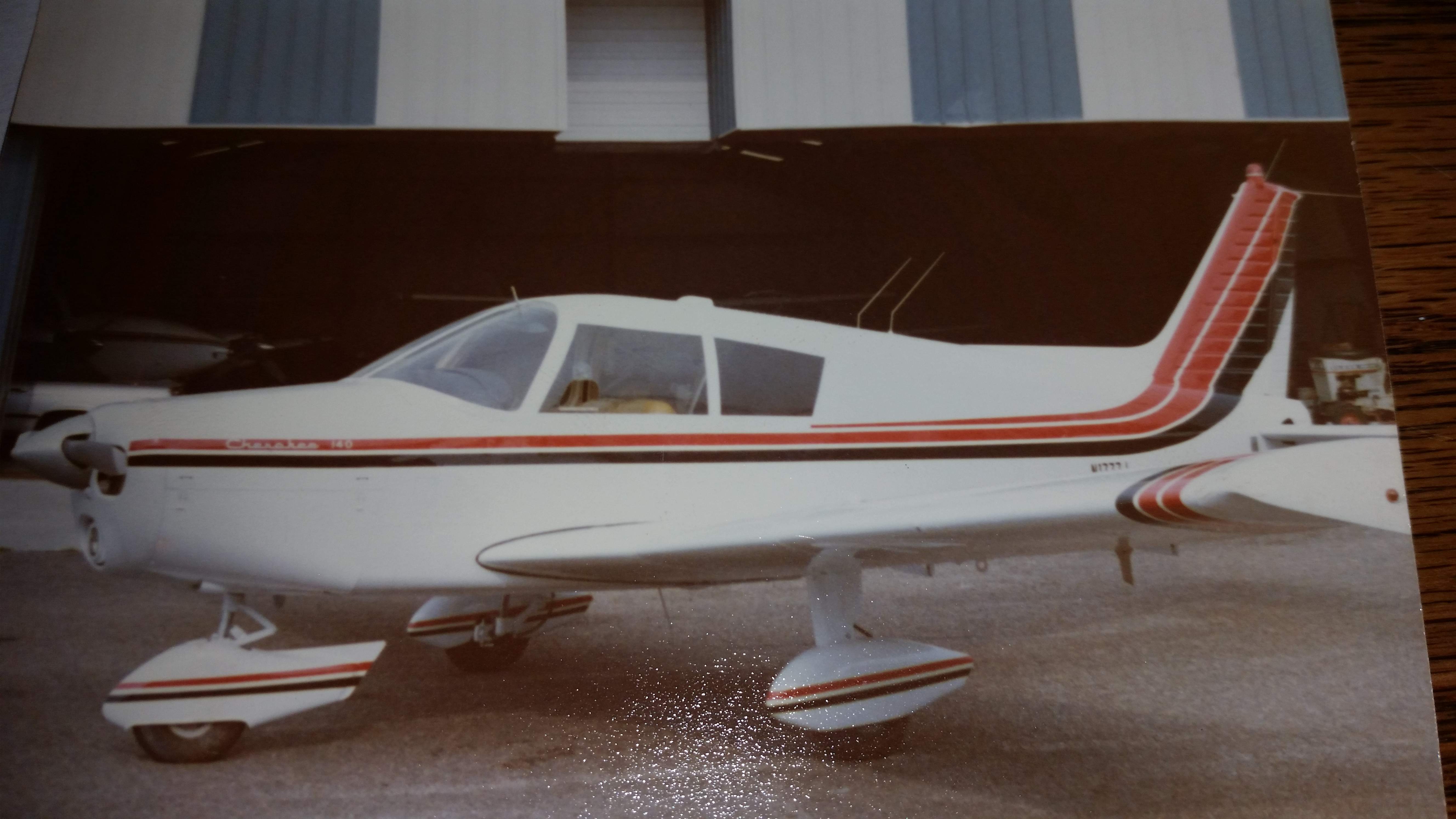
First airplane I had painted was $1750 at Harrington in Aiken, SC. It was in 1979. First annual was less than $300, including the brake caliper that was replaced.
-
Aft CG or Fwd CG... where are you operating?
David Lloyd replied to Yourpilotincommand's topic in General Mooney Talk
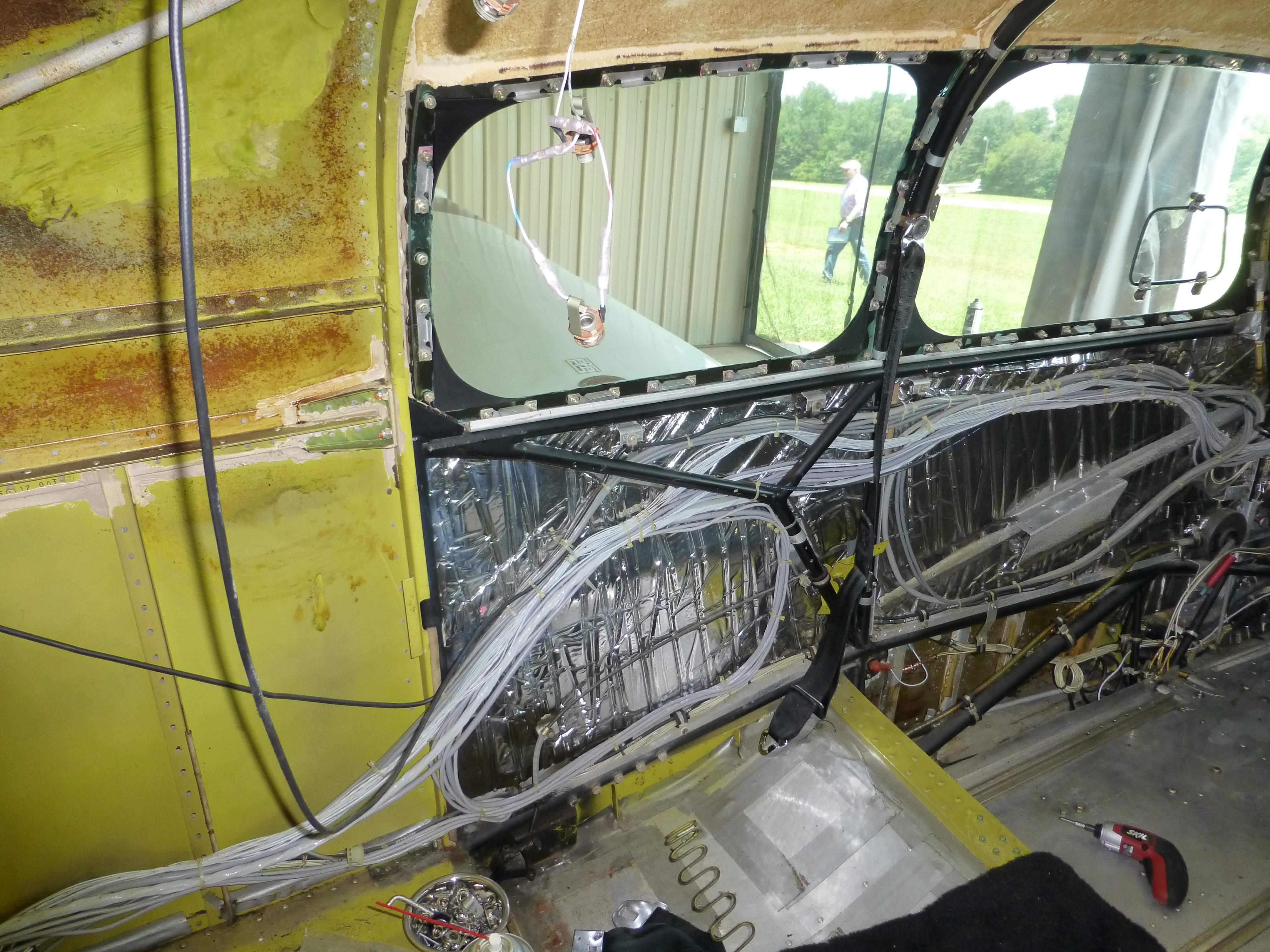
Redoing the interior, I removed probably 20 pounds of foam insulation that was added at some point. Not in the logs. I did replace some of the old fiberglass insulation with the foil backed foam. Wiring for the Stec pitch and roll controllers plus the King remote gyro for the HSI must weigh 15 pounds. Only the wiring for the Stec was recorded.
-
Aft CG or Fwd CG... where are you operating?
David Lloyd replied to Yourpilotincommand's topic in General Mooney Talk
I checked yourpilotincommand's weight and balance page against my spreedsheet, it appears correct in it's calculations. However: I really think my CG is further aft than most with the rear mounted battery, the Stec roll and pitch servo controllers, the pitch servo, KG102 for the King HSI, remote radio for the PAR200B and ELT. And yours is 1 full inch more rearward than mine! That's an inch that makes a big difference. I hope some others post their numbers for their C, D, or E. Especially E. -
Aft CG or Fwd CG... where are you operating?
David Lloyd replied to Yourpilotincommand's topic in General Mooney Talk
Share yours. My C is 1771 empty weight, 46.15 arm, 81729 moment. Recently weighted. I do have a 3 blade prop (15 pounds or so over a 2 blade) and Power Flow exhaust (several pounds over stock) moving the CG forward but also a rear mounted battery. Weight includes 8 quarts of oil, bladder tanks (30 pounds), wingtips, all the mods. Even after getting rid of the old radios, it is the fattest C model around. -
complete 180 hp cowling
David Lloyd replied to Jerry Pressley's topic in Avionics / Parts Classifieds
-
The '65, '66' and '67's each had a slightly different system. Some used a remote gyro, others a panel mount, still others an electrical switch to turn the system on and off. So, a little better description, a year, a serial number, even a pic from the parts manual. I had a '65 C with the remote gyro which has a bias lever on the gyro's base. In the radio bay, someone must have bumped that lever at some point causing a left turn that could not be trimmed out. Brittle cracked tubing, sticky pilot valves, bad gyros, leaking actuator boots, all could cause the problem. All these are repairable. Well, maybe not the leaking boots...someday.
- 1 reply
-
- 1
-

-
M20 short body guide, gotchas, and mission advice
David Lloyd replied to DartMan's topic in Vintage Mooneys (pre-J models)
100 Hours got a pretty good drop in my taildragger. Would expect 100 hours Mooney time would get a similar drop. -
Faith in ADSB weather
David Lloyd replied to Tim Jodice's topic in Mooney Safety & Accident Discussion
Sitting at home in light rain, look at the weather radar on the weather channel. Sometimes it looks like your house might wash away, other times it looks accurate for what you experience. The local news and weather, if they have their own radar almost always shows heavier rain that what actually happening (maybe this attracts viewers). If it really is raining hard, the weather channel or Channel 9 appears pretty accurate. Seems like the same thing is going on with the NWS radar; make the picture ugly as possible. Most of my flying life, my Stormscope kept me out of the thunderstorms, the big bumps. I have flown through very heavy rain with a smooth ride and nothing showing on the Stormscope. Wife and passengers do not like that and it wears the paint off the leading edges. -
Once, I replaced an EGT probe with a new probe and it read about 200 degrees lower than the others. It was within a degree of the others when cold. After putting up with it for a couple years, replaced it with another new probe. That read normal and in line with the others.
-
Visiting AGL Aviation at MRN tomorrow 8/12
David Lloyd replied to Parker_Woodruff's topic in General Mooney Talk
Actually, Winston-Salem, 30 miles west of Greensboro. -
keeping your KCS55 HSI system going
David Lloyd replied to philiplane's topic in Avionics/Panel Discussion
Not to worry about 12 or 24 volt, I think all are switchable. Had to switch out my KG102 right after purchase, fortunately a friend had one left over from an upgrade. Later got a KI525a from him when mine failed with sticky flags. -
A couple months ago I had a sump drain start leaking and could not get it to stop. Looked at the O&N bladder drawing, it specified an F391-18 drain. Got it from Spruce. It appeared to be cad plated steel. Removed the old one and it appeared a little bit of water at the very bottom of the tank, undrainable without removing the drain, had caused a little rust inside the valve where the o-ring sealed. When I bought the plane a year ago, there was water in the left tank. Every time I flew, there were a few drops of water in the cup from the left tank only. Finally got the water cleaned out and replaced the little o-ring at the center of the fuel cap. Despite squirting a lot of water at the cap with a hose, no more water in the tank. Buy a new drain, run your tank down, remove the old drain and drain the tank completely. Install new o-rings on the fuel caps, install the new drain, see what happens.
-
Actually I took mine off and sold it.
-
I think 1/2". I remember it was the largest OD socket that would fit thru the hole in the armrest.
-
With the SL60, can you search by airport name?
-
No on the Flightstream, the 175 family will talk to your ipad without. Garmin meant it to be used with their Foreflight knockoff but people say Foreflight works fine. If you want to load a database update directly from your ipad, then you would need the Flightstream. I just download the database from the Garmin site to my laptop, laptop to card, card to GPS. The Garmin Pilot Guide is not great, you will have questions. The radio is terrific, easy to use. Buttons, icons and procedures are very much like the 650/750 if you are familiar. Give me a call with questions, 980-505-2083.
-
Replacing an InterAv alternator
David Lloyd replied to Matt Ward's topic in Vintage Mooneys (pre-J models)
Remove the brush set and take to any old alternator shop. Very common alternator, they will have the brushes for less than $15. If asked, they would tell you to clean the slip rings a bit with a scotchbrite pad, install the brushes and run for a while at no load. If you are energetic, take the alternator and they will check it over and repair as needed for less than $100. -
Any Garmin 175 GPS pireps? Install time?
David Lloyd replied to Immelman's topic in Avionics/Panel Discussion
tmo, thanks for the reference. Here's what it says; 21-1. Ground Test - GPS, GPS/SBAS, and GPS/GBAS. 21-1.1 Interference. a. The lack of interference from VHF radios should be demonstrated on the completed GNSS installation by tuning each VHF transmitter to the frequencies listed below and transmitting for a period of 30 seconds while observing the signal status of each satellite being received. Degradation of individually received satellite signals below a point where navigation is no longer possible is not acceptable and will require that additional isolation measures be taken. Re-evaluation of installed VHF transceiver performance is not necessary if the filter insertion loss is 2 dB or less. b. Evaluate the following VHF frequencies (25 kHz channels): 121.150 MHz 121.200 MHz 131.275 MHz 121.175 MHz 131.250 MHz 131.300 MHz c. For VHF radios with 8.33 kHz channel spacing, evaluate the following additional VHF frequencies: 121.185 MHz 121.190 MHz 130.285 MHz 131.290 MHz The radio shop demonstrated this for me. Brought up the page showing signal strength of all the satellites, set the first com frequency on the KX-165 and keyed the mic. On a couple frequencies, one or two satellites lost their lock. The other seven or eight satellite reception was unaffected. The shop said this was acceptable as long as the navigation was not impaired. And this was after the shop had spent some time moving antennas, and adding a filter. My new PAR200B did not affect the GPS signal whatsoever. Difference between old and new design. -
Covid-19 is an old Indian phrase meaning every government agency is to make up 19 new, silly rules.