AndreiC Posted January 24 Report Posted January 24 I know some people around here have experience with very cold weather flying, so searching for some wisdom. @Slick Nick? Others? The thing is that the weather would be great for flying the next couple of days, but for the very low temps. So I am itching to go, but I worry that if I attempt to start up the plane I will do damage to the engine, gyros, etc. I am in an unheated hangar, and all I have is a Tanis-like engine preheater (plug-in). (Not sure of the make, but it heats up the cylinders and the oil pan.) I don't have to go flying, it is just for fun. What is the collective wisdom about what the lowest temperature that it is safe to start the plane up at, after a night on the preheater with a blanket? Is -5 F (= -20 C) too cold? How about 0 F (= -18)? Thanks.
Flyler Posted January 24 Report Posted January 24 I don't think there is a real answer to this. The colder the temps, the more potential wear and damage may occur to the plane. There are some adventerous folks that are flying their turbo Mooneys up in the flight levels and surely see these VERY cold temperatures with regularity. Your observations about the avionics and engine are good. If you have mechanical gyros, they will have thick lubrication due to the low temps. Plastic parts (metal too) are more brittle. The grease in the trim jackscrew is very thick, making the electric trim (if you have it) work harder. The battery voltage will be low when cranking, etc. Nothing that the plane can't handle but it will stress it more than a warm day would. Possibly stress your wallet too. For what it is worth, I will probably be snowed in for another week or two with the pending storm. Today looks like lovely flying weather, except it is about 5 degrees F. I won't be flying today. Not super risky IMO but I would rather not get stuck somewhere. With my luck, I will have a very minor mechanical issue and have to land at an airport that is 5 miles away from my hangar, get the plane stuck outside, and have a foot of snow cover it and block it in for 3 months...
Hank Posted January 24 Report Posted January 24 I have the same setup. My coldest takeoff was for breakfast one weekend, 8°F. Four planes went, I was second to takeoff, and the cabin was warm by the time I left the pattern. Coming home after eating was no problem. I did plug in the oil pan heater the night before, and ran a small ceramic heater inside the cabin for ~30 minutes before pulling out of the unheated hangar. Have fun, and dress for the preflight! Bbbrrrrrr!!!
Ragsf15e Posted January 24 Report Posted January 24 26 minutes ago, AndreiC said: I know some people around here have experience with very cold weather flying, so searching for some wisdom. @Slick Nick? Others? The thing is that the weather would be great for flying the next couple of days, but for the very low temps. So I am itching to go, but I worry that if I attempt to start up the plane I will do damage to the engine, gyros, etc. I am in an unheated hangar, and all I have is a Tanis-like engine preheater (plug-in). (Not sure of the make, but it heats up the cylinders and the oil pan.) I don't have to go flying, it is just for fun. What is the collective wisdom about what the lowest temperature that it is safe to start the plane up at, after a night on the preheater with a blanket? Is -5 F (= -20 C) too cold? How about 0 F (= -18)? Thanks. Ive flown down in low single digits (f). The engine was at ~65f though after being on the heater all night. At times I tried a small ceramic heater on low in the cabin as well for the instruments but never felt safe with leaving it on (although I did a few times). Honestly, if you preheat the oil and cylinders to an acceptable temp (say a good bit above the 20f lyc recommends), you’ll be fine. I did struggle to get enough cabin heat when OATs were ~-20c. I was wearing a lot of clothes too. My new 252 seems to have more heat though. 1
AndreiC Posted January 24 Author Report Posted January 24 Okay, what I hear is similar to what I knew -- most people have not attempted to start the plane when the temps are in the negative Fahrenheit territory. At another local field, the owner of the flight school was of the opinion that somewhere below 10F and 0F it is time to put the plane in a heated hangar unless it is absolutely necessary to fly. I'll stay put for the next couple of days (and just go and blow the snow from the access apron). Monday it's supposed to warm up to a balmy 10 degrees, so I'll maybe go then.
Vance Harral Posted January 24 Report Posted January 24 Something often overlooked in these discussions is the temperature tolerance of the pilot. One of my friends had an airplane on the ramp in Nebraska over the Christmas holidays, in below zero (Farenheit) temps. The airplane was fine, but the pilot wound up with frostbite on two finger tips due to a hole in his glove that he didn't think was a big deal. Your decision making won't be as good if you're miserable, of course. And if you bundle up enough not to be miserable, you may find you have some minor difficulties strapping in, reaching various controls, etc. Having said that, how cold you're willing to start the engine isn't really a black/white thing for a single flight, but more of a long-term wear and tear issue. If your battery/starter combination is strong enough to turn over the engine and get it started, you're not going to destroy your engine and gyros in a single cold-weather operation, even in fairly brutal conditions. As such, a once-every-few-years special missing during a brutal cold snap isn't really ever a "no go", provided the pilot can take it and the starter can crank the engine. All this good information you're getting about minimum temps, pre-heat, gyros, etc. is based on keeping the machine healthy across frequent cold weather ops.
Slick Nick Posted January 24 Report Posted January 24 @AndreiC I routinely fly down to about -30*C here in Canada. Honestly, if I didn’t, I probably wouldn’t fly too much in the winter. The coldest I’ve had my J was about -42 up at 18,000’. Cabin heat is not an issue, my heat muff is tight. Winter flying weather here in the Rockies is some of my absolute favourite. A good high pressure system will park itself overhead for a week at a time and it will be cold, but crisp, calm, and clear. I block half of my oil cooler with speed tape below about -5*C, otherwise you won’t get the oil hot enough to burn off moisture. This is essential. I keep my plane in a heated hangar, so I don’t have quite the same issues as you might have. Operationally, once I get it out of the hangar and fired up, the plane seems to love the cold air. If the plane is cold soaked from being parked outside, you will have some interesting challenges. Starting with the engine, I’d do everything I could to give it a good preheat. That oil getting hot will be a big help on startup. Pull it through by hand a bunch before starting, get that oil moving. Your battery will take a hit in the cold. I’ve even noticed this on a hot start in the winter, where the battery in the tail has been cold soaked for a couple of hours. Give it all the help you can. You’ve got an E model, so perhaps the battery is up front under the cowl where it will be warmed by the engine heat. Your avionics and gyros will be subject to wear in the cold. Preheating the panel and cabin is just as important in my opinion. A small space heater on for an hour should be more than enough. Your tires and pucks will be rock hard, avoid runways and taxiways that are bumpy. Your tank sealant will thank you. Cycle the prop deeply once the engine is warm for takeoff, maybe 4-5 times. Get some hot oil up to that hub. Make sure your cabin heater is up to snuff. Plastics and interior trim will be very brittle. Touch things with care. Other than that, I wouldn’t worry too much about it once you get the airplane warmed up. Winter flying is very enjoyable. The plane performs better, the wing and prop have more air to bite into, and you’ll get more horsepower from the engine. Take advantage of it! 10
Utah20Gflyer Posted January 24 Report Posted January 24 Preheat the engine. Throw a little space heater in the cabin for an hour before you fly. It will be fine. You want to fly then go fly! To me the only real question is how cold is too cold to start with no preheating and how cold is too cold for your personal preference. Where I live in Utah I would say it’s never to cold to preheat and fly but I’m not going to fly when it gets in the single digits unless I have a mission that is going to motivate me to deal with the personal discomfort of prepping the plane on the ramp. After owning my Mooney for 5 years I fly to train or for missions. I don’t fly just to fly anymore. 1
Fly Boomer Posted January 24 Report Posted January 24 1 hour ago, AndreiC said: What is the collective wisdom about what the lowest temperature I'm not sure there is a "lowest". As others have suggested, I would plug in my engine heater the evening before, insulate the cowling and prop with something, plug in a GPU or small battery charger the evening before, and plug in a small cabin heater first thing the morning of the flight. What I would personally worry about is the King KG-102a gyro in my avionics bay. I don't have a plan to pre-heat that gyro yet, and it's pretty old. If you don't have a gyro in the tail, heat up the other things, make sure the battery is topped off, and go fly! And, if I was going for breakfast, I wouldn't linger too long before getting back in the air. Another tidbit I am adding after reading some of the other posts above is "dress for the walk home". An off-field landing is always a possibility regardless of temperature. 1
MatthiasArnold Posted January 24 Report Posted January 24 When crossing the Alps in F150+, I typically see -15°C OAT - no factor at all. The lowest OAT I have flown in was -30°C. Windows get icy from the inside. Cabin heat performance is OK in the front row. It seems to be quite cold on the back seats. I have Reiff engine preheaters which I use of course. Based on what I have learned on Mooneyspace, I add one percent IPA 99% to the fuel when forecasted temperatures go below -25°C at altitude. It's documented in the flight manual. 6
Fritz1 Posted January 24 Report Posted January 24 Reiff turbo XP heater on the engine, alien heater in the cabin, heated hangar the night before flight is preferred, heater in the Bravo has plenty of power in cruise down to -30F, marginal in climb and insufficient during taxi, keep microfiber towel handy to wipe frost from inside of windshield and keep taxi as short as possible after coming out of the heated hangar, prime TKS in hangar for 3-5 min to make sure all panels and prop are flowing, top off TKS tank, wear winter clothing, have gloves and hat handy in case you have to walk home
toto Posted January 24 Report Posted January 24 The people at aircraftheaters.com make the Hornet brand. I use a cowl heater from them for preheating the engine, but they also make a line of cabin heaters that are safe to use at all times. They have both mounted and portable cabin heaters - might be worth a look for people with mechanical instruments. https://www.aircraftheaters.com/aircraftheaters 1
Ragsf15e Posted January 24 Report Posted January 24 One other thing I learned… don’t touch 100ll when it’s that cold (like spill a sump jar). If it gets on your skin you have immediate frostbite. 4
dkkim73 Posted January 24 Report Posted January 24 Biggest real risk management thing is the survival aspect IMHO. My wife and I were discussing this at 17K last night in the beautiful, calm, totally clear and totally black, rather cold sky approaching Mullan Pass. The flight dynamics are fantastic as Nick mentioned and the scenery is, if not magnificent, at least meditative, during the day. There's a big period of the year I suck up the weight and clutter and fly with extra survival gear. When it was in the negative double digits ambient on the ground last year, and I had commute flights, I would layer up and wear a vest with a few essentials to boot. Second the value of pre-heating (hangar and engine heater such as the Reiff XP). The heater in my aircraft will keep the cabin and panel "warm enough". The avionics bay is in the tail but the primary gyros are solid state. I've often wondered about how comparable the routine cold temps at altitude (due to lapse rates) in thinner air are to cold ops on the ground. For fun or local maintenance/training flights, I think there's not much of a downside that can't be mitigated by the pre-heat maneuvers well-discussed about and dressing warmly enough or flying in areas where you aren't too far from help. When I was in the upper midwest (MN), we definitely took advantage of some of these flying days. At minimum, doing it a few times will give you valuable operational and planning insight. D 3
toto Posted January 24 Report Posted January 24 1 hour ago, dkkim73 said: Biggest real risk management thing is the survival aspect IMHO. My wife and I were discussing this at 17K last night in the beautiful, calm, totally clear and totally black, rather cold sky approaching Mullan Pass. The flight dynamics are fantastic as Nick mentioned and the scenery is, if not magnificent, at least meditative, during the day. There's a big period of the year I suck up the weight and clutter and fly with extra survival gear. When it was in the negative double digits ambient on the ground last year, and I had commute flights, I would layer up and wear a vest with a few essentials to boot. One of the first lessons my private flight instructor taught me was “always dress like you’re going to have to walk home.” When it’s below zero, that walk home is pretty rough and requires a lot of planning. If the walk home is a no-go, the flight probably should be too.
Ragsf15e Posted January 24 Report Posted January 24 Dress to egress… nothing more fun than wearing a “poopy suit” in March flying out of warm North Carolina just in case you ended up in the pretty cold Atlantic. 3
GeeBee Posted January 25 Report Posted January 25 My biggest concern during ultra low temp operations is entraned water in the fuel. If a check of sump fuel with Gasoila shows dry, I would not worry about it a lot. OTH a little 100% IPA would be a good idea. Not all water comes out in a sump check. Water can be entraned and not detected by a sump check which only checks for free water. We know for a fact that the Mooney engines, especially the Continentals do not have heated spiders like the twin Cessnas. We have had one Acclaim here dead stick out of FL210 due to these problems. Most the time engine radiant heat is enough and I don't know what the break over temp when the engine heat is not enough, but it is pretty dang cold. 1
Bartman Posted January 25 Report Posted January 25 I would use 100% Isopropal Alcohol up to the max allowed, which I think is 3% if my memory is correct. I'd have to look at the POH to be sure. The few times I have flown in very cold temps, I added the IPA well ahead of time, like the night before at minimum, not something you want to dump in the tank and take off. I also filled the tank after flying with IPA to dilute it and minimize any effect on the sealant, if any. I sumped a tank once when it was really cold, and it kept dripping. I am very cautious of this now. Importantly, since the heater is mandatory, the CO detector is required as well. I would not fly without my Sensorcon, especially in the winter. I check and adjust tire pressure more often when it gets cold. You may quickly regret it if you don't.
kortopates Posted January 25 Report Posted January 25 10 minutes ago, Bartman said: I would use 100% Isopropal Alcohol up to the max allowed, which I think is 3% if my memory is correct. I'd have to look at the POH to be sure. The few times I have flown in very cold temps, I added the IPA well ahead of time, like the night before at minimum, not something you want to dump in the tank and take off. I also filled the tank after flying with IPA to dilute it and minimize any effect on the sealant, if any. I sumped a tank once when it was really cold, and it kept dripping. I am very cautious of this now. Importantly, since the heater is mandatory, the CO detector is required as well. I would not fly without my Sensorcon, especially in the winter. I check and adjust tire pressure more often when it gets cold. You may quickly regret it if you don't. A little IPA goes a long ways. 1% is plenty and 3% is hard on your seals and shorten their life despite Mooney does allow up to 3% on some airframes. 2
Fly Boomer Posted January 25 Report Posted January 25 2 hours ago, GeeBee said: If a check of sump fuel with Gasoila shows dry, I would not worry about it a lot. Do you like the WF25 "Regular" or the AP02 "All Purpose"?
dkkim73 Posted January 25 Report Posted January 25 5 hours ago, GeeBee said: I use the AP02 but either is fine. Hadn't heard of this until now. Do you just use a dipstick in the sump (GATS) jar? I imagine it wouldn't layer much unless there's gross contamination.
GeeBee Posted January 25 Report Posted January 25 42 minutes ago, dkkim73 said: Hadn't heard of this until now. Do you just use a dipstick in the sump (GATS) jar? I imagine it wouldn't layer much unless there's gross contamination. Pour some fuel out of the GATS jar into a small paint pail and use a "popsicle" stick with the paste on it. You really don't want to do a check in the GATS jar as you want to keep it crystal clean for easy detection of free water. The GATS jar finish is actually quite good at spotting entraned water if you know what to look for. If the fuel "sheets" off the sides and quickly returns to the pool, the fuel is dry. If it "hangs" in sections as it returns to the pool, it might have entraned water. 1
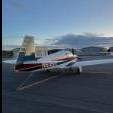
AndreiC Posted January 26 Author Report Posted January 26 Well, here is a report on how it went today (OAT 6*F). After a night plugged in, the oil was at 67*F and the CHTs at 40*F. I ran a small ceramic heater (1500W) inside the cabin for 20 minutes before pulling the plane out of the hangar. With these preparations I was comfortable in the cabin with just a sweater and the engine fired up completely normally. The only "issue" I had was that due to the super dense air I had to throttle back a fair bit to stay out of the yellow arc on the airspeed (at 3500 feet the DA was close to sea level). But 24/24 worked well, even though I had to run ROP (10.2 gph per POH) to keep the CHTs barely in the green. The oil temp was fine though, after covering half the oil cooler with aluminum tape. 5
Ragsf15e Posted January 27 Report Posted January 27 2 hours ago, AndreiC said: Well, here is a report on how it went today (OAT 6*F). After a night plugged in, the oil was at 67*F and the CHTs at 40*F. I ran a small ceramic heater (1500W) inside the cabin for 20 minutes before pulling the plane out of the hangar. With these preparations I was comfortable in the cabin with just a sweater and the engine fired up completely normally. The only "issue" I had was that due to the super dense air I had to throttle back a fair bit to stay out of the yellow arc on the airspeed (at 3500 feet the DA was close to sea level). But 24/24 worked well, even though I had to run ROP (10.2 gph per POH) to keep the CHTs barely in the green. The oil temp was fine though, after covering half the oil cooler with aluminum tape. Climb rate after takeoff??? That’s the best part!! Everything full forward, gear up flaps up, and whoosh! Up you go! 1

Recommended Posts