201er
-
Posts
5,071 -
Joined
-
Last visited
-
Days Won
70
Content Type
Profiles
Forums
Blogs
Gallery
Downloads
Events
Store
Everything posted by 201er
-
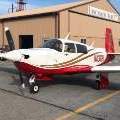
Mooney 201 lands on high power lines in MD
201er replied to ArtVandelay's topic in Mooney Safety & Accident Discussion
Here is the position and distance from the runway where the plane impacted the tower vs the straight in approach. The lower line is the straight in and the upper line is the distance to the impact site. My understanding is that the minimum crossing altitude at JOXOX is 1280ft at 2.4nm from the runway. Given a TDZE of 520, at 1.2 miles the altitude on glidepath should be 900ft which is 380ft AGL. This is 111ft above minimums of 789ft MSL which won't be reached until a bit closer to the runway. Perhaps someone with some math skills can share with us at what exact altitude the airplane should have been at this position 1.22 miles from the runway given the approach profile. And what kind of deviation one might expect on the CDI and glideslope in such a position. Are we talking about one dot off or major deflection?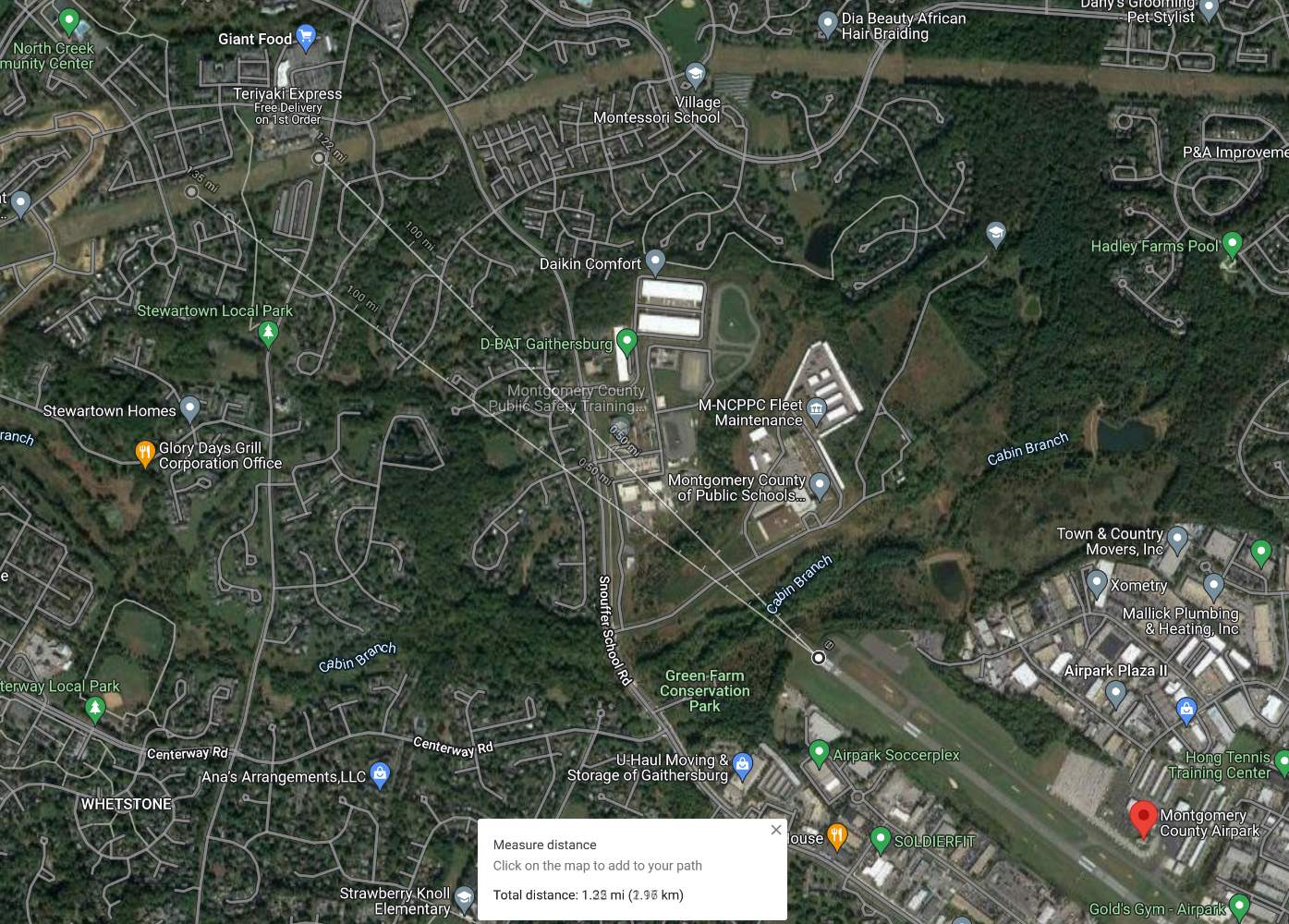
-
go, no-go decision - only LIFR en route
201er replied to dominikos's topic in Miscellaneous Aviation Talk
It’s not too much different than flying at night, over mountains, or over water. Yet the vast majority of aviation accidents happen in day VMC. You are more likely to have an accident at departure or destination so put greater focus on those. Stay proficient, take good care of the airplane, and carry lots of fuel. You can mitigate more risk by not fooling around, staying strictly legal, not going below minimums, avoiding stalls, and carrying enough fuel than worrying about what’s underneath you. -
Mooney 201 lands on high power lines in MD
201er replied to ArtVandelay's topic in Mooney Safety & Accident Discussion
After all this, the cabin and baggage doors still functional!
-
Mooney 201 lands on high power lines in MD
201er replied to ArtVandelay's topic in Mooney Safety & Accident Discussion
Wouldn't matter on an LPV approach. Follow the needles to the ground. Would have crashed on the runway if all the needles were centered, not 1-2 miles short. -
Have you ever wanted to be a wing walker?
201er replied to amillet's topic in Miscellaneous Aviation Talk
That’s not a wing walker, now here’s a wing walker!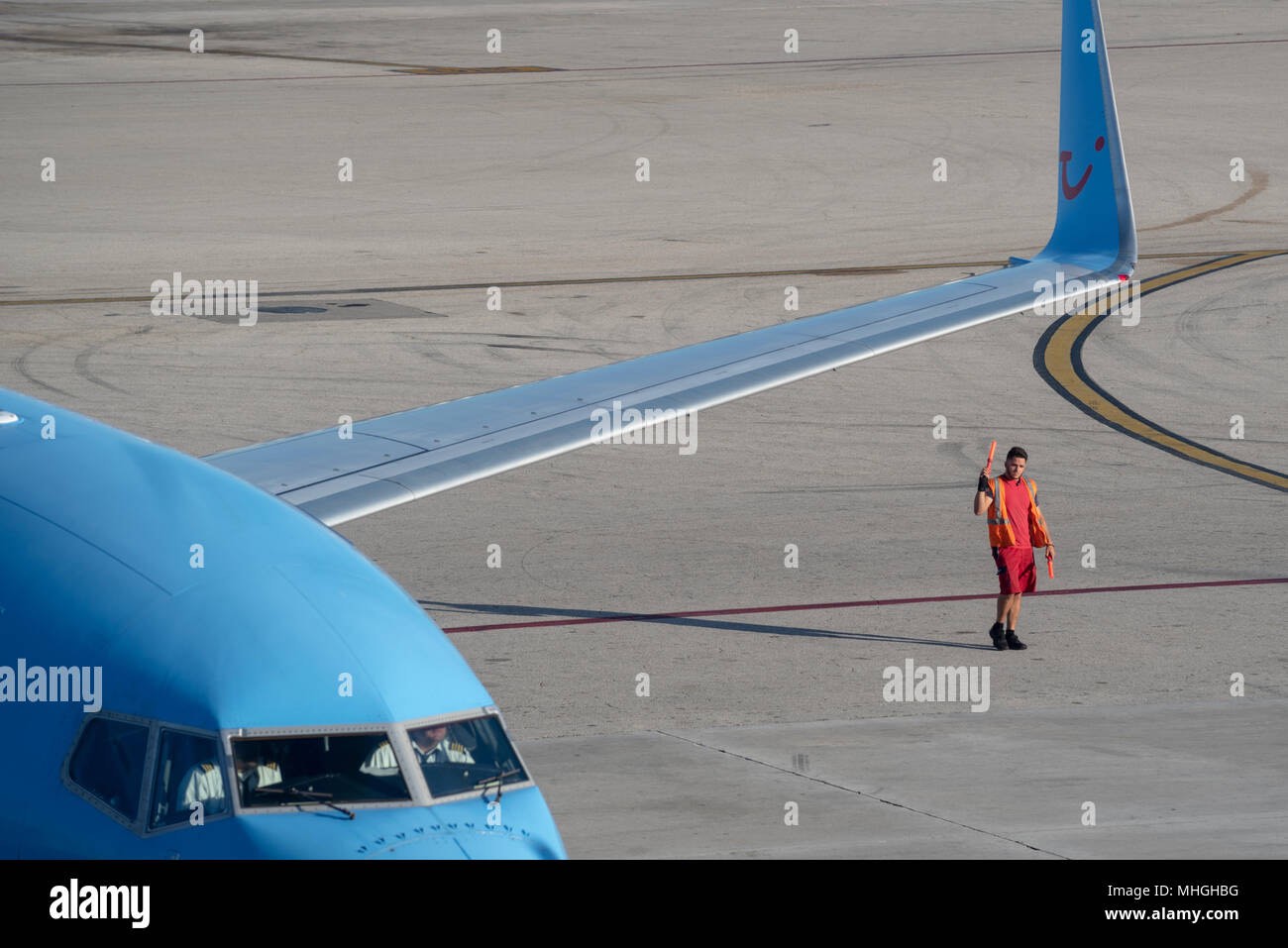

-
I have a very good price on scam parts, 430s, whatever you want. I’ll match or beat any other scammer’s price!!
-
Sounds about right. Can't be expecting everyone else to be paying for rookie gear up mistakes. I know so many Mooneys that got gear upped or prop struck in the first 25 hours of new low time owner. I think with 100 hours and instrument you can expect to cut that in half and with 1000+ hours not quite in half again. What does that say about your current risk factor though? Be super careful, get good instruction, get lots of practice, don't do anything stupid, don't over estimate your capabilities, don't get too comfortable, and before long you'll be out of the danger zone and you won't have to pay so much for insurance.
-
I thought the back is closer to CG, sitting on the spar and all?
-
For motion sensitive passengers, what’s better the front or back? Besides visual differences, is there a difference in how motion/turbulence feel in the back vs front?
-
Was thinking about making some for birds but it turns out they don’t need them. They don’t get hearing loss like lowly mammals.
-
Or when there isn't enough runway or you want to take a lot of friends or you want to transport a baby elephant
-
Flying IFR NJ to VA, I can file Miami as an alternate
-
NJ to Texas, Caribbean, Canada, Denver to NJ, and loads more.
-
Byron does it for $300 In theory it was a big improvement. Down from 0.50. In reality it’s subtle but noticeable. But I’m sure in the long run it’s worth having less things shaking.
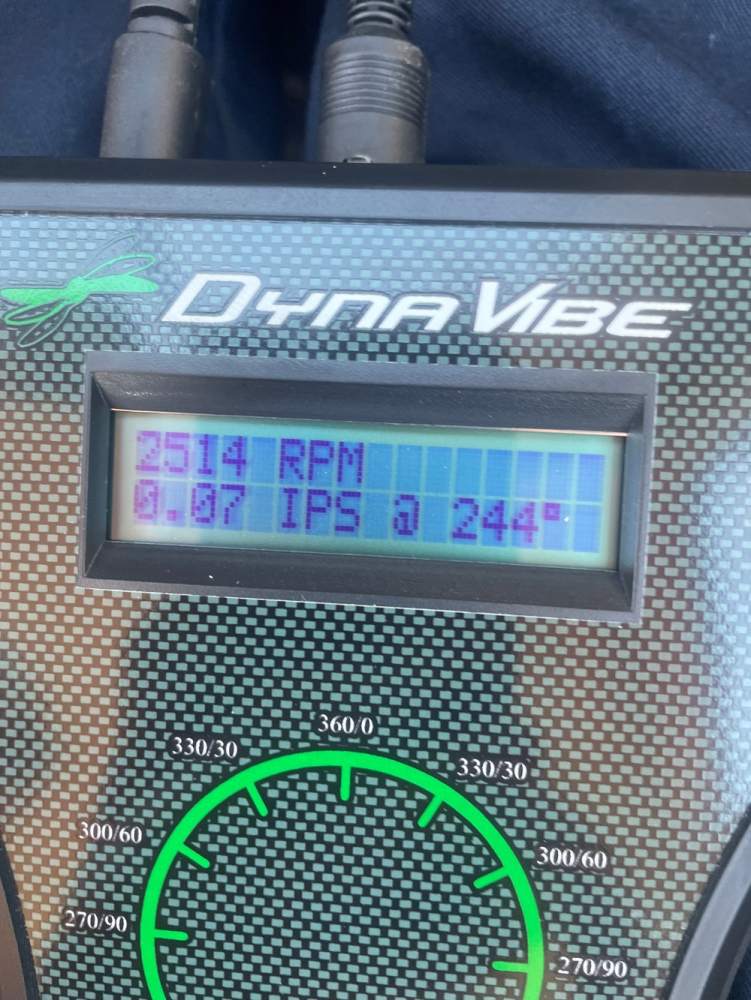
-
Not usually a real choice. You usually choose between headwinds or the really nasty front, thunderstorms, and hard IFR that comes before/after. Most of the flights I did in absurd headwinds was a choice because the +/- day alternative was worse. You could be waiting a while.
-
Demonstrated a bunch of pretty real world numbers in this example: At today's gas prices, makes an even bigger difference. For example 1000nm trip with $8/gallon fuel: 145ktas@8.5gph vs 155ktas@10.0gph 0 wind: $469 in 6.9 hours or $520 in 6.5 hours, $51 to save 0.4 hours 50 knot headwind: $714 in 10.5 hours or $760 in 9.5 hours, $46 to save 1.0 hours The stronger the headwind, the lower the premium to save some time by going faster (from a modest to begin with cruise speed). It's an effective fuel cost of $127.5 to save an hour to go 10 knots faster in zero wind or $46 to save an hour to go 10 knots faster in 50 knot headwind. Moral of the story is, it's ok to get impatient and go faster when facing stiff headwinds, you won't be paying as much to go faster as in still air.
-
I don’t think anyone is coming expecting to make money slowing down but the cost penalty for going faster is reduced. You should add time and cost to your calculations to see what I mean. In effect, if you calculate Carson’s speed in still air and assign it a dollar value, then increase it proportionate to the headwind, you’ll have a higher best bang for the buck in headwind speed instead of an aerodynamic speed. Especially true when you factor in the hourly cost of airframe time, engine time, etc. Headwinds eat into those as well as fuel so you do get more back by speeding up.
-
Practice makes perfect
-
That’s not good. I get higher TAS and lower fuel flow at a higher RPM and LOP. I’d probably be down to 7-8GPH to run that kind of speed.
-
What, 90 knots? Wouldn't even know how to get it down that slow with gear and flaps up. But yeah, there's little to be gained in terms of fuel savings going below Carson's speed.
-
1990 205 MSE weight and w&b isn´t she a bit on the heavy side?
201er replied to Irmin's topic in Modern Mooney Discussion
205 is likely heavier than 201 with the extra speed mods. Plus MSE's are heavier than 201's as well so they did a gross weight increase on paper to make it have a similar useful load on paper but in reality still heavier. -
I'm pretty sure they have you beat... fierce competition and so many colors to choose from. A highly lucrative market.
-
Won't be sitting long if it's behind a Mooney.