
bfreelove
-
Posts
70 -
Joined
-
Last visited
Content Type
Profiles
Forums
Blogs
Gallery
Downloads
Events
Store
Everything posted by bfreelove
-
I did some instruction in a Cessna 152 Aerobat early in my career that had standard (non-caging) gyros. They needed overhauling pretty routinely, and I would never fly IMC with them after seeing them get rung out. Often after a spin you'd be staring at the complete backside of the mechanism with the horizon facing the firewall. Modern IMU/AHRS systems vary on how well they do. I've heard Garmin's G3X can deal with full bore unlimited aerobatics and not get tumbled, but most can't keep up. The Dynon system we used in our Red Bull Air Race airplane didn't handle any aggressive maneuvering at all. We would rely on our tracking system in the track that had very expensive IMU/AHRS chips and could keep up and track the airplane position to within a meter and the attitude within a tenth of a degree even with high roll rates and over 12G. I'd love to have a system with that setup in my Mooney for IFR, but admittedly it's a bit overkill for that application. Ben
-
I think it was '84. The pilots were the late Charlie Hillard (the first American pilot to win the World Aerobatic Championships), and Gene Soucy (3x US champ and World level pilot). I had a great conversation with Gene about this last year when I was telling him about buying my Mooney. The show was sponsored by the factory, and they Charlie kept his for some time. They were both 231s. I flew aerobatics for a living for about fifteen years. I have zero interest in flying aerobatics in my Mooney. Why break the rules and beat up my airplane (not to mention trash the "swiss watch" gyros) when there are plenty of way more suitable airframes that are infinitely more fun to throw around? Modern high performance aerobatic monoplanes are an amazing experience and almost impossible to break (you'll hurt yourself way before the airplane complains). Find a good aerobatic school and have at it. Ben
-
I can also highly recommend Mike Dupont at American Aero Services (KTAN). He did a pre buy for us about fifteen years ago before we bought an airplane sight unseen and flew it back across the country to CA. I wouldn't normally go for that but we had some time constraints and were referred to him by a good friend who is also a very experienced A&P.
-

IO550G-AP Overhaul - should I switch to an `N`?
bfreelove replied to ronr's topic in Modern Mooney Discussion
I have the IO-550-N in my M20L. There's 1100 hrs on the engine and the cylinders are all still in good shape. When I bought the airplane a few years ago I had the typical issue with cylinder #5. I added a pixie hole which helped a little bit, but the main issue on mine was that the lower forward cylinder baffle wrap (the head portion, not the barrel) was not the proper geometry. It's the same part no. as the Ovation so I'm assuming this is the issue for most of these instances as well. There was about a 3/8 inch gap between the fins and the baffle, and the baffle did not extend down as far as the rest of the lower baffle wraps. There's a formula for how much you should wrap the cylinder based on cylinder fin depth, and the rest of the lower baffles meet this spec precisely, just number 5 was out of spec. I fabricated a new section of baffle to match the other cylinders, and that coupled with the pixie hole, #5 is now the second coldest cylinder. -
Need help with engine mount shims
bfreelove replied to Glen Davis's topic in Modern Mooney Discussion
Here's an archived link: https://web.archive.org/web/20190317235036/http://donmaxwell.com/aligning-your-engine-using-shims/- 1 reply
-
- 3
-

-
I would suggest calling Oklahoma City directly if you haven't tried that already. I had a similar issue getting any response from my FSDO recently, but was able to get what I needed straight from the main office. https://www.faa.gov/licenses_certificates/airmen_certification/contact_airmen_certification/
-
These are classic symptoms of an intake leak. Since the intake gaskets were all changed I would have a look there first. -Ben
-
If the lines from the spider to the fuel injectors haven't been changed I would check for a restriction there. Based on your jar test I think you'd expect to see more fuel in the number 4 jar with it having the largest injector nozzle. 1-3 seem to correlate pretty well for the nozzle sizes.
-
The Ovation cowling is the best design I'm aware of for any certified aircraft (IMHO). The key is in the inlet ducting, sizing, and exit "extractors". The inlet ducts look particularly optimized for the engine. The designer was clearly well versed in the state of the art. I haven't measured the upper plenum pressure recovery yet (would like to at some point), but I would guess it will be quite high compared to most cowls. I have the Ovation cowl on my M20L and with a good set of baffle seals and careful use of silicon to seal any leaks the cooling is actually too much. I have to run the oil cooler winterization plate year round and most of the CHTs run in the low 300s high 200s depending on OAT and altitude.
-
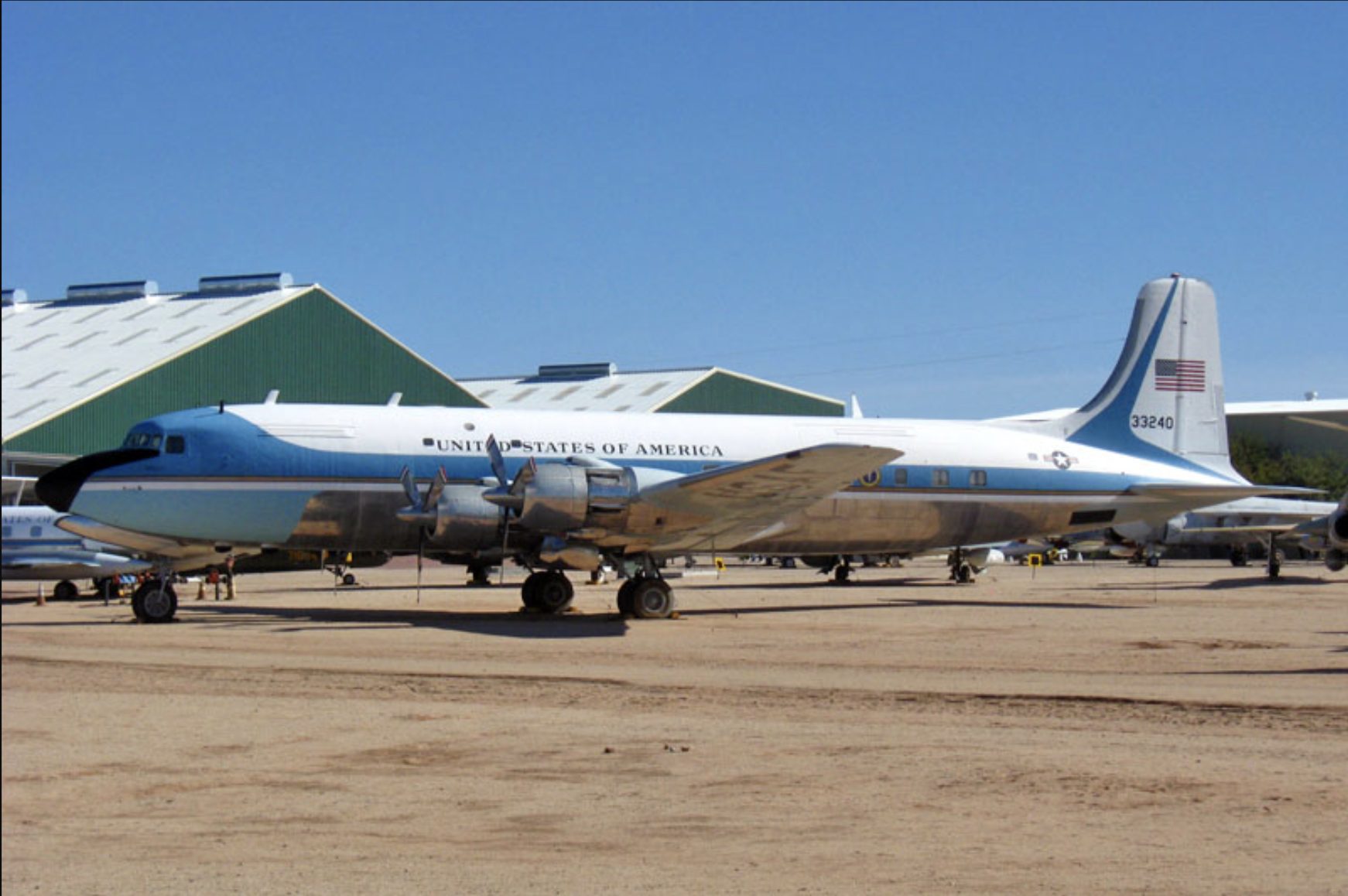
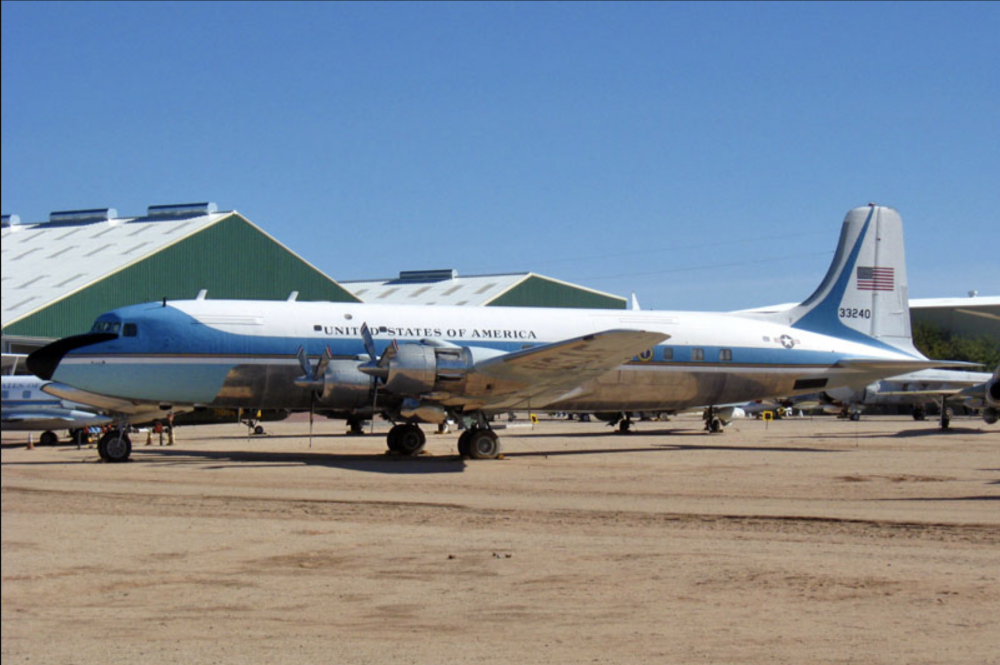
My guess is C-118 (DC-6). I think it's the one at the Pima Air and Space Museum, it was the last piston powered presidential aircraft, used during the Kennedy administration.
-
FWIW Lycomings can be run without a vernatherm and just a simple pressure relief valve (not sure if that's what his A&P meant). The relief valve was the original configuration however you don't see them much anymore. Switching back to the relief valve is used sometimes in experimental setups as some people think it seals better than the vernatherm forcing more hot oil through the cooler, which lowers the oil temp. I've used this technique before and it seems to lower the oil temps but will require much longer ground run to get to flying temperatures as the oil is always flowing through the oil cooler (only bypasses in case of oil cooler blockage). Wouldn't be ideal in cold weather for sure. https://www.lycoming.com/sites/default/files/SI1008C Bypass Valve Installation.pdf
-
-
-
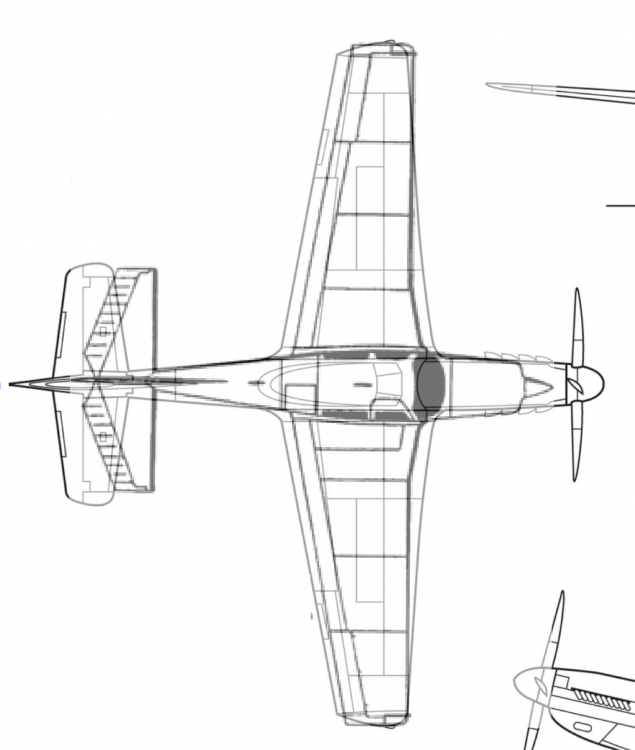
I have an M20L that has the IO-550 conversion with the Ovation cowling made from carbon fiber. It's really well done and extremely light. That being said I still needed to add the full 19lbs of charlie weights recently to get the CG away from the front of the envelope. I've never handled a fiberglass Ovation cowling but from my experience working with composites (especially cowlings) I would guess it saves around 5 lbs. One downside is the carbon will wear out around the fasteners and need to be redone every so often.
-
Would have most likely been a parallel valve IO-540. The "narrow deck" version of these is quite light and used in a lot of aerobatic applications, the Pitts S-2B and C use the AEIO-540-D4A5, which I don't think is the narrow deck version, but still quite light for the power. We used a slightly pumped up version of that engine for air racing and it's remarkably robust, able to handle peak power mixtures, 2950 RPM, with minimal cooling (routinely seeing temps at redline) and very high G with no issues and essentially normal lifespan. I'd love to have that engine in the front of a Mooney.
-
Troubleshooting on-the-ground communication problems
bfreelove replied to Matt Ward's topic in General Mooney Talk
I've had the fun of troubleshooting a comm antenna mounted on the bottom of the airplane (in my case an airplane with carbon fiber fuselage skins that make it even more challenging). It's unlikely to be the radio (although it could be) since it seems fine in the air. The first step is to check the antenna SWR (most avionics shops will have equipment to do this). If you get anything more than 1.5:1 on the antenna (1.2:1 is ideal) then you need to check the coax, and also make sure the antenna is getting a good ground to the skins. Having the antenna on the underside will make it more sensitive to any issues and this will show up on the ground. In our case we kept making larger ground planes until it worked okay, with the aluminum skins you have the best ground plane possible, but it needs to have good continuity to the skin to work. A bad coax, or bad connector can also affect this. If all that checks okay, then it's the radio. -
Hahaha! I'd like to take a Liquid Rocket apart and see how they did it.
-
To get the current gear approved to 3200 lbs would be a fair amount of work. Some engineering to put together the data and then the paperwork. Just increasing the gross weight with the current landing weight would just be paperwork. All my experience is in experimental aircraft (aerobatics and air racing), but have some friends with a lot of certification experience which are willing to help out. I've talked with one other L owner that was interested already. Only eight were converted by Mod Works before Hurricane Charly wiped out a bunch more, and two have been totaled since then so it's a pretty small crowd.
-
Radar altimeter (KRA10) troubleshooting
bfreelove replied to xavierde's topic in Avionics/Panel Discussion
I removed mine last year. The antenna was on the right wing, and the computer was in the next bay outboard and forward from the antenna. You can follow the antenna cable to find it. It was a bit tricky to get at and remove only being able to work through the inspection panel. -
Thanks for the heads up JT! I've researched it a lot and think it might be possible, but it would be a big project for sure, requires changing almost all the main gear parts, brakes, and gear doors. It's not on the top of my list at the moment since I don't really need the useful load increase (although it would be nice to have the fully enclosed gear), but if I could find the parts for reasonable cost I would probably keep them in the back of the hangar in case I ever want to tackle that one. I'm more likely going to try it going the route that Rocket did for that same gear, or just work on an STC for getting the allowed takeoff weight increase with the landing weight still at 2900. Landing weight can be 95% of the gross weight if the takeoff performance is sufficient. This is where the magic 3368 number comes from for the other long bodies (3200/.95). Now I just need to find the time.....
-
Thanks!
-
Thanks for the info about the O being parted out! I have been keeping an eye out for some used heavier duty gear. What's interesting is that I think the increased strength of the newer gear is mostly to put the dual brake pucks on and take a larger braking load, not any landing loads. When you line up the parts numbers, they're nearly identical except for a few key parts. From comparing them by eye, the tubing looks the same with just the welds being a little different and the cross tie plate being removed. The nose gear on the L is exactly the same as the Ovation already. Also interesting is that I think the K and J models already had the dual puck gear (with the fully enclosed gear doors) in 1988. My assumption is the L never got it because they were trying to keep the weight down? Not sure. The upside is the L airframe is nice and light. Mine had a lot of avionics and a heavy interior, but was still much lighter than most Ovations. Sort of on par with an M20S. I've gotten about 70 lbs out of it so far (including adding the 19 lbs of ballast which it really needed!). I think I can get the empty weight under 2100 lbs with some more work. It also has a super light carbon fiber cowling. I'm not sure what the Ovation cowlings are made out of but I think Mod Works had them made up lighter to help with the weight issue (just an assumption). -Ben
-
I have an M20L that was converted from the Porsche engine to the IO-550. The original of owner of mine bought it new and put about 3000 hrs on it with the Porsche engine. The airplane came with the most complete paperwork I've ever seen (including receipts from every time it was detailed etc.). There are several letters in the files from him to Mooney asking why they weren't promoting the airplane more and stopped making them. He seemed to really like it with the Porsche engine and sold it shortly after it was converted. There was some teething issues with the Porsche engine that led to some ADs. That being said I think most owners really liked that setup and didn't have as much issues as is rumored. The design was pretty impressive when you consider it was a certified all electric airplane (dual electronic ignition, all electric gyros) in 1988! My opinion is that the only main issue was the hp was a little low for the weight of the airframe, and that Porsche insisted on keeping the engine cooling fan and the cowling design is really inefficient as a result. If you match up fuel burns from the Porsche engine against the IO-550 it's often 5-10 knots faster with the TCM engine for the same fuel burn. My thinking is this is just down to the cooling efficiency since everything else is pretty much unchanged. There's a few differences in the L airframes vs. the rest of the long bodies, smaller rear windows, stall strips in a different spot, smaller fuel tanks and some other oddities. But the main difference is the landing gear. It's basically the same gear as the J and K models from the mid 80s. This is what limits it to the 2900 lb gross weight, which means the useful load is really bad. The gear is the same gear that has been approved to 3200 lbs for the Rocket, but the STC holder went under before they got the gross weight increased for the converted Ls. There is actually one L (which was the Mod Works test bed) which has the increase, but the rest of us are left with the lower gross weight. For me it's just fine, I never fly with more than one other person and not much bags. If I'm by myself I can nearly fill it up (it has Monroy long range tanks so 89 gals total) and that fits my usual trips perfectly. I just really like the airframe engine combination, and the acquisition cost was well below a comparable Ovation. It probably doesn't have much resale, but I'm doing a lot of work on it and plan some modifications as well (including a gross weight, or at least takeoff weight increase). I don't feel as bad changing a bunch of stuff on the L since it's such an oddball. It's an amazing airplane and I feel lucky to have found it and plan to keep it as my forever airplane.
-
Ovation Oil Temp and Prop Governor Help Needed
bfreelove replied to MarkD34M's topic in Modern Mooney Discussion
I don't think this would have anything to do with the prop governor directly as oil isn't really circulating through the prop, the governor is just allowing more or less oil in the piston depending on what blade angle is needed to keep the RPM constant. That location will definitely read higher than the original location as it's reading oil temperature before the oil cooler, and the standard location reads it after the oil cooler. In general the peak oil temperature in the system is typically 40 degrees higher than what you read on the gauge (oil temp after the cooler). If that was the only change I wouldn't worry about it until you get the original probe fixed. The temp going up with increased RPM is normal, as is in the climb. It's probably more sensitive if looking at the temp before the oil cooler. If it comes back down in cruise then it's controlled and okay. -
B and C standby alternator not alternating i.e. broken
bfreelove replied to Mark89114's topic in Modern Mooney Discussion
I would check the drive spline. They are prone to failure due to being made from plastic and meant to break before they can do any damage to the accessory case of the engine. If that’s the case it’s a cheap and easy fix. I used to carry around a spare drive spline in my previous airplane that had that as the main alternator. If that’s not it, B&C has a good troubleshooting guide on their website and great customer service if you give them a call.