
glenn reynolds
-
Posts
177 -
Joined
-
Last visited
Content Type
Profiles
Forums
Blogs
Gallery
Downloads
Events
Store
Everything posted by glenn reynolds
-
I have been using Dow silicon grease on my cap but it definitely got stiffer in the last year
-
M20M bravo tks speed brakes in icing condtions
glenn reynolds replied to pkofman's topic in Modern Mooney Discussion
I fly an ovation with speed brakes and known Ice tks (fiki). My plane panel is placarded prohibiting the use of the speed brakes in icing conditions for the reason stated earlier, they freeze in the extended position and having one deployed while the other retracts makes landing MUCH harder (it is doable just lots of extra work) In heavy ice it is key to be very careful how much flaps you use and of course since you don't know your new iced up stall speed, speed brakes and flaps can be a recipe for an accident. my tks supliment states, no speed brakes in ice as well. I have have learned to be careful with the speed brakes after I have exited icing conditions and then attempted to deploy the speed brakes on final and had only one deploy so now, if I have been in precipitation or ice and the temperatures are still in the too cold range, I don't use the speed brakes. -
Has anyone had a complete engine failure ?
glenn reynolds replied to spokewrench's topic in General Mooney Talk
A friend of mine had an off airport (road) landing after his carburetor iced up. This inspired me to sign up for engine failure training. I hired a cfii from stow mass and he used a cloud deck for "ground level" and we practiced take off engine failure and the fateful 180 degree turn (lowest altitude I could do it was at least 750 feet above "deck". Then we practiced "landing in a forest" where I had to stall at the "tops" of the trees (clouds) and have the simulated contact with as little forward speed as possible. Really valuable training which taught me a great deal. It was such memorable day that twenty years and three thousand hours later I still remember his name: Tim Connelly. I've had three engine failures, one as a flooded carb float which flooded the engine on final. I didn't make the runway but the plane was undamaged. The second one in a different plane I was three thousand feet above Oakland CA and the engine swallowed a valve, and I glided to a runway landing at the oakland airport with no damage except the engine did require replacement. The third was a case of faulty maintenance when a mechanic installed the wrong airbox gasket and the subsequent full throttle takeoff sucked the gasket into the carb and killed the engine at about two hundred feet agl. The departure was phoenix sky harbor with an eleven thousand foot runway so the no engine landing was a non event. So I have a couple of things I have learned: 1) three of three failures were directly related to maintenance and or the poor quality of that maintenance. I no longer look for the cheapest way to fix a plane. I look for the most cost effective and highest quality method of maintaining the plane. As such I have personally learned a LOT more about maintenance practices so I can be an educated pro-active plane owner, (and no, I don't rent anymore!). 2) It cost me half a day of flying with Tim Connelly to learn how to "crash", while I certainly am not an expert by any stretch I understand how important it is to keep practicing and staying vigilant. I hire an instructor every six months to spend a half day tuning up skills and while not all CFI's are as good as Tim, I do see great personal improvement in my simulated emergency response after these sessions. 3) there are great lessons to be learned from landing a no flaps taildragger, taking unpowered aircraft lessons (glider, hangglider, paragliding) lessons. 4) one of the great joys of flying is the personal growth that comes from a career of learning. Take a guy like Don Kaye who has a day job but teaches flying and has 11,000 hours! here is a guy who really loves the process of the art of flying. -
Dual vacuum failure in Ovation
glenn reynolds replied to BorealOne's topic in Modern Mooney Discussion
Answering the questions (sort of) from carusoam and niko 182: yes there were pounds removed in removing the standby system, (vacuum pump, hoses, regulator, display, gauge, hose to rear of plane, electric standby vacuum and motor assembly) so Pacific Coast Avionics did a new weight and balance for the plane, but I'm sorry I don't remember how many pounds it was but it is a chunky unit with base plate, electric motor and of course the vacuum pump. As for carusoam's question this is trickier for me to respond to so I'll provide as much as I know: The plane has a gns530 and gns 430, TKS and a g500 installed and uses a kfc 150 autopilot. when shopping for maybe $ynthetic vi$ion and the g5 and a flight stream 210, some of the comments which got thrown my way included: "it is an electric instrument panel and you are REQUIRED to have a vacuum standby attitude indicator, we can't install a G5" from a local avionics shop. Another item which came up was the TKS stc and redundancy requirements but I don't remember how that effected the options except that the plane has a standby alternator installed on an engine accessory pad already. I got quotes from four avionics shops and two line items really stuck out: one was the price of upgrading the g500 to synthetic vision (g600) with a delta of almost four thousand dollars between the highest shop quote and pacific coast avionics. The second was that when pacific coast avionics quoted the installed price for the g5 as less than the in the box price from aircraft spruce. When I got into the details with pacific coast avionics, they explained that the intent of the requirement to have a back up attitude indicator (I believe this is part of the stc to install the g500, now g600 in the plane) is to have a second, INDEPENDENT attitude indicator which would operate in the event of a total electrical failure, so Pacific Coast Avionics explained that the G5 meets that requirement and they would confirm with the local FAA office to that effect. two more items are rolling around my memory, one was that during the install of the garmin flightstream 210, it was seen that with the autopilot, an existing stand alone garmin vor display and the g600, the flightstream needed to push to the gns 430 which is of course paired with the gns530 because all the ports on the gns530 were used (this then requires the extra step of moving flight plans from my ipad to the gns430 and then crossfilling to the gns530 vs direct ipad to gns530, oh well). lesson observed is that only so many ports are available. When all is said and done, I found that the G5 had been configured as both an attitude indicator (which is what I bought it for) but also with the soft keys it can then be switched to be a vor navigation display slaved off the gns (I don't remember which one it got slaved to, the gns 530 or the gns 430). Pacific Coast Avionics explained that the G5 does both functions but is often sold as a "buy one of each" display! Frankly I got way more for my money than I realized when I signed the install contract. I credit the service manager at pacific coast avionics for chasing down the options and legalities as this got deeper in the weeds than I had expected. I know this is a hard thread to follow as i'm not an avionics engineer but feel free to ask follow up questions. While I felt confident that I couldn't just fly around with the vacuum attitude indicator inoperative (my wallet was sick of replacing pumps and indicators), and two grand was acceptable, It did seem like a lot of back up.... Then one day somewhere over the midwest the left screen of the g600 failed! G5 worked perfectly. Pacific coast Avionics put a replacement left screen in and life is good. Carusoam, During a cross country flight I stopped for garmin service at vip avionics in hartford and they did an awesome job (pacific coast avionics arranged the warranty coverage so as this didn't cost me, I can't speak to their pricing). hope this helps. Glenn -
Dual vacuum failure in Ovation
glenn reynolds replied to BorealOne's topic in Modern Mooney Discussion
I finally tossed in the towel on my vacuum system and removed the vacuum pump off the engine, removed the standby vacuum pump from the tail and had pacific coast avionics install a garmin g5 for $2,000 (US) installed. Frankly that display gives me a multi hour built in battery back up, attitude indicator, airspeed, turn coordinator, vertical speed. Dollar wise I have found this to be an excellent value for the money and the display is really good. the unit was a slide in fit in the old vacuum driven attitude indicator hole. And I also drive an ovation. -
Good morning and thanks for the fantastic feed back. The explanations make a lot of sense. While the wind at the surface was only 15 knots the wind at 15,000 feet was 75 knots with light icing. Both these conditions influenced me in the following ways: I can’t use spreed brakes due to the icing so I want the cleanest approach I can get. Second I was thinking through both wind shear and turbulence on the decent. Runway 12, 30 was too short and not great lighting. I had been monitoring the approach frequency and understood that most planes were flying the ils 02 with a circle to land but with too much discussion about direction to circle. There was also discussion on gusts on approach. Approach was in flow control mode and I was being vectored for same. I really hate to hold in icing but had plenty of fuel and TKS. The plane in front of me asked for and got the rnav 20 and when I requested the same the controller seemed was happy to do it as I felt it gave her less flow control issues. She promptly held the jet behind us who requested the ils and circle. We broke out as advertised at 5,000, asked the tower to turn up the lights and landed visually. Yes I have filed a NASA report. I did brief the approach prior to requesting it but never saw the bottom tape of not authorized as the I didn’t have any clue there would be a critical message on the bottom margin, just was not in my preapproach brief. My bad. Again thanks for all the great feedback. If you look at the FlightAware track it is pretty stunning to see the ground speed swing when we got vectored. It goes from 240 to 93. That gets your attention.
-
I fly with a Garmin 530w a Garmin g650 and ForeFlight. I just flew the approach into Kgpi and had difficulties. Here is what happened: Due to winds they are landing runway 20. Some of the planes ahead of me are taking the ils for 02 and circling to land however it is Ifr and night and I would prefer to not circle to land. I select the rnav 20 approach as does the aircraft ahead of me. Approach control vectors me to fikab (Iaf) and clears me for the approach. ForeFlight loads the plate but the approach is NOT listed on the Garmin 530w list of approaches. I fly the approach using ForeFlight break out and land. However on further review I note the plate has authorization required on the bottom. I’m assuming that my approach clearance is not what the plate is talking about. I’m also guessing that maybe the Garmin database doesn’t load these approaches? In Canada, restricted approach plates have a hazard marking border to alert you that you must have an Canada approval to use the approach. Revelstoke has one as does Victoria. Is anyone familiar with the rnav 20 approach at kgpi?
-
I can only repeat what others have already said: I bought a used early model ovation with a factory new engine and the break in had been done incorrectly resulting in the oil rings not seating. Major bummer. Good news is that I used three different Mooney instructors to get my landing runway distance down to 2,000 runways with no stress. Enjoy the plane.
-
What I have learned about LED landing lights
glenn reynolds replied to PTK's topic in General Mooney Talk
I run LEDs; two whelen taxi lights for the wider angle and two whelen landing lights in my tks ovation. Whelen told me the only difference is the corrugation of the front lense to provide a wider illumination angle for the taxi light. I fly with the landing lights off and the taxi lights on. I absolutely turn on the landing light on final as I have spotted animals on the runway environment on short final. I really like the fact that the LED lights do not melt off the ice as it allows me to gauge how severe a challenge the TKS system is working against as the rest of the plane is ice free and I have had up to an inch of ice covering the wing lights. I found the comments about rising temperatures and declining output to make a lot of sense and was surprised at how heavy the heat sink is on the back side of the whelen LED lights is which is now explained. My take away is with longer service life and lower power draw I'm keen to have the taxi lights on when the plane is airborne. I now have six hundred hours on the Whelen LED and can recommend them. -
*** WANTED IO-520 Engine ***
glenn reynolds replied to Frank B.'s topic in Avionics / Parts Classifieds
I have no idea if you would be interested but I read an article in EAA about swapping out engines at mid time so I've been curious. I fly a 95 mooney ovation with a io550. The engine was a new install when I bought the plane three years ago so I would guess (i'm at my office not near log books) the engine is four or five years old. I have put six hundred hours on it in the last three years so the engine has about 800 hours. It runs great, gets oil and filter and oil analysis every 33 hours. If you wanted to purchase this engine as a running, flyable engine, I would pay the balance to replace the engine. I was / am skeptical how this would work as most people want a core cost engine and then rebuild it and that would leave me with no incentive to scrap my current engine. If however a buyer wanted to buy my engine for it's half life value, then it could work. the article talked about the value of buying an installed engine which could be flown, compression tested etc, but a short search online found NO one selling such an engine so I'm not sure there is much market. It does seem this concept could be popular with smaller engines which are more popular in homebuilts. If this is the wrong engine or concept, no worries, but I am curious what happened to your old engine? Glenn Reynolds 209-603-5206 -
I looked at what contortions you had to go through to connect different tugs to the nose gear. After watching a neighbor crawl under his plane to connect a battery powered drill tug, I choose to go with the electric ez tug. It connects and disconnects to the nose gear while I stand at the controls, no bending down and fitting a friction wheel to the nose gear. I tried a castering or turntable electric tug of unknown brand and found it too sloppy to accurately park the plane. The battery will move the plane for about thirty minutes of full speed driving which is about ten times what I use it for. Can't speak of traction on ice. So in summary, look at how each tug needs to be attached and figure on doing that in the dark and the rain. Frankly kneeling on the ramp is not something I want to do.
-
I have a 24 volt unit sitting in my hanger.
-
1978J Nosegear truss turning radius stop tab broken
glenn reynolds replied to wiseng's topic in Modern Mooney Discussion
My concern is that you can't break the tab off with out stressing the tubing and the tubing is all that keeps your propeller from smacking the pavement and the engine requiring a tear down. It seems really simple to have LASAR ship you a reconditioned nose gear and ship yours back as an exchange. I now have a three foot long yellow and black streamer which goes on my prop and says "restricted tow Angle" -
I'll offer the ultra low budget option: I bought two seat cushions from aircraft spruce, they are three density layers of memory foam and have burn certs, I paid a mobile upholster to come the the airport and change the bottom cushions. Cost about six hundred bucks total and comfort wise it's great. It doesn't look any better but I can fly cross country in one very long day and still have a behind.
-
Ovation pilots, can you flight plan a trip for me?
glenn reynolds replied to cujet's topic in Modern Mooney Discussion
I fly an ovation with the 310 Hp Stc and fiki The fiki knocks my airspeed down to 170k. The mountain high pulse oxygen unit is a must I use the headset boom cannula and always use o2 above 5k. The pulse unit turns on automatically so I set it up prior to departure. -
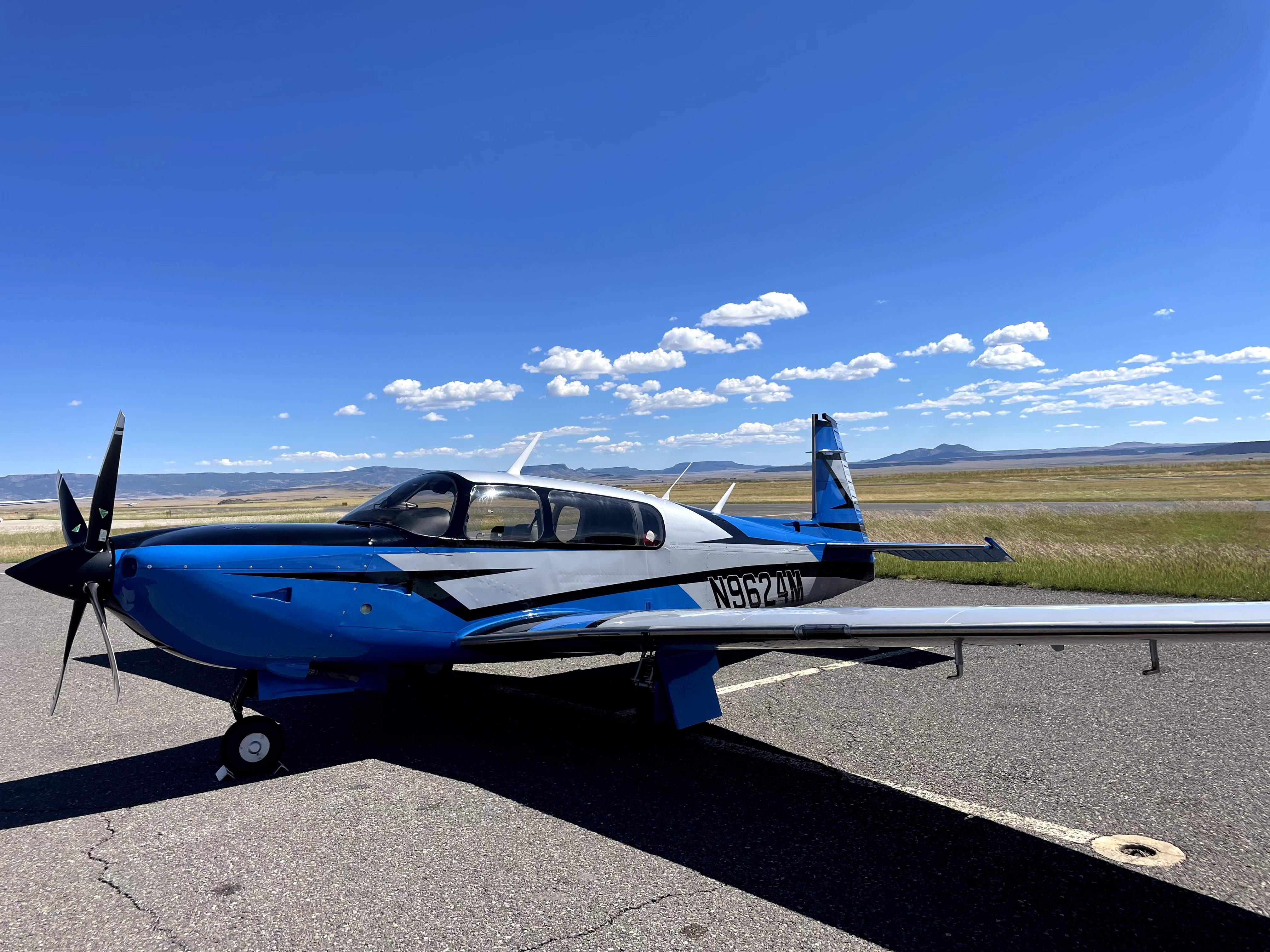
i fly a fiki model R (no turbo). I often put a five gallon jerry can of refill tks fluid in the baggage compartment as that encourages me to be quicker to turn on the TKS system. I have LED landing lights which allow me to monitor the airframe ice as the old incandescent lamps melted the ice and the plexi lamp covers are the only visible part of the plane where I can see ice buildup. I think my biggest concern is too avoid Super Cooled Liquid as this can bring down most all airplanes due to the volume and speed of the ice accumulation so if SLD is forcast on the ice forecast charts I will not fly in that area period. I always have a plan B for Ice. This means the route must have viable airports I can land at at should the TKS system fail. I've had a couple issues, one time a fitting on the tks system blew off so it just pumped the fluid out into the belly pan, another time the prop slinger nozzle broke off (this is a known issue) and again the system could not build pressure and of course it can be easy to use the three hours of fluid and then you are done. I like to flight plan for as high as I can get prior to the area of icing. This allows a couple of options, in some cases I am in broken tops and can visually deviate around build ups, In all cases the plane will come down to a lower altitude, so this altitude means my oxygen system is an integral part of flight prep as well as a co2 monitor and warm clothing as my mooney ovation cabin heater can't really keep the cabin warm when the outside temperatures get below minus twenty five. the coldest ive flown was minus forty and there was ice inside the plane! The great news is that in that kind of temperature my non turbo machine has made it to twenty thousand feet, (but just two persons, STC 310hp engine and minus forty outside and slow climb) Our descent was through light ice but the tks held it off and due to the high altitude for the flight we ended up using less than a gallon of tks fluid on a four hour trip. I'm much more careful about flying into ice at night after arriving at an airport in wyoming only to find the runway had more snow on it than I care to land on ever again. while a larger airport would have been a good alternative, wyoming, nevada and much of canada don't offer that option. The TKS system MUST be primed prior to ice as it takes twelve minutes to prime at standard flow rates. I will not take off if the icing is at surface level, so freezing rain etc at the surface and this is due to the ability of ice to accrue way too fast for ice mitigation equipment to shed ice. I'm told by far more experienced pilots who fly a wide variety of known ice equipment that they use the aircrafts ability to climb as the actual ice mitigation plan and fiki is to allow a normal descent but NOT cruise or hold in moderate or heavy ice conditions. and if your thinking of taking off with ice at the surface, that is only because you have not asked the FBO how much ramp deicing actually costs! Another way I plan is to stay out of heavy or extreme ice. So light ice on my route as long as viable alternates along the route etc and if I've already got altitude and no other issues, i'll continue a flight with reports of moderate ice, but I'm working on how to get out of it. Two weeks ago I was crossing nevada just below a cloud layer when ATC explained that due to radar coverage limitations and minimum enroute altitudes, he was asking if I could go higher so he could launch a medivac out of ely nv. I turned on my TKS and climbed to 17k which it turned out was as high as I could get due to it only being about minus five celsius and I listened to the light twin pilot plead with the controller to get him out of the ice he had climbed into, below me! I assume he was not FIKI or we (he and I) had flown into an area where the ice was much worse lower in the clouds. As I had only about one hour of TKS fluid left (I had departed wisconson and been in and out of ice the whole flight) I soon hit bingo TKS fluid level which for me is forty five minutes remaining, so I had to deviate to hawthorn nv and land. I had about an inch of ice on the landing light covers so it was a moderate ice day for sure. Having seen how fast ice can build on an airframe i think that ice must be treated as one of the most dangerous aspects of flying that ranks equal to thunderstorms. there is a great deal of really good information on icing available, most of the material is based on aircraft with climb power double or triple that of our small planes and those guys died, so i put a lot of thought into when to fly, where I'll fly, and what altitude. I fly coast to coast a couple times per year and it isn't uncommon for me to be forced from the canadian border all the way down to texas to get around weather which exceeds my single piston capabilities. hope this helps
-
O2 oxygen fitting for refilling the onboard tank,
glenn reynolds replied to Tony Armour's topic in Modern Mooney Discussion
Mountain high o2 sells all the parts to both fill the Mooney tank and assemble a cascade tank battery. -
My ovation o2 works anytime I turn the valve on. clockwise rotation for on, counter for off. Do note that my ovation has the complex linkage between the pilot control knob and the valve on the oxygen in the aft compartment. I pulled all my seats and the left panel to wire in a backseat USB port and observed the oxygen control linkage so look in the back and if the tank valve is not opening then remove the seats and the left interior panel. while you have it open to fix the linkage, mcmaster-carr sells some very fine leak detection soap which I used on mine to track down a loose fitting.
-
Recommendation for LED landing light
glenn reynolds replied to NicoN's topic in Modern Mooney Discussion
I have five hundred hours (two years) on whelan landing and taxi lights. When I made the purchase it was due to failed incandescent lamps which had also heat damaged the ovation plexiglas bulb covers. I fly with my taxi light on all the time. No damage to the plexiglass and no issue with the lamp since switching to LED. The two lights are plenty bright. While Whelen uses the same LED diodes in both the taxi light and landing light the taxi lens is ridged which gives the beam a wider broadcast angle. Whelen suggested I put in two sets of landing lights rather than a taxi and landing but I choice taxi and landing as I feel I get better side of the taxiway lighting with taxi light. They were expensive but I have no regrets and recommend you switch to LED. Whelen stated that the big difference in brands is how they treat or handle the heat output. Whelen claims they spend real money on cooling fins and metal heat dissipation which the competition scrimps on. Since I have not flown with the competition I cant say how good a light they make, but I do know that in icing conditions, I get very significant icing on the landing lights (that is the only section of the wing not TKS protrotected) so it's not warm enough to melt ice. (it's not relevant for this thread, but I actually like having an "ice indicator" so I can judge how much icing I'm fighting with the TKS system) -
Rip In Inner-Gear Door Sheet Metal
glenn reynolds replied to lsearcy's topic in Modern Mooney Discussion
Lasar reskinned my gear door after a hinge failure and the cost was a thousand less than the cost of a new door. They told me they see six per year and gear actuation at too high a speed is a good way to get there. -
My ovation has 350 hours on a factory new engine it always reads 65 psi. and same as above, blackstone says life is good. I run nine to ten quarts of oil and it has no effect on the oil pressure.
-
My ovation with a garmin 530 and king autopilot did the same thing. I flew it to executive autopilot in sacramento CA and they fixed it and a bunch of other little issues in less than three hours. Now it works like a charm. The two other avionics shops I tried, just poked at it and said it was an old autopilot. Executive simply said it needed to be adjusted and they promptly did so. The lesson I learned. Bale as soon as the prospective avionics shop starts to demonstrate a lack of experience FIXING the issue vs simply replacing parts. Good luck
-
how about a spare vacuum gauge and some air filters? and Even a 24 volt electric standby vacuum pump? If you need it I have it. Glenn
-
I had LASAR fix my ovation gear door same issue. Cost about $400 if I remember right. Paint was included. Took two weeks I took the door off the other side so the plane was symmetrical and kept flying while the repairs were done.
-
Avionics recommendations near Bay Area
glenn reynolds replied to frcabot's topic in Modern Mooney Discussion
I have had two electrical issues which several shops couldn't fix but got fixed at executive autopilot in less than half a day. Frankly I wish I hadn't gone to the other shops at all. The bad news is that it was a several week wait to get an appointment, but to their credit they had me on my way before noon. Im sorry to say that too many a&p just are not quick with electrical issues. Good luck