
0TreeLemur
-
Posts
3,268 -
Joined
-
Last visited
-
Days Won
8
Content Type
Profiles
Forums
Blogs
Gallery
Downloads
Events
Store
Everything posted by 0TreeLemur
-

1966, 20C upper vent cable snapped
0TreeLemur replied to Carmen allocco's topic in Vintage Mooneys (pre-J models)
Note to those who haven't done so. Is your overhead vent cable hard to open/close? A little tri-flo applied to the vent cable along its accessible length makes operation a breeze. This non-controversial point could go into a routine maintenance FAQ and help people stop breaking cables. -
M20E Vacuum removal question. Bad to remove step?
0TreeLemur replied to Mooney Dog's topic in Vintage Mooneys (pre-J models)
A correctly operating PC system is an amazing stability enhancer. Not only does it keep the wings level, when connected to other Brittain controls it will follow a magenta line all day. I fly IFR with my system. It's like flying on rails. I'd never remove it unless somebody gave me $20k for a full 3-axis autopilot. -
M20E Vacuum removal question. Bad to remove step?
0TreeLemur replied to Mooney Dog's topic in Vintage Mooneys (pre-J models)
There is an awesome electric replacement for the step retraction system available see: www.flightenhancements.com -
This.^^^^ I flew the remnants of TS Delta last year. No effect on the avionics. Note: the search function on Mooneyspace is.... lackluster, unless you are trained in Boolean operators and logic. Google is your friend: type: "flying through rain site:mooneyspace.com" into google. Or "sealing instrument bay site:mooneyspace.com" and you'll find lots of stuff. Most questions you will have for Mooneyspace have been answered over-and-over again. Study them and you'll find stuff that works. Good luck.
-
Handheld VHF Receiver Battery Life
0TreeLemur replied to 0TreeLemur's topic in Avionics/Panel Discussion
I tested the six cells that came out of my radio. 5 had <0.1V, one had 1.75V. Fratricide? -
Handheld VHF Receiver Battery Life
0TreeLemur replied to 0TreeLemur's topic in Avionics/Panel Discussion
I don't think so. Last time I used it was when I changed that batteries. Since they are the Lithium AA's I expected to last a lot longer. Requiring a long-press on a recessed on/of button, It's hard enough to activate. It lives hanging from the little shelf above the co-pilot's windshield, so not easy to accidentally bump.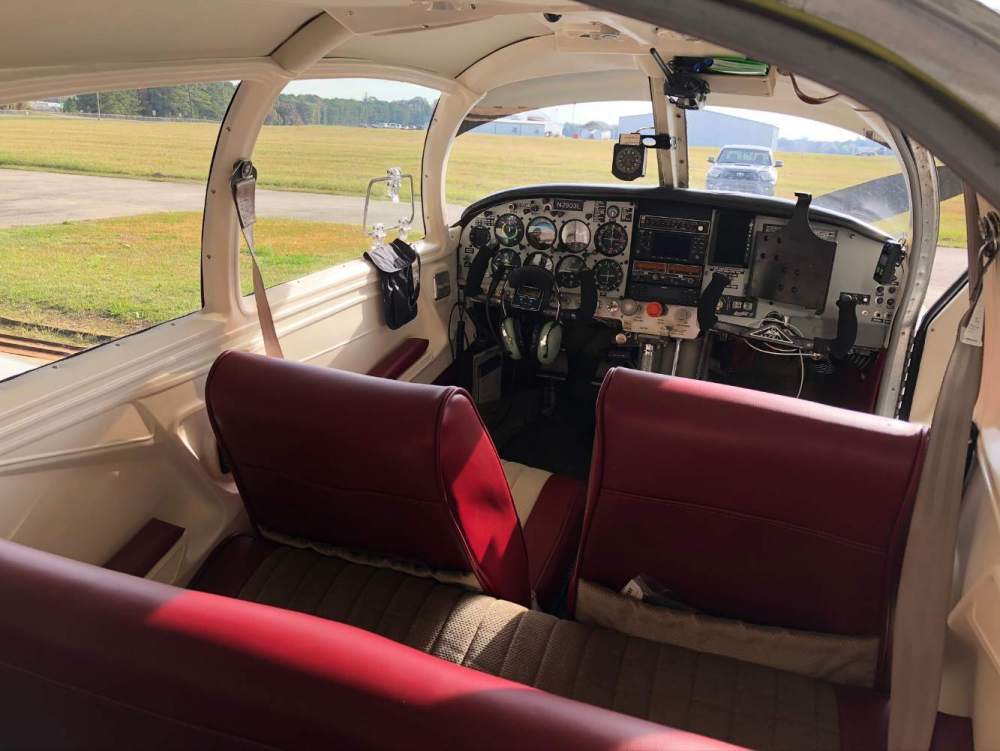
-
Handheld VHF Receiver Battery Life
0TreeLemur replied to 0TreeLemur's topic in Avionics/Panel Discussion
AA's. -
Hi everyone, I carry around a Yaesu Pro-X handheld receiver as a backup. At annual time I replaced the batteries with six new lithium Energizer cells. Yesterday I attempted to switch it on to get the ATIS and the batteries were dead. I have not used it since I replaced the batteries. That's really disappointing. Seems like it has battery draw when not switched on? What handhelds to people like, and what kind of battery life do you get? Thanks!
-
Pilot incapacitation. Loss of control. Front seat passenger pulls hard aft on the yoke well above Va. Ya'll know how sensitive the elevator is to slight yoke movements. Imagine a passenger in a panic thinking that they've got to pull back hard. That explains what you see. The slightly nose up pancake configuration of before impact is not inconsistent with the aerodynamics. The folded wings are in control of the attitude.
-
... and skinned knuckles, and a bunch of grunting and sweating. And maybe some choice words...
-
Used scanners with aviation frequency band are inexpensive on the interwebs. I have one at home and one in the hangar. Lets you monitor more than one freq. at a time.
-
The interior panels are seriously in the way. There might be a trick to get the rear seat out without removing them but I can't imagine. When we redid the interior a couple of years ago, we had the interior panels out anyway. But the seat fastener hardware projects through the interior panels. I think that leaves no choice but to remove the interior. In our C that rear seat back is a really tight fit. Good luck.
-
Optimizing a C (D conversion)
0TreeLemur replied to MooneyNoob's topic in Vintage Mooneys (pre-J models)
Our '67C has recessed arm rests. If speed is your mission, then you'll start coveting J's as soon as you realize your C will never go as fast as a J even after you put a bunch of money into it for mods. It has 20 fewer HP. Those 20 horses add speed that no mod short of an STC'd upgrade to an IO-360 will get you. That's a lot of money. Now you have an E with mods. If you want a J, buy a J. Optimize a C for speed and you gain a few knots. Then go fly against 20 knot headwinds. You won't notice. -
If the arcs on the C and E are the same, I have two spare ASI's if you need a replacement. One came out of our '67 C, and I bought the other to keep on my desk at work from someone who did a panel upgrade. Bottom of green: 70 mph Bottom/Top of white: 63/100 mph Bottom of yellow: 150 mph Vne: 188 mph The one out of our C worked fine, I replaced with one showing knots on the outer ring. PM me if you want it.
-
I strongly recommend not put anything of value on a cargo ship without having it fully enclosed except maybe anvils. I've shipped stuff all over the world. The number of things that can go wrong is infinite. The ways to protect it once dropped off at the port are zero. All preparation must take place before then. Even when perfectly and safely packed, we have had problems with rogue waves, loose containers, and most commonly, storms. The last big shipment I did in February from the US to a Caribbean country, a 4'x3'x9', 900 lb crate was actually cheaper by air freight than ship. Air freight companies were begging for cargo.
-
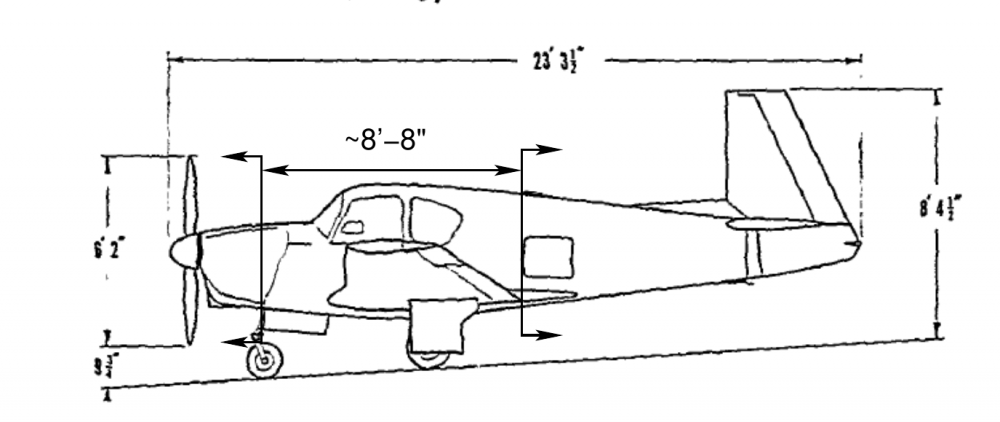
A shipping container is 7.5'w x 7.9'h x 39'l inside. Taking the tail and engine off won't do it. Even for a C or E, the wings gotta come off too- from firewall to back of hat rack is about 8'-8". Maybe you could conceivably rig up a jig that holds the wing chord at a 45-degree angle in the container, maybe, and get it in. That would be expensive too.
-
Let’s hear those panel thoughts on my M20F
0TreeLemur replied to Bryan G's topic in Vintage Mooneys (pre-J models)
Example: Here's how a primary EDM can clean up the RHS of your panel.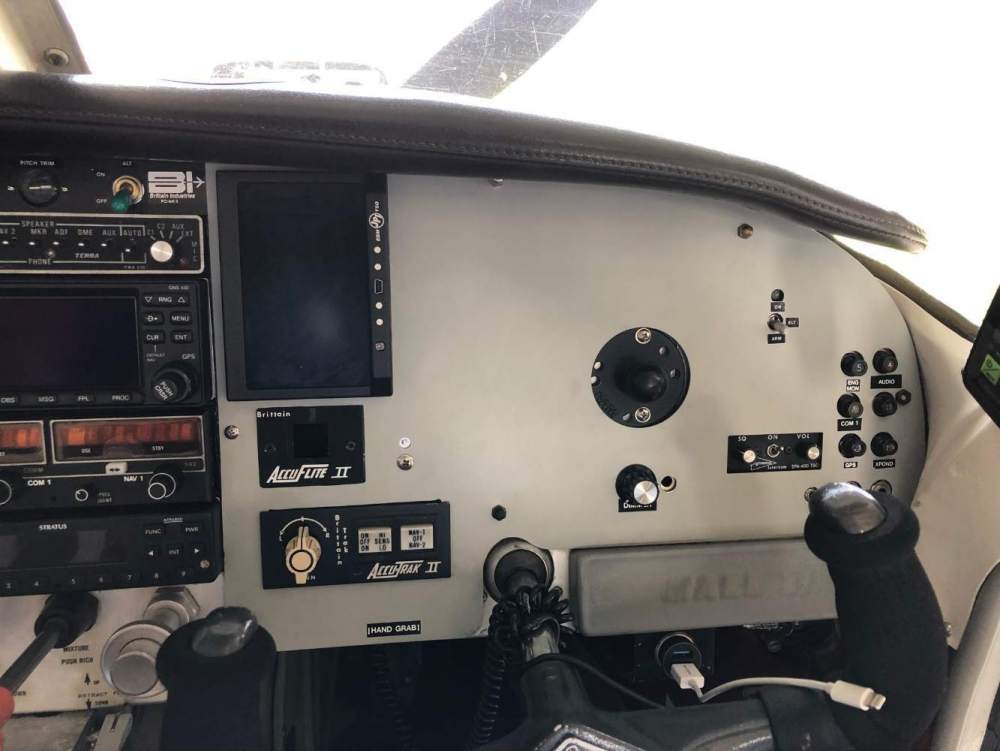
-
Thanks Greg, but I bought one from Spruce. Oddly enough, the original RAL was good. I didn't test it correctly. But, JPI replaced one of the boards in the EDM900 because it had a problem. Funny thing is the original RAL wouldn't work with the repaired EDM.. The new RAL that I bought from Spruce worked fine with it. Fred
-
six gear collapses & gear ups in one week
0TreeLemur replied to philiplane's topic in Mooney Safety & Accident Discussion
Yesterday I read the article on Threat Error Management (TEM) in the most recent issue of IFR magazine. I'd never heard of that concept. It encourages you to become hyper vigilant any time you notice or even get the feeling that something is different or unusual in you, the environment, or the equipment. Hyper vigilance means using whatever resources are available to detect, trap, and mitigate potential problems. Checklists/procedures are a great part of this for not introducing new threats like failing to lower the gear, or catching the fact that you already forgot to lower the gear. Here's one of many references I found online: https://skybrary.aero/index.php/Threat_and_Error_Management_(TEM)_in_Flight_Operations The SLOJ that @A64Pilot raises might be summed up as the condition of being "fat, dumb, and happy" as my instructors used to call it. The opposite of hyper vigilance. Any time things don't seem right, or when they seem unusual, distracting, etc. That's the time to act like you just saw a rattlesnake and pay a lot of extra attention to all the details. Anyone ever had TEM training? Any good resources to recommend? I enjoyed the article, it seems to provide a formalism for something that most of us do anyway most of the time. Training and reinforcement can help to make this a more deliberate and thoughtful practice other than being "fat, dumb, and happy". -
Are Diamonds really Safer than Mooneys?
0TreeLemur replied to PMcClure's topic in Mooney Safety & Accident Discussion
Things have changed significantly since 2012. If I were reviewing Diamond's publication, I'd say they cherry picked the most favorable data that supports their case. From the FAA Fact Sheet- General Aviation Safety: (https://www.faa.gov/news/fact_sheets/news_story.cfm?newsId=21274) U.S. Accident Rate (per 100,000 flight hours) 2001-05 Baseline: 7.97 accident rate, 1.27 fatal accident rate, 2.36 fatality rate 2013: 4.95 accident rate, 1.02 fatal accident rate, 2.10 fatality rate 2014: 4.26 accident rate, 0.65 fatal accident rate, 1.14 fatality rate 2015: 3.67 accident rate, 0.52 fatal accident rate, 0.85 fatality rate 2016: 3.45 accident rate, 0.54 fatal accident rate, 0.93 fatality rate These data support a significant decrease in accidents over time. Top causes of accidents (FAA - same fact sheet cited above): The Top 10 Leading Causes of Fatal General Aviation Accidents 2001-2016: 1. Loss of Control Inflight 2. Controlled Flight Into Terrain 3. System Component Failure – Powerplant 4. Fuel Related 5. Unknown or Undetermined 6. System Component Failure – Non-Powerplant 7. Unintended Flight In IMC 8. Midair Collisions 9. Low-Altitude Operations 10. Other Pilot related causes and decision making dominate the list. A fair comparison by Diamond on aircraft factors related to safety/survivability ought to consider accidents that occurred under similar conditions and filter out uncommon factors. That's the big challenge in terms of aviation safety data analysis. I'd like to see an analysis of the safety of Mooney pilots who are active on MS vs. those who are not. I'd say we probably have a split sample, where one group is considerably more and actively interested in safety/training and continued learning. Maybe I'm wrong. I'm sure some folks who have been on MS a while and keep track of the accident reports have an idea if this is true or not. -
Rosen Visors Installation on 68 M20C
0TreeLemur replied to Janat83's topic in Vintage Mooneys (pre-J models)
The plastic window liner and headliner come out easy. Take them out and see what's behind. Maybe there is a mounting hardpoint and the headliner needs a few holes drilled. -
Anybody have a source for Placards
0TreeLemur replied to apriav's topic in Vintage Mooneys (pre-J models)
Follow-up. To install the Brittain Accuflite switch in my panel I had to remove two placards, which of course destroyed them. Just asked Aerographics for a quote to replace the "normal category" and "turn of strobes in clouds/in case of fire turn off cabin air" placards. They are sending just those to me at no charge. -
M20E missing step and crank
0TreeLemur replied to Livewide's topic in Vintage Mooneys (pre-J models)
A very nice electric step actuator exists. See: www.flightenhancements.com -
Rosen Visors Installation on 68 M20C
0TreeLemur replied to Janat83's topic in Vintage Mooneys (pre-J models)
Not sure about '68, but the visors originally installed in my '67C were mounted to the rectangular channel covering the center post using two pass-through machine screws. They were removed before we bought her, but you can see where the mount was located. The Rosen visors use an outboard mount, which will require some modification to the trim, and installation of a mounting point on the tubular steel frame, won't it? -
I believe it is a sonic boom! Watched that video again, and there is another instance at 5:23 that sounds identical to the one at 6:47. That's just too much coincidence for it to be wind noise on the mic. Wow. Anybody at Osh notice regular sonic booms? Maybe microphones are more sensitive to them than ears with the background noise of engines? Fascinating pic. Compressibility effects on pitot-tubes. Stagnation temperature and heat flux reduce the stagnation pressure reading for M>0.8 if I remember correctly, meaning that the ASI under-indicates.