

47U
-
Posts
1,215 -
Joined
-
Last visited
-
Days Won
5
Content Type
Profiles
Forums
Blogs
Gallery
Downloads
Events
Store
Everything posted by 47U
-
Rectifying your exhaust hanger issue will surely help stabilize the ball joint so that it doesn’t (or at least reduces) exhaust leakage. Unfortunate that you came out of a mx activity minus the hanger. As a long-time owner, you realize that the ball joint hardware, bolts and springs, require periodic replacement. The heat takes a toll, and then there’s the ensuing corrosion/rust. Replacing unserviceable exhaust joint hardware sounds a lot like preventative mx to me. I try to protect the ducts to the muffler shroud that are exposed to exhaust system heat with fire sleeve, I think Spruce sells it as protection for the fuel flow xducer in a 1 1/2” diameter. I cut it open to make a flat sheet and secure it to the duct with safety wire. Zip ties generally won’t take the heat (as I learned). I replaced my exhaust with a Knisley PMA (slip joint risers) a few years ago. Changes to the orientations of the duct connections on the shroud were required because the tailpipe outlet on the muffler was changed. Routing the ducts became problematic and a work in progress… as the pic suggests. This was not the final solution.

-
Generator. I’d flown up to MYV, about 10 miles away, to meet up with a CFII for a practice IFR check ride prior to scheduling with the DPE. On the way up, volts dropped to battery voltage. I landed at MYV, told the CFII that I had to cancel, and flew back to LHM on just the comm radio. George in Rio Linda turned the generator overhaul around in a couple days. I would have upgraded to an alternator but was against the clock to complete my check ride before my written expired (for the second time). I passed the checkride, and am still on a generator. I’ll upgrade to the alternator when the engine is overhauled. And I miss George. He was the best.
-
You’re not altering the autopilot, per se. Adopting the pitch servo installation methodology used on the long body and applying it to a short body could be considered as a minor alteration by many with an A&P/IA who are approving the installation, since the installation results in the exact same functionality of the autopilot as approved under the STC. Others may see it differently.
-
I replaced the fresh air vent door cable with the excess left over from the McFarlane PMA mixture cable I had replaced, which is cut to length in the field. This cable has a teflon insert and the wire slides smooth as butter. If you replace just the wire, the sheath is still 40 years old and perhaps unlikely to get all the dirt and corrosion cleaned out with lubrication. I soaked my carb heat cable in a pan of mineral spirits for several days and running the wire through it still came out cruddy. Maybe order a length of cable from McFarlane and then do the swap as an OPP when you have some down time.
-

Fifteen years on Mooneyspace flies by . . .
47U replied to LANCECASPER's topic in General Mooney Talk
Perfect for those hops over the foothills to Willows for a run to WallyWorld.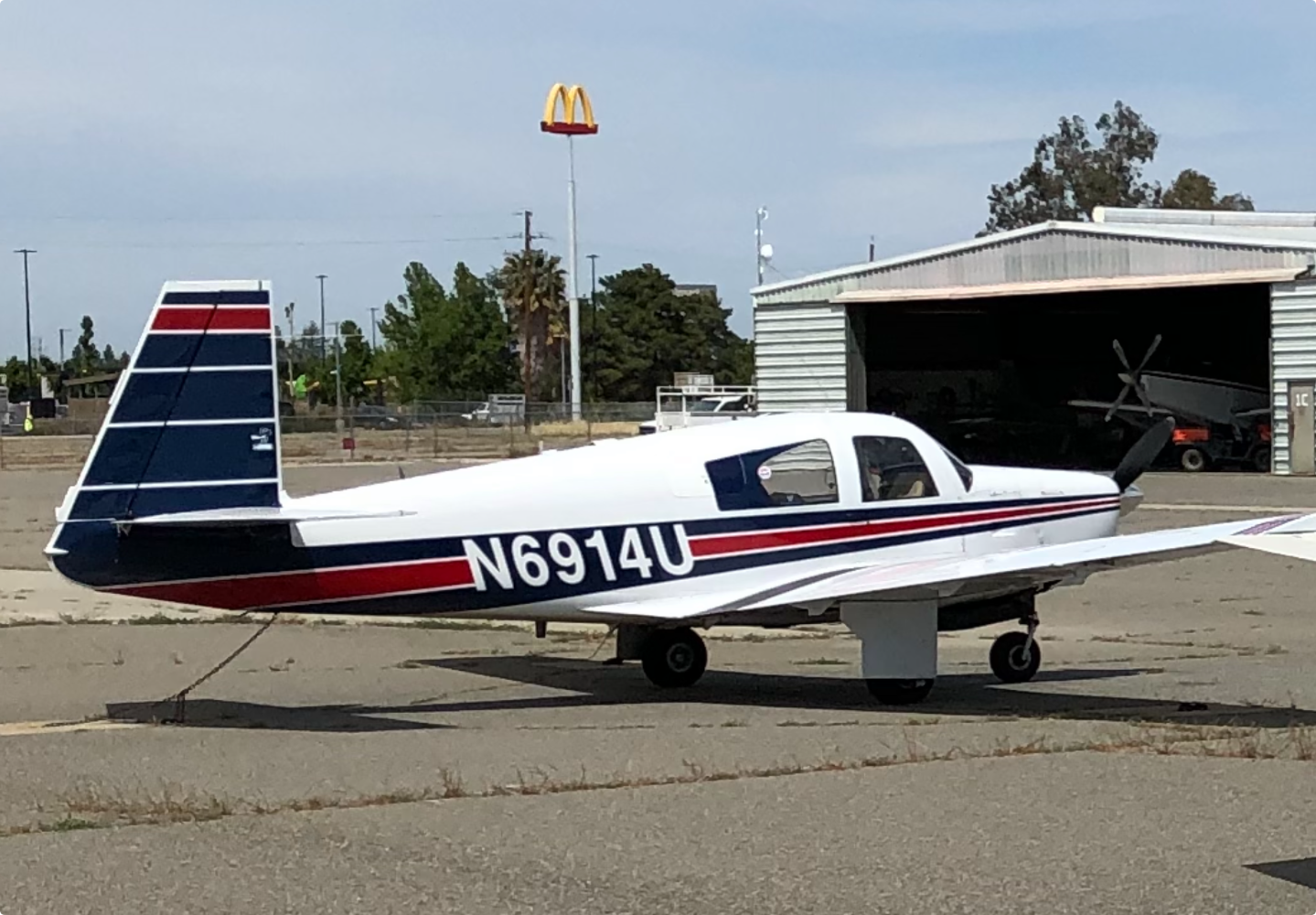
-
Talk about inflation… Top Gun sold me this bolt in May 2024… and had it in stock. 914004-000 (is the length as a -28 bolt) $194.04
-
This one bit me a couple years ago, except then it was only $20… for a nut plate. Ironic, the all-metal corner nut plates are about $2.

-
I didn’t run a flightline safety analysis on this project, all I did was rotate pictures and repost them. It does look a bit sketchy though, doesn’t it.
-
Of course, the hydraulic system needs pressure. In my ancient history… the -135 left hydraulic system has an aux pump that runs off the battery. That will charge the brake accumulator giving you about 3 (no more) brake applications. When we had to tow an airplane, the brake rider switched the battery to emergency and ran the left aux pump to charge the brake accumulator (in the left wheel well) to 1,000 psi minimum. It was a pretty weak pump, only 0.7 gph. If it wouldn’t pressurize, you had to drag chocks to tow the jet. Nobody wanted to do that. I had 17 years on the -135, Offutt, Mather, and Beale. It’s a good jet. Inefficient by today’s standards, but those were some of the best years of my tenure.
-
Or, have ‘FBO guy’ at MSP remove the nose chocks prematurely during engine start, crew chief doesn’t notice, and by the time 3 of the 4 engines are running the -135 moves forward far enough to smack the start cart with #3 engine nose cowl. It wasn’t me, but the crew chief who trained me… great guy, great cockpit crew, except on that day they didn’t set the brakes before engine start. Offutt had to send a crew from the jet shop to MSP with a nose cowl. After that incident, crew chiefs started visually checking to see that the brakes springs were recessed before calling engine start, including engine runs for mx.
-
I get the correlation of the poll to the fuel vent thread. I took the poll as an expansion on the subject of ground safety devices as promoting safety awareness rather than a scientific exercise to measure what positive or negative outcomes can be established by their use. My takeaway from the tank vent thread was that a vent (or vent ground cover) could be designed that defeats insects, but allows the vent to function if the cover was not removed. Something along the lines of the little flapper pitot tube cover on my ‘62 Cherokee which used airspeed to function. But then, any additional induced drag by such a device would probably be rejected by the Mooney community.
-
Perhaps, I get it. But I don’t think the object of the poll was to find out how many pilots are out there who have never made a mistake. Kinda like, filing an ASRS to report that nothing went wrong? I’m of the opinion that, if you’re in the game, sooner or later it’s your turn. Just don’t be chronic.
-
Aspen MFD with EI CGR engine monitor
47U replied to Steve Dawson's topic in Engine Monitor Discussion
I’d have to hit the lottery. The Aspen unlock and EI equipment together is more than the list price of the CGR 4 cylinder combo (@ 5.7 amu). And that’s before buying the Aspen MFD… unless you’ve got one sitting around. I suppose there are used MFDs out there removed for upgrades. My UBG-16 will soldier on in its obsolescence for the foreseeable future. -
I, too, am chock afflicted. Twice. As my mental focus is on the sortie into IMC early in my IFR training. With my CFII in the right seat. And once, long ago when I was a crew chief, they told me (when we returned to Offutt) that I failed to pull chocks before climbing onboard my -135. I think they’re lying. I would never do that. ”Over wing and aft hatches checked closed. CHOCKS, ground wires, pitot tube covers, and external ground equipment is removed. Upper and lower rotating beacons on and rotating. Aircraft is in taxi configuration.”
-
You got me, Ross. I’m only vaguely aware that some of the bigger shops have a test stand. I haven’t had the pleasure of experiencing a full overhaul yet, but I did top 3 cylinders in two years a couple annuals ago. Reading the Lycoming (and others) break-in instructions, I took away some important points. Minimizing ground run time, stipulation to have ‘calibrated’ engine gauges, initially run at high power to start, then alternating high and low power settings. Considering that a good portion of the cylinder(s) break-in can occur in the first hour (or so), after a major overhaul, the controlled environment of the test cell seems to me like a good thing. Even from a standpoint of maybe lowering the risk of infant mortality. In my former life, the jet shop ran everything across the test cell before putting in on the jet. Lycon isn’t that far from me… this is on their website: https://lycon.com/testing.php
-
Thank you for the pictures. You have a really nice vintage example. A field overhaul that was not run on a test stand ‘could’ still be breaking in cylinders. If chrome cylinders, perhaps even more so. Your baffling around the starter/alternator shows attention to detail, but the rest of the forward flexible baffling might benefit from replacement. There are some areas showing wear, some questionable areas, especially below the prop where if looks a little funky. If you’re fastidious about making sure the baffle is secure in the channel, it could be fine, but there is some evidence of deterioration both upper and lower. You’re picking up manifold pressure off both #1 and #3 cylinders, both to the firewall? I’m not an expert… the #3 is to an engine monitor? With the PowerFlow, 16.5 to 17.5 might not be sufficient to keep the CHTs where you want them. @Skates97 had a good post on carbs about 5 years ago… I am assuming your PowerFlow exhaust carb heat system is not dumping air like the stock Mooney system. I noted the cold air intake for carb heat was moved from behind #3 cylinder to in front of #2 cylinder, which you mentioned #2 and #4 were your hottest CHTs. Externally, your doghouse looks really good. There’s certainly many in worse shape (including mine). Still, it’s a good idea to do some flashlight testing for gaps. Interesting cowl flaps for a ‘62 C… I’m wondering what event brought those about. An upgrade from normal wear… or an unfortunate event? Please keep us posted on developments… we’re all learning.
-
Welcome, Phillip. Between the PowerFlow and E mag, these CHTs might be what you get. It’s hot in Texas. How many hours on the overhaul? If you’re still breaking in cylinders, there might be some relief yet to come. Was the overhaul done with chrome cylinders? Chrome might run somewhat hotter CHTs. Is the oil temp within expected range? Be sure the flexible baffles around the upper and lower front cowling are in good shape, seated in the groove. Check to make sure the inter-cylinder baffles (below the cylinders) are installed correctly. And check that the baffle tie rods are installed. There are some felt pieces on the back side of the doghouse that close up some gaps. Make sure those are doing their job. The ‘62 has adjustable cowl flaps (I think)… to see if it makes a difference, I wouldn’t be against adjusting them to be open an inch more than spec’d in the mx manual. To see if it makes a difference. Get the speed up as soon as possible after takeoff. 120 is a good target. I understand the urge to gain some altitude on initial climb, but see if emphasis on acceleration makes a difference in lowering CHTs. Enjoy the new ride… let us know how it goes… post some pics!
-
Transponder antenna replacement questions
47U replied to LANCECASPER's topic in Avionics/Panel Discussion
Presumably, the Comant comes with a base gasket? And mounted on a belly panel? I don’t think any RTV is required. I think convention has the slanted side forward, but, being a Mooney…. why not go with the straight end forward. This is the (Mooney) way. -
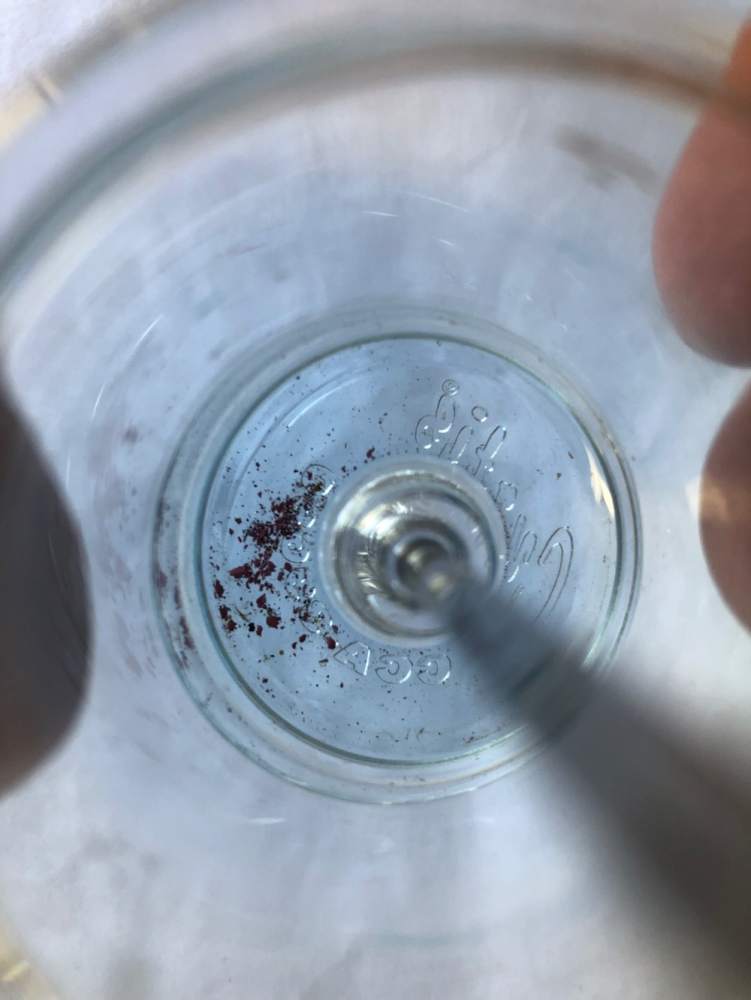
When these little grains started showing up I was concerned. They were soft, so I figured it was the top coat. No tank work in my ownership starting in 2008. No history of a full strip and reseal. Not leaking, just one brown rivet and a couple screws with stains on the wing walk panel. The gascolator and screens were clean, but I got paranoid. I figured this wasn’t going to get better by itself so I got on the schedule in Willmar. Problem solved, no more debris in the sump samples.
-
https://www.controller.com/parts/search?SearchType=Start&PartNumber=c-3532-22p
-
The previous owner of my ‘63 C told me of this… the one time he had carb ice in his 35 years of ownership, he saw the manifold pressure was dropping. I added a carb air temp probe when I installed the FP-5 and have a warning light set at 35 degrees.
-
Aspen MFD with EI CGR engine monitor
47U replied to Steve Dawson's topic in Engine Monitor Discussion
I could be interested… depending on price and availability. I think I could reuse several modules I already have feeding my UBG-16 (which is now obsolete). However, the product was announced some months ago…. -
-
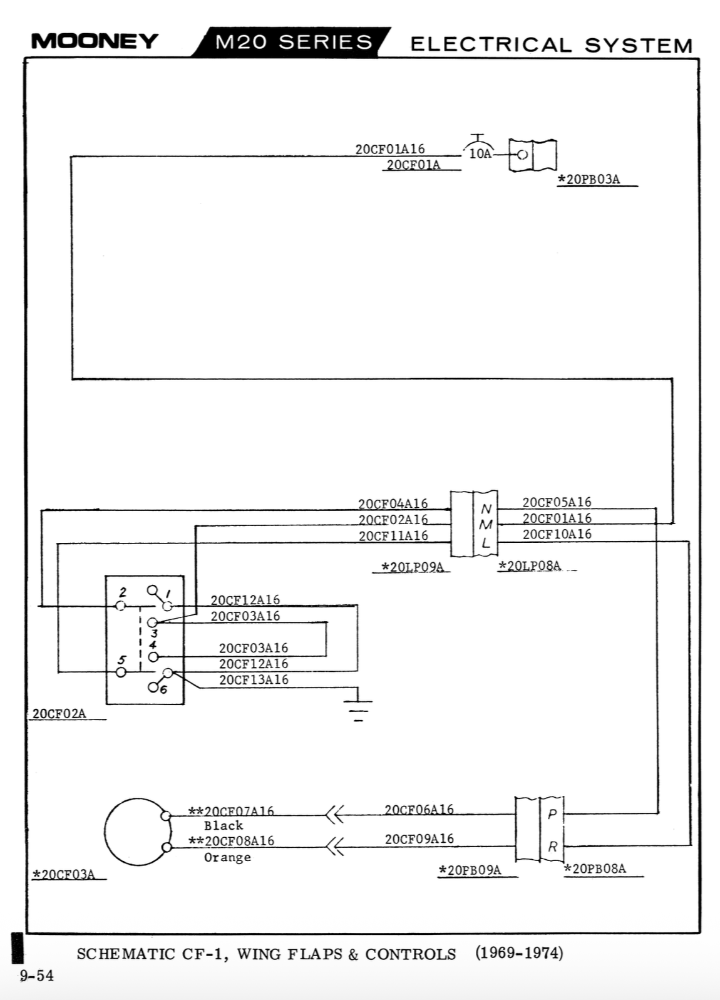
I’d start by measuring voltage at the actuator and compare the up-circuit voltage to the down-circuit voltage…
-
Nope. Not available at any airport that I’ve been to in NorCal…