Ragsf15e
-
Posts
6,394 -
Joined
-
Last visited
-
Days Won
33
Content Type
Profiles
Forums
Blogs
Gallery
Downloads
Events
Store
Everything posted by Ragsf15e
-
Yeah their website is not good, but they answer the phone and talk to you which is nice! Glad you found your parts.
-
I would start with the parts department at Lasar. They have some parts in stock or will order through Mooney. I got nose gear parts through them both of these ways recently.
-
There is a small tube on the bottom of the oil filler tube for the return line. I’ve actually been thinking about this because routing that line has to go through the back baffle (filler tube is forward of the baffle, oil sep is aft), and my return line is in an inverted U shape right now stuffed through a hole with some other lines (maybe ignition wires?). Almost has a “P” trap in it…
-
Surefly SIM4N install in an M20C PIREP
Ragsf15e replied to DXB's topic in Vintage Mooneys (pre-J models)
This might be a bit of pain on the front end, but Id suggest trying it first with the advance enabled. If you don’t like it, you can turn it off (yes, with some work). If you start in fixed mode, you won’t know. I really liked it on my F in advance, but of course I was injected and ran LOP a lot. Another factor is your normal cruise altitudes? If you’re an east coaster who thinks you’ll get a nosebleed above 5,000’, then advance isn’t going to be different than fixed timing. However, if you’re cruising at 8-10k a lot then it’s more noticeable. -
I’ll add pictures later this week when I go clean the belly, but here’s the story… TSMOH - 220hours, 3 years Last Annual - April 2025 When I got my 252 in January, one of the first things I noticed was how much oil was on the belly after a flight. It wasn’t actually using much according to the dipstick, but the spray was from the breather tube all the way to the tip of the tail along the belly. At first, I thought it was blow by, but then I realized the oil was still looking new after 25 hours since oil change and the compressions were all good at the annual in the 60s. Then I realized the oil cap was a little loose so I changed the O-ring on it and it seats nicely now. Finally, I thought I solved the problem when I realized that both the breather and the return line from the oil separator were routed down underneath the cowling to exit the engine compartment. Yes, the oil return line was not hooked up to return oil to the engine. My mechanic fixed that at the annual and cleaned out the oil separator. The next five hours of flying had a small amount of oil out the breather which I considered normal. Then this weekend I flew two ~3 hour XC legs and again I have a lot of oil out the breather. I would say it’s not as much as before the annual, but it goes from the breather tube all the way back below the avionics compartment. The engine only uses about 1 quart every 10 hours. When I left on my cross country this weekend, there were 6.5 quarts of oil in the engine. After the first three hour leg I checked and it still had more than six, so I didn’t add any. I’ve been trying to keep it right around six because lots of people say it will blow out more than that. Does anyone keep it below six? From my reading, it seems that it could have something to do with a prop shaft seal or maybe the dipstick isn’t sealing right or maybe the breather or oil separator are clogged somehow? Or maybe pointing the wrong way? I have no idea how we should go about troubleshooting this. I really do not think it’s blow by from a cylinder. My breather is bent near the exit and ziptied there to point directly aft. Is that how others are? My F model breather opened straight down. I feel like I'm grasping at straws… any suggestions? Thanks, Drew
-
Video of door pop, pilot error (not Mooney)
Ragsf15e replied to 201er's topic in Mooney Safety & Accident Discussion
True, you can always ask for priority, like saying “minimum fuel”, but it doesn’t mean you’ll get it and it can mean different things to different people. Declaring an emergency puts you and atc on the same page. -
Yeah i wanted tit on the strip as well but can’t. I did move the strip to the right and like it there although it does move the pfd off center.
-
Mine’s another 20 degrees cooler. I might try to cover some of the cooler with metal tape and see how it goes. Sure Id like to see exactly 180, but the oil analysis shows no water and I see steam/vapor coming out when I open the cap after shutdown. I get the feeling it’s hot enough.
-
I think there’s more to the story then… if the oil is only ~150 degrees before going through the cooler, then the vernatherm shouldnt be letting any (or very little) into the cooler at all which means a winterization plate wouldn’t make much difference. The vernatherms open ~160ish depending on the part number.
-
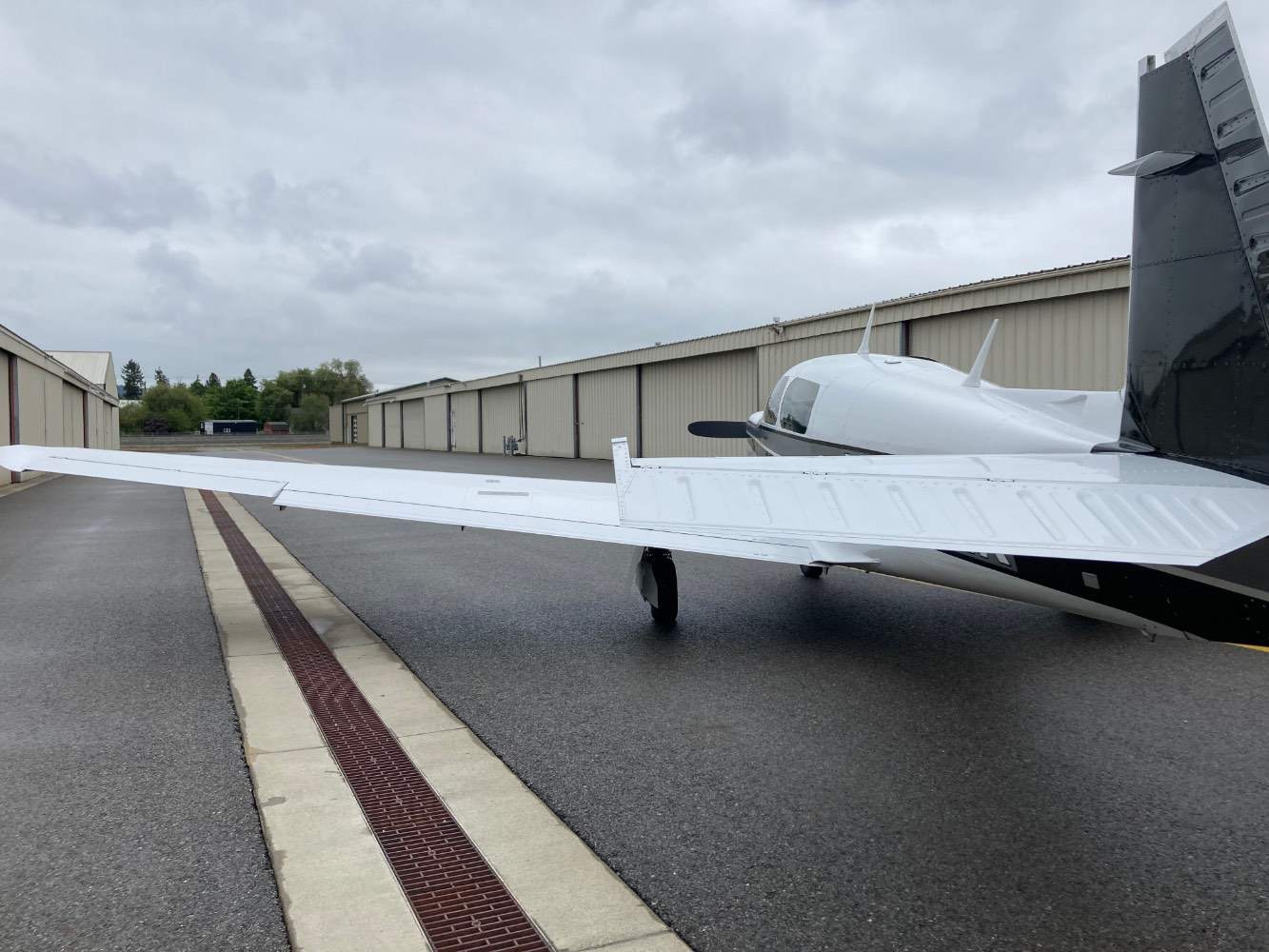
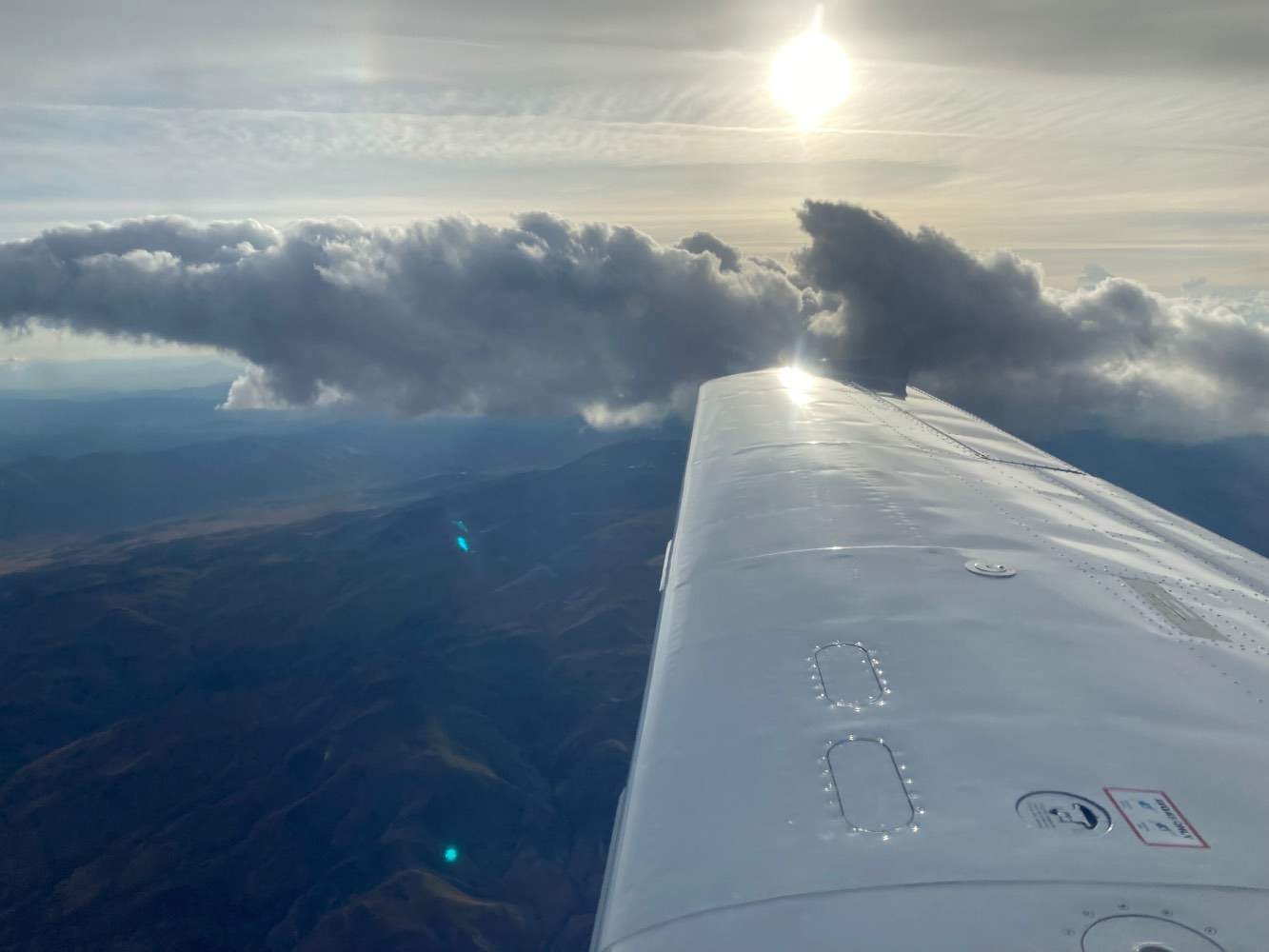
Spokane to Carson City for a visit with the parents/grandparents. 15,000’ most of the way at 175ktas and 10.4gph. Awesome airplanes! IFR and had to stay low for icing across Washington, but Real pretty descending across Reno near Pyramid Lake and Blackrock “airport”.



- 182 replies
-
- 11
-

-
The temp probe is on the outlet of the oil cooler. The flow of oil over it is already gone through the cooler or bypassed it. If you want the hottest oil, youd have to measure it in the turbo or the main bearings etc but the probe definitely isn’t measuring the hottest oil. Savvy has a pretty good number of tsio-360 engines with data and they publish their average values. Ill see if i can find the diagram for you - their “green” zone is 160-180.
-
Actually his oil temp is pretty standard for a K. I agree with you that around 180 is a good temp for the oil, but the primary oil temp sensor location on the tsio-360 is immediately after the oil cooler. In fact, it’s basically attached to the cooler. You kind of have to assume that the oil is much warmer (and thus above 180) elsewhere in the engine. However, his reading is pretty close to the average for this engine type.
-
Wow, i like the way your g3x is setup. Mine has the engine instrumentation on the left side. Id prefer like yours so it is consistent when you bring up the split screen engine page, they will be on the same side as they were before. Also, yours has more information on it, but I see you don’t have all 6CHT‘s or EGT‘s or ff which mine does. I didn’t realize that could be customized. Also, do you know what fuel flow you were running there?
-
Snow? Fog? it was either 0/0 weather or the picture didn’t load.
-
Another Mooney Gear Up Video
Ragsf15e replied to 1980Mooney's topic in Mooney Safety & Accident Discussion
Jeez, maybe underinsured? It had a full Dynon panel and 100smoh?! -
Well now, hold on. Which engine do you have exactly? The TCM parts manual for my TSIO-360SB shows the original (spot welded) part as 653337 and it also states that the part is superseded by part 670105 (riveted). This aligns exactly with the AD. These parts (670105) are shipping from various suppliers. I got one last week. Do you have a different engine variant that uses a different part number? Heres a shot from the tcm online parts catalog:

-
SHAW 431-9 FUEL CAP CONUNDRUM
Ragsf15e replied to DCarlton's topic in Vintage Mooneys (pre-J models)
Did you (or your mechanic) take it apart and see what’s wrong? They are dead simple to maintain, especially with new o rings available. I don’t think I’d give up on one too easily. -
New panel is finally coming together
Ragsf15e replied to phxcobraz's topic in Vintage Mooneys (pre-J models)
Looks awesome! can you describe exactly what you did to the plastics? They look great and im considering doing mine. -
M20R 310 STC cruise minimum 2500 RPM
Ragsf15e replied to Tyler G's topic in Modern Mooney Discussion
That’s the list of revisions, for better context on exactly what they changed and how, post the updated page 3. That’s where the real info is. -
Wire routing and securing wire inside the wing
Ragsf15e replied to Mooney-Shiner's topic in General Mooney Talk
Only a half hour? -
No worries. Our search function isn’t great. I use google with “mooneyspace” at the end. Heres the thread from a few weeks ago with lots more advice.
-
I’ve used Command Aviation at Bellingham and like them. Crown at PAE is good too but busy. We had a thread about this very location a couple weeks ago, see if you can search it out on google. Advanced down in TTD is very good and not that far.
-
Strangely, my gtx345 was using a G5 as the encoder and (after several conversations), garmin admitted there is an issue with that setup that can cause intermittent mode c loss. They even offered to send me a gae-12 encoder. Now I doubt the same issue exists with the g500txi, but I guess my thought is that it might not necessarily be an issue with the transponder itself. Maybe a wiring issue from the g500? It will need reasonable troubleshooting.
-
The reason I ask about your encoding source is that they said your mode C was intermittent. The mode C is the altitude reporting portion of your transponder signal. The transponder gets its altitude from the encoder which is a separate device.
-
Yes, but what’s its altitude source? I don’t think a gtn can be the altitude source? There will be some type of encoder hooked up to static air that provides it. Could be anything from an old school grey code box or a fancy little garmin one on the back of your unit. It’s where the transponder gets the pressure altitude. Strangely, the transponder needs a different box to do this for it. The transponder itself just takes care of sending out the different mode c signals, adsb, etc.