

slowflyin
-
Posts
803 -
Joined
-
Last visited
-
Days Won
3
Content Type
Profiles
Forums
Blogs
Gallery
Downloads
Events
Store
Everything posted by slowflyin
-
I'm located in VA. For years I struggled with my Q-hut hanger. Cold as heck in the winter and unbearable in the summer. Worst of all was the corrosion on my tools. When I bought my Bravo I decided something had to be done. Three inches of spray foam insulation and a mini split turned my hangar into paradise. It definitely controls the humidity and when I'm working on the plane I just rachet the thermostat down to 75. The variable speed compressor in the mini split has eliminated any concerns about short cycling and ineffective humidity control. It's a whole different experience! Winters are the same. I typically set it on 50. If I'm flying the next day or working one the airplane, I turn it up!
-
It's a three layer mechanism. A black ring stuck to the glass connected to a black ring out front with the indicator ring slipping between the two. I had one in my 170 and found it useful.
-
Green 500 to go Yellow 200 to go Red Minimums.
-
I recall risers and wastegates on his first two engines. Maybe @donkaye can chime in. It's likely I may be mistaken. Memory isn't what it once was.
-
I agree and rarely run near 1600 TIT. That being said, the lack of data is frustrating. 1750 didn't work so they dropped the TIT max to 1650. Did 1650 not work? I've read all I can find and haven't been able to find any remarks regarding 1650 burning up someone's exhaust. Did your previous owner run 1650 as a limit? @donkaye has more experience with the Bravo than most and he runs very conservative TIT temps. He's still doing exhaust work mid-time. If he had used 1625 or 1650 would he have had a different outcome? One thread had comments from a gent that had a background in metallurgy, and he was fairly adamant 1650 was good to go. Wonder how his exhaust is holding up. In the end, all I can find is these engines need exhaust work, 1750 is bad, 1650 is Mooney's opinion, everyone else seems to lean toward some degree of cooler is better. How much cooler depends on who you ask. It's not my intention to be argumentative. Patience is appreciated in advance.
-
Mine doesn't require GAMIs. It will run smooth on the lean side. My biggest challenge with LOP ops is keeping the TIT in an acceptable range. 14.2 GPH-LOP puts TIT at or above 1650. I can lean to 13.2 GPH, 1625 TIT without roughness or surging for around a 10 kt penalty. I'd like to see 1600 or less. LOP, my highest CHT drops from 385 to 350. I'm constantly contemplating whether I should baby the jugs or the exhaust.
-
I've got a Victor Black engine in my Bravo and I love it! Silky smooth-runs like a sewing machine. No GAMIs but will run LOP if I choose. All that being said, a Lycoming overhaul comes with exhaust and turbo. Not so much with anyone else. I thought my exhaust was in good shape. Not so much.
-
I pretty sure you can wire it into the gear light circuit.
-

Looking for nose gear truss, part # 940042-503
slowflyin replied to JackM20M's topic in Mooney Bravo Owners
I've utilized Specialized for a truss with great results. -
My CO will read 10 ppm if I leave the storm vent open and tow the AC with my power tow. These detectors are very sensitive. If lean aggressively on the ground, I've found it drastically reduces any CO readings. If I don't, I can easily have 25 or 30 ppm. 0 in climb and 0 in cruise.
-
FS: WAT G3 PAR-36 LED Landing and Taxi Lights - $299
slowflyin replied to OSUAV8TER's topic in Avionics / Parts Classifieds
I adjusted per the Mooney SM. Considering the beam presentation is so different compared to the old GE bulbs I wasn't really sure what kind of results to expect. Pleasantly surprised to say the least. -
FS: WAT G3 PAR-36 LED Landing and Taxi Lights - $299
slowflyin replied to OSUAV8TER's topic in Avionics / Parts Classifieds
Pic of my departure early this morning. Two G3 landing, two G3 taxi lights and two led recognition lights. Couldn't be more pleased. Thanks James!
-
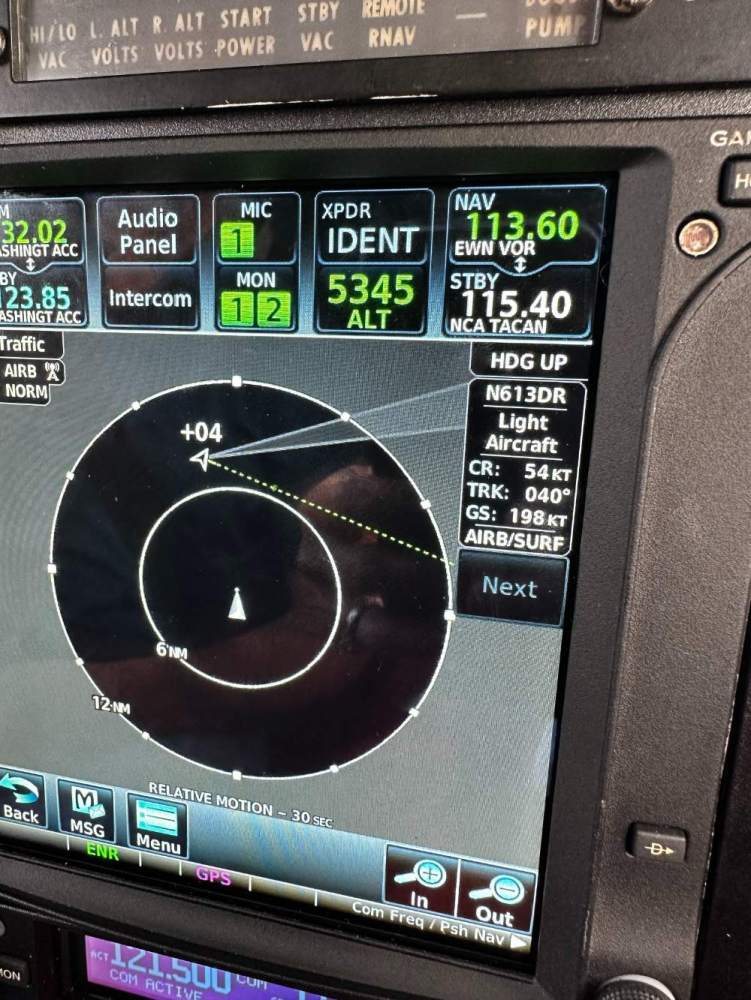
Sunday morning, I heard a fellow Mooney driver on freq. and then picked him up on ADSB. Nice GS!
-
Adding an Audible Alarm to my EDM900
slowflyin replied to CMMPilot's topic in Engine Monitor Discussion
I've always thought an audible alarm would be a nice addition. -
I would guess an F with J cowling and WS would have a higher UL but lack some of the interior refinements.
-
Good afternoon, I may not be the best to answer as I don't fly a Continental. My Bravo has a Lycoming TIO-540 and my Skylane has a Lycoming IO-540 with Cessnas bolt on Turbo. Since no one else has responded here ya go: How long do you expect to get out of a set of cylinders ? Time in service ? Bravo ran to TBO. About 2100 hours. Skylane 1400 hours (previous owner) How long have you gotten before needing cylinders ? What symptoms made you remove cylinders ? Above Is it common to do a top overhaul on such engines ? Not unheard of on the Lycoming's but I wouldn't call it routine. Others can comment on the Continentals. My inquiry would only apply to map turbo systems, which produce the same boost at sea level or at the service ceiling. Not turbo normalized engines which have a much easier life. finally, can you share your experience with top overhauls ? What would you like to know?
-
Congrats!
-
I started looking at Champs but I’m drawn to the Citabia for sure.
-
I have my Bravo and a 182 we use for work. Looking to pick up a Champ or Citabria. I also turn wrenches on some of our survey aircraft so there never seems to be enough hangar space. Additionally, I run the FBO on the field and occasionally we have someone transient looking for shelter overnight.
-
Certainly money in the budget for a fridge!
-
Thanks! Door arrives 7 August. I'm excited to say the least.
-
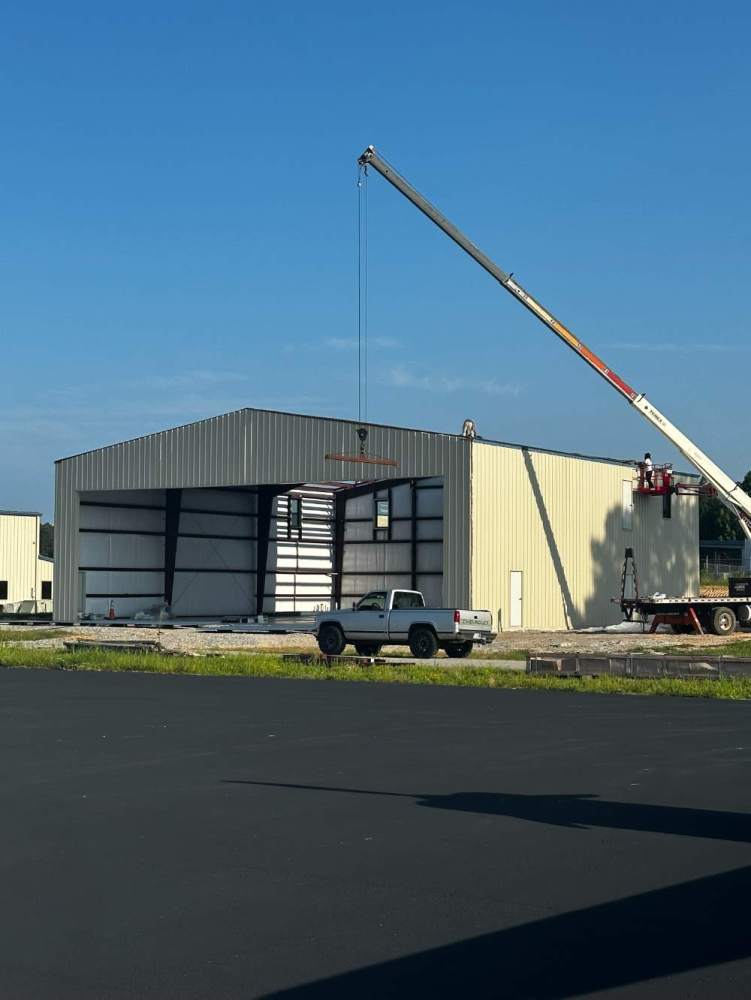
Progress!
-
I'm sure your attitude will improve at sunset on your new sailboat!
-
Enjoy the next chapter!
-
It’s an O-540-L3C5D. Carbureted and rated at 235 HP. I’m hoping regular oil analysis will offer me some foreshadowing before things get out of hand. I concur, no MOGAS STC for this variant. Thanks for your comments.