
CAV Ice
-
Posts
76 -
Joined
-
Last visited
Content Type
Profiles
Forums
Blogs
Gallery
Downloads
Events
Store
Everything posted by CAV Ice
-
We just bought one from Air Power Inc. They had the best price we could find for the battery in our Columbia 400. Here's a link to the one you are looking for (ready to ship 4/3): https://www.airpowerinc.com/rg-35axc
-
Same nozzle
-
#70 tip drill .0280
-
Get a tip drill set and run the proper size through the metered end of the nozzle. Make/Model of aircraft and FIKI or no-hazard system and I can tell you what size the metering end is...
-
Yes, all Mooney FIKI TKS systems are 28V.
-
We do provide a no-hazard system for the M20J, both 14V and 28V. FIKI is only an available on M20K, M20M, M20R, M20S and M20TN.
-
Doing this today on our Columbia 400.
-

Sick + Single Pilot IFR + Trapped above ice
CAV Ice replied to hais's topic in Mooney Safety & Accident Discussion
@smwash02 we run ours until all the panels fully wet out and have even flow. If you have a stubborn spot on the panel wipe the entire length of the panel with a lint free rag while the system is running. This tends to "help" any areas that aren't wetting out. Another thing we do is run it during cruise on the outbound leg of a trip. You can see it wetting out the length of the wing (see attached picture). Then leave it off on the return trip if possible. This prevents a mess on the hangar floor.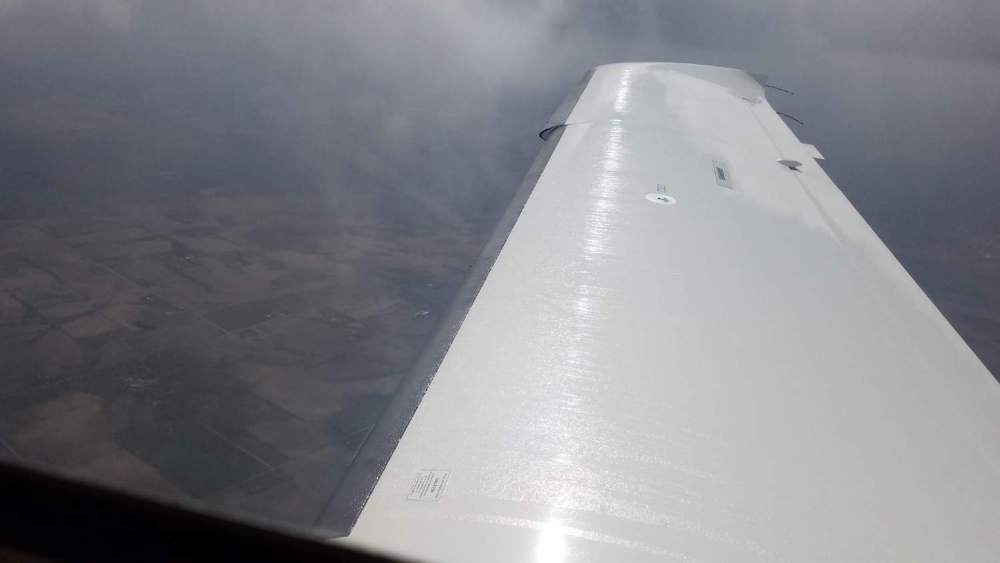
-
Sick + Single Pilot IFR + Trapped above ice
CAV Ice replied to hais's topic in Mooney Safety & Accident Discussion
@hais I sent you a PM. It is recommended to run the TKS system at least once a month. I prefer systems be run twice a month. The high pressure light could have been caused by a number of things... ambient temperature (below -30 C) can cause it due to the viscosity of the fluid, EMF can cause it, power surge to the high pressure switch, faulty ground on the high pressure switch. As long as the high pressure switch was able to be reset I wouldn't consider it a filter issue. -
@Scottknoll I sent you a PM
-
Recently had issues with our RH speed brake (Columbia 400). Called Precise Flight and they recommended sending both in along with the controller. Got the controller upgraded and both brakes overhauled for $2069.50.
-

-
M20M with G1000 (s/n 27-0318 & 27-0326 and on) no vacuum pumps required. M20R no vacuum pump required with G1000 (s/n 29-0333 and on). M20TN no vacuum pump required. ***This information comes from the CAV Aerospace FMS 8100-FMS STC SA00306WI. If it is a factory installation refer to the Mooney FMS***
-
Have a Columbia 400 with a nose wheel shimmy. It is very light below 20kts and increases to moderate between 25 and 28kts. After 30kts it stops. Tire is balanced, bearings are good, strut is serviced and I'm out of ideas on what to do to stop this shimmy. Any thoughts are much appreciated! Thanks!
-
@ArtVandelay our controller was under the baggage area. We have a Columbia 400 though not a Mooney.
-
I sent our speedbrakes and controller out for the exact same issue a few months ago (Columbia 400). Initially I wanted to just send the problem speedbrake out, but precise flight strongly recommended sending both with the controller. They updated our controller to the latest and greatest and went through both brakes. Total cost was $2069.50
-
@GeeBee the stall triggers are sealed on with a PRC type sealant (integral fuel tank sealant). This creates the seal between the stall trigger and the panel. Additional RTV type sealant is optional and not as strong as PRC, but not a bad idea.
-
@aviatoreb sent you a PM
-
Anyone have any info on this? Rumor of a zoom webinar for Oshkosh by Jack Pelton on 5/27 at noon. Would like to be able to watch if possible. Thanks!
-
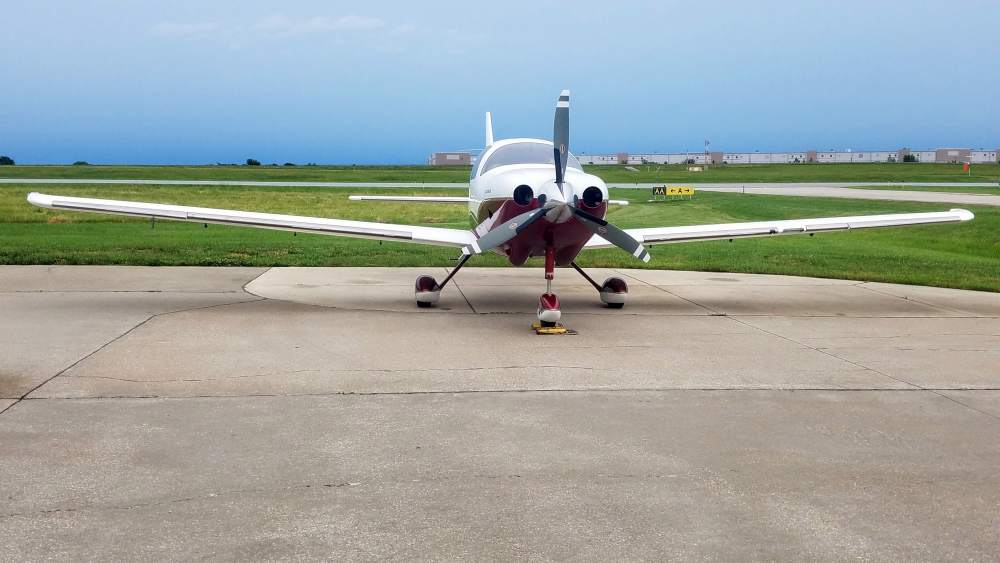
Wow... this thread has been around for a while. Can't believe I missed it. Anyway... I'm Jason, Operations Manager/Repair Station Manager/Technical Support for CAV Ice Protection (manufacturer of your beloved TKS systems). 6 years in the Army turning wrenches on Blackhawks, 6 years GA mechanic (mostly on PC-12's) A&P/IA, other odd jobs in between. PPL and working on my IR in a Columbia 400. Bad news is I have to pay for the fuel during training in the gas hog (40 GPH on takeoff... learning to lean it out real quick)! Joined Mooney Space because I enjoy reading all the stories and posts on all things aviation. Need any tech support or have any questions on TKS feel free to reach out! Hope to run into some of you at Oshkosh this year and yes, it will be my first time there... can't wait!!!
-
@RonM We exercise our TKS every couple weeks on our Columbia 400. To avoid the mess in the hangar and engine area we run it during trips. Run the system in cruise on your outbound leg until you see the panels wetting out (a couple of turns to get the sun angle just right will allow you to see the fluid on the wings... see attached picture). Once landed look at the trailing edges of the wings and tail. There will more than likely be residual fluid there so you can ensure the tail is wetting out. Then on your return trip leave the system off (if possible). This should allow the majority of the TKS fluid to leave the airframe and wont leave a mess in your hangar. We have noted TKS fluid running down inside our engine cowling and out the nose gear if we run it in the hangar. Another option, if you want to run it in the hangar, is to cap the prop by removing the prop nozzle and capping it there. A bit more maintenance extensive though. Hope this helps. -Jason
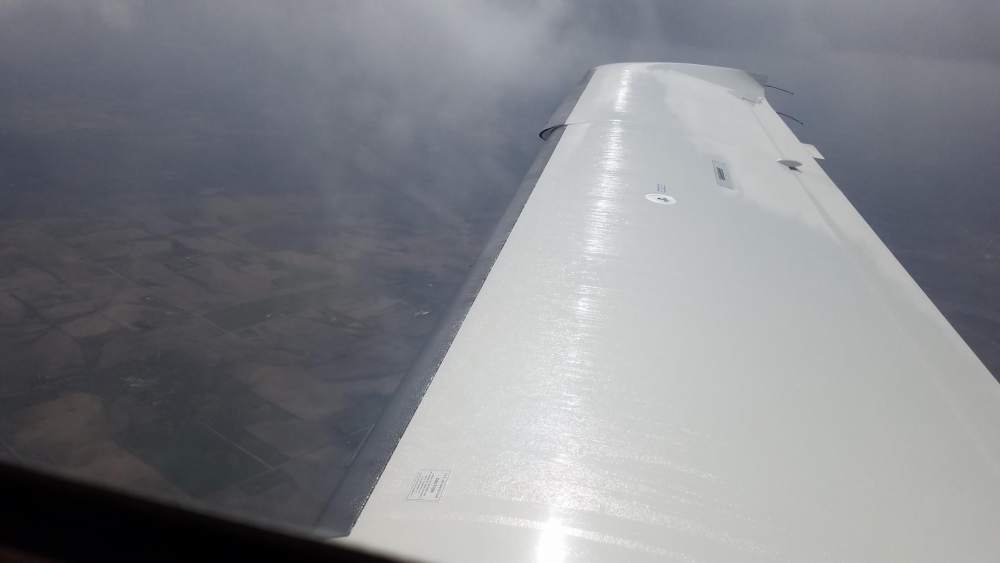
-
You are correct. TKS fluid itself is not corrosive, however like you said it can hold water. I've done an "unofficial" test in the repair station with bare metal. I put TKS on one and water on the other. The results were as expected. The water corroded and TKS did not. It did take the TKS quite a while to evaporate.
-
@Tim Jodice output of the main metering pumps and calibration of the proportioning units is based on panel design (older steel or riveted panels as compared to newer titanium and laser welded panels), line length for the installation and panel length. Nothing to do with fluid quantity.
-
The no-hazard system and FIKI system for both Mooney and Bonanza are completely different. The FIKI systems use different porous panels, dual windshield pumps, dual solenoid valves, dual metering pumps (different output than the no-hazard system), different wiring bundles, added heated stall warning, different control panel, dual alternator requirement, different prop slinger ring (depending on engine and prop), different proportioning units (different output to the panels).
-
Another reason there are more Mooney's with TKS... Mooney FIKI STC was issued 4/21/1995, Bonanza FIKI STC issued 3/14/2003. During that 8 year period Mooney's had TKS kits installed at the factory as well as retrofit. Bonanza's are all retrofit.