
Rick Junkin
-
Posts
1,446 -
Joined
-
Last visited
-
Days Won
8
Content Type
Profiles
Forums
Blogs
Gallery
Downloads
Events
Store
Everything posted by Rick Junkin
-

Too much Bluetooth. Should be Blueteeth.
Rick Junkin replied to Glen Davis's topic in Avionics/Panel Discussion
@Glen Davis I stand corrected! iPad bluetooth connection to both the G3X Touch AND the GTX 345R or other data link device is required to get everything, as Skip stated. Section 8.9 of the G3X Touch Pilot's Guide discusses Connext features and requirements and while it does state that bluetooth connection to "another" device is required the wording is vague. As Skip also stated, the G3X connection will get you AHRS and GPS data and provide for flight plan transfer to your GTN, and the GTX connection will get you the ADS-B weather and traffic. My purpose for this post isn't just to bow to Skip's @PT20J superior knowledge, although I do , it's to post this link for a video discussing and demonstrating the G3X Touch bluetooth connection details. I hope you find it as useful as I do. Cheers, Rick -
Too much Bluetooth. Should be Blueteeth.
Rick Junkin replied to Glen Davis's topic in Avionics/Panel Discussion
@Glen Davis There's a nuance here I missed the first time through. You can connect your iPad via bluetooth to multiple boxes in your panel at the same time. So you can connect to both the G3X and the GTX 345R and that should get you weather and traffic if you have problems getting it through the G3X. That's what I do for redundancy. Cheers, Rick -
Too much Bluetooth. Should be Blueteeth.
Rick Junkin replied to Glen Davis's topic in Avionics/Panel Discussion
@Glen Davis I have a very similar panel and I get everything I need on my iPad and can transfer flight plans to my GTN 650Xi. Tom, who posted above, is the only person I've seen posting so far that can't get flight plans to transfer to the GTN Xi through the G3X. Tom, please correct me if I'm wrong, I know I haven't read every post. Here are my answers to your questions. 1. Connecting to the G3X will (can?) get you you everything. That's what I did first and it worked for weather, traffic, and flight plan transfer to my GTN 650Xi. However, I also connect to my GTX-345 for redundancy on weather and traffic in the event I lose the G3X. The GTX 345 also has an AHRS, but the remote unit (345R) does not. 2. Yes. You have the most control over who hears the music if you connect it to the GMA 35C. If you have bluetooth headsets I'm not sure but I think you can connect more than one to your phone and listen that way, but that's rather cumbersome. Plus the 35C gives you auto-mute for the radios. 3. The FS 210 has an AHRS, which is a good backup for your iPad if the G3X goes out. You'll want to check with the avionics installer to see if they wired things in such a way that only the FS 210 is connected for flight plan transfer. I'm not even sure that's possible, but if you can't transfer flight plans through the G3X that might be the case and a place to start with troubleshooting. Cheers, Rick -
Unfortunately as stated above you are stuck until you get the SI back from Oklahoma City. Brief with your instructor and declare he is PIC and I think you'll be good to go to fly with him in the interim. Once you get the SI/renewed medical go get your Basic Med physical exam, complete the online course and "declare" you are flying under Basic Med as soon as possible. You can certify with Basic Med concurrent with a valid medical certificate, no problem. Then keep yourself clean for the duration of your 3rd class medical certificate (until it expires) and then don't look back. It's important not to have any action against your 3rd class medical certificate because if it's revoked for any reason you no longer qualify for Basic Med. Make sure you completely understand your SI and comply with any reporting requirements regarding health changes to avoid any potential revocation due to not following the rules in the SI. Once the 3rd class expires you'll be out from under the SI and only need to be concerned with the Basic Med health items that require a re-examination by the FAA. Then it's up to you to make the no go/go decision from a health perspective. Evaluate and decide wisely. Cheers, Rick
-
I found the answer. EGT sensors must be turned off in order to get the G3X Touch EIS TIT lean assist function to work. We cannot enable both EGT and TIT and get the lean assist function available for TIT. With both EGT and TIT sensors enabled the lean assist function is only available for EGT. I got this information indirectly from Garmin through Adam at Mid West Panel Builders. Adam has done some very informative Youtube videos on the experimental G3X Touch configuration, operation and integration with other Garmin avionics and was kind enough to reach out to his contacts at Garmin to answer my question about TIT lean assist. Here's a sample video if you're interested in checking out the MWPB channel and the info they provide for the experimental community. I will be watching for any updates on when/if any changes are planned for the EIS to expand the lean assist capability. Cheers, Rick
-
Bumping this. Is anyone operating a turbo with a G3X EIS and have the Lean Assist function set up for your TIT? Cheers, Rick
-
The most useful indication on an AOA indicator is the "on speed" indication. Get it there and keep it there until roundout and flare, or perhaps slow down a bit before roundout depending on where you've decided to calibrate "on speed". 1.3 or 1.2 Vs0 is a good starting point. What made it really useful in the jets I flew was the AOA tone. A slow rate beeping tone approaching on-speed AOA, a steady tone on-speed, and a fast rate beeping tone when the AOA exceeded on-speed. The experimental G3X AOA system just added the capability to turn on an on-speed tone. The certified system gives a varying tone depending on how far you've exceeded on-speed AOA but it doesn't allow for a tone indicating on-speed. That probably won't change due to its mental equivalency with the stall horn and the FAA probably won't authorize it because of the confusion it could cause, based on the behavior of legacy stall warning systems in GA airplanes. I'll be very happy if I'm wrong about that. My point is "pull to the tone" was an instructional direction for how to fly the curvilinear base to final turn of an overhead pattern on-speed. The visual indicator was there, but the tone was gold. Cheers, Rick
-
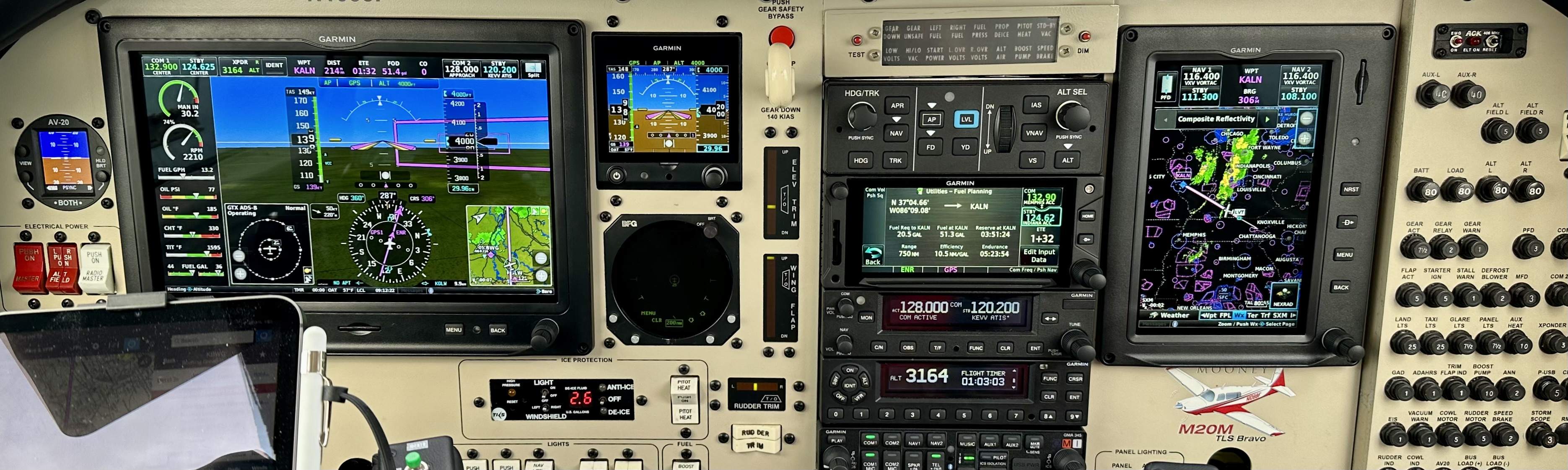
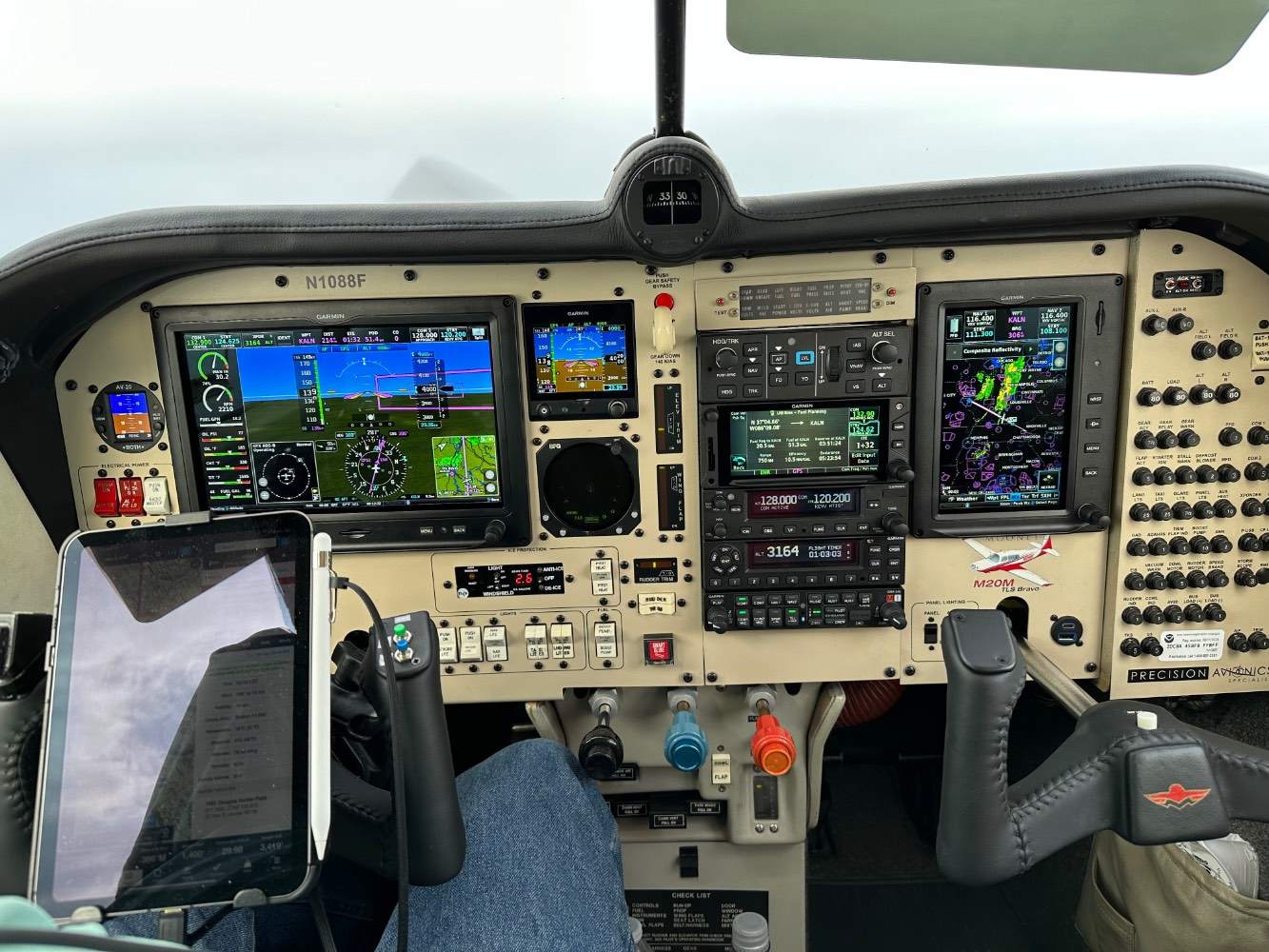
My original plan was G3X/GNC355/GNC255A. I opted for G3X/GTN650Xi/GNC255A mainly to get the Smart Glide integration. I considered the GNC355 in place of the GNC255A but decided that was a cost savings opportunity with minimal impact to operational capability, along with providing a second VOR receiver for old school navigation if GPS hiccuped. I never really considered the GTN750Xi because I figured the G3X would be my primary user interface. The 750 would provide a larger display screen for other formats, but I went with a second G3X display for EIS redundancy and to use it for the other formats. If you take a look through the GTNXi Pilot Guide it shows you all of the differences between the 750 and 650. There are not a lot, and none that swayed my decision or the ultimate capability of my panel. The most impactful difference I saw is the 750 displays both the comm and nav frequencies, and the 650 can only display the comm OR the nav frequencies and you have to switch between them. Same with the GNC255A. I've got my MFD configured to display nav freqs for both the 650 and the 255A, problem(?) solved. It's definitely a first world problem, if a problem at all. The other thing would be the 750 can display Flight Charts and the 650 can't, but if you're using Foreflight that probably doesn't matter much to you. I have Flight Charts on the G3X but I still prefer the Foreflight presentation on the iPad and may drop them from my data subscription in the future. Or I may keep them for redundancy for when the iPad craps out. Yeah, I'll probably keep the subscription, cheap insurance. Here's what it looked like yesterday:
-
IFR “practice” with certificate vs without. Good idea or Bad?
Rick Junkin replied to Schllc's topic in General Mooney Talk
The elephant in the room is Aeronautical Decision Making skills. It's up to the instructor's judgement and assessment of the student as to whether they display any of the negative risk traits and address those at the same time as providing the instrument familiarization training. Assessing whether the student understands the intent of the instrument training and is developing or has developed the judgement to use it appropriately plays a big role in my decision of what and how to teach. And then, when we practice flight with reference to instruments, emphasizing this is what you'll have to do if you've already made some bad decisions or things didn't go as planned and find yourself in a square corner. A student or pilot who demonstrates consistent ADM skills will likely make the correct decisions regarding weather and their ability to fly in it. Those who exhibit poor ADM need to have that behavior corrected before proceeding with training they would otherwise misuse and potentially get themselves hurt. To answer the original question - train to the pilot's/student's capability to learn and properly apply the training. So yes, provide the training. Cheers, Rick -
Propeller RPM higher than 2575 on takeoff
Rick Junkin replied to SuperSmash's topic in Mooney Bravo Owners
@SuperSmash Greetings! Always lots to learn with a new-to-you airplane. Exciting times. My governor overshoots a bit occasionally but always well below the 2700 transient limit and I don’t mess with it on takeoff. I’ll start dialing things back once I’m up and away and configured for climb, and that’s my recommendation. You’ll find different techniques for climb power settings as well. Bob Kromer, former Mooney test pilot and CEO, advocates leaving everything firewalled until reaching cruise altitude. That assumes you’re able to keep your CHTs under control at full power in the climb which you can usually do with airspeed and cowl flap adjustments. I learned the book numbers in my transition training and that’s what I use, but really for no good reason other than that’s how I was taught to do it. And it’s what’s in the book . But you’re probably finding there are a few things in the book that you shouldn’t do. Things like running high power at peak EGT, and using TIT and CHT redlines of 1750 and 500 respectively. But I digress. If you don’t already, you’re going to love your Bravo. Cheers, Rick -
Propeller RPM higher than 2575 on takeoff
Rick Junkin replied to SuperSmash's topic in Mooney Bravo Owners
Here, I’m gifting you a period “.”. Feel free to reuse it as many times as you like. I’m curious about your rationale for cycling the prop so many times, and what magnitude of RPM drop you look for with each cycle. I’m at the other end of the spectrum and only cycle once with minimum RPM drop with the rationale that the check is to verify oil flow to the governor. That’s when I’m flying the airplane at least weekly. If the airplane has been sitting for awhile it may take a few cycles to get the prop response I expect to see but I still keep the RPM drop to about 200 RPM or less. But I’m always open to hearing other ideas! Cheers, Rick -
GFC 500 pitch oscillations by Mooney model
Rick Junkin replied to PT20J's topic in Avionics/Panel Discussion
Looks like Garmin will have an indirect opportunity to address the pitch oscillation issue as part of the answer to this proposed AD. https://www.avweb.com/aviation-news/ad-mandates-garmin-autopilot-software-fix/?MailingID=1527 Cheers, Rick -
Prop Strike and Engine tear down requirements.
Rick Junkin replied to Schllc's topic in Modern Mooney Discussion
I think that’s smart. Call Continental/TCM and see if they have an engineering record of the consultation on this engine. Or better yet, ask the broker to get that info for you. -
Prop Strike and Engine tear down requirements.
Rick Junkin replied to Schllc's topic in Modern Mooney Discussion
I’m going to legalese you a bit. Yes, it’s mandatory to execute these steps to comply with the service bulletin. However, compliance with a service bulletin is voluntary for aircraft operated for private non-commercial use under Part 91. So, I don’t have to comply with a service bulletin as an operator of my aircraft for personal use under Part 91, but if I choose to comply then I must execute the requirements of the service bulletin as written. And if I’m using the aircraft in a commercial capacity, like as a rental aircraft, then I AM required to comply with service bulletins, get 100 hour inspections, etc. So in this instance, the service bulletin is regarded as advisory and it’s up to the aircraft owner to decide if he wants to comply. I’m just another pilot with an understanding of how I believe this works, happy to be corrected by someone better informed or experienced. Cheers, Rick -
Prop Strike and Engine tear down requirements.
Rick Junkin replied to Schllc's topic in Modern Mooney Discussion
A quick google search yielded this from Lycoming: https://www.lycoming.com/content/propeller-ground-strike-or-sudden-stoppage-can-be-dangerous and https://www.lycoming.com/content/service-bulletin-no-475c And this from Continental: https://www.airmarkoverhaul.com/wp-content/uploads/2019/02/Prop-Strike-Continental-Engine-SB96-11B.x43733.pdf Reader's Digest Version - service bulletins from both manufactures recommend/direct(?) an engine teardown in the event of a prop strike. EDIT: Thinking more about this I recall discussion of a crank run-out check being deemed sufficient in some cases with Continental engines, I think. Guidance from both manufactures is contained in a service bulletin and as such is not mandatory for non-commercial Part 91 ops. If engineering at Continental was consulted there will be a record of their analysis that may be available to you if you ask Continental for it. That would provide evidence and insight into the decision to recommend against a tear down. Cheers, Rick -
KDYL - KDWH recommended midway stop?
Rick Junkin replied to BravoWhiskey's topic in Miscellaneous Aviation Talk
@BravoWhiskey Take a look at KSJS. Not the cheapest fuel prices but a friendly FBO and a good restaurant on the field. One of my favorites. Call to make sure they'll be open at the time you're planning to arrive. (606) 298-2799 If you want something further west check out M93 and the Southernaire Resort Restaurant, 931-721-3321. Lower cost self serve fuel and the restaurant is a short (less than 1/2 mile?) walk off the northwest end of the runway. It's a very low key "down home" kind of place with excellent food and service. Another favorite. EDIT: M93 is a VFR destination, no approaches. I forgot about that. Cheers, Rick -
Has anyone figured out how to get the G3X EIS Lean Assist mode to display peaks on both EGT and TIT at the same time? The Garmin manuals are a bit vague on how the Lean Assist function can be configured. My interpretation is that if I have EGT probes it will use EGT, and it will only use TIT if TIT is the only thing configured, meaning no individual cylinder EGT inputs to the EIS. Is my interpretation correct? @TrekLawler? On my airplane the Lean Assist enable/disable configuration option is only available on the EGT page, with no option for Lean Assist enable on the TIT page. I tried disabling LA on the EGT page thinking that might make it available on the TIT configuration page, but no joy. My G3X Touch EIS is configured with 6 x CHT, 6 x EGT, and 1 x TIT from the TIO-540-AF1B. Lean Assist mode operates and displays peaks per the manual for EGT and marks the fuel flow for the first EGT peak. TIT has no Lean Assist indications. I'd like to get the TIT LA indications but I don't want to lose the EGT indications. Full disclosure, I don't normally use the LA mode but I'd like it to work the way I want it to . I do the Big Mixture Pull and then adjust to my target LOP fuel flow and TIT, and occasionally enrich back to find peak TIT to check how far LOP I'm operating. I'd like to have the cyan LA marker as a TIT peak reference on those occasions. Cheers, Rick
-
GFC 500 pitch oscillations by Mooney model
Rick Junkin replied to PT20J's topic in Avionics/Panel Discussion
During my research into this oscillation issue I came across this Garmin service bulletin for gain adjustments on SR22 GFC500 installations, the details of which can only be accessed by an authorized Garmin dealer/installer. Cirrus pilots were reporting oscillations similar to what we're seeing and this SB addresses pitch performance. While it wouldn't be legal within the STC specifications to use this data for our Mooney installations it may be enlightening to know what fix Garmin put in place for the SR22. You can ask your installer if they'll take a look at it for you and share what's in it. December 08, 2022 : (2022) Service Bulletin 22113 Rev A: Approval of an updated maximum autopilot engagement speed and new gains for Cirrus SR22 aircraft Cheers, Rick -
Catch y'all next year. Enjoy! Cheers, Rick
-
During my research into this oscillation issue I came across this Garmin service bulletin for gain adjustments on SR22 GFC500 installations, the details of which can only be accessed by an authorized Garmin dealer/installer. Cirrus pilots were reporting oscillations similar to what we're seeing and this SB addresses pitch performance. While it wouldn't be legal within the STC specifications to use this data for our Mooney installations it may be enlightening to know what fix Garmin put in place for the SR22. You can ask your installer if they'll take a look at it for you and share what's in it. December 08, 2022 : (2022) Service Bulletin 22113 Rev A: Approval of an updated maximum autopilot engagement speed and new gains for Cirrus SR22 aircraft Cheers, Rick
-
I used a straightened paper clip to push in where the “button” was when mine broke until I could get it fixed. A mechanical pencil will work too.
-
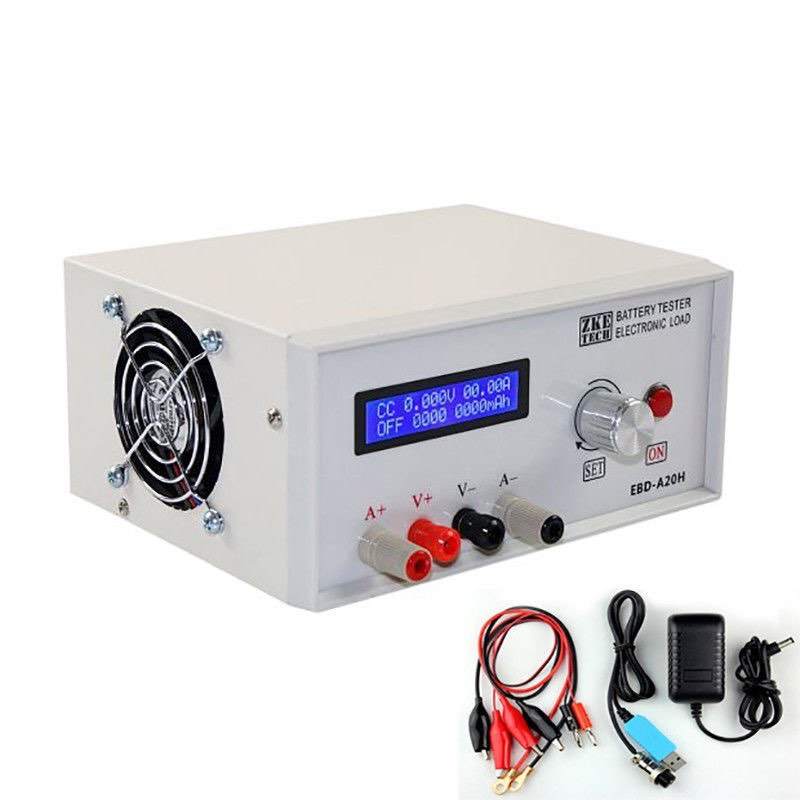
I found this through another aviation web board, can't remember which one, and ordered one last week. I should have it in a couple of weeks and I'll give a PIREP. I think it was the RV board where someone was recommending it, may have been Beechtalk. https://www.ebay.com/itm/122893917064 I too just replaced a battery I knew was bad and I got this to keep a better eye on both. #2 still passes my approximated capacity test (turn on 14ish amps worth of avionics and lights and verify it still has 20 volts at 48 minutes) but I'd prefer to be able to see and verify the data. I'm using Gill LT 7243-14 batteries. I know, once again I'm the outlier. Cheers, Rick
-
Careful with that one. My brakes are vacuum operated and when the airplane was repainted by the previous owner that placard was mistakenly put on the wings. This caused some confusion for my installer during my panel replacement as to whether the vacuum system should be removed. I'm casually working on sourcing a diaphram replacement as I'm sure I will need one at some point, but the brakes still work work great! Cheers, Rick
-
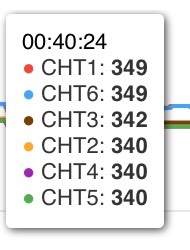
My CHT spread in cruise, a delta of 9 degrees driven by #1 and #6. I have a GAMI spread of 0.4gph, with the same pattern of #1 and #6 peaking 0.2-0.3gph higher than the others. Makes sense. EDIT: This is at 30/2200 and 16.5gph, 120 degrees ROP. Have you looked at your engine's GAMI spread to see if there's a correlation with the CHT deltas? Cheers, Rick
-
Single 10” G3X with Garmin EIS in a turbo
Rick Junkin replied to 81X's topic in Avionics/Panel Discussion
@hubcap Take a look at the excerpt from the STC installation manual Skip posted earlier. According to that, fuel pressure or fuel flow is required on the EIS strip for engines with fuel pumps. Did you find a way around that? Cheers, Rick