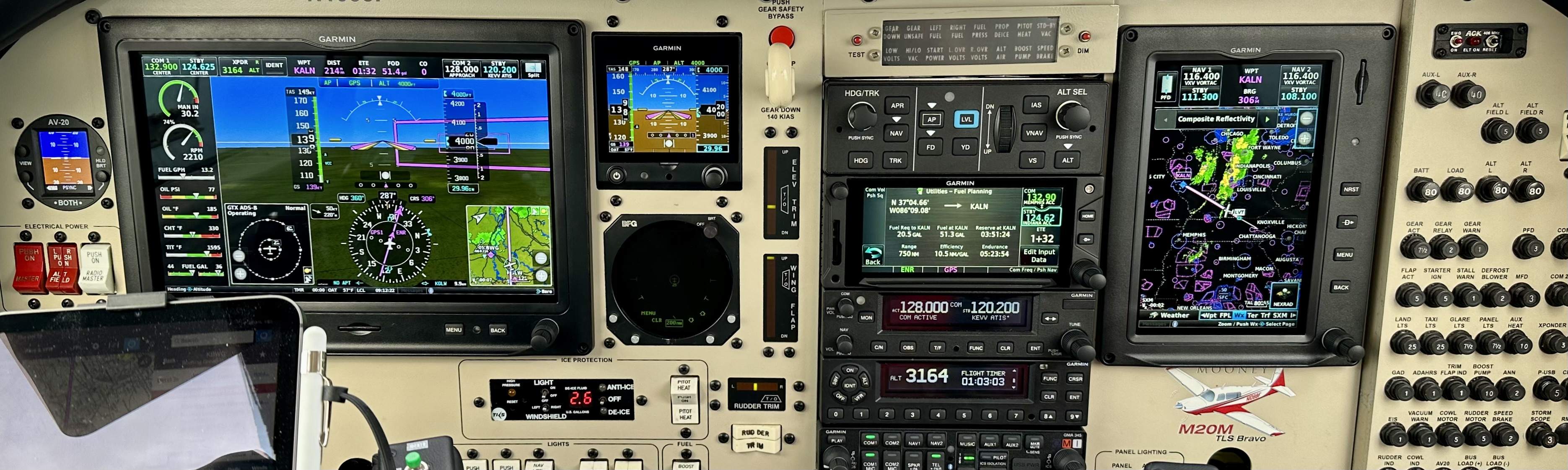

Rick Junkin
-
Posts
1,446 -
Joined
-
Last visited
-
Days Won
8
Content Type
Profiles
Forums
Blogs
Gallery
Downloads
Events
Store
Everything posted by Rick Junkin
-
 So pairing acknowledgment order is important, good to know! I must have done it that way by chance from the get go as mine paired and transferred data from both the G3X and GTX345 on the first try. Foreflight shows a single "Connext" connection under Devices, and it says what data capability is available in the Connext bubble. I used to have the same issue with the Flightstream 210 in my previous panel where it would show connected to the iPad but Foreflight couldn't see it. As I recall it worked reliably as long as I had Foreflight open on the iPad when I powered up the airplane, but that may have been a red herring. I'd reset the iPad connection to my G3X and GTX345 and go through the pairing process again to provide another validating example of Skip's discovery, but my luck I wouldn't be able to get it working again. Maybe I'll try it with my iPhone. Cheers, Rick
 -
Has anyone taken the time to build a Garmin Pilot performance table for the M20M? And are you willing to share your work? Almost everything in my panel (and on my wrist) is now a Garmin product and I'm in the process of making the move from Foreflight to Garmin Pilot for reasons of synergy. I'm not liking the change so much, but then I've been a Foreflight devotee since version 1. The more I experiment with Garmin Pilot the more I understand how it does most of the same things as Foreflight but in a different way, and some things much less elegantly. But I digress. Back to my ask - GP appears to have performance tables for every Mooney model except the M20M. I initially built my own for Foreflight, and can do it again for Garmin Pilot, but if someone has already done the work I humbly request to share in the fruits of your labor. I've put together something that will work for my primary flight profile but would like to have the data for multiple power settings for more robust planning options. Thanks in advance. Cheers, Rick
-
Hangar Wishlist (what's in your hangar?)
Rick Junkin replied to ElisiumNate's topic in General Mooney Talk
I suggest starting with a rolling toolbox, at least two sets of rolling wire shelving with shelf liners, a work bench, something comfortable to sit on, and a small fridge. The toolbox, shelves, and fridge will fill themselves quickly and keep you organized as they do. Reorganizing and cleaning the hangar is a snap with everything on wheels. Make sure they are the locking variety of wheels. Cheers, Rick -
I have a graduate degree from Embry-Riddle, it opened doors for me in the aerospace industry. I'm guessing he's immediately interested in the professional pilot curriculum, and I suggest he look at plussing that up with what's required for the aeronautical or aerospace engineering degree. It's a heavy course load, and tuition is not for the faint of heart or lack of means, but that approach will set him up with good options in aviation after graduation. Cheers, Rick
-
AOG - Binding in rudder/nose gear control
Rick Junkin replied to Rick Junkin's topic in Modern Mooney Discussion
“Barkeep, please fix Smut a top shelf Old Fashioned and back him up one!” Turns out the full deflection left slip was germane, the copilot right rudder pedal hooked the sidewall upholstery. Well done, Sir! I make my way down to Venice a few times a year, next trip I’ll coordinate with you to drop in to X35 and make good on my cocktail promise. Cheers, Junkman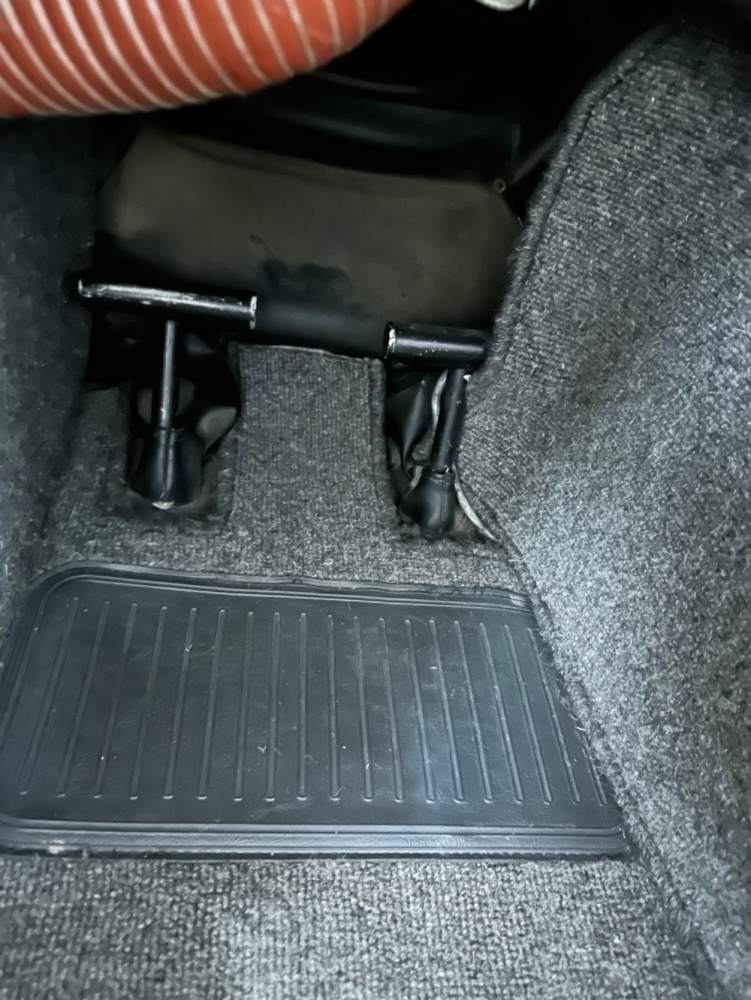
-
AOG - Binding in rudder/nose gear control
Rick Junkin replied to Rick Junkin's topic in Modern Mooney Discussion
GENIUS As a matter of fact, the carpet on pilot side wasn't reinstalled securely after the avionics mod and I was planning to take care of that during the annual at the end of the month. How much do you wanna bet.... That's where I'll start. Thanks! If that's it I'll owe you a cocktail or 2 for the time saved and flights flown between now and the annual. Cheers, Rick -
I'm AOG, fortunately at home, with something amiss with my rudder/nose gear steering. 1989 M20M. Turning to the left on the ground required significantly more pressure on the rudder pedal than usual, and when putting the airplane back in the hangar it felt like something was binding went I turned the nose wheel to the left with the tow bar, and I wasn't able to get full travel on the nose wheel. I set the rudder trim full left but that didn't help. The only thing notable or different on the flight before this was observed was I did a slip with full right rudder at one point in the flight. Recent maintenance/installation action was a complete avionics remove and replace in September, to include installing a GFC 500 without the yaw damper. I'm going to get under and in to the airplane tomorrow to see if I can identify anything that doesn't look right and might be causing this. I plan to start at the nose gear steering linkage and then drop the belly panels. I'll also look at the rudder trim but I don't expect that's causing this. Any suggestions on where to look first? And anything specific I should be looking at? Cheers, Rick
-
@Jetpilot86 I'm guessing you have the OEM CHT probe with an added piggy-back or washer thermocouple going to your Insight monitor from one of those cylinders and it's giving you inaccurate data on your Insight. What were the other 4 CHTs? I had that setup with a JPI EDM 830 and #5 had the OEM CHT probe with a JPI piggy-back and never did indicate correctly on the JPI. I think I've read that some of the Bravos had the OEM CHT on #3, and if that's the case and you have a washer CHT thermocouple that could explain the majority of the difference. Cheers, Rick
-
Yeah I crossed the streams there, I was thinking about your previous post. I set the cruise power settings I noted in the post above, and I don't increase the MP. 30/2200, 13.2 GPH yields TIT 40d LOP at 1615d. Cheers, Rick
-
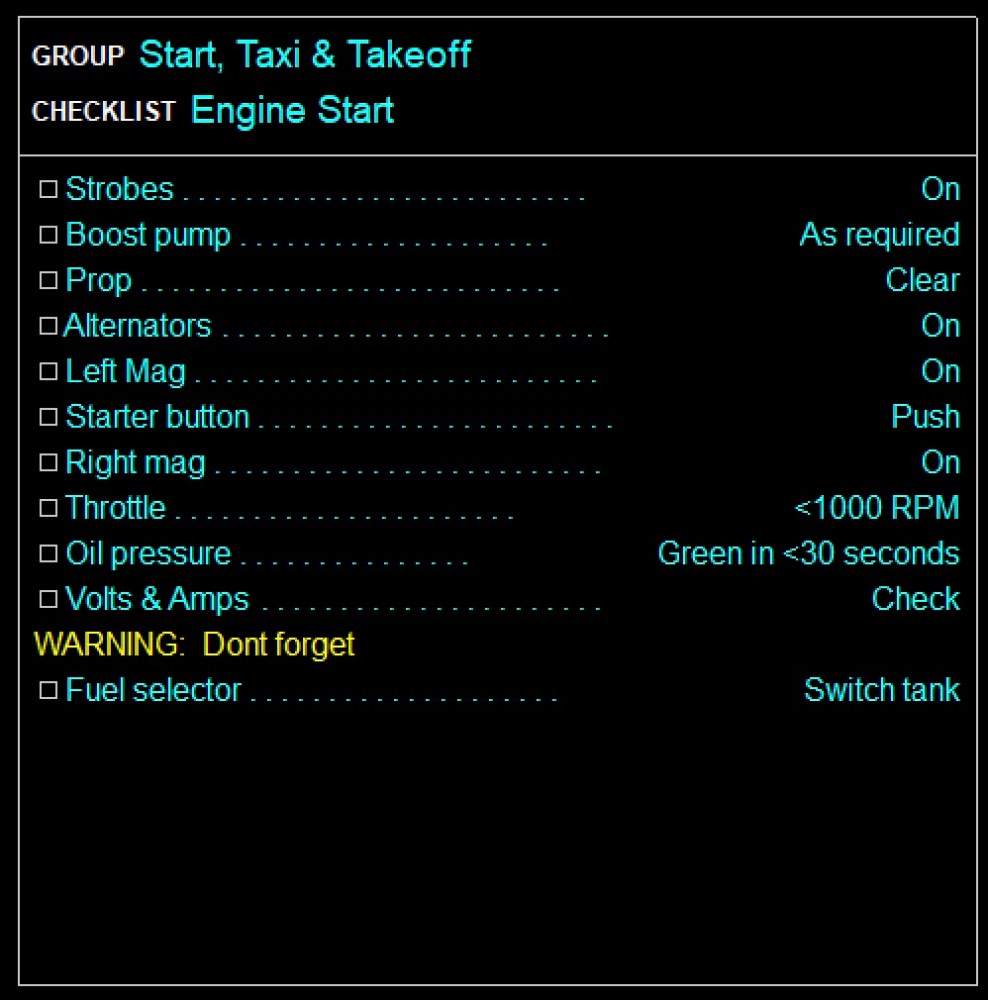
My technique as well. Here's my Garmin checklist for Engine Start Ok so probably not worthy of a WARNING, but it could be. Cheers, Rick
-
Understand, and agree. I've done the same with my engine and just BMP to my desired fuel flow and crosscheck TIT and CHTs, and then look at the details occasionally inflight and always review the download data to spot any anomalies. Mike's webinar comment was in response to a question asking how many degrees LOP he runs, and his response was essentially "I honestly don't know and I don't care, and here's how I do it..." But context is everything, so yes, anyone reading through this and looking to play with LOP needs to do the homework and understand what they're doing to the engine and how to do it safely. Cheers, Rick
-
No, FF solely determines LOP power, but what Ross was referring to is with a Turbo you can lean with air, not just FF. So whatever FF you want to target too, set accodingly and then add air (MAP) without changing FF. But you will not gain airpseed by simply adding air, since power is dropping as you move further from peak and much more quickly on the LOP side than the ROP side. Ok, please bear with me for a question with a practical example. Here's how I normally cruise: 30"/2200 RPM 13.2 GPH TIT at 1615 (40dF LOP) Now the question - I increase the MP to 32" and adjust the mixture to maintain 13.2 GPH. What happens to my airspeed? Thanks for your patience. Cheers, Rick
-
The words I used were a paraphrased quote of Mike Busch in a webinar saying he never looks at EGT and knows he’s LOP when he feels the slight decrease in power as he pulls the mixture, and then leans more as needed to get to the CHT and fuel remaining at destination numbers he wants to see.
-
A bit of thread creep - I have not taken the APS course yet, and this is something that still puzzles me about LOP ops. What I read from Savvy and hear in Mike's webinars says when operating LOP, the fuel flow solely determines the HP, and when ROP the MP and RPM determine the HP. Which I understand to mean that no matter what MP or RPM I'm running, as long as I'm lean of peak 13.2 GPH will yield 70% rated HP on my TIO-540-AF1B. And I can know I'm LOP by observing a decrease in power and airspeed when I pull the mixture back to my LOP fuel flow. BUT, I've read other sources that say as Ross does, that I can regain that airspeed, and hence add power (increase HP) at that same 13.2 GPH, by increasing the MP after I'm LOP. That appears to be a contradiction to the "FF solely determines HP LOP" assertion. But that assertion has never fully made sense to me either. Dang, I need to take that course. Cheers, Rick
-
Don, I know I've read it in a number of your previous posts but I can't recall - what drove your decision to overhaul at 2,295 hours? Cheers, Rick
-
Per the Lycoming documents, TIT is the egg. My M20M TLS originally didn't even have an EGT gauge, only TIT and a single CHT on #5. We tend to over-think it because we have the ability to monitor everything with our modern engine monitors. You've mentioned the Red Box so I'm assuming you're familiar with Mike Busch's preaching. He emphasizes keeping CHTs well below redline as a proxy for inter cylinder pressure indication, and using observed variations in EGT and CHT to identify developing engine anomalies before they become engine failures. In his recent webinars he states he doesn't even know how far LOP he is running, because he never checks to see what his peak EGT/TIT is. He pulls the mixture back to his known LOP fuel flow or until he feels a power drop, indicating he's LOP, and then leans further to make his fuel at destination what he wants it to be. Pretty simple once you have that all worked out. What Paul @kortopates will advise you is if you want to find peak TIT, do the "big mixture pull" to get straight to lean of peak and then enrich the mixture to approach the peak from the lean side. Once you observe the peak, make your FF adjustment to either ROP or LOP. This avoids dwelling in the red box/fin. Mike Busch will tell you there is no reason to do that, just stay LOP with your CHTs under control and your TIT below redline. But you have said you want to operate ROP, so the above is a better method of getting there. After finding the peak TIT set the TIT where you want it to be with FF, and then you can crosscheck the CHTs and EGTs to monitor for the details of any changes in engine operation. I do the same thing, only on the LOP side. I use the "Lean Assist" mode on my G3X to mark the peaks on all six EGTs and then I can see at a glance if any of them have moved. But I don't fly with that page up all the time. My primary references are the TIT and the hottest CHT. If those are where I want them, I am confident everything is running as desired. You mentioned you've digested the writings of DVA, Don Kaye and others so I'm not going to repeat any of that stuff. All the information you need about key numbers, % power, preferred power settings, LOP fuel flows etc. are in those writings. And you're right, dedicating some air time to a practice area and familiarizing yourself with how all this works is the best way to learn it, especially if you can fly with someone experienced in managing this engine and can show you the whole gamut of power settings available to you. Cheers, Rick
-
I think you may be mixing apples and oranges just a bit here. My apologies up front if I'm pointing out things that are already obvious to you. 1750 TIT and 1650 TIT are redline limits for continuous operation; 1750 from the M20M POH and 1650 from the Lycoming Engine Operating Manual. It appears you are equating these limits with peak TIT, which is most likely not the case at a given power setting and flight condition. For instance on my last flight at 6,000', 30"/2200 RPM my peak TIT was 1665 and I ran at 13.4 GPH and 1615 TIT, 50 degrees LOP. If I chose to run ROP I would be running 100-150 ROP at a maximum TIT of 1565, and more probably closer to 1515, and about 16.5-18.0 GPH. At higher altitudes and/or different power settings the peak TIT would be different. The actual peak TIT, not the redline limit TIT, is the basis for setting your fuel flow to give you the desired TIT delta whether you're running ROP or LOP. The actual peak TIT may be above the redline TIT. In my case I also monitor the individual EGTs to make sure the individual cylinders are LOP by at least 35 degrees for my nominal power settings. If they aren't I've got some adjusting to do. As to the how and why of my engine management, it's derived from the same research you've been doing and applying all that I've learned from it. Attentiveness to mag health and timing, plug wires, fine wire plugs, a GAMI spread under 0.5, and lots of patience refining the power and fuel flow settings to arrive at what works for my engine. I run the same fuel flow references for 75% and 70% power with similar, slightly cooler TIT results. In the mid teens I see TIT 40 LOP right at 1600. My CHTs at 13.2-13.4 GPH sit at 335-350, also in line with your engine. I can run smoothly at 30"/2200 RPM down to less than 11 GPH where power drops lower than is useful. I have GAMIs and they may help with that, but I don't have comparative data from the stock injectors. Cheers, Rick
-
My ultimate fix was to replace the KAP 150 with a GFC 500 , but that doesn't help you at all. I was considering pulling the unit, removing the face plate, and fabricating a new pin on the original plastic part. Unfortunately this isn't a legal way to go about it, but I was confident I could make it work. Tell you what - I still have the A/P computer that was removed from my airplane. I'll pull the face plate and take some pictures to show you what's involved and you can make your own decision on how to proceed. I'm out of town and it will be a couple of weeks before I can get to it, probably some time the week of the 18th. Cheers, Rick
-
Joe at Hawk Aircraft Services has done this mod recently. Give him a call for info. Cheers, Rick
-
Here’s what Garmin has in their help pages. https://support.garmin.com/en-US/?faq=jIgpsBCCQb52oO0r7oXgP7 Cheers, Rick
-
What has been your experience with the AV-20 in particular? Is there a configuration method for the AV-20 beyond what's in the manual? Cheers, Rick
-
Thanks Skip, I’ll get some pictures to illustrate my situation and then contact uAvionix. Cheers, Rick
-
Yes, the airplane is stationary and level at power on and the AV-20, G3X and G5 all go through their power-up alignment. The G3X and G5 align with a centered ball, and the AV-20 aligns with the ball out to the left. All three AIs align properly in pitch and wings level. The AV-20 ball position is the only anomaly. Cheers, Rick
-
The ball on my AV-20 is a bit more than half a ball to the left when my G5 and G3X balls are centered. The AV-20 is installed aligned with the other units. Has anyone seen this? Next step is a call to uAvionix. Cheers, Rick
-
Do You Leave Your Tow-Bar Connected While Parked?
Rick Junkin replied to PeteMc's topic in Miscellaneous Aviation Talk
Ok, here's the confession of a reformed tow bar leaver-on-er. I used to leave my Sidewinder on the airplane in my hangar, but religiously removed it once the airplane was outside the hangar. My thought process was I never had the keys in the airplane inside the hangar so there was no chance of engaging the starter, it was easier to just leave it on the nose wheel to be ready to pull the airplane out, it was a strain on my back to always be taking it off and on, yada yada yada. Never had a problem. I didn't take it with me when I left the home patch and perhaps ironically I observed the "in my hand or in the baggage compartment" dogma with the OEM tow bar I take on the road. Never had a problem with that, either. What changed my behavior was when I was getting ready to install an Electroair push button ignition that is hot when the master switch is on and no longer requires a key to operate the starter. This gave me cause for concern because I anticipated hours and hours in the cockpit in the hangar with the master switch on while I learned my new panel and there was a remote possibility I might bump the starter button while I was messing around in there. But my first thought was, "Gee, I need to put some kind of flag on my Sidewinder that I can see from the cockpit to remind me to take it off the airplane when I'm playing with the avionics." DUH. Stupid People Tricks 101. Ultimately I came to my senses and realized how dumb (and lucky) I had been and now I no longer leave the Sidewinder on the front wheel of the airplane in the hangar. It's either in my hand or in it's storage spot in the corner. Cheers, Rick