

StevenL757
-
Posts
2,354 -
Joined
-
Last visited
-
Days Won
1
Content Type
Profiles
Forums
Blogs
Gallery
Downloads
Events
Store
Everything posted by StevenL757
-
Inside an inspection panel under the right wing, about 2 feet aft of leading edge and about 5 feet inboard from the wingtip. The inspection panel is not held in by screws like the majority of the others. You need to drill out the Avex non-structural pop rivets to get to the servo.
-
NGT9000+ can’t detect non-adsb acft
StevenL757 replied to Airways's topic in Avionics/Panel Discussion
How so you know you aren’t receiving any TAS (non-ADSB) targets? Can you be sure that any non-ADS/B targets have been in your vicinity whilst in flight? If you’re certain that you’ve had non-ADS/B targets in your vicinity, then any or all of three things is possible here… You don’t have the TAS/Active Traffic unlock applied to the unit. You mention it exists, but I’d verify it from a software perspective. Your NY164 is too far aft to the point where your wing is likely shadowing certain areas. Your WAAS antenna (the foreground left-most antenna above) for the NGT9000+ position source is too close to the COM blade. There should be at least 24 inches of space ideally between any COM blade and this antenna. On a Mooney, the NY164 typically goes above the cockpit…as in the attached example. This is in alignment with factory drawings showing the recommended proper positioning in this location. Personally, I would ensure your TAS unlock has been done, and I would move the NY164 to the front, and put the WAAS position source antenna for the NGT where the NY164 is presently.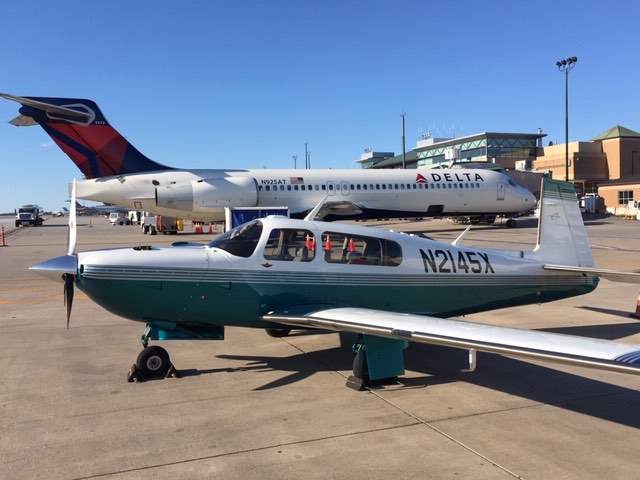
-
Gary, given the higher temps, it’s important to keep ground time to a minimum. The tightly-cowled Ovation isn’t cooled as well on the ground as other aircraft (by design), so limiting ground time is important. This is sometimes hard to do at larger airports where you’re likely to be in a conga line either waiting on a release or just waiting in sequence behind other departures and arrivals. A couple of questions… What engine monitor do you have? Where is your oil temp sensor located (there are a couple of different locations) What temps were you seeing, and at what points during the taxi, TO, and departure phases? My guess is that your monitor is indicating correctly, and that you were on the ground for longer than, say, 10-15 mins before departure. Once you’re in the air, especially in hot areas such as you are, do your best to keep the deck angle low and aim climb out ~130KIAS until you’re higher and in cooler air. Steve
-
I wouldn’t mess with the prop unless you’re seeing slinging grease or experiencing any other issue. I would, however, consider having it dynamically-balanced unless it has been done recently. As far as hoses are concerned, I wouldn’t skimp here. People generally overlook this area and only replace all or certain hoses when overhauling or replacing an engine. Don’t protect an engine worth tens of thousands with less than $700 of new hose…be proactive about this. It’s inexpensive in the grand scheme. I’m sure you’ll find other areas of this engine that need attention, based on what your PPI turned up.
-
The material on my cowling above is Gentex 1081. The sealant is (heat-resistant) RTV106.
-
Switching antennas really isn't going to tell you anything. Before you go ordering replacement/exchange radios, you should be switching the GIA63W units and setting them both Active/Active in the software (through the config - a dealer needs to do this). 1. If the problem moves, it's something other than the GIA63W 2. If the problem DOESN'T move, it's likely the GIA63W @philiplane's comments are well-taken. If you have a GTX345R, then your SW load will be a bit more involved as its imaging SW needs updating also. An active traffic system (TAS/TCAS) onboard adds more complexity. Essentially, you need to know EVERYTHING you have on board your airplane and how it connects to understand and know how to make a good problem statement to your shop.
-
@Alan Maurer, SWR = Standing Wave Ratio. Overview here: https://www.sciencedirect.com/topics/engineering/standing-wave-ratio LRU = Line Replaceable Unit. Your GIA63W radio modules located in the avionics bay, for example, are considered LRUs. Basically any computer that generally slides into/mounts into a rack in the remotely-mounted area/areas away from the cockpit that connect back to the cockpit in one or more forms to one or more systems. Edit: Send me a PM and I’ll reply with my number and we can talk tomorrow if this issue persists. Steve
-
$70k for an overhaul? Wow. A factory-new IO550G6B is currently at $61,770. As you say tho...some people don't want to wait - probably one of the caveats to which you're referring.
-
ovation backup alternator question
StevenL757 replied to Tommooney's topic in Modern Mooney Discussion
To add to @GeeBee's correct remarks above, and to answer your question, that 70A breaker is a thermal device with a "latch" of sorts; that when pressed, it locks things over-center to close the breaker. It is a different model than the Klixon breakers elsewhere in your panel, and is this way by design. The answer to your question is Yes - it does indeed require roughly 2x to 3x the force to pull it open as the rest of your breakers, and you're right to ask the question. -
The GI275 is a magnificent standby ADI…and HSI. If you’re planning on putting $$ into an engine monitor, you’re far better-off spending on an EDM900, which does as much - if not a little more - than the EIS, and with about 3x the real estate. Trying to read EIS info on something as small as a GI275 is not something you’ll want to get used to. Save yourself the hassle, find some panel space on the right side, yet close to your radio stack, and get the 900…or spend a little more and get the 930. It’s money well-spent.
-
Quite simply - airspeed control. There's no magic formula here. Mooney airframes will "tell" you when they no longer want to fly...period. Should you learn to land the airplane in every flap position? Absolutely. Learning the airplane at the bottom of the envelope is a necessity in my opinion for proper transition into the airplane. As a general rule, for every one (1) knot over landing ref, increase your landing distance by approximately 100 feet. Carrying 10kts extra? Do the math. That's IF you make it to the ground without a prop strike.
-
Sorry for my delay replying here. I’m heading down to TX tomorrow…let me ask my IA on Sunday when I see him, as I don’t remember off the top of my head.
-
Nice!!
-
Somebody should jump on these. One of the best upgrades you can give your engine if you’re currently a massive plug user. The added cost is extremely well-worth it.
-
I’m not sure who or where you’re getting 6 to 9 months out for a Continental factory rebuild. They are doing a factory-new IO550-N8B for me right now (engine due to be shipped about 2 weeks). The order was placed on or about mid-Feb. of this year. Maybe the timing depends on the individual engine model, so I’d certainly follow back up with them to see if they can pull in that 6 - 9 month timeline.
-
I would recommend - only if you have a standby attitude indicator plus another suitable display to back up the G3X’s engine monitoring functions (such as another G3X dedicated to engine monitoring), then I’d say go for the EIS if you really want, and if the G3X quits, you can fly off the standby + your other engine data display. In general, I love Garmin stuff; however, JPI edges out the EIS in my opinion, simply because I have everything I need in one glance, and it’s completely separated from my primary display. I have hundreds of hours behind the 900 (and the 930 by upgrade) in my previous Ovation, but have the G3X with EIS in my airplane presently. In the course of installing a new engine, I’ve made the decision to remove my EIS, add CIES transmitters, and add another JPI 930 (on order…arriving in about 3 weeks). With the JPI, I don’t have to change pages to lean or perform other functions. I have everything in one view on the JPI, which makes my scan smaller and allows me to focus on flying and monitoring other things. If my primary display quits, the JPI has my back.
-
Yes, we have that in the plan.
-
Avionics Installation Question
StevenL757 replied to whiskytango's topic in Avionics/Panel Discussion
Yes…as Skip @PT20J indicated, that whole side of the aircraft needs to be removed. I’ve been through it several times on my Ovation for various pieces of work, and it’s never a fun task. Not the worst task, but not fun either. I’ve always made a habit of removing the interior and reinstalling it myself after every avionics job to ensure it is replaced correctly. It’s pretty apparent when someone forgets to replace seat belt anchor bolts, so the shop should’ve caught this. It’s possible they screwed the bolts in just to get them started, got sidetracked, and then never double-checked their security. Replacing the interior yourself helps eliminate things like this…assuming you know what you’re doing. -
@Steve0715, I sincerely hope you get stronger and stronger and are able to get your 3rd Class Medical. And I can't say that I've ever run into anyone who has flown a hot air balloon over Kilimanjaro at ANY altitude...much less FL200...very cool. What I will say about transitioning into an Ovation (if that's truly the way you want to go) is this: Regardless of what you owned back in the eighties, you need to think of approaching the Ovation as not something in which your friend will "give you a flight review - FR" as you put it, but something that only a qualified Mooney instructor with a history of Ovation-specific training given should be providing you. Having flown them both, I can tell you that the Ovation is a far cry from a "J"/201. The "O" requires a heightened sense of attention-to-detail and overall higher level of training and competence to fly well. Things happen much faster in the Ovation, and it's incredibly easy to get behind the airplane. Again, echoing many opinions here, I sincerely hope you're able to clear the roadblocks and do what you want to do. Steve
-
Well, thought I'd share an update since it's been awhile. Unfortunately, like every project, I've added a few things to the original list. I crossed off things that we've already done. Huge kudos to Acorn Welding in Canada for the amazing looking exhaust job. $4,400 later, but it turned out better than a brand new system. Whole project is taking a lot longer than I anticipated, but I have to keep telling myself that I'm essentially cramming nearly 8 years of upgrades I did to my previous Ovation into about a year with this airplane. I know it will come out looking amazing. Just hard to be patient. Heading back down to TX in a couple of weeks when the engine arrives, so am finally looking forward to that. I can almost see the light... :-) A few pics...

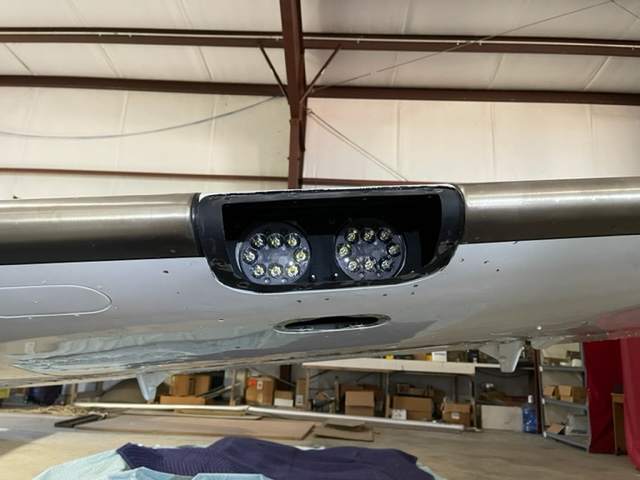
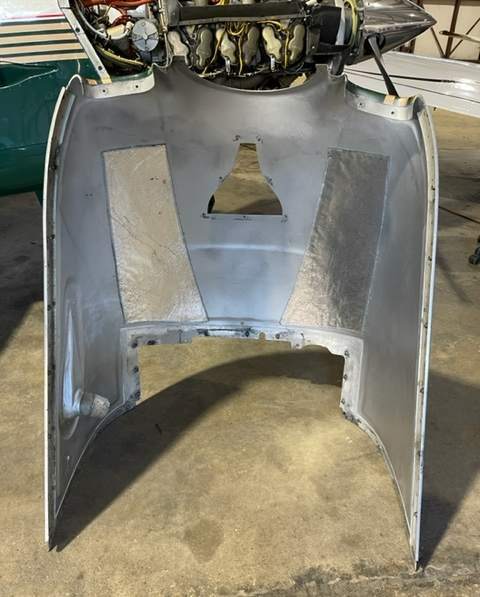

-
How much time do you have? :-) Seriously - and briefly - the upgrade shaved between 500 and 1000 feet off my takeoff run at sea level. Climbs with full fuel are normally around 130-135KIAS, and 1000-1200FPM. Beyond 8000 feet MSL, you need to lower the deck angle slightly to cool the cylinders properly. #5 will likely get hotter than the other five in the climb, but will settle down quickly upon leveling and transitioning into cruise. Above 12k, the climb rate starts to fall off a bit, but is still far-better than a 280HP Ovation. Above 15k, it falls off more. I've had the airplane to 20k several times - and at varying weights - and have experienced 200-300fpm climbs from about 17k to 20k. With the 280HP flavor, I had barely 100-150fpm climb from 17k-20k. Yeah - agree. For @Alan Maurer - it would be well-worth your time to call Brian Kendrick, make an appointment when you're ready, fly West along the gulf, and have him do the upgrade for you. You'll thank me afterwards. If you need more details - PM me and we can chat on the phone. Happy to do it. Edit: I realize you may have choices much closer, but again, ping me offline if you want and we can talk specifics if you want.
-
Inogen concentrators (and similar products) are approved for aviation use, but that applies to passengers on pressurized aircraft - where cabin press. levels are well-below 10k. Is there any documentation from Inogen or another reputable/official source that states this equipment is approved (or even wise) for use by a flight crew member aboard non-pressurized aircraft? Not sure if the price point is the major factor behind your purchase, but I'd suggest looking for an aviation-specific product that meets your needs instead of "flight-testing" something at 17,500 feet, where documentation clearly states it isn't to be used up there. This isn't an issue of what any pulse oximeter tells you, or what your Inogen unit tells you - get a proper oxygen system in your aircraft and use the right tool for the right job.
-
I would suggest it. Those two services are bundled in with my NAV, Jepp charts, Terrain, and the other services, so my guess is (based on previous interactions with Jeppesen) although you *might* pay a higher price for adding those two services if you don't already have them, there may be some savings by bundling them into your existing services and doing everything through Jeppesen/Boeing. I've always experienced great customer support and services through them, so am curious if you find things the same. Let us know how you get on.
-
I've had Jeppesen's JDM (Download Manager) for the last several years, and they also supply SafeTaxi and Obstacles...this isn't unique just to Garmin. I have the Full-USA Jepp subscription, along with the 750Xi and G500TXi both Jepp-unlocked, and as you indicated, the pricing through Jeppesen has been historically lower than Garmin. I've been loyal to Jeppesen for this reason, and because they're the airline standard. JDM has this capability as well...where you can "double-download" without having to call them to "reset" your downloads after every instance. It was a PITA to have to call them constantly for a reset just to get a second set of cards (which I also do), but they fixed that issue.
-
…and tighten that upper screw. :-)