201er
-
Posts
5,074 -
Joined
-
Last visited
-
Days Won
70
Content Type
Profiles
Forums
Blogs
Gallery
Downloads
Events
Store
Everything posted by 201er
-
I have battled each of the hazardous attitudes at some point and I'm not 100% sure I am entirely past them. However, close calls, scares, stories, years of aviation, and having nothing to prove does help minimize them over time for me. The attitudes I personally exhibit least are probably anti-authority and resignation. I think I'm pretty well versed in the rules and have virtually no temptation to break them. I feel that there is more anti-authority feelings in pilot-maintenance than the flying. I don't do much maintenance so I don't get into those debates. I use ATC services on nearly every flight and often file so I am pretty comfortable working with authority. Being super familiar and appreciative of ATC services in the NYC metro area probably contribute largely to that. As for resignation, it's really hard to think of examples of. I think most pilot types are the opposite of this and we'll see from the poll. Perhaps I have a bit of resignation about all the paint peeling off my bird, but I am inching closer and close to a paint job. The only resignation I can really think of engaging often is choosing not to fly because of conditions. But not flying can't be a hazardous flying attitude. Macho is the attitude that is most in between for me. It's not often but not completely unheard of. I think it is most brought out by a fearless passenger to impress. A few abrupt maneuvers or steep turns, but never anything aerobatic. In the absence of such passengers, these macho impulses pretty much never appear to me. I see the Mooney as a cross country flying machine and not something to hot dog in. Now invulnerability and impulsivity are a different story. These attitudes are most often the ones that need to be kept at bay for me. It still isn't often that they come up, but of the 5, it would definitely be these 2 to think more about. I don't get much impulsivity any more. It's hard to come up with something I haven't already done in the plane so not much of it can be impulsive. I tend to plan and think my flights through so it is rare for them to be impulsive. The invulnerability attitude is probably my biggest vice. I have flown cross country at night, IFR over mountains, over open water, in remote places, through bad weather, etc. I'm not sure that it's an attitude as opposed to a calculated risk per say. The outcomes were never bad and in this much flying, I haven't had a problem as a result. However, it does not mean that it couldn't potentially happen. Dicing it close to weather and things like that. I guess a better way to put it is that I have to spend more effort convincing myself not to do something, that shit could happen, is something I sooner have to think about than those other 4 attitudes. As years go by, I have fewer and fewer scares. Is it because I've had them and become numb or because I learned from them and don't do it any more? Probably a bit of both.
-
I think the most hazardous hazardous attitude that isn't listed is "I don't ever have a hazardous attitude."
-
What's your biggest vice when it comes to the typically mentioned hazardous attitudes? We're all human and we've had all of them at some point. It's mostly a matter of being aware of our hazardous attitudes and proactively mitigating them. Keep those bad boys bagged up! I'm curious if there is a greater prevalence of certain attitudes in pilots and particularly Mooney pilots. If we can, as a community identify them, then hopefully we can proactively work at mitigating them in the ways we discuss things online. The FAA identifies the 5 most common hazardous attitudes as: Anti-authority: “Don’t tell me!” Impulsivity: “Do something quickly!” Invulnerability: “It won’t happen to me!” Macho: “I can do it!” Resignation: “What’s the use?” Vote in the poll which of these you have seen or resisted most in yourself and share stories about how battle these attitudes. Do you have any that aren't listed?
-
How many weeks of flying did you miss out on because of your little “exercise” mishap?
-
Steep Spiral + Spot Landing Commercial Maneuver Practice
201er replied to 201er's topic in General Mooney Talk
Most of the maneuvers they require for the commercial serve no practical function and are generally the exact opposite of how a commercial pilot ought to be flying. I found that extremely ironic. If I wrote the standards, I’d rather see an extremely boring and uneventful flight with precision, awareness, and sound judgement. -
Steep Spiral + Spot Landing Commercial Maneuver Practice
201er replied to 201er's topic in General Mooney Talk
Yes -
Steep Spiral + Spot Landing Commercial Maneuver Practice
201er posted a topic in General Mooney Talk
It's been a little while since I practiced the steep spiral and power off 180 accuracy landing since the commercial checkride so I went out to practice a few. It was a strong gusty crosswind at Morristown on a warm winter day. Winds were howling across runway 5. I came over the airport at 2900ft to stay beneath the 3000ft class B floor. I thought Morristown would be more accustomed to this sort of request from practicing aircraft but it was like he heard of it for the first time. Maybe it's just the way I was taught... to continue the spiral into the accuracy landing as opposed to doing them independently. Afterall, if you ever do have an engine issue and you happen to have an airport below, it's good to have confidence to glide your way into it. Abeam the numbers I chopped the power and started the turns. There's a chance I didn't do them steep enough for "commercial" spec or ACS. I did not specifically review the requirements. However, for practical application, this turn kept the airport underneath and in sight. It was difficult staying around a point with this much crosswind. It was almost requiring a flat upwind push on the headwind and a very steep turn around the downwind. I cleared the engine after every turn. I did a total of 3 spot landing attempts. The first one, coming out of the steep spiral worked out as far as getting me on the runway safely without adding power. However, I overshot the captains bars for the spot landing so I just put in the power and went around. The strong winds and gusty conditions made me want to carry more energy to avoid a shear induced stall. However, even with an overshoot turn and a slip, I couldn't force it down on the spot with that much speed. The second time, I came out of the spiral and made the spot landing. However, I had to force it down a little prematurely so it wasn't as smooth as I would have liked. The third attempt I skipped the spiral and did the power off out of the pattern. Came around the base to final quite low and it barely looked like I would make the runway. However, having made the runway with speed in reserve, I was able to float it all out and stretch it to the touchdown zone markers for a perfect spot landing in the box. I compiled bits and pieces of the 3 attempts into a single video here showing the different elements that go into these maneuvers. If you are studying for the commercial pilot, take a look. However, be aware that having taken the checkride already, I'm a little hazy on the exact ACS requirements and these may not be exactly per what they are looking for on a checkride. -
How Many Hours PIC to Transition into a Mooney (Poll)?
201er replied to 201er's topic in General Mooney Talk
Overall an interesting poll and insight into pilot opinions on basic experience level they had and think others should have to get into a Mooney. I'm not sure we learned much or changed anyone's minds, but it's good to know where the community stands. I may be an outlier in that I think there is a lot to learn and a lot of responsibility on the line here. It's not that I think the Mooney is terribly hard to fly or land (although it can still be a challenge), but when it comes to using these machine for what they are intended to do I think there is a lot of room for misjudgment. Judgement can't necessarily be taught or learned directly. It comes with experience. I have to admit I am a bit afraid of the potential harm that can occur in a Mooney more so due to poor judgement than poor technique. Hearing stories and losing friends in such a way can do that. Fly safe. -
How Many Hours PIC to Transition into a Mooney (Poll)?
201er replied to 201er's topic in General Mooney Talk
The airspeed at which the airplane will land depends on weight. It can vary up to about 10knots from full gross to as light as can be in a 201. Flying the book number for gross weight when light can lead to a lot of float or a bounce trying to land as though loaded up. Yet, the angle of attack at landing is always the same. It's better to target an angle of attack than an airspeed. You either need to interpret airspeed to ballpark AOA or you can be precise/simple by using an AOA indicator. The worst thing to do is to confuse airspeed and groundspeed (which is easy to do). With an unexpected tailwind, you may feel like you are too fast and stall early. Or with a strong headwind, you can try to land early because it feels slow enough to be landing normally. This can lead to excessive float or bounce. High DA can lead to high true airspeed and thus higher groundspeed than you are used to, so again thinking about speed can be confusing and misleading. In turns it is even more pronounced between wind, groundspeed, weight, and load factor and how it impacts stall speed. The AOA is consistent. Referring to AOA by AOAi can be simpler, more consistent, and less distracting like thinking about speed. -
How Many Hours PIC to Transition into a Mooney (Poll)?
201er replied to 201er's topic in General Mooney Talk
It's easy to confuse airspeed and groundspeed because they are often coupled. Until they are not. Just on this thread guys were saying they don't need no stinkin ASI, just look outside... -
How Many Hours PIC to Transition into a Mooney (Poll)?
201er replied to 201er's topic in General Mooney Talk
Nope. Speed doesn't matter. Angle of attack does. Being on speed for yesterday's flight today may be enough to float a thousand feet or bounce by putting it down too soon. -
How Many Hours PIC to Transition into a Mooney (Poll)?
201er replied to 201er's topic in General Mooney Talk
Doesn’t work so good if you have a tailwind or high density altitude true airspeed AOA is better -
Personal milestone. First log book filled!
201er replied to rbridges's topic in Miscellaneous Aviation Talk
The first log book takes the longest. Then on subsequent books you get frustrated they don’t fit more. I’ve got 5. -
"I'm a student pilot. Can I get insured on a Mooney?"
201er replied to Parker_Woodruff's topic in General Mooney Talk
So does that mean that the student/novice pilot is about 5-7 times more likely to break the airplane than a more experienced pilot (based on the X more premium)? Is it the same % ratio premium compared to a novice vs experienced 172 pilot? In other words is it that much more because it's a novice or because it's a Mooney? -
How Many Hours PIC to Transition into a Mooney (Poll)?
201er replied to 201er's topic in General Mooney Talk
That's what the red knob is there for! Pull it out till the engine nearly quits, maybe tug the other two back beforehand as well and before you know it you're doing 110kts and spending half the fuel of the 172. I still do that till this day when I get overwhelmed in difficult IFR or when I was flying to Bravo airports back to back. 105KIAS, 15", 2160RPM, 4.6GPH - Speed reduced per ATC request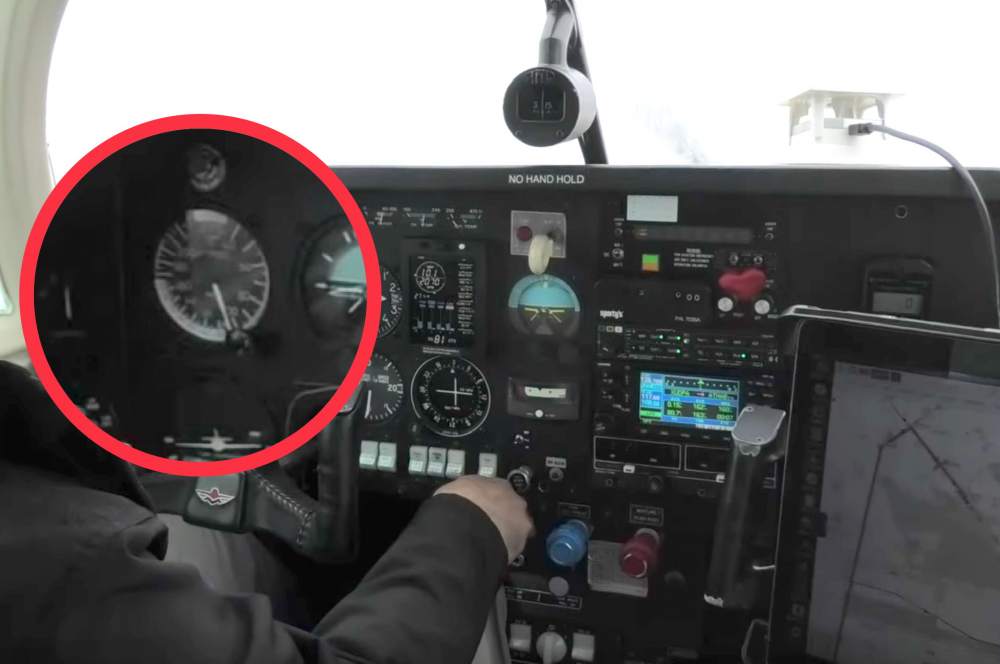
-
How Many Hours PIC to Transition into a Mooney (Poll)?
201er replied to 201er's topic in General Mooney Talk
I had 354 hours total time with a Commercial Pilot Glider rating with Private Pilot restriction in airplane. In other words I was Private Pilot Airplane, Commercial Pilot Glider. 190 hours glider, 164 airplane, 261 PIC, 34 tailwheel, 66 hours xcountry, 53 hours retract/complex time. 6 years of Aviation experience and 4 years in Airplane. In retrospect I would say I was at my lower limit of qualification to comfortably/safely transition into a Mooney. I made up for it by adding 150 hours and instrument rating in my first year of ownership. Two things I had going for me were being in the aviation environment for 6 years and flying a diversity of aircraft. Years play nearly as much of a role as hours. In the time spent in aviation, I was contemplating weather regularly, reading articles, hearing stories, etc. I think 500 hours in 1 year is less experience than 300 hours in 5 years for this reason. It takes time to be involved in aviation as much as hands on time in flight. By the time I got my Mooney, I had checkouts and experience in many gliders: 2-33, 1-26, 2-32, 1-34, 1-34R, L13, G103 and airplanes: J3 Cub, 152, 172, PA28 Cadet, PA28R-180 Arrow, PA32R-300 Lance, BE35 Bonanza. This diversity of aircraft as opposed to having all the hours in the same airplane made me more aware of learning a new aircraft. I think that if I had less years in aviation or a less diverse variety of aircraft experience, I should have had more hours (like 400-500) before moving into an M20J. Even after getting my Mooney, it took me years to get truly comfortable and proficient at flying this airplane. It wasn't until getting my instrument rating, 500+ hours in M20J, and years of flying at it that I felt like I grew into it. Nonetheless, to this day with 10 years of ownership and 1500 hours in Mooney, I do not feel like I have outgrown the airplane. Despite feeling familiar and comfortable, I still feel challenged and interested all the same. My advice to any beginner is to enjoy their pre-owner years and make the most of them. Experience flying a diverse fleet of aircraft available for rental and get good at flying. Fly enough to know your mission, objectives, challenges, abilities, and deficiencies. Then, when you have sufficient experience and are ready to step up to the next level, consider a Mooney. I think 250 hours total time + 3 years aviation experience is really the bare minimum to get into any Mooney and better to see 500 hours + 5 years. An instrument rating is very important but I think it's ok to earn it in the Mooney itself because it's great practice to do it in the machine you'll be in the soup with. -
How many hours Total, PIC, retract and what rating did you have when you transitioned into a Mooney? Based on how it turned out, did you start flying a Mooney too soon for your experience level, too late, or just right time? Based on how it went for you, how much quantitative and qualitative experience would you recommend a pilot to have before transitioning into a Mooney? Does your answer vary by model?
-
"I'm a student pilot. Can I get insured on a Mooney?"
201er replied to Parker_Woodruff's topic in General Mooney Talk
What are we looking at? About 8 grand in a typical J? Any of you instructors take a student from zero (or solo) to private pilot in a Mooney? How many more hours does it take in a Mooney than in more typical trainers? -
How to fly safely in severe icing without FIKI - Go small.
201er replied to aviatoreb's topic in Miscellaneous Aviation Talk
I dunno. Try pouring a bucket of water on it beforehand and see how it flies. -
Top ten weather questions...what are they?
201er replied to Scott Dennstaedt, PhD's topic in Miscellaneous Aviation Talk
Why is the weather usually lousy when it's the one day the pilot set aside for flying?A PS, maybe not for your webinar but perhaps you could explain here real quick what the heck is going on here?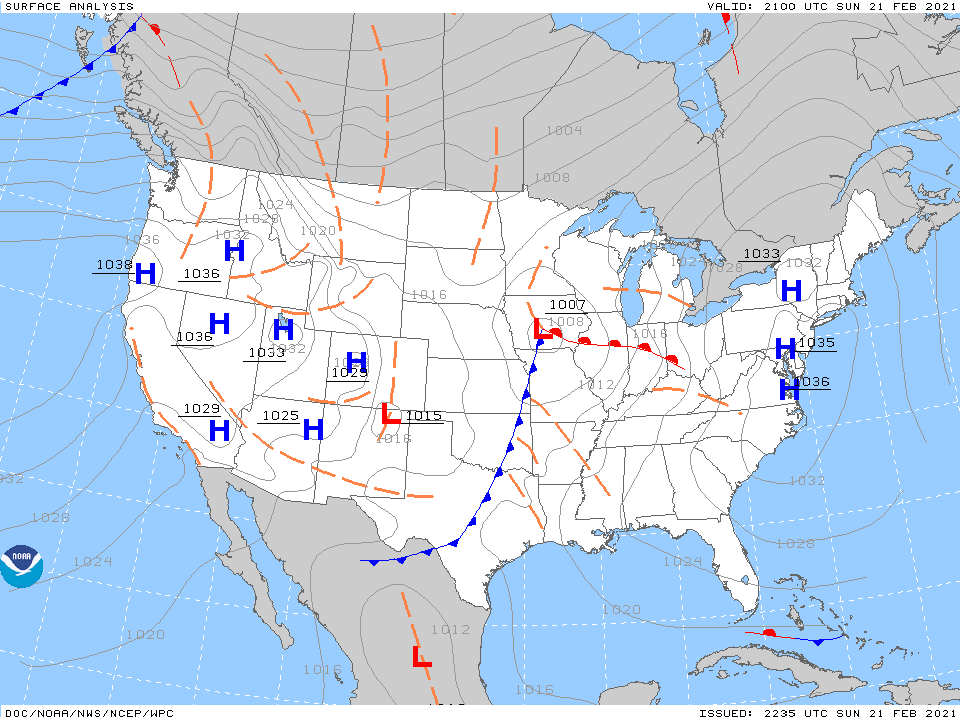
-
Just about everything Wait till you have to do the no back clutch spring
-
-
Maybe Timmy should rate everyone's credibility while you're at it
-
Thanks for sharing. Not Covid. The story. Actually good of you not to share it. How did you keep your wife from catching it from you? You think maybe she was immune already? Glad your still with us cause we got a lot of BBQs to catch up on once this is all over.