


Fly_M20R
-
Posts
255 -
Joined
-
Last visited
-
Days Won
1
Content Type
Profiles
Forums
Blogs
Gallery
Downloads
Events
Store
Everything posted by Fly_M20R
-
Hi Oscar, I really enjoyed your video and the music was perfect! The following comments come from me as still a beginner in videography: I actually still find it a bit difficult to "be myself" when I do my videos but that is what comes through best. One appears fairly rigid when trying to "act" in a "professional" manner or what one imagines the audience would like to see. I often find myself acting a bit different than "me". Of course, it is important to enunciate well otherwise one does not come through intelligibly (I can tend to mumble at times). It appears as if the audience does like to see one's face every once in a while rather than just panel or outside view. Need to get over stage fright!! We all have stage fright! You can record your transmissions and actions during your takeoff, parts of cruise and landing. How long was your flight on this video? I ask because the outside cameras can be controlled to record and stop recording via their own wifi network but still use up battery during idle time and I found it difficult to get more than maybe 1-1/2 hrs out of them. If your flight was longer than that then how did you preserve battery? Great views!! I think that having the landing at 1x recording speed would have been nicer than at 2x (or 3x) as you had. People enjoy watching landings! I have a framed caricature that says "Flying is man's second greatest thrill. Landing is the first"!! Chris
-
Hi Skip, Great info. Thank you! A few questions and comments arise using my rusty college engineering background and my layman's aerodynamic knowledge: 1) I thought that the chord with flaps up was from the leading edge of the wing to the trailing edge of the flaps up and that with flaps down the chord changed to being from leading edge of the wing to the trailing edge of the flaps (now down) and therefore the chord line did change accordingly which could be some 3 or maybe more degrees. (???). Appears as if the engineers opted not to consider this change in their calculations. 2) The AOA with flaps at 0 deg ("AOA_Flp_0" is the pitch angle we observe on the AI (call it "Deg_AI") plus the angle of incidence ("Deg_Inc"): [ AOA_Flp_0 = Deg_AI + Deg_Inc ] 3) The AOA with flaps at 33 deg ("AOA_Flp_33" is the pitch angle we observe on the AI (call it "Deg_AI") plus the angle of incidence ("Deg_Inc") plus the chord angle increase delta with flaps down ("Deg_chord_delta_Flp_33"): [ AOA_Flp_33 = Deg_AI + Deg_Inc + Deg_chord_delta_Flp_33 ] **** Note that we should observe a smaller pitch on the AI with flaps down **** **** The unknown (for me) in this formula is the added angle to the chord with the flaps down. **** 4) Based on the critical AOA you provided on the M20K looks like the slightly higher critical AOA_flp_33 of 17 deg vs 16 for flaps up would be a combination of delta degrees of the chord and ability to fly at higher AOA at same airspeed with flaps down. 5) The wing on an M20K is the same wing as on the Ovation since you can calculate the stall speeds for an M20K with its gross weight with the formula I gave plugging in the M20K's gross weight for current weight and 3,368 lbs for the Ovation. Vs and Vso at gross in the Ovation are 66 and 59 respectively. Or, you can go the other way around: flip the weights in the formula and put the Vs and Vso of the K as the stall speeds at gross. I know it works quite closely for the J models as well. 6) Obviously don't have a velocity vector on the GI 275, however one might be able to estimate the angle based on the VSI. I was descending somewhere between 100 and 200 fpm during the stalls since it was easier to control the airspeed changes that way. Wish I had done it at perfectly level flight to get a better idea of the actual pitch at the time of stall and therefore get a good ballpark of the critical AOA. .... Next time I'll have to do the fine speed control with finer throttle adjustments combined with smooth yoke back pressure. A bit more of a challenge... 7) Apparently, there is no need to note speed brake effects on stall speed in the AFMS as long as they are less than 3 kts, which is what I found. This is according to a post on Beechtalk by someone who was part of the design team for the Series 2000 Precise Flight speed brakes. Guess that explains it. Finally, I would like to say that I erroneously called the flaps as "Fowler" flaps instead of "Slotted" because I noted that they did extend by 1-1/2 to maybe 2 inches behind their original position and took the definition of Fowler literally without taking into the account that true Fowler flaps extend significantly more than what we have in our planes. Appears as if Fowler ones also go back horizontally first and then curve down as in the "scareliners"... Thank you again for your great feedback Skip! Chris
-
Hi Oscar, Nice video!! Have some comments and questions about it but haven't had the time to write them out. Will do so this weekend. Chris
-
Your comment re slotted vs Fowler flaps got me to read more about them and it seems that true Fowler flaps extend much more than what our Mooney flaps do. Our Mooney flaps do add up to a couple of inches to the length of the wing when looking at it from the top which is why I called them "Fowler" type. But it is not the same mechanism as true Fowler flaps. Both Fowler and slotted have "slots" which allow the air from below the wing to get above the flap and therefore add lift. It would also appear that since they do add some length to the wing they also increase the wing surface. Slotted then? Chris
-
Hi Oscar, Crazy that you find that I am good at the videos I do because I definitely struggle all the time to try to make them more broadly appealing. I feel that what is required is being the playwriter, producer, director, actor, prop guy, sound and music guy (I am not musically capable at all and so have no idea as to what music may be good to insert) and editor all at once to make a reasonably appealing video. You definitely have had challenging landings and takeoffs from what you describe and seems as you would need some VG's if you want to have a Mooney and be able to use those fields. Looking forward to your report. Chris
-
Thank you Anthony! Will upload soon. Chris
-
Hi Oscar! Did you install the VG's after you got the plane or were they already installed? Your short field landings must be on a dime!! Did they change the airspeed indicator to reflect the change in stall speeds? Yep, you should go out and do some stalls and calculate what the stall speed should be per the formula I showed. I would use the original stall speed (Vso and Vs) published for your plane without the VG's in the formula and that way you can determine if they really make any difference. Really curious as to what you find. Thank you and happy flying!! Chris
-
Hi Jeff! I flew on 12/29. It was a tad windy on the ground but really smooth at the altitude I did the stalls - 5,500 ft. There was a good amount of wind speed up there but it was smooth. It was from the West and therefore did the stalls either into it or directly away from it. For those of you who have not met Jeff, he is very knowledgeable regarding his Ovation since he races it and often places first place! He certainly has fun in his plane!! It is certainly possible that the stall speeds I obtained were subject to some error, and most likely due to environment (i.e. my flying ). However, I can certainly say that the plane felt quite different in landing configuration with speed brakes out vs them being in, and the earlier stall (higher stall speed) with them out is fairly credible. Did not feel that different in clean configuration with them in or out. From what I have read and superficial knowledge I have obtained it appears as if Fowler type flaps (which extend the most beyond the trailing edge) have the most effect on lift because they do increase the wing surface. Flaps that just "go down" only affect the camber and the cord and don't add that much to the wing surface. The camber change also increases lift and moves the center of lift somewhat aft. It is more pronounced with Fowler flaps. Let me know what you find after the test flight in your newer Ovation with the Series 2000 brakes. I plan to fly Jack's Bravo which has the series 2000's and test it out. Will do a video of it when I fly. Yep, the speed brakes certainly reduce the float on landing. When landing we usually do so with flaps fully deployed and therefore the effect of the speed brakes would be to reduce some lift as per my findings. Having less lift may translate into less float. See you at the airport! Chris
-
Thank you Anthony! I had a really good time doing this video. Much more fun flying it than editing it though!! Hmmmm.... will have to try doing a video like this in the rain to observe what happens with the pattern of rain with speed brakes out. Would be even better to paste some of those little strips that show exactly what the air is doing at any part of the wing. Don't have any and would need some good instruction on how to put them on AND take them off! My main goal was to have really good speed control and decrease the speed slowly and in a steady fashion. In doing so I ended up descending a bit during each of those stalls. I do not believe the IAS was affected in any way in doing it this way. However could not reliably compare the airplane attitude on the AI and therefore estimate the AOA. Note that with flaps retracted the AOA is the pitch angle (attitude on the AI) plus the angle of incidence which I have not been able to find published anywhere but assume to be some 3 to 5 degrees. Once the flaps are deployed the chord changes from leading edge to the trailing edge of the flap (not the trailing edge of the main wing). I really have no idea of what that angle may be but would also estimate some 3 to 5 degrees. Since critical AOA for our wings is close to 14 degrees according to what I have read, then you can figure the other angles correspondingly. I have made a spreadsheet that I keep on my phone and iPad on which I can then calculate stall speeds, approach speeds, maneuvering speeds and best glide speeds for any weight of the airplane including fuel, passengers and baggage. Can share although not sure how to share a file on Mooneyspace. Landing was good even if I flew a bit faster than 1.3 x Vso because of some turbulence on the last part of the final approach. Landed around 700-800 ft beyond the displaced threshold. It's displaced because of trees. Chris
-
Thank you for all the comments and questions guys!! I'll reply in detail a bit later today. Really good questions and comments!! Chris
-
I have always “felt” that speed brakes might increase the stall speed in a Mooney. However, never really read anything specific nor does the POH publish any stall speeds with the speed brakes deployed. So, thought I would take to the skies and do a “test” flight. I was a bit surprised and now believe I understand their effect better. Stalls in a Mooney Ovation - effect of weight and speed brakes.
- 40 replies
-
- 13
-

-

-
Garmin dual attitude indicator failures with data
Fly_M20R replied to RobertGary1's topic in General Mooney Talk
Ughhh!!! -
I found the same in my 1995 Ovation. By luck I found out that if I trim the elevator to a down position after shut down that the noticeable friction (slight binding) that occurs mid-position on the yoke when you push or pull on it is much less than if I leave the trim in the nose up position which is typical after a landing. Of course, adequate lubrication as Skip states is important in minimizing the friction. Not sure why trimming the pitch down before tying down or hangaring the plane decreases the binding vs leaving it trimmed up. That binding may add extra resistance to the servo and if not up to par in torque may cause it to fail. (???) Chris P.S. I am scheduled to upgrade my panel to add a GTN750Txi and a GFC500 in January and therefore interested in GFC500 experiences.
-
Where do I find uploaded files in the forum? Code7700 has done a superb job in explaining ALS and runway lighting!! I go back and refer to it regularly to refresh my memory!
-
Thank you midlifeflyer!! Glad you got a laugh out my calling out the LOC minimums reminding you of Jerry W! I can certainly do a video just showing the GI275 throughout the whole approach. I think that only seeing one view may bore some watchers and so will lose interest. I am open to suggestions. Definitely have one camera set up for that. Chris
-
Thank you Anthony!! Well.... I didn't know it had a name. I love Mooneyspace because so many smart people always contribute to our knowledge base!! Chris
-
That reminder was for the home A/C filters.
-
!!!! That is hilarious!!!! You were definitely "taking notes"!!! HAHAHAHAHAHA!!! .... and to answer your question: Nope, I did not change them that day.
-
Thank you Deb!
-
Thank you Mike!
-
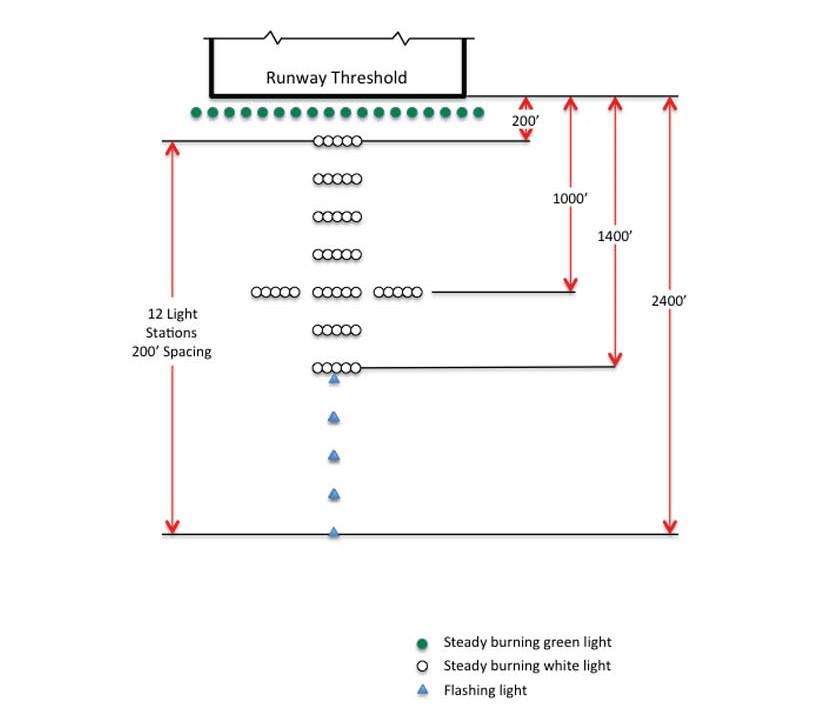
Thank you David! We are continuously learning as pilots as well as refreshing stuff that we don't use often. I did when I flew the ILS and definitely when I did the video since had to think through it in more detail. If you check out the diagram I have attached for a 3 degree sloped approach, you will notice that one descends at 300 ft / nautical mile. Approximating 6,000 ft/NM, at 200 ft above TDZE (~AGL) one is 2/3 NM (4,000 ft) from the TDZ, but ~3,000 ft (1/2 NM) from the runway threshold. With 1/2 mile visibility one should be able to see the threshold IF the ceiling is exactly 200 feet throughout. However if the ceiling is variable as it was in this ILS approach one may not be able to see the threshold at 200' AGL even if one sees the MALSR since they are sort of "below" you. By seeing the MALSR one can descend below the DA but not below 100' above TDZE. With adequate visibility and ceiling now above 100' one can see the runway "environment" and land. The MALSR actually has 12 total lights spaced by 200' with 5 flashing lights extending from 1400' to 2400' from the threshold. At 200' AGL one is unlikely to see the flashers (I did not see them) since they are below the nose. If one were higher, say 300' then we can see the flashers if not totally in the soup. I attached the nice diagram that Code7700 made out. In real life they are not as "squat" as in the diagram, but a definitely longer image. I am really happy that my 530W, GI275 and KFC are well in sync so that the plane flew the localizer and GS perfectly to show the MALSR right on the nose!!! I did not listen to the LOC ID. My bad! The 530W does identify it and shows me which LOC to which it is tuned. It will not place it in the active frequency when loading or activating the approach. One has to do that manually. Easy step to forget when it gets busy. To answer your question, I try to verbalize everything I check as a habit and reviewed the missed approach proc out loud for myself. Auditory input helps with memory. I had the air filter cleaned at the annual in Willmar, MN as per procedure. Not sure why you ask. Is it because of my flight up there in July and August with all the smoke? Thank you for your comments David!! Always to the point! Chris Chris
.thumb.jpg.20bc6c26cb8033337c2c8885b55639bc.jpg)
-
Great point Don! Happy you brought that up because us Floridians rarely have to deal with ice during an instrument approach. I would reduce power by 2 or so inches of MP to achieve same KIAS as with the speed brakes out. Speed brakes are nice during an approach because in general one will descend at 500 fpm and maintain same speed by deploying them and then simply retract to stop the descent. No need to adjust throttle. However, I found out that the speed brakes on my 1995 Ovation are just a bit larger than the ones I had in a 2005 Bravo and the rate of descent is almost twice as much. Mooney must have changed the speed brakes at some point in time or with models. Thank you for your input!! We are always adding to our knowledge base in these forums.
-
The perfect day came with LIFR ceilings at Brunswick GA (KBQK) and IFR at FHB for me to go "play in the clouds" and see how low I could go at KBQK. Could I get down below DA without actually seeing the runway? As it turns out I could have landed but opted to do the missed approach at KBQK and fly back to KFHB after one turn at the hold. Had to do an RNAV into KFHB. Great IFR day!!! Chris Koppel
-
Did you see the GS fluctuate a lot in your GPS Navigator?
-
I have not seen that kind of display in my setup. However, I do not have a second GPS, NAV/COM or GPS/NAV/COM connected to my bottom unit. I have not seen any documentation on dual HSI’s being displayed at the same time. It may be a configuration issue. Disclaimer: I have not read all posts yet, only the first two so the answer may have been already posted… Chris Edit: Well…. Just read through and answer HAS been posted by N23BN and nicely followed up by midlifeflyer!! I had skipped over that section since I have a GNS530 and not a GTN unit. Also may not have it in my configuration because I only have a GNS.

.jpg.33e47c8b923d4ebd1b0123c5e7a934a1.jpg)