L. Trotter
-
Posts
164 -
Joined
-
Last visited
Content Type
Profiles
Forums
Blogs
Gallery
Downloads
Events
Store
Everything posted by L. Trotter
-
This will be my first time to Oshkosh and I cant wait !! I would have REALLY liked to join the Caravan but am unable to attend a formation training clinic in time. Although not a snotty person and would be happy to park next to anyone, I would prefer to park/camp next to my fellow Mooney brothers/sisters.... Hope that does not make me a bad person. I was originally going to arrive Sunday AM but had no idea if I would even be offered a place on the North 40. No idea how fast the area fills up. I thought I would arrive at noon Saturday, 21 July and fly the Fisk arrival. Perhaps if I arrive behind the Caravan (time wise) I will be directed to park in the same area???? I'm not sure if my logic is sound.
-
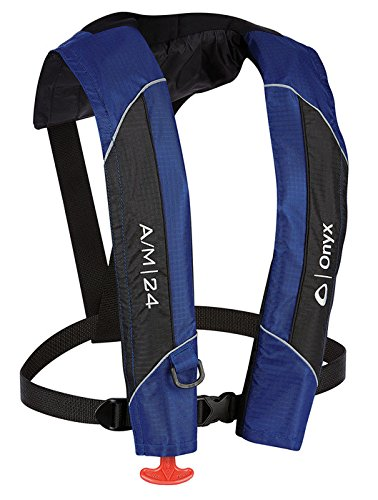
It seems CO2 cartridges are considered "Hazardous Material" according to the US Government. There are conflicting reports as to wether commercial carriers will allow CO2 cartridges on their aircraft. I am looking at life preservers to use on trips over water (Bahamas, great lakes). Here is an example: https://www.amazon.com/ABSOLUTE-OUTDOOR-Automatic-Manual-Inflatable/dp/B0032ALK36/ref=pd_sbs_200_3?_encoding=UTF8&pd_rd_i=B0032ALK36&pd_rd_r=CT6ER7DG38SRT2925QC7&pd_rd_w=sILMm&pd_rd_wg=p9NW4&psc=1&refRID=CT6ER7DG38SRT2925QC7 Questions.....1. Are the CO2 cartridges safe to carry in an unpressurized cabin up to FL 250? 2. Any one with a favorite life preserver that is comfortable, can be worn in flight and is US Coast Guard approved?
-
Thanks for all the suggestion. This is what the folks at Western Skyways (Montrose, CO) recommended: 1-Run in test cell x 2hrs (various combinations of power settings) with Mineral oil. Drain oil/remove filter. 2-Run normal power setting while flying with Mineral oil x 10 hrs. Change power setting every 30 minutes. Full power not a problem. Change oil/filter. 3-Repeat #2 x 25hrs with Mineral oil 4-Change to normal multigrade oil Their was no requirement to maintain warranty. The attitude seemed to be "Just run it hard" and "change the oil".
-
I will be picking up my plane today after completing a full top end overhaul with factory new cylinder/pistons/rings etc. (TSIO 550G). Any thought or suggestions about break-in procedure.
-
For a TKS prop to be set up correctly, the TKS nozzles should extend out just past the spinner and cut back at an angle. Each nozzle should be pointed at the second grove (from the front) of the rubber boot. To assure proper function, you should get TKS fluid blown back on to the windshield with out turning on the windshield bar. Also, when you shut down you will see fluid on the front cowling behind the prop. Just helped the guys at CAV revise my prop setup that had been installed improperly.
-
This topic is confusingly interesting. The Acclaim has a indicated Vne of 194 kts. In the flight levels, I routinely cruse at TAS > 220 kts and never felt "flutter". Newer Acclaims with the same Vne boast TAS >240 kts. Just for completeness, stall speed is based on indicated air speed not TAS. Is it being suggested I should slow down? I have never heard anything about this concern.
-
I hesitate to tell my power off 180º story, but It might benefit someone. Two months ago I was performing my check ride for a CPL. I chose to use my Acclaim for the flight test. All the reference maneuvers, steep turns, short/soft field techniques and 3 Precision power landings were spot on. I wish I could have stopped there. The last maneuver was the power off 180º Precision spot landing. Flight conditions-clear skies, wind 20-25 kts with rather freq gusts to 35kts down the runway. Our normal. At 1000 ft (pattern alt), 90 kts and abeam touch down point, throttle pulled full aft. started turn to base-then gear down. Making the runway was not an issue, hitting the exact point was. The head wind with gusts became a real unrecognized danger. As we all know, Moonies like to float (1 kt extra = 100 ft). That extra 100 ft on a CPL test is a bust. I was right where I needed to be maybe 5 feet above ground at 67 kts (per FFA examiner). Then the unthinkable.....I instantly lost a good 15 kt head wind. With an unexpected sudden 52 kt air speed, I experienced an immediate stall and my plane literally fell out of the sky just before the touch down site-all in about 2 milliseconds. I landed VERY firm of the main gear. At the time I did not notice any significant bounce, just a "were did that come from" feel. We returned to the hanger having completed the exam, engine running fine, no vibration. Upon shut down, I immediately became nauseous at what I saw. You guest it, I had a prop strike. Seeing the bend tips of your prop can bring a grown man to tears. After a full inspection I had also literally blown out all of the rubber gear biscuits, TKS sling ring had chewed up the lower cowl by 1 inch, engine mount bent down 1/4 inch and the lower front edges of the main gear doors bent up. I still get sick thinking about it. Items to consider: -I'm not sure the power off, precision 180 (in the pattern) is realistic and necessary. Possible just a high risk/benefit maneuver. Yes, I completed many successful power off landings, but the risk was still present. -Landing with no power (it's really like negative thrust) is a very different circumstance when compared to a std low power landing. Beware! -Stalling a few feet off the ground is not recoverable. The entire experience was instantaneous. -A prop strike may not be immediately noticed. A hard landing means taxi back, shut down and look. -Even with insurance, a prop strike is expensive. -Completing a CPL in a Mooney is very doable. It is also very difficult, thus making you a better pilot. Keeping speeds under control is a real challenge. There is nothing lazy about "lazy 8's". The whole point of a CPL is to perfect our piloting skills. No regret from this pilot. In thinking this event over-a million times, I really don't know how I could have prevented this from happening, given the circumstances and requirement. Chose a different day? It's always windy at our airport. This was a typical day. Had the wind been consistent I would have had no problem. Plus, you don't get to choose when an engine will fail. Carry more speed? Then you bust your distant, particularly if you get a nice gust. Under a real engine failure, I don't think anyone cares if you were >100 ft from a "your" landing spot. Keep the speed and force the plane to the ground? Not happening.Typically, very little power under similar circumstances makes a big difference. This was not an option. These are just my thoughts. After 25 years and 5000+ hrs of PIC I still have more to learn! Wondering if I passed the CPL check ride? Well the answer is yes...and no. I passed initially. On the taxi ride back the examiner provided his assessment, all very complimentary. At one point he suggested my instruments were rigged. After recognizing the prop strike, he changed his mind and failed me. I get my plane back on Monday and have the pleasure of performing one more power off, precision 180º landing. Ya, I can't wait. haha
-

252 Turbo loss - exhaust gasket failure
L. Trotter replied to Bryan's topic in Modern Mooney Discussion
Just to clarify for others understanding...... Carbon Monoxide (CO) that would enter the cockpit through the heating system (and thus raise CO levels on a sensor) would occur from a leak with in the exhaust heating shroud. A leak from a turbo charging unit (turbo charger case or V-band attachment points) would blow 1500+ºF exhaust gas inside the cowl (not associated with the heating shroud) which would exit with the normal flow of cooling air. This "leaked" gas would not likely enter the cabin. Therefore, a CO sensor will NOT detect a turbocharger system leak. The hot gas will acted as a blow torch with in the cowl and likely burn something up. -
252 Turbo loss - exhaust gasket failure
L. Trotter replied to Bryan's topic in Modern Mooney Discussion
Don't fly your plane until this is fully assessed by a knowledgeable A&P. To pull 32 in at 15,000 ft would suggest at least partial turbo function. A big concern is exhaust (turbine) leak which (if present) will be come a major hazard to your safety- ie. fire. Additionally the turbine could fall apart internally and deliver far more than compressed air into your engine....ie. metal. -
Magneto failure at 9000ft
L. Trotter replied to wings_level's topic in Vintage Mooneys (pre-J models)
On the topic of "Mag checks" during run-up......perhaps common knowledge to some. For those who have EGT monitoring on each cylinder, make sure to watch for an EGT rise on each cylinder when running on only 1 mag. This rise is normal and should decrease back to normal (baseline) when back on both mags. This finding is in addition to the normal expected RPM drop. So, If you don't have the expected EGT rise, something isn't right. Yes, you will have to slow down your Mag check to let RPM and temps stabilize, usually only 5 seconds or so. -
Something is not right if the vibration is that noticeable. If all is well....dynamic balancing is in order.
-
I'm sorry, I know this is off topic. I can't let this go and have others believe this inaccurate opinion. Be careful with your "facts". Hope you were just kidding. I am a DO. I was excepted to both MD and DO schools.I chose a DO school intentionally because I believed in spinal manipulation. My father was a chiropractor, out of choice, and never had any interest (nor applied) to any other profession. If you compare medical school curriculums, both MD and DO are identical with one exception, the DO's have an extra class on spinal manipulation. In reality, medical school is just a warm-up (MD or DO) to learning the art of medicine. A physicians skill set is really developed in residency (training after med school) which in many cases (like mine) is longer than medical school. If I missed the humor or sarcasm of your comment i apologize.
-
I agree with your comment. Unfortunately, 100% of the basic meds I've performed are not on my patients. All of these patient's primary care providers refused to perform this service. As a result, I typically spend a minimum of 1 hour sometimes 2 hours getting the patient's entire medical/surgical history. This may not be the spirit of what was intended, but it's the best I can do at this point. Someone (docs like me) has to get the ball rolling on the medical side. I believe once things get rolling personal primary care providers will jump on board and the program will run as intended.
-
I have been providing basic Med (as a physician) since it's inception. I have spoken to the legal folks and believe I have this figured out (if that is even possible). -There is no more liability doing basic med than any other medical assessment. -A physician providing basic med is not in any way "certifying" the pilots ability (medical or otherwise) to fly a plane. The responsibility rests on the pilot to know if they are healthy enough (free of perhaps minor and certainly major illnesses) to competently and reliably pilot an aircraft. For example, a pilot can have a major "health event" 1 hour after being issued a basic med exam. There is no way a physician can determine the future. The same holds true for a CDL as well. -The issue with many Docs is that they don't understand their possible "new" role serving pilots in a way that has traditionally been an FAA responsibility. Unfortunately, perception, right or wrong, is currently the guiding force. Give it time, things will improve as Docs learn and become more familiar with what is been asked of them. -Many retired AME's do not carry malpractice insurance and therefore will not act as a practicing physician (ie. no basic med). As an AME, they are acting as a type of consultant for the FAA and are making a recommendation to the FAA as to wether the pilot meets FAA flight standards-a different medical-legal arrangement. -As far as the eye exam....any Snell chart will work (the chart that has all the letters that 10 feet down the hallway). I actually use one on my computer that is adjusted for std reading distance. The basic med form only asks for vision (20/20 ect) corrected or not. There is no need for an eye specialist exam unless there is something unique and you would need to see a specialist....regardless as to the need for basic med. The same hold true for any medical specialist need. -If you have a significant health issue (heart, psychiatric, diabetes ect) and have never been granted a FAA special issuance (waver) for that particular issue, you will need to re-visit the AME as the basic med will not apply. You are no longer a basic medical candidate. Once you receive the special issuance you now re-qualify for basic med. If you have never had an AME evaluation (new pilot), you will need one first, then you qualify for subsequent basic med exams. I hope this helps.
-
Yes there is. I am aware of a cutting edge alloy (a derivative of BAM-Boron, aluminum, magnesium) technology that is being tested for the military. The alloy is laser deposited to the rings and cylinder lining to create an extremely wear resistant coating that runs 20% cooler, is 4% more efficient on fuel and power out put is about 20% more (yes 20% more power on 4% less fuel). The alloy is molecularly fused to the metallic cylinder liner. I have tried to talk with the Continental folks, but they don't seem to be interested. The majority of testing will be covered by DoD funding (they want their tanks and heavy equipment engines to last longer in the middle east deserts-very harsh conditions). No one has considered using this same technology for aircraft engines. This would be a game changer for our engines. TBO, no problem ( top ends would essentially be eliminated). More power with no overheating issues. Less fuel use a guarantee. The alloy has been in use the past year as a coating on oil rig plungers.The problem.......the plungers didn't wear out and the sales of replacement parts plummeted. Parts distributors are now requesting a "lesser" product. The cost of lining the cylinders of an engine would be recaptured in the first 75-80 hrs of flying-in just fuel alone. If anyone is knowledgeable or interested in working on an STC for this lateral move of new technology let me know.
-
I just updated my non-WAAS G1000 to be ADS-B compliant. Cost total cost of install was $6,250 for the GTX345R with bluetooth. The WAAS GPS antenna included. Originally it was felt that a total G1000 WAAS upgrade was needed for the ADS-B compliance.....Not so. Although it would be nice to have full WAAS GPS receivers, I do not find any practical limitation in approaches. The difference in MDA/DA for the nonWAAS is typically only 100-200 ft. if needed I just use the ILS if weather is that low. Don't let the nonWAAS issue be a deal breaker.
-
I just spent 60K installing a full FIKI TKS system. The result.....A totally non functioning system. To be fair, CAV did not do the installation. One of their two "certified" shops did. Mooney (my first choice) was to busy to install. Among other things the 2 main problems are 1. The tanks siphon them selves dry (as mentioned previously) 2. Quantity sensor (reads anywhere from 0 to 7.4 gal) even when the tank is bone dry. When full, no difference. I am taking the plan to CAV in 3 wks for them to trouble shoot and revise the new installation. Sounds like the sensor issue has not changed. I will bring up this thread and discuss the deteriorating product quality/reliability. I'm hoping to get a functioning system before winter is up.
-
Just another thought…There is an overflow tube (cut at an angle) coming through the belly plate just below the back seats. Just beneath the belly plate there is a small hole drilled into the overflow tube to prevent siphoning of the TKS tanks. Over the years some overflowed fluid may have plugged the small hole. You may have drained your tanks through siphoning. Yes, it happened to me. If your sensor reads zero, turn the system on to see if your panels still wet out-confirming the reading is erroneous..
-
Yes I did with flaps retracted immediately after touchdown, trying to get as much weight on the main tires as possible.
-
Let me pass on some lessons learned this past week. I was traveling from Norfolk, Virginia (CPK) to Lawrence County Airpark (HTW), Ohio this past week. A full briefing was obtained including local NOTAMS. All was well with no reported runway (3000 x 70 ft) concerns at HTW. The winds were calm and the approach to RWY 26 was uneventful. What I didn't notice was "black ice" covering large parts of the runway. Solid ice in parts with melted ice on other parts rendered the pavement wet and dark looking throughout...It all looked the same from the air. I started braking uneventfully at first, until I hit the first section of ice. In retrospect, standard brake pressure....then hitting ice... caused the wheels to lock-up and stop rolling (no antilock feature) until the next non ice spot. I did note the tires sliding on ice and then for maybe a second or two on the non ice surface. I eventually was able to stop, trying only to brake on the wet surface areas (easier to identify once on the ground). Now the lessons.... 1. Even a second or two of skidding can destroy a tire. Yes! just that fast. By luck I saw a single focal flattened area the size of a walnut (into the metal cords) on a new right tire while pushing the plane into position for tie down. If you feel your tires slid while braking, check the entire circumference of all tires. I replaced my tire. 2. You can burn up a lot of runway if it is slippery. Abort the landing early if you don't have a mile to slow down without brakes or just go to a different airport if there is any concern. Under the current flight parameters, I needed 1900' to stop under ideal conditions. I should have played it safe and aborted the landing at the FIRST indication of trouble on this relatively short runway. 3. Although NOTAM's are nice and are created with reasonable reliability, remain cautious particularly at smaller airports. 4. I am sure glad I have always been anal about approach speeds. In my case, 75 kts when crossing approach end of RWY. For each additional 1 kt, expect burning up an additional 100' of runway in our Mooney's. Just 3-4 kts in this case would have resulted in a disaster. A "sterile cockpit" is essential on all landings, considering all flight and environmental factors. Don't let landing become routine.
-
I may be slow on the uptake......How does one damage the airspeed switch during a static system check? I want to prevent such an occurrence.
-
First long cross-country in our Mooney
L. Trotter replied to 0TreeLemur's topic in Vintage Mooneys (pre-J models)
Keep that girl of yours happy and warm while flying with you. It will be the best investment you could make in your plane.- 13 replies
-
- 2
-

-
- speed
- cold cabin
- (and 1 more)
-
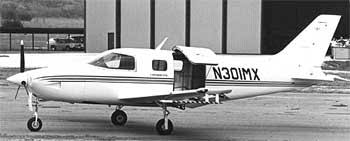
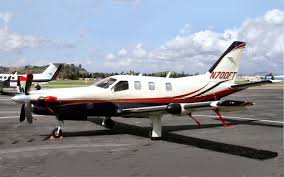
I don't know about the rest of you , but when I see a TBM I seem to feel an unseen force drawing me in for a closer look. Dare I say they are just down right sexy! Could I be "cheating" on my Mooney. Similar sleek lines, nice shape, fast looking on the ground-faster looking in the air. There was just something familiar about those TBM's. Now I know why. In 1983 Mooney attempted to enter the single engine, pressurize cabin market to compete with the likes of Cessna, Beech and Piper. A single prototype was created (and flown) to FL 250 with a Max speed of 301 MPH. The prototype became know as the Mooney 301. Unfortunately, Mooney came under financial difficulties (again) before formal production could be started. The company was ultimately purchased in 1985 by investors Alec Couvelaire and Armand Rivard - French based. The new owners felt the 301 was to heavy and slow to effectively compete with the up coming rivals. In 1987 a joint venture developed with Daher-Socata, another French company, to design a single engine turboprop utilizing the 301 as a starting point. By 1988 (a year latter) the joint venture produced the first prototype known as the TBM 700. "TB" for Tarbes (French city were Socata is based), "M" for Mooney of course. Plans were made to manufacture the TBM's both in Kerrville, TX (Mooney factory) and in France. Type certification was obtained in 1990, but unfortunately, Mooney continued to experience financial issues and withdrew from the project just 8 months after the type certification was obtained in the US. You guessed it....The rest is history. So now when I see one of those beautiful TBM's taxi by, I realize I am flying nothing less than the little brother. Don't worry, your not cheating. Your just feeling brotherly love. Who would have known.......not a history expert, just a little extra time to read Mooney 301 . TBM 700
-
If you join the "Emerald club" through National you will eliminate the extra day charge. They will drop off on Friday...you can pick up on Sunday-the day you start renting (doing this very thing next weekend).
-
Making arrangements for a rental car has not always been straightforward, particularly at the smaller airports. Arriving after hours Is often a dealbreaker for many FBO's. I would try to make arrangements online or by the standard call-in number. A simple rental frequently turned into a mess and I never knew if a car would actually be available when I arrived. NOT ANY MORE! I'm not trying to endorse any specific rental company.....I just happen to use Enterprise/National. I learned of a specific department Enterprise has dedicated to pilots. Talking to somebody who understands what an airport identifier is and what FBO stands for is really refreshing. Now when I call, I provide the airport identifier, date and approximate time I will arrive and the vehicle is there, ready to go-even after hours. When you're done, just park at the FBO and walk away. No paperwork to complete (before or after), no credit card issues etc.. The information is contained in your file. Additionally, the rental generates credits towards free future rentals. If the FBO already has rentals, they will work directly with them. There is no extra cost for this service and I typically receive discounts (5-10%) not available elsewhere. The Enterprise rental number is 877-421-3722 (Sorry, I don't know if Avis, Budget or any other rental agency has a similar service). Perhaps this tid-bit will make someones life a little easier-It helped me.