
cliffy
-
Posts
4,785 -
Joined
-
Last visited
-
Days Won
39
Content Type
Profiles
Forums
Blogs
Gallery
Downloads
Events
Store
Everything posted by cliffy
-
TruTrak Autopilot Pre Order's / Status Update
cliffy replied to Jeev's topic in Avionics/Panel Discussion
All I know is what I've been told and heard My last 737 was an old -300 so you can see I've been out of the game 15 years now. I've got many friends flying for SW -
TruTrak Autopilot Pre Order's / Status Update
cliffy replied to Jeev's topic in Avionics/Panel Discussion
Here's the Boeing certification issue that the FAA is hung up on in Seattle -
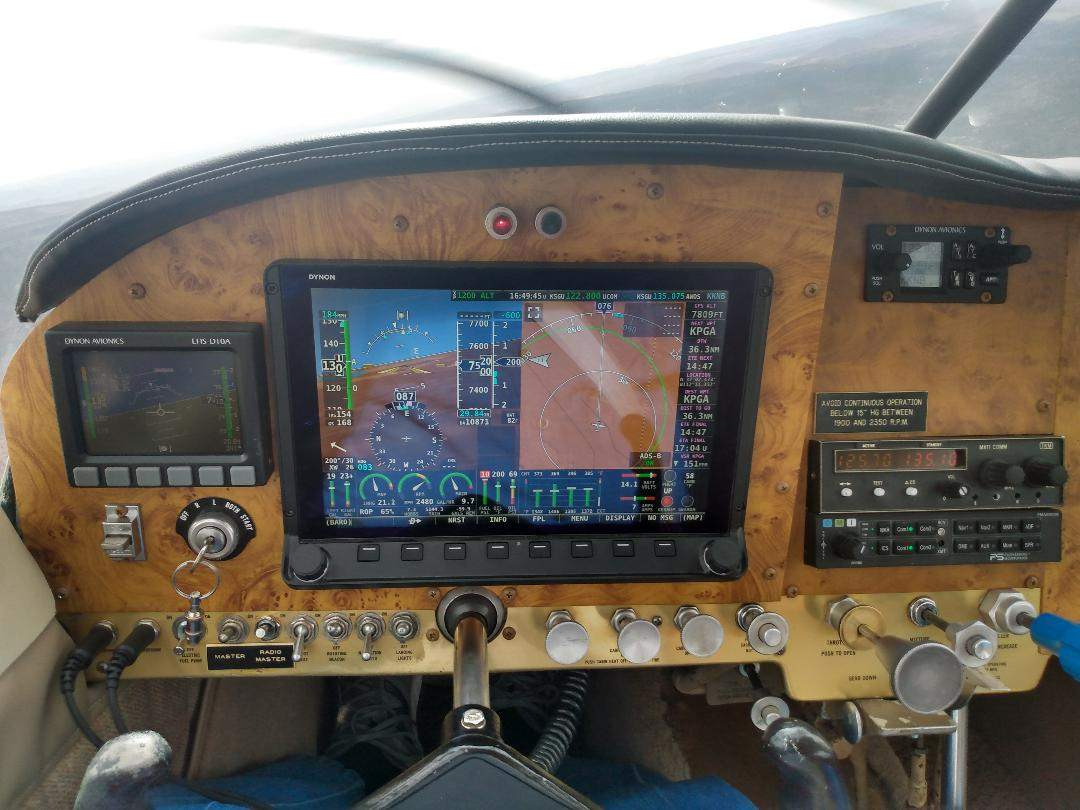
Looking for the number of an LED bulb to replace the normal "hot" bulbs in the "twist to dim" gear lights As mine are no regulated to a secondary position as the Dynon has gear lights also (I kept the old lights in the same panel spot to avoid a change in muscle memory when looking for the gear lights ) I'd like to change to a "cooler" runn Just asking if anyone knows the number off hand before I did into pages of internet c&^p :-) Picture attached of the old lights above the Dynon
-
I flew my Mooney C many hours IFR with just a wing leveler
-
TruTrak Autopilot Pre Order's / Status Update
cliffy replied to Jeev's topic in Avionics/Panel Discussion
All I heard was they are all still all working on a Boeing certification issue that either gets solved by the end of the year or it gets dropped. Then more agent will be available to look at other projects, And my comments were about the Dynon A/P and not TT/BK for which I may have jumped the gun on this particular thread. Like I said rumors nothing as solid evidence. Just passing along what I heard. Sorry if it confused anyone My personal opinion on the TT/BK issue? I think its all internal with BK and Duncan -
TruTrak Autopilot Pre Order's / Status Update
cliffy replied to Jeev's topic in Avionics/Panel Discussion
From what I hear (rumor mill) they are in the same FAA office as the Boeing fiasco and the Boeing fiasco has untl the end of the year to get fixed or be dropped At that time more inspectors will be available to look at Dynon BUT that's just the rumors I hear. Don't put any faith in them -
Next time the engine is off put rivnuts in the firewall.
-
DON'T BE PLAYING WITH THE ALTERNATE EXTENSION SYSTEM WHILE THE WHEELS ARE ON THE GROUAD- PERIOD! If you need to play with it get it on jacks so its safe in case something goes wrong Play it safe Get it on jacks just in case. Then you can actually raise the gear and play with the alternate system. safely
-
Jack it up and check for drag on your left main wheel If draggy fix it. If no drag then look at your rudder and nose wheel alignment by stepping out in front and look toward the tail Rudder should be aligned with the fin and the nose wheel only very slightly askew. There is an adjustment degree number in the Maint manual for the nose wheel setting with the rudder aligned If its out of rig - get it rigged properly ( the ENTIRE airplane) If the nose gear is wrong then the rest of the airplane is probably out of trim also. Also then grab the nose wheel and see if you can very easily turn it left and right (loose) If it moves more than a few degrees then the steering linkage at the top of the nose wheel well needs repair Pull the nose wheel fwd and aft to see how much play there is in the pivot bushing. You shouldn't feel any movement fore and aft. The BIG vertical bolt through the pivot should be checked for proper torque every annual but most do not do this. The torque spec ahs been lowered since the original manual setting. SB Make sure the entire gear has been properly greased every 100 hrs (AD requirement) Add grease to the NG pivot until it squeezes out. There is a Service Bulletin on how to check the nose wheel caster by dropping a plumb bob down from the nose gear structure. Its easy to do with the plane on jacks as you can easily level the airplane while on the jacks. Also one more important item LOOK very carefully at the nose wheel truss assembly where the turning nose gear touches the static gear truss above the nose wheel. Look for dented tubes there Turn the nose wheel by hand and you will see where the tubes hit Any dent deeper than 1/32 of an inch means its unairworthy and needs to be repaired. Grab your A&P and get to work :-)
-
I just flushed my entire panel for a Dynon HDX in my 64D I have the panel in the hangar


-
Or any STC;d alternator kit that has an AML for your airplane. There are many.
-
All they looked at was EPR nothing else and EPR was lying to them with an iced over P1 tube They never cross checked it with EGT or FF just as I've seen many do in the sim. They had no idea what EGT or FF was on a normal takeoff. The airlines I worked for never taught that (3) To take it further- when I got checked out in the 727 right seat (never flew one before) they gave me the usual engine fail on approach. I called the fail and the check list and then just pushed the good 2 up to 4500 lbs/hr FF BECAUSE I was holding the normal 3,ooo lbs/hr FF on approach with 3 engines (9000 lbs/hr total FF) If it took 9000 lbs per hr to maintain it would be 9000 lbs whether it was 2 or 3 engines. It works perfectly in this instance. If you ain't burning the fuel - you don't got the power! When we landed and stopped the check airman asked how I knew just what power to go to on the other 2 engines when the engine failed because normally everyone hunts around trying to get the power set. He was surprised with my answer and this was with a major air carrier at the time! Just as an aside - there was a Continental crash in Colorado many decades ago of a 737 that just rolled over and died with no conclusion as to why. I may have the answer but that is for another time.
-
TruTrak Autopilot Pre Order's / Status Update
cliffy replied to Jeev's topic in Avionics/Panel Discussion
I'm just wondering? If you have a higher cost option for Mooneys (the 200) and you also own the very capable for most low cost option (the 100) would it make economic sense to have both in the line up or would one tend to "downplay " the low cost option by not producing it? What economic sense does it make to have both? -
Saw the same many times We called them autopilot cripples (no hand flying skills) Did the same on night takeoffs going down to DC power only, froze the sim and asked what they had working and what they would fly by. Several knew which engine instruments were working but no one knew what parameters they needed on those instruments to fly. All they ever looked at was EPR They had no idea of T/O FF, EGT or N2 RPM (not that FF worked in DC mode but as a teaching aid a la Air Florida in Wash DC) Even a decade after that crash not one person knew what the correct FF and EGT was for a normal T/O in the 737. It just amazed me. If you ain't burning the fuel you don't got the go power. Don't care what the EPR says. If in doubt 2-3 degrees NU and push the knobs up high It will fly and not over speed until you get some time to get away from the ground and to trouble shoot after T/O. Surprising how many big iron drivers had no idea of this
-
TruTrak Autopilot Pre Order's / Status Update
cliffy replied to Jeev's topic in Avionics/Panel Discussion
That happened to me weeks ago -
OK who's got boards to do it? Come on! Someone fess up and help the group here PLEASE! I'd even go $20 per
-
I am rated in the AB 320 series and I have not read Palmer's book but I feel the real culprit (or part of it) might have been the training regime for AB. One of the first items shown to new hires is they tell them to fly with the stick held all the way aft and show how in normal law (3 computers on) the airplane won't stall. I'm willing to bet that played a part in their thinking as they were going down- 'IT CAN'T STALL I HAVE THE STICK ALL THE WAY AFT!" When in danger you go back to your training, ESPECIALLY if you are low on total experience. I, too, could go on for pages on stuff I tried to teach in sims on the 737 and 757. Stuff that was obvious to me but unheard of to my students even at that level of training. I have only heard (as I'm long retired off the pig) that now they have to check the overhead to see how many computers are on IF they have a control anomaly (there should be 3 lights right on the front panel one for each computer that is alive and not back over you head on the overhead). As you can tell I am not a fan of the bus for me its Boeing all the way (and maybe only up to the 767 era). Bill Wheat and Stowell seemed to agree that in a Mooney you don't want to spin it. Since they are WAY beyond me in that experience I'll defer to their opinions. As the old commercial said (paraphrased) "When they speak I'll listen!" I was always against the FAAs decree that new pilots only had to go to the first indication of a stall. If you've never been on the other side and had to recover you won't have any idea what to do if it ever happens to you. I am very grateful that my mentor had me doing spins and full stalls (power on and off, flaps up, flaps down) before I even solo'd
-
Each airframe has its own particularities in a stall situation The number of turns IS the issue in some airframes, probably also Mooneys as per Bill Wheat. Some airframes go into flat spins after a turn or two and then recovery is very problematic. Spins do not of themselves lead to spirals They are independent of each other. Spins are a stalled condition of the wings, spirals the wing is still flying below the stall AoA Speed does not increase in a spin Speed increases in a spiral Wrong Every airplane will (by regulation) recover from a stall. From 747s down to J3 Cubs. Many however may not recover from a fully developed spin Hence the requirement NOT TO SPIN them. Spirals on the other hand have the wing AoA lower than the stall AoA thus "flying" and not stalled BUT in a position where by speed increases rapidly and the normal intent is to lower the speed by pulling back on the control wheel thereby increasing the load factor to way above load limit and tearing the wings off the airplane. Just look to many many Bonanza incidents from the same scenario. My mentor from 60 years ago said quite calmly as I was into a well developed spiral under the hood in a Cessna 140- "Roll the wings level THEN put the nose on the horizon" That's the only way to recover from an uncontrolled spiral If its a spin one or both wings are stalled If its a spiral both wings are flying.
-
PLEASE BE AWARE THAT YOU MAY BE MISSING A BIG POIUNT IN "BALACING" THE ELEVATOR! The elevator is NOT "balanced" around its hinge line. It does NOT sit level when "balanced" according to the book. It is trailing edge heavy by the amount shown in the limits section of the MM. The CG of the surface is behind the hinge line for stability. Can't just use any weight that fits, Part numbers are called out in the parts manual. They vary by model and maybe S/N The round piece is probably heavy metal used for balancing where solid lead won't give enough weight for the size of the volume. I'm sure Mooney never figured on 50 years of life for corrosion when they made the part.
-
Why not just a tracing of each board with tic marks at every 5 degrees of angle then someone could make their own and be able to interpolate between degree marks for setting travels $10 per board tracing fee + postage I'll buy the first C model set :-) Lay them out on brown paper taped together and accurately trace them fold them up and mail them
-
Tim the Tool Man :More power, More power!
-
Getting back to Mooney spins- I had a conversation with the GURU of Mooney- Bill Wheat many years ago In that conversation he said he got into a full spin of many turns (5+) and almost didn't get out He said HE never wanted to repeat that again NUF SAID? Many if not all airplanes can recover from a partial to a one turn spin but when the spin develops into a multi turn edition the recovery for some is problematic. Those who deliberately do spins in Mooneys are playing with fire I used to do spins in my Cessna 140 also. In fact my Commercial Check Ride was nothing but spins in it back in the 70s and I was being checked by the retired head of an FAA GADO office. All he wanted to do was spins so that's all we did for 45 minutes I have also done the 12 year wing demate test flight on Lear Jet 20 series airplanes. You go to a full stall and break straight ahead and also banked Recovery takes a little while I have flown video chase on the MD87 when they ere doing high altitude full stall flight tests 30K feet They lost a couple thousand feet on recovery In my 727 training we had to fly it (albeit in the sim) all the way past the stick shaker to the complete aerodynamic shake of the stall and keep it flying there for 30 seconds. But then again that's when REAL pilots flew big airplanes :-) Not the video game players of today! :-) In fact in the 727 we had to fly the real airplane the length of the runway with gear out and full flaps at Vref no higher than 20 feet above the surface as part of our qualification Sheilds up!
-
I find it amazing that none of you have ever heard of using valve grinding compound on a phillips screwdriver tip to remove screws with wallowed out heads.
-
I will agree with you on the shody A&P work IN FACT I had penned an entire paragraph just on that subject but deleted it to stay on topic for the posting. Many of the maintainers here have the same story of following behind some other shop only to have to repeat their work. Some of us have seen a lot of crappy work in our time. A mag falling off (emergency landing) due to loose nuts and worn lock washers Landing gear not going up all the way (even just after an annual) with the wrong actuator installed. it goes on and on. BUT we have also seen "the attitude" that I described. Not everyone nor did I mean to implicate everyone in my diatribe but many of us have seen a lot of the CBs club or again "more airplane than the owner can afford" either by finances or skill level. And it all ends in accidents in the end.
-
Not at all what if was inferring