

802flyer
-
Posts
162 -
Joined
Content Type
Profiles
Forums
Blogs
Gallery
Downloads
Events
Store
Everything posted by 802flyer
-
https://www.bbc.com/news/articles/c1w932vqye0o Crash due to 3D Printed intake duct failure in a Cozy Mk IV. Hard to know what level of consideration was given for the design and material choice in this case, but just a reminder to be thorough when going the OPP route. Sent from my iPhone using Tapatalk
-
Yeah, and it’s easy enough to keep the plane plugged in through the spring and fall. So even if I don’t need to preheat at 45F, I still do because it’s just clicking a button on the app. This will often have temps around 90F if done overnight, which means I’m at run-up temp by the time I’m ready to taxi. During the summer I’ll put the battery minder on one channel, so I just have to disconnect the plane side. Could plug some extra lights into it your door opens in the middle but your light switch is on the wall of the hangar. Plenty of excuses to use it all year. Sent from my iPhone using Tapatalk
-
Another vote for the Reiff/Switcheon/blanket combo. Even with single-digit temps in the hangar, this would have oil and CHTs in the 70s or higher after being turned on the night before flying. The switcheon device also measures a temp and shows it in the app, so you can see real time hangar temps. I use the second channel of the switcheon to control a Hornet 45 cabin heater to warm up the seats and avionics. The heater goes on the floor in from of the pilots seat and I sneak the cable out through the baggage door. Sent from my iPhone using Tapatalk
-
Sounds like a great trip. The approach from the south is definitely pretty; just be mindful that it can get bumpy when it’s windy, so I’ll often stay on the west side of the mountains until the Route 4 gap when VMC, or just go fly the approach from the north and circle to land. Just a few extra tenths in the logbook for a smoother ride if it’s windy. Sent from my iPhone using Tapatalk
-
Mac Jets at Portland (PWM) and Heritage at Burlington (BTV) both seem to have decent availability of courtesy cars and a plethora of good restaurants within a 15min drive. Both places offer good walking/hiking/biking a reasonable distance from the airport as well (though you may want to uber since both ask for the car to be back in 2hrs or less). Rutland (RUT) gets you within a half hour or so to Killington and Okemo, and the FBO can arrange a rental car for you; just be mindful that Rutland downtown is not exactly a destination itself. Martha's Vineyard (MVY) and Chatham (CQX) both have decent restaurants on the field, if you're going for a summer seashore visit. Provincetown (PVC) is always fun but you'll probably need a uber into town; Good food, fun town to stroll through, and nice bike paths. The Bar Harbor area is also great as mentioned previously, though the crew car seems to be in high demand and the airport itself isn't a destination. Columbia County (1B1) is an excellent fuel stop on your way too/from, with some of the best prices in the region. Griffiss (RME) also has great fuel prices (cheap self-serve is a ways from the FBO however, and there are fees at the FBO if you decide to drop in) and some cool military aircraft rolling through. I'd be happy to see a Northeast group open up as well.
-
Mea culpa, I had received some bad info and just assumed it was correct. Thanks to you and @Marc_B for setting me straight, and for the good news that it is field changeable (with the dataplate marking as you say)! Sent from my iPhone using Tapatalk
-
This is correct with regard to the physical mounting of the unit. But it is programmed to then fire at the “proper” number of degrees BTDC for the given engine. And since the programming is done by SureFly, one has to choose either of the “proper” settings for the IO-360 when ordering. Sent from my iPhone using Tapatalk
-
Reviving this old thread to see if anyone can comment on the original question after a few years of experience: Have you installed a Surefly at either 20 or 25 degrees, and what has your experience been? A crack was found under my #2 cylinder at some recent maintenance, so my engine is getting overhauled and I'm likely to put a Surefly on the left, and trying to decide how to time it. My engine was at 25deg with slick mags, so I'm inclined to stick with 25 unless there's data/experience suggesting that 20 is the better choice given Surefly's timing advance feature. Thanks!
-
Ballpark Fixed Costs when Doing Math for a Partnership
802flyer replied to bigmo's topic in General Mooney Talk
Quick thought on the wet vs. dry rate topic: A club that I used to fly with charged a wet rate, and reimbursed fuel purchases at a fixed dollar-per-gallon value that was roughly average for our area (updated once or twice a year to track the market). So if you end up going out of your way to buy fuel cheaper than the assigned rate, that actually brought your cost down for the trip; if you decide to visit the most expensive FBO at a Class B airport, you've still got skin in the game when buying their $10/gal fuel. At the end of the day, the club is paying fair market value for fuel, and individual partners still get some autonomy in their actual fuel costs for their given trips. If a member asks the plane be left more/less full than usual, hopefully you've set the rates such that your home field's price is aligned with the assigned price, and therefore debts between parties are not worth calculating (plus everyone knows the reimbursement price ahead of time, so they can plan accordingly when deciding to tanker fuel home, asking for tanks to be left low, etc.). Seemed to work really well. -
If you have the LEMO headset, you can benefit from the convenience of panel power whenever it is available, but still easily connect it to a GA Plug plane with the $40 adapter referenced above. If you buy the GA plug headset, you’re stuck with GA plugs and batteries in every plane. I don’t see a reason not to buy the LEMO headset and GA adapter if you regularly fly in a plane with LEMOs. Sent from my iPhone using Tapatalk
-
I believe the GPSS algorithm makes the steering commands based on real-time parameters such as speed (i.e. start the turn earlier if you’re going faster), so I doubt you can test it on the ground. Sent from my iPhone using Tapatalk
-
Yes it should follow the lateral course of GPS approaches in GPSS mode (pedantic clarification: the glide slope is the vertical portion and would depend on the approach mode of your autopilot). Just make sure you have the KAP 150 in heading mode to use GPSS, as GPSS will not change the performance of NAV mode. Sent from my iPhone using Tapatalk
-
What autopilot? Was the autopilot and/or G5 pre-existing? If your autopilot previously followed a heading bug, and the G5 is allowing you to turn on GPSS, then you should be able to put the autopilot in heading mode, activate GPSS on the G5, and sit back while the plane flies the turns for you. Sent from my iPhone using Tapatalk
-
If they have one on the shelf ready to exchange. Nobody I spoke with had an A1A available for that option.
-
This is in line (both price and lead time) with the half dozen quotes I received in early November. Sent from my iPhone using Tapatalk
-
Sounds like they are receiving/shipping small batches at a time
-
Ordered one from LASAR in the Spring and the 35wk wait time was advertised at that point. Just emailed Heather to ask how things are coming along. If they're still advertising 35wks, that makes me a bit worried that the Spring order hasn't gone though yet? Will see what she says and report back.
-
Flying CCW around a low tomorrow
802flyer replied to 0TreeLemur's topic in Miscellaneous Aviation Talk
Yeah I flew from Maine to Oklahoma last month when there was a giant system over the Great Lakes. It was faster to fly south to Virginia and then turn west rather than going direct. Crazy stuff. Sent from my iPhone using Tapatalk -
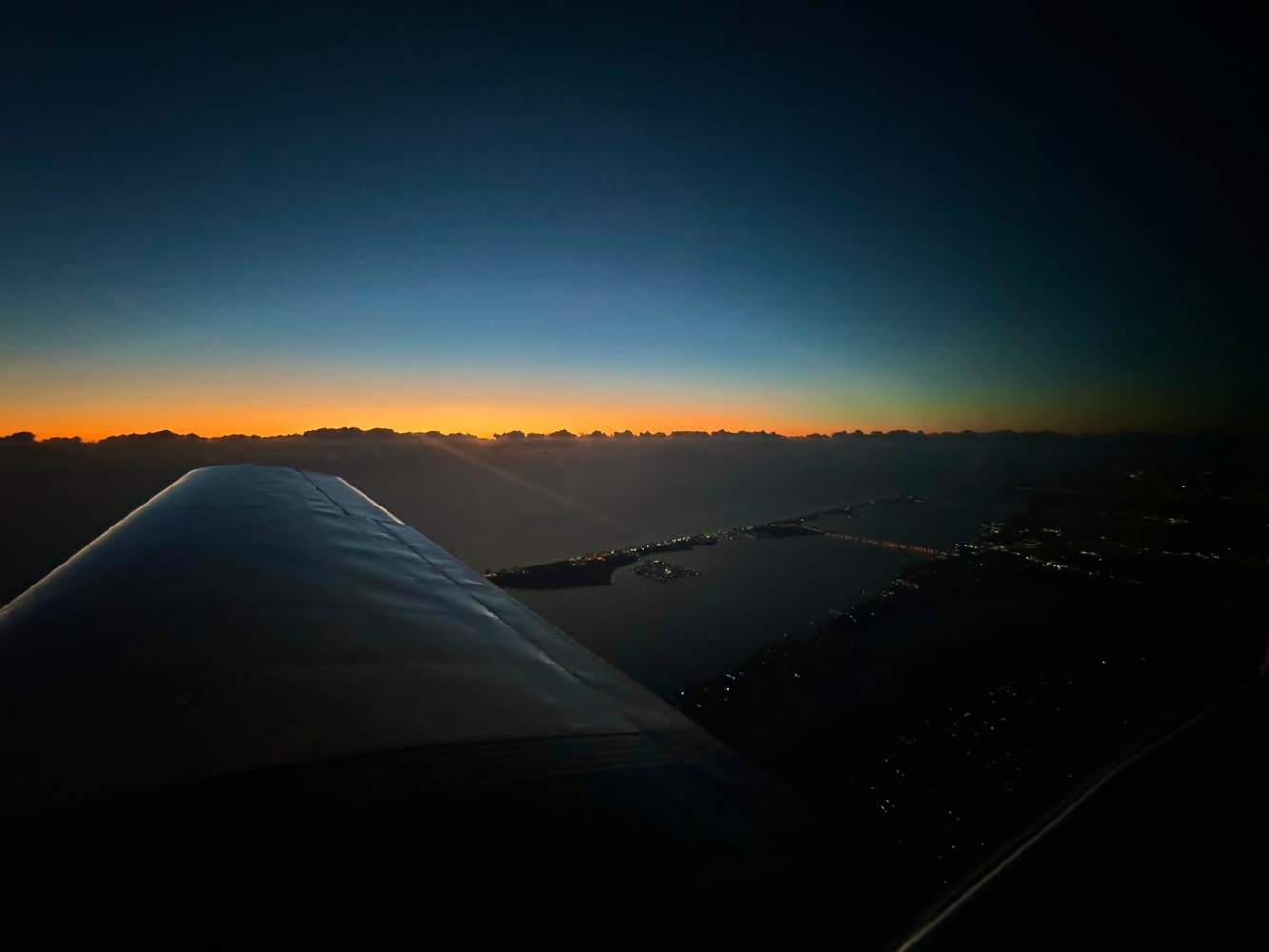
Agreed. The field of view required to capture the wing seems to make the colors a bit less dramatic
-
Agreed. My MVP-50 has a Voice Annunciator that will ping and then tell you “Check RPM” or whatever parameter is out of range. There’s a hardwired switch to turn it on/off and to acknowledge the message to make it quiet. Between that and the auxiliary Caution and Warning lights just above my PFD, it’s hard to miss when the monitor is upset. All of that said, it can be a bit annoying as I too will get yellow-range oil pressure briefly during the first take off of the day, and it warns me when my RPM is in the avoid-continuous range when transitioning to land. So I think my greatest risk in missing something will be due to alarm fatigue rather than lack of engine monitor (literal) bells and whistles. Whenever it lights up, I try my best to scan the whole monitor screen for other anomalies; the voice annunciation is helpful to recognize atypical alarms (I have the EI connectors that like to loosen up occasionally, and have been startled in cruise by a “check cylinder head temperature” alert when one decides to go intermittent). Hopefully if something bad happens I’ll have the presence of mind to look carefully and catch it quickly. Sent from my iPhone using Tapatalk
-
Any commentary on the circumstances of the flight? I’d like to hope if it were a routine takeoff from my home field, that I’d notice the extra performance in the seat of my pants pretty early, nevermind the auxiliary warning lamps for my engine monitor flashing in my face. But perhaps a stressful scenario and maybe some alarm fatigue (eg oil pressure always a bit high initially) contributed? Interesting case. Thanks for sharing. Sent from my iPhone using Tapatalk
-
I would definitely check out the prebuy service from https://www.savvyaviation.com/, which can handle the logbook review and help you coordinate a prebuy. Their main Mooney expert is a frequent contributor here. I wish I had looked into it when I was a first-time-buyer. Last I checked, their pricing seemed very reasonable and probably would have paid for itself given that the review and prebuy which I sourced myself resulted in a few missed items that I’m confident they would have caught easily. Sent from my iPhone using Tapatalk
-
I’ve flown just under some similar-looking (to me anyway) clouds and had a smooth ride, while skirting around some decidedly nasty weather. Sent from my iPhone using Tapatalk
-
How is your climb performance? Do you have any data points of IAS/fpm/DA for pattern altitude as well as up higher (eg above 6k)? Time-to-climb for a climb to altitude around 10k ft can also be helpful. Understand you’re trying to keep temps down while breaking in cylinders, but people here may be able to compare reasonable cruise-climb profiles. Sent from my iPhone using Tapatalk
-
It’s a generalization, but I believe the relatively humidity at altitude tends to be a fair amount lower than at the surface (on a nice VFR day, at least). Skew-T plots show this temp/dewpoint spread well. I suspect that the conventional wisdom to “run the engine for an hour in cruise to drive off moisture” might take advantage of getting both the air and oil into a low humidity environment. In theory, this will cycle a good volume of dry air through the engine while the oil is hot, aiding in the related-rates process of pulling moisture out of the oil. If any of this makes a difference, I can see why getting to altitude might be better than a ground run. If moving to Tucson isn’t an option to achieve low humidity, just pick a clear day and climb Sent from my iPhone using Tapatalk