N6018Q
-
Posts
125 -
Joined
-
Last visited
Content Type
Profiles
Forums
Blogs
Gallery
Downloads
Events
Store
Everything posted by N6018Q
-
Martin Induction Systems in Enid Oklahoma. About $2300 for servo and distributor overhauls and injector cleaning.
-
Update: my plane is finally out of the shop. Installed a JPI 830, overhauled the fuel servo and distributor, cleaned the injectors and its running like a top. Previous commenters were exactly right about the servo. The overhaul shop couldn’t even perform a pre-overhaul flow test. Apparently the diaphragms in the servo were ?loose? causing the intermittent roughness. Thanks for all the input, it is much appreciated.
-
PS I hope that in 5 years from now, my plane looks half as nice as Bob's!
-
So, 5 years later, I noticed the exact same inconsistency (at least in my mind) and as I was searching Yahoo, I came across this thread. My ASI is labeled exactly like Bob's. I was taught that if your airspeed decayed below the white arc, in a landing configuration, the plane would stall. It appears to me that this topic was dropped rather than resolved but I realize I might be missing something. @Bob_Belville, has this been resolved to your satisfaction? If so, what is your conclusion?
-
Coincidentally I had exactly the same idea less than a week ago. I will be flying the same route through 3 different ARTCC's for the next year. I figured I could compile a small kneeboard list, but I've come to the same conclusion as the other posters here- no master list and the frequencies change often. Foreflight does list Center frequencies when you look up a specific airport within an ARTCC's area, which would at least give you a starting point to regain communications if you missed a Center call. Possibly not the best solution, but what I did was add an airport from each of the 3 areas I will be traveling through to my "Favorites" in Foreflight. That way, I'm only 2 taps or so from at least a starting point in regaining comms.
-

N943RW at Hawk Aircraft Paint
N6018Q replied to Bob_Belville's topic in Vintage Mooneys (pre-J models)
Beautiful plane! -
Normal 60 second Boost Pump Amount?
N6018Q replied to N6018Q's topic in Vintage Mooneys (pre-J models)
-
Normal 60 second Boost Pump Amount?
N6018Q replied to N6018Q's topic in Vintage Mooneys (pre-J models)
@carusoam sorry about that. Yes, I’ve looked at my charts. Today for example, the DA was 5200’. Highest temp shown is 80 degrees F with a 1330’ roll. Today it was about 100 degrees. I would reserve no less than 1500’ for takeoff, it’s pretty flat here, no 50’ obstacles. I wouldn’t have any reservations about using the 2500’ runway AFTER I’m confident in my engine’s reliability. The crosswinds here near the Oklahoma panhandle can be brutal and I would normally use the 23-05 runway instead of the 17-35 runway if the winds dictated. My initial ppl training, which took almost two years due to work constraints consisted of flying on very cold and very hot days and one of the things I really noticed was the difference DA made on takeoffs in the underpowered 172 I was using. I do appreciate the heads up, and don’t want to give the impression that I know it all. The main reason I signed up on this forum is to take advantage of the wealth of info shared here. I want to be a better pilot and am willing to listen to anything you have to say. -
Normal 60 second Boost Pump Amount?
N6018Q replied to N6018Q's topic in Vintage Mooneys (pre-J models)
Yes sir on the upstream checking. My mechanic is doing that now. I just had my boost pump overhauled in April due to a leaking tell-tale. The largest particle of fibrous debris in the servo inlet screen looked suspiciously like a piece of shredded synthetic impeller from the leaking pump. Visual inspection of the injector nozzle ID's, particularly #2, also indicated the presence of debris. -
Normal 60 second Boost Pump Amount?
N6018Q replied to N6018Q's topic in Vintage Mooneys (pre-J models)
Thanks! And no, I haven't done an in-flight mag check yet. My servo, injectors and distributor are all out for testing right now but I have downloaded the Savvy suggested flight profile and will implement it ASAP. -
Normal 60 second Boost Pump Amount?
N6018Q replied to N6018Q's topic in Vintage Mooneys (pre-J models)
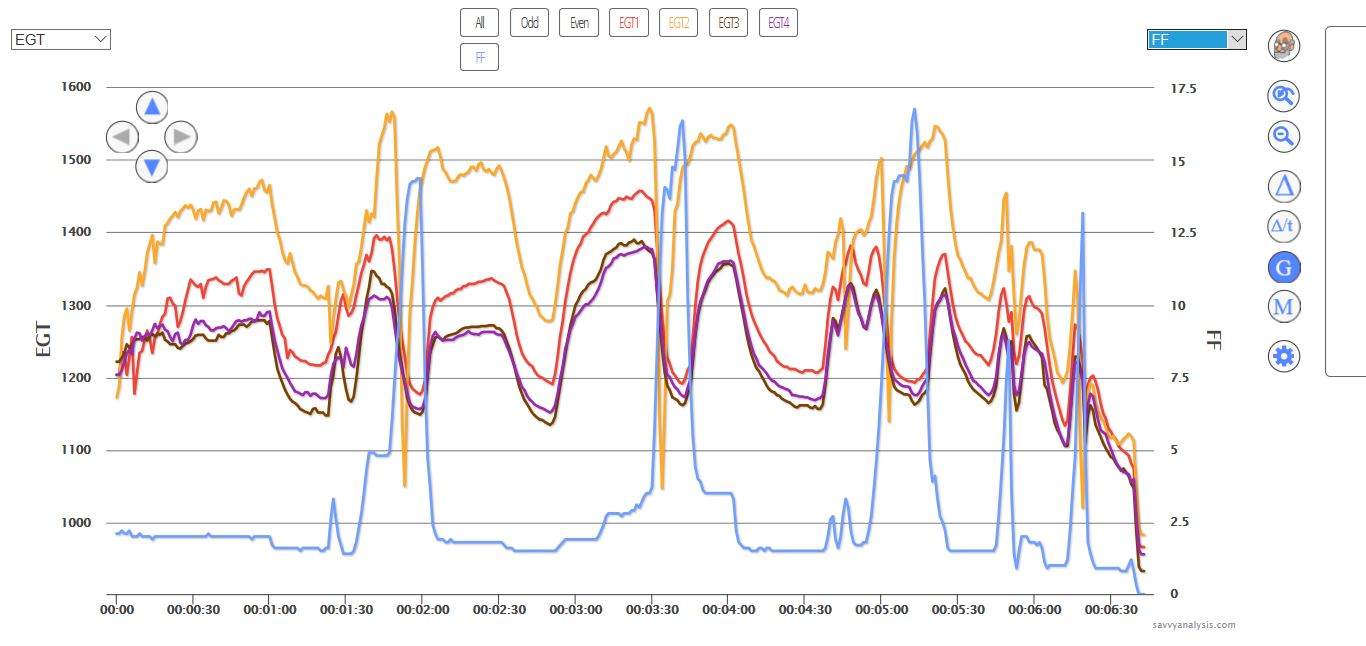
In the interest of brevity, I sacrificed conciseness and necessary detail. The 2000' I was referring to was MSL. The longer of the two runways at KWWR, where my plane is residing, is over 5500' long. There is a shorter one (2500') but I have no interest in using it until I know my plane is running reliably. The plane is new to me. I bought it in the November timeframe of 2017 but immediately started an annual that lasted until April this year, due to the mechanic only working on it after his regular work hours. I have ~130 hours since my PPL in 2016, almost all in Cessnas. Throughout all the insurance, FAA (and personal) required complex training, the engine ran beautifully. On the last flight with the CFI before his endorsement, the engine exhibited roughness when I was about 2 miles out on a straight in final. Since then the problem has been very intermittent in ground operations. Only after all the rework described above on the electrical system, along with the JPI install, did I feel confident enough to attempt a take off last week. My Friday runup was by the checklist (except for the full rich item). The second one on Monday (indicated by the erratic graph I posted earlier) was not part of a takeoff attempt. I started the plane at the hangar and was just trying to see whether my previous mistake of not going full rich was the only problem. This time, the engine was rough across the rpm spectrum. That's when the mechanic and I started the flow tests to try to identify faulty components. My understanding is lacking with regard to the "normal MS stuff" items 1 through 5, because if I understand you correctly, number 3 indicates "target EGT" while I am still on the runway (I am at 2000' MSL with a typical DA over 4000' at this time of year in NW Ok). This appears (to me) to contradict number 2 "full rich ". I'm familiar with leaning for cruise and have studied the EGT/CHT/BHP/BSFC graphs, so with a little time (and a smooth engine) I will be able to identify a EGT temp for max HP. Should I lean for that target BEFORE takeoff? With that being said, I do understand that I was leaned entirely too much for my Friday attempt. And for the record, even though I have my complex endorsement, I have scheduled additional training when my plane is running again. -
Normal 60 second Boost Pump Amount?
N6018Q replied to N6018Q's topic in Vintage Mooneys (pre-J models)
I started a thread back in April about engine roughness at 2400 RPM. The MS consensus back then was that it was probably my fuel servo. I relayed that info to the local mechanic but he was convinced it was an electrical issue. I was pretty confident that it wasn't, since I just got the plane out of an annual which included a new harness and spark plugs and magneto overhauls. He found a cracked magneto and a harness that was jumping fire to the frame (that's probably not the technical terminology but I'm not a mechanic). Last week he completed the installation of a JPI 830, along with another new harness and re-overhauled magnetos. Run-ups seemed fine but whenever I got on the runway and applied full power, the engine immediately started stumbling. A mea culpa here: I had leaned a bit for ground operations at the 2000' airport I'm located at right now. This after reading here about the probability of fouling plugs at full rich. I didn't go full rich on that take-off attempt. ( I know that right now a bunch of readers are shaking their heads and wondering what kind of idiot does that.) After this was pointed out by @kortopates, I went back Monday morning to see if that was all that was wrong. It wasn't. The engine exhibited roughness at all RPM's no matter what the mixture was set at. The mechanic was finally convinced that it had a fuel issue. To his credit, he did a great job installing the JPI and found the issues with the electrical system that could have bitten me down the road. The tests we did was to try to isolate which component of the fuel system was bad. I also sent the data from the last run-up to Savvy and @kortopates indicated probable servo issue and injector blockage. The servo inlet filter had a small amount of trash in it. The attached pic that looks like a halfway normal run-up was from Friday. The erratic pic is from Monday.


-
Normal 60 second Boost Pump Amount?
N6018Q replied to N6018Q's topic in Vintage Mooneys (pre-J models)
Yeah I got that from the two previous answers. I also got an analysis today from Savvy that indicates probable injector blockage AND servo malfunction. My mechanic is sending out the injectors, servo and the the distributor for testing and overhaul/replacement as necessary. It’s interesting that the “tried and true” method with MEK was ineffective. -
Normal 60 second Boost Pump Amount?
N6018Q replied to N6018Q's topic in Vintage Mooneys (pre-J models)
Thanks for clearing that up. -
Mechanic performed a “cup test” on my injector lines today (not through the injectors). The amounts shown are what he got by running the boost pump for 60 seconds with full throttle and mixture. Seems like about 2 ounces or so in each bottle. Is that a normal amount? We disconnected the fuel line before the servo and the boost pump produced about 1 gallon in 60 seconds.


-
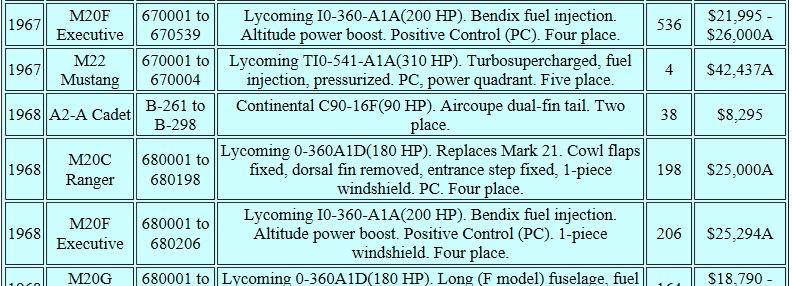
From http://www.mooneyevents.com/chrono.htm
-
I have Bendix (1200 series?) mags. There was a ~2-1/2" crack on the body, not in the immediate vicinity (relatively speaking) of the mounting flange. I'm not a metallurgist, but the crack sure didn't look recent to me. And thanks for the heads up on the installation washers, I'll make sure my new mechanic is aware of those.
-
One thing I know, I’m impressed a whole lot more by the contributors to MS when the discussion sticks to Mooneys........
-
I spent $2k just on labor on my first annual, not to mention $1.3k on mag overhauls. Total for parts and labor was ~$5k. Flew 6 hours, engine started running rough. Second mechanic pulled the mags and 1 case was cracked. Believe me when I tell you I’m not bragging!
-
Tell me how to fly level and I’ll do it! Thanks for fixing, I tried several different things and never could rotate them. Thanks!
-
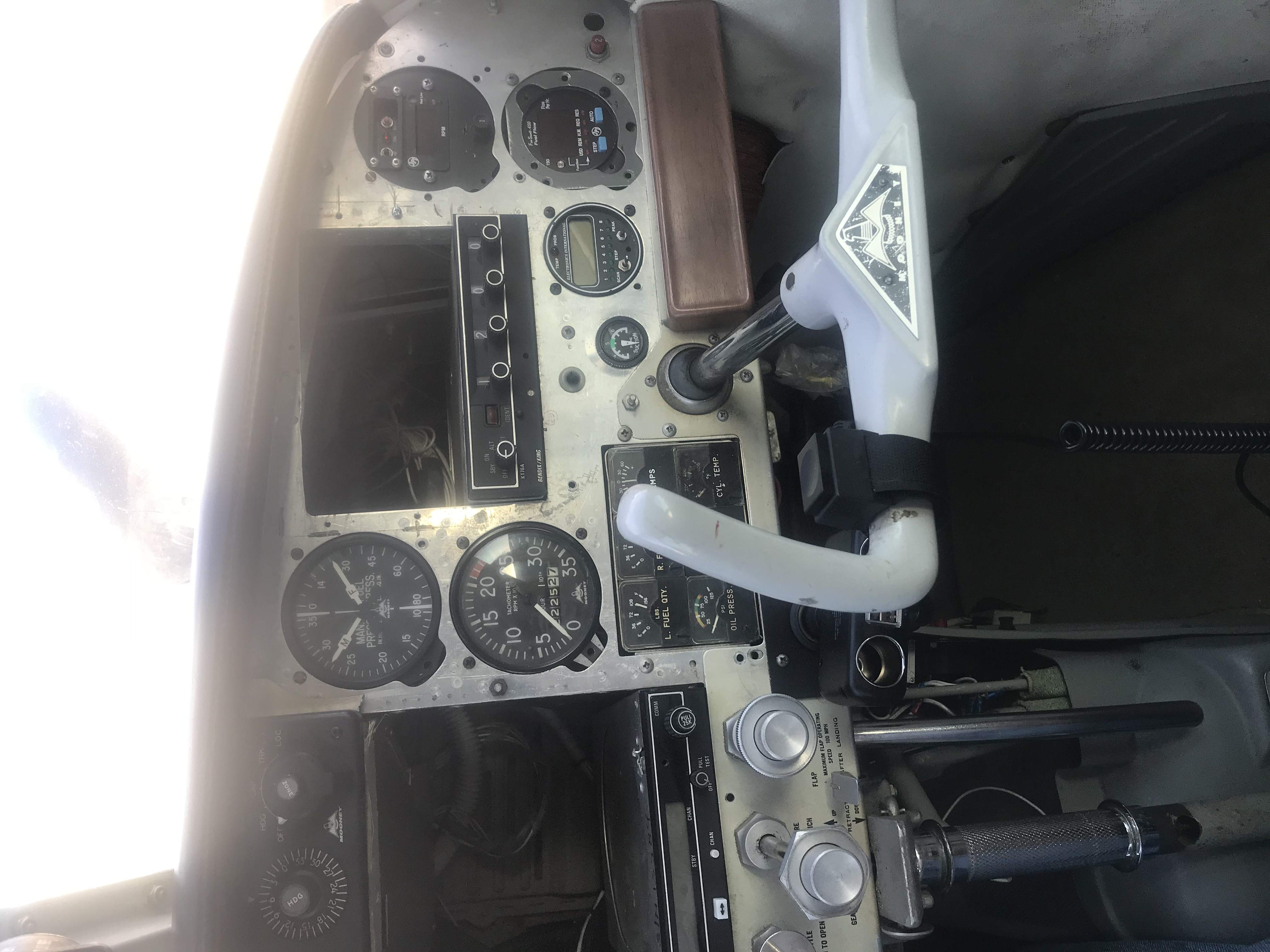
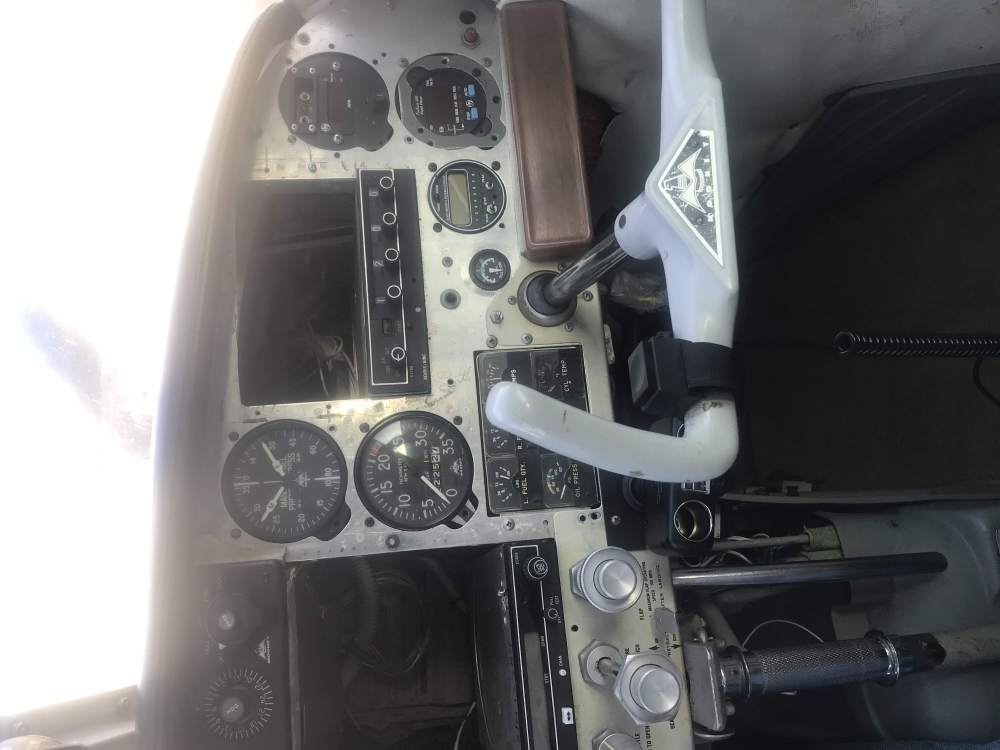
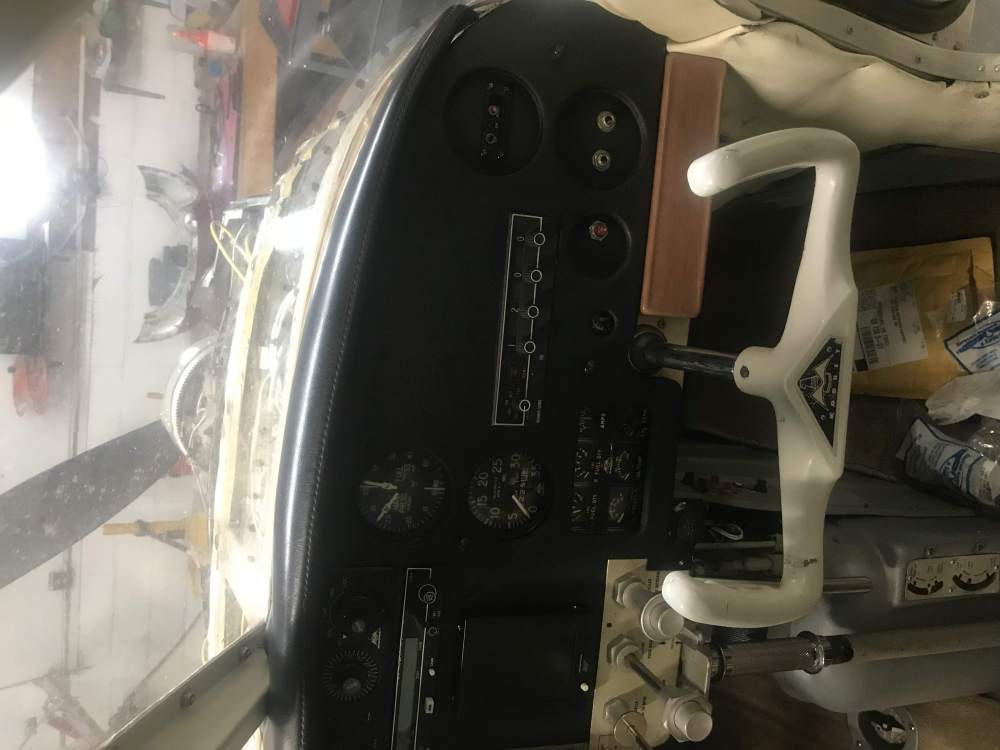
First pic is what the panel looked like when I bought the plane...
-
Procedures for clogged injector or turbocharger failure
N6018Q replied to FloridaMan's topic in General Mooney Talk
Thanks, I appreciate the info -
Procedures for clogged injector or turbocharger failure
N6018Q replied to FloridaMan's topic in General Mooney Talk
I'm gonna show my ignorance here- how do you stop the prop from spinning? I too noticed significant increase on the glide distance chart when the prop is stopped. -
Got my renewal insurance quote today...
N6018Q replied to ragedracer1977's topic in General Mooney Talk
Q: What is a "Combined Single Limit of Liability" or "smooth" limit? A: Most aircraft insurance policies contain liability coverage sub-limits. An example would be, $100,000 Bodily Injury each person per accident/ $1,000,000, Property Damage per accident/ $1,000,000 total each accident for all bodily injury and property damage. With sub-limits, the most that can be collected under each coverage per accident is the stated maximum limit. A combined single limit (CSL), often called a "smooth" limit, has the total stated limit available with no specific sub-limits for Bodily Injury or Property Damage claims. -
Concur with the 7500 fpm which translates to over 85 mph vertically!