

DXB
-
Posts
3,614 -
Joined
-
Last visited
-
Days Won
14
Content Type
Profiles
Forums
Blogs
Gallery
Downloads
Events
Store
Everything posted by DXB
-
Huh. I drank the BatteryMinder coolaid and thus find this bulletin from Concorde distressing. But do we know the BatteryMinder trickle charger /desulfator has this issue described with "maintenance chargers"? I don't know much about electrons so need some expert guidance...
-
The Surefly is sealed by an integral O-ring and doesn't require a gasket per manufacturer install manual.
-
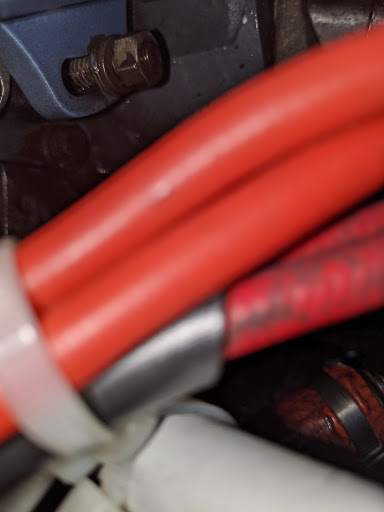
Wish I could say the same. A couple of months after my Surefly was first installed, I started noticing a few drips of oil on my nosewheel tire after each flight without an obvious source. After 3 or 4 instances of this, I took a much closer look. Glad I didn't wait longer :/
-
Meh. I suspect WOT power difference is trivial here. 2600-2650 is about what I get since installing a new PCU-5000 governor a few years back. It behaves identically before and after an engine overhaul last year - so I don't think the engine is underperforming. The tight quarters to adjust the fine pitch stop screw on the governor have made it seem not worth the trouble. Also, if there's real evidence of that a 50-100rpm difference in pitch at WOT makes a more than trivial power difference for my O-360, I'm sure about to be corrected in great detail , and if so I'll fix it at annual...
-

EarthX Batteries STC Approval for 150+ 12V Aircraft
DXB replied to EarthX Inc's topic in Miscellaneous Aviation Talk
@EarthX Inc It's good to see this technology advancing for our 12V system planes. I will consider it for my M20C when my currrent Concorde 35AXC warrants raplacement. However, the 15 amp-hr capacity of your battery vs. the 33 amp-hrs of my current battery still leaves me a bit wary. When the charging system fails on our planes (a common event), high battery capacity becomes a critical safety feature for us. -
B&C Starter in '65 C Model - What to watch out for?
DXB replied to jeremyc209's topic in Vintage Mooneys (pre-J models)
Honestly it was 7 years ago when it was put in - I don't recall my A&P mentioning any installation challenges but that is only modest assurance for you. -
Can I bypass FlightStream 210 and connect via GI-275 & GTX-345?
DXB replied to AdamJD's topic in Avionics/Panel Discussion
FWIW simply updating the Foreflight app on the ipad fixed a similar problem connecting to a portable ads-b receiver for me -
Can I bypass FlightStream 210 and connect via GI-275 & GTX-345?
DXB replied to AdamJD's topic in Avionics/Panel Discussion
the real benefit is having all route changes on your panel GPS automatically update on your ipad - try it and you won't ever want to go back! -
S.2503 Rotor Act - requires ADS-B in AND out !!!
DXB replied to pmccand123's topic in Miscellaneous Aviation Talk
Thanks - this detail lowered my BP a bit since I've gone the portable receiver route for ads-b in for the last 11 years and am perfectly happy doing it this way. -
A few notes about foam plug passive headsets (Halo, Clarity Aloft, whatever) that have garnered praise in this thread: - Many folks, including me, find them more comfortable overall than an over the ear headset - I used one for years until my hearing started waning, and I took a deep dive into the data on noise attenuation by foam plugs. - Their high frequency noise attenuation is excellent, superior to over the ear passive headsets, on par with good active noise cancellation headsets - Their low frequency noise attenuation is poor, certainly no better than a cheap passive over the ear headset - In contrast to jets, the serious, hearing damaging noise made by our piston planes is in the lower part of the spectrum, which is protected poorly by foam plugs - The low frequency noise in our Mooneys is destructively loud and adds cumulative damage to hearing each time we fly with a passive headset, be it over the ear or foam plug-based. The decreased fatigue with a good ANR headset is also dramatic vs. any passive headset. I very much regret the 7 years or so that I spent flying with a foam plug headset. I recall seeing Phil McCandless, founder of Quiet Techologies (Halo headsets), at Oshkosh this year standing under a banner saying something like "ANR quality sound attenuation at a fraction of the cost." For piston planes, this is egregiously false advertisting that is contributing to lasting hearing damage for pilots like us. Dr. McCandless also has a doctorate in audiology and should certainly know better. His website also contains various related falsehoods. Here's an old thread that contains links to relevant data:
-
Adding a Powerflow produces a subtantial increase in power in the carb'd C, less so in the fuel injected birds. My experience after adding the Powerflow was that it puts it in E territory. As others mention, this comes with more heat - this has taken a while for me to sort. Ultimately, a careful rebuild of the baffling at time of overhaul did the trick for the most part, and I can now even run it hard with the Surefly advancing timing in cruise with temps under control. I'm pretty sure this setup will even outrun a stock E. Advantages of the E: There's no question the angled valve IOs are easier to keep running cool, and you can save some fuel by running deep lean of peak in a way that's impossible in a carb'd plane, no carb heat to mess with Advantages of the C: Slightly more bullet proof fuel system with no clogged injector or fuel servo drama, no hot start drama, and also substantially cheaper cylinder / overhaul costs As a rank amateur with no appetite for engine drama, I gotta give a (slight) edge to my carb'd C...
-
I agree regarding opinion of Rob at KOXC in Waterbury CT. But like you're based in NY, not New England...and I'm very close to both of you in Mooney travel time here Philly PA. Maybe it should be the mid Atlantic and New England forum....
-
Category includes losing mags, which I suspect comprise the vast majority.
-
Can surefly and e-mag both be on one engine without backup battery?
DXB replied to Will.iam's topic in General Mooney Talk
Certification for the E-mag has been a year or two away for more than a decade. Maybe Hartzell's acquision of E-mag provides a real possibility of it now, but these timelines are always much slower than billed across aviation. -
Making sense of NTSB report for M20F N9339M
DXB replied to DXB's topic in Mooney Safety & Accident Discussion
Interestingly I also trained in a Warrior II for my PPL 11 years ago, just before getting my M20C. Biggest difference I recall is that the Warrior pitches up upon applying flaps whereas the Mooney pitches down. In either case its helpful to get it back in trim at a safe airspeed before entering a turn. Then one can not apply any back pressure and simply let the nose sink in the turn so that AOA, airspeed, and stall speed all stay constant. -
I can't find a prior thread for this crash in 2023, from which both pilot and passenger thankfully walked away. The story sounds like a typical low altitude base to final stall-spin event, for which the outcome is usually lethal. https://generalaviationnews.com/2025/11/28/mooney-pilot-loses-control-while-landing/?utm_source=TPOA&utm_medium=email&utm_campaign=20251201 The pilot's description per the NTSB report is kinda interesting here if taken at face value: "The pilot reported that, while turning from the left base to the final approach leg of the traffic pattern at the airport in Meridianville, Alabama, the Mooney M20F’s stall warning horn sounded. He pitched the airplane’s nose down and increased engine power. The airplane then “violently” pitched up and to the left. He continued his attempt to regain control, but the airplane then pitched up and to the right, and eventually hit terrain about 200 feet short of the runway threshold." The description of the aircraft's behavior doesn't totally make sense to me if you take the pilot's description at face value. I'm curious what can be learned here about correct recovery technique if one ever hears the stall horn in this particular scenario (unless there was already a wing drop, the pilot's inputs sound correct). It doesnt sound like it was a fully developed spin - otherwise the airframe woundn't be in one piece and the occupants would not have survived.
-
Fifteen years on Mooneyspace flies by . . .
DXB replied to LANCECASPER's topic in General Mooney Talk
Looking back, I'm just past 11 years since my first post in November 2014, just after I bought my M20C as a first time plane owner, 2 months before I finished my PPL. I was probably lurking for a while before as I contemplated what plane to buy as well as how to manage the prebuy and initial maintenance. In the early years, I read the current and old topics voraciously and posted very regularly. My posts are a fairly accurate diary of every question or issue I've ever had with my plane. I've learned a tremendous amount here and also tried to pass it on in replies to threads in the early years. Now I read and post less, but I still find a lot of value here. It seems that overall activity on the site has also gone down over the last few years. A subset of the more prolific posters and highest knowledge folks have left. Perhaps this partly reflects our shrinking fleet of aging planes. Perhaps the various Mooney-related pages on FB have taken a chunk out of the traffic here; however, in general I find those pages much less useful overall. -
There is no need for a cell switch. RELATIVE humidity is what determines moisture exposure of a surface and resulting corrosion rate, NOT absolute moisture content. The dryness you experience in your heated house in the winter without a humidifier is experiential evidence. The higher temp of the heater would markedly accelerate corrosion at high relative humidity, but in the very low relative humidity in your engine with the heater, there is negligible effect. As long as you have a engine heater that warms all components well above the dew point, continuously leaving the heater on in winter is an ideal solution.
-
Unscrew the dipstick and leave it plugged in all the time with the in the winter, when most folks fly less. It will keep the inside of the engine bone dry and invulnerable to corrosion.
-
Aspen MFD with EI CGR engine monitor
DXB replied to Steve Dawson's topic in Engine Monitor Discussion
Meh - tons of anecdotes for glitches and failures with both modern Garmin and Aspen stuff, some having durable software fixes. The big red Xs on the original Aspens once airspeed input is lost was a troubling vulnerability but was addressed in the Max upgrade. There is no objective comparative data on pfd reliability I'm aware of here, only the passions of individuals with different experiences and biases. -
Aspen MFD with EI CGR engine monitor
DXB replied to Steve Dawson's topic in Engine Monitor Discussion
EI monitors are top notch, and it's good to see some innovation from Aspen. I support anything that might offer alternatives that chip away at Garmin dominance. -
Carb temp gauge is a pretty simple install and is nice to have. The O-360 configuration in our Cs is resistant to ice, but I still adhere to keeping carb temp above 40F in any visible moisture including clouds (except at full power when climbing down low). Having the temp gauge simply lets you keep some of the power you would lose by using full carb heat. Upon reducing power for descent, I usually use full carb heat simply because I'm usually thinking about landing and don't want to distract myself by futzing with partial carb heat. The gauge also show you that carb temps are typically quite high at low power in the pattern. For that reason, I turn carb heat off when turning final and performing my last GUMPS- one less thing to worry about if one needs a go-around. Doing so also limits dust ingestion close to the ground. Lastly note the hinges, seals, cable etc. that actuate the carb heat door and bypass valve in the C's airbox are a bit fragile and often need maintenance. Having a carb temp gauge can tip you off when something isn't right (this has happened for me).
-
This seems like sound guidance that may help keep others safe in the future, regardless of what caused this tragedy. Looking back now at the old thread, you did write "both the gascolator screen and the servo screen need to be removed and inspected for debris. You’re way upstream of where you need to be until you verify that the fuel system has not been contaminated." That seems like reasonable advice back then and is a bit chilling to read now. I think there's boost pump screen in the series also. It's not at all clear the A&P looked at all the screens downstream of the one you picture here.
-
I'm curious if there are any SOPs to guide exactly how far to go with such inspection and decontamination in Mr. Baber's fuel system contamination scenario. One adds some risk with all invasive maintenance, particularly that performed without a clear diagnosis up front, which may more than offset likelihood any safety dividend of an intervention not directed at a clearly identified problem in a component. I admittedly know little about these fuel injection systems, which my plane lacks, and so my comment may be completely off the mark in this particular case. However, if there is a more rational, systematic process for dealing with Fred Baber's fuel system contamination issue than what he did, it's certainly worth highlighting here so that others can learn from this tragedy.
-
Fred Baber's story makes me think of my own early days after getting a C model, 10 years ago now. Unlike him, I was an 80 hr newly minted VFR wonder who also knew nothing about aircraft mechanical workings. The plane was flying when I got it but had been underused and had a handful of gremlins. I was nervously hyper-vigilant about these issues and was reading Mike Busch's stuff voraciously. But my ignorance and inexperience at that point made me ineffectual and also drove A&Ps and shop owners crazy. My point is that even if one is thoughtful, cautious, and a rule follower, progressing in aviation means entering situations that are more tenuous than otherwise encountered in routine daily life. I recall the fuel pressure in my C had a habit of dropping to 0 during climbout once in a while, in the days before I had a fuel flow gauge. We chased that issue ad nauseam before concluding in was just vapor lock in the pressure line, in absence of any other viable explanation. That assessment could easily have been wrong and cost me my life - perhaps not unlike what happened to Fred Baber here.