
Shadrach
-
Posts
12,165 -
Joined
-
Last visited
-
Days Won
170
Content Type
Profiles
Forums
Blogs
Gallery
Downloads
Events
Store
Everything posted by Shadrach
-

Intermittent Rough Engine / High EGT need help diagnosing
Shadrach replied to 33UM20C's topic in Engine Monitor Discussion
I don’t think a typical O360 will generate will flow at 18gph . 16.5 to 17 is on the upper end for the breed. Agree that 11.4 is low for full rich @ 80%. Should be closer to 12.5-13gph. I’m not sure if this O360 variant has an enrichment circuit. As many C pilots report throttle reductions in climb as a way to manage temps. -
Overhauled? As in upgraded with new screens and face plate? I’ve been running dual 165s and they have been outstanding in terms of reliability. Never considered proactively “overhauling” them.
-
So which ran hotter? Your F or your J?
-
1966 M20E Alternate Static Air Source
Shadrach replied to Cessna738's topic in Vintage Mooneys (pre-J models)
My 67 F came with a static valve similar to the one pictured below. The were also common on the Pipers and Cessnas of the era. Mine is mounted in the upper right hand side of the pilot’s footwell, next to the ram air cable. It is well labeled and easily accessible. I will try to get pictures when I am next at the hangar.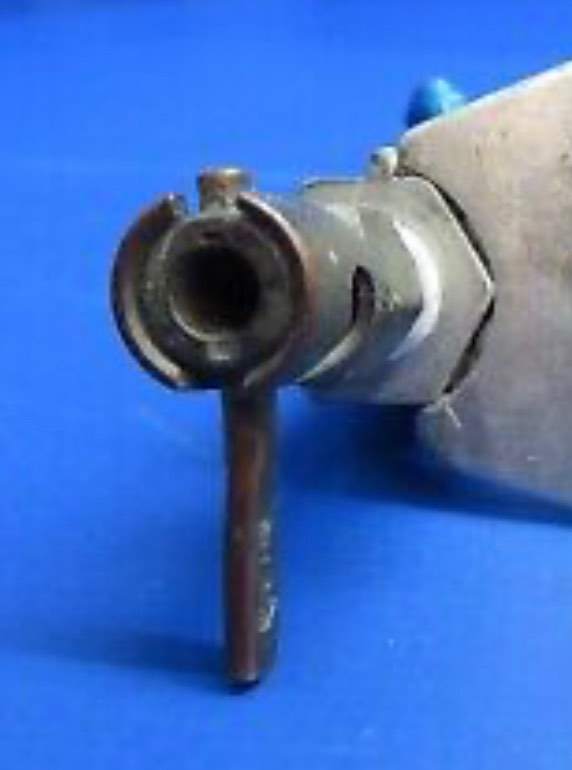
-
Intermittent Rough Engine / High EGT need help diagnosing
Shadrach replied to 33UM20C's topic in Engine Monitor Discussion
1151° Is on the low side but not alarmingly. It’s likely still less than 300° ROP. It would not concern me until I had a reason to believe it was a symptom of a problem. -
The question is do they inhibit hemoglobin function by volume of blood. I don’t know the answer to that question. Iterestingly, not only do they inhibit clotting, buy some work to eliminate existing clots. Years ago I had a DVT in my left calf in an area where I had suffered severe trauma to my leg many years before. A short term regimen of Rivaroxaban (Xarelto) eliminated the DVT well inside of three months. The majority of the previously mentioned injury was actually caused by blood thinners being used as a prophylactic to prevent clotting around a possible damaged section of artery after a severe knee dislocation. As it turned out the artery was fine. However the blood thinners prevented the soft tissue damage around my knee from coagulating and it continued bleeding out into my leg. I developed compartment syndrome and the only way to save my leg was to perform a four compartment fasciotomy (Google it if you have a strong stomach). Way more trauma than the original knee injury, and likely cause of the DVT many years later. My AME and the FAA were surprisingly easy to deal with regarding the DVT.
-
I’ve been told that the J cowl is superior in terms of drag and cooling efficiency. I believe that both of those statements are true. However, efficiency equals better cooling per volume of air, it doesn’t necessarily mean better cooling in general. Speaking hypothetically, if the old guppy mouth ingests 400% more air but is only 50% as efficient, it still offers more cooling capacity. This may be especially relevant during low speed and high angle of attack operations. it would be good to hear from anyone that has significant time in both vintage and modern Mooneys or has gone from a vintage guppy mouth to an updated J style cowl. I have some J time but certainly not enough to make a meaningful comparison. I can only say that cooling is not much of a concern with a stock vintage cowl…save for maybe a sustained climb at Vx on a hot summer day.
-
Just sorry he was in a Mooney
Shadrach replied to Brandt's topic in Mooney Safety & Accident Discussion
I get that it’s a sore subject. I’ve members of my family that are no longer insurable and some that will be in that category inside of 15 years. However, I am 99.9% sure that underwriting decision are not influenced by forum posts. -
Just sorry he was in a Mooney
Shadrach replied to Brandt's topic in Mooney Safety & Accident Discussion
I see that daily. There must be a lot of day drinkers our during the week…or…perhaps they are driving a smartphone at the same time. -
All it takes is a leaky fuel cap. I’ve never been to Rouen, but given its location, I’m assuming that the last several months have been rainy. He M20J has 1.28 gals of unusable fuel per tank. In order to ingest water into the fuel system, with the airplane stationary on the ground, the water content would have to exceed unusable fuel. So, if you drained 1/8th of a gallon from a tank, that means that quite a bit was pumped through the fuel system.
-
So I’ve been told. Regardless of theory, in reality my bird runs very cool.
-
We have similar views. F’s are versatile planes. They can be made better but not by taking away the 2 best traits they have going for them. Simple, robust, systems and good load hauling,
-
Intermittent Rough Engine / High EGT need help diagnosing
Shadrach replied to 33UM20C's topic in Engine Monitor Discussion
Some of my my EGTs get into the 1600s when running on a single ignition source. I would expect slightly higher base line EGTs compared to an angle valve due to the lower (8.5:1) compression ratio. -
Intermittent Rough Engine / High EGT need help diagnosing
Shadrach replied to 33UM20C's topic in Engine Monitor Discussion
The plane lives at HGR. I live north in North Frederick county off rt26. My father in law keeps a red Decathlon at FDK. It flies frequently, occasionally by me. I’d love to see your bird sometime. -
Fair enough, I’m glad you didn’t throw it away. Unless something has dramatically changed in what’s acceptable for exhaust overhaul, that’s a perfectly good core.
-
It’s not, but that tube is easily replaced at overhaul.
-
I’m interested in how that exhaust came to be in its current condition. Did someone take a cutting wheel to it?
-
Intermittent Rough Engine / High EGT need help diagnosing
Shadrach replied to 33UM20C's topic in Engine Monitor Discussion
@33UM20C I’m in your neck of the woods. We should meet up sometime. Too bad you didn’t do an in-flight mag check. I would bet dollars to donuts that you would see EGTs even out but read high on one mag and be running rough (three cylinders) on the other. Verifying the ignition system is working properly is low hanging fruit. It is the first place to start. -
Intermittent Rough Engine / High EGT need help diagnosing
Shadrach replied to 33UM20C's topic in Engine Monitor Discussion
Really unlikely (as in likely not possible) that an intake leak is causing an EGT to flirt with 1700°. -
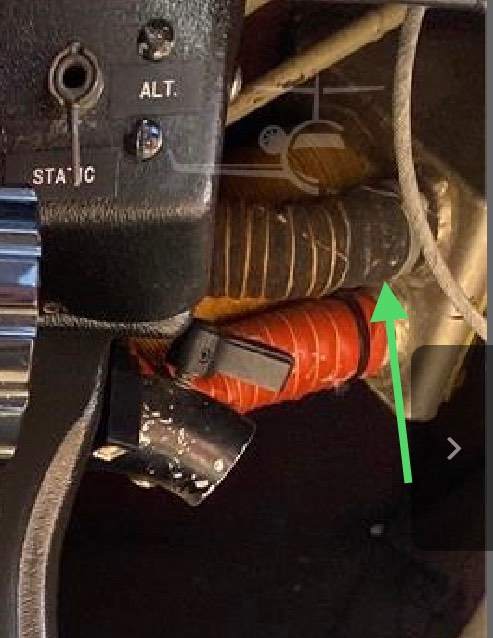
That’s a nice looking plane with some desirable mods. Looks like it’s out of annual since November. It’s weird in that it looks like it’s been well taken care of but no one bothered to replace what looks to be the original CAT tubing going to the defrost. I can tell as much from the condition of the tube as from the yellowish white zip tie that it is likely original. It’s a travesty that was not replaced with SCAT before the 201 windshield was installed. I’d be curious to see the back side of the panel
-
Intermittent Rough Engine / High EGT need help diagnosing
Shadrach replied to 33UM20C's topic in Engine Monitor Discussion
Seems most likely Ignition related. No way an O360 would generate EGTs in the high 1600s from mixture. -
My list of things to fix and fabricate is already longer than I’m expected to live…
-
Perhaps the reason my climb numbers seem skewed compared to others is the guppy mouth cowl intake. While less than attractive, I really don’t have to think about CHTs much except for in the hottest part of the summer or in winter when I try to keep them from falling much below 300°. This means I can climb at almost any angle I want within reason. It would be a rare set of circumstances where any 172 is able to outclimb me in angle or rate. Our main runway is 7000’ long and at mid weight it’s not a huge challenge to be at pattern altitude before reaching the end. An E model will do even better. A few years ago I remember a thread where everyone was talking about how badly Mooney‘s climb in the landing configuration (Full flaps and gear down). I decided to test to see if this was true. What I found was that the airplane climbed just fine with full flaps in the gear down (1000fpm) but I had to be willing to fly at ~80MIAS. The deck angle was very shallow. It was sort of like being in an elevator.
-
I have. None really come close to the units I was using. They either have a good platform but no ratchet or the have a ratchet but a lousy platform. They were made by PZL, the manufacturer of the Wilga as well as other aircraft.
-
Same system of actuation but a steel tripod base. Plenty beefy but not as beefy as the one pictured. No maintenance other than occasional grease. Do you know where they can be procured?