

takair
-
Posts
3,090 -
Joined
-
Last visited
-
Days Won
2
Content Type
Profiles
Forums
Blogs
Gallery
Downloads
Events
Store
Everything posted by takair
-
The servos(I’ll have to check part numbers), an alt hold can which I have, and brackets for the servos. They can likely be fabricated. Oh and lots of tubing.
-
One other thought, I know you replaced baffle seals, but be sure that the lower forward seals to the cowl are good. There are often big leaks around the starter and alternator. These leaks could have an impact on oil cooler flow even more than the cylinders. These are harder to see if you have a cowl closure, but would still be a leak…. What are your cylinder temps? I would expect an F to be under 350.
-
Good thought…..maybe do 1/4 at a time using aluminum tape just to be sure you don’t overshoot. I’ve done that when really cold….
-
Is this the stock oil temp location? Do you still have the original gauge and does it match the digital? Do you have the little metal shield between the exhaust and the cooler lines? I have seen between 170 and 220 over the years. 170 on coooold days. 220 on hot days, down low with higher power. It runs a nominal 180. At one point I sealed the top and bottom of the oil cooler to keep air from spilling passed. That seemed to help on the hot days.
-
One option is to add a Brittain dynertial and altitude hold. It is a bit of a scavenger hunt, but can be done. The STC can still be acquired. I added it to my plane a few years ago and am happy with it. I recently picked up a number of partial systems (less Mooney servos) that I will go through to insure operation and offer for sale. The holy grail is the servos, which are somewhat uniquely sized and are hard to come by.
-
The newer ailerons have a double tapered trailing edge. They are near symmetrical. The old ones have an under camber. I thought Fs had the new version. Maybe I’m looking at your picture wrong, do you have more of the ailerons? Alternately, take a look at some other F pictures….some in the classified area show the newer ailerons. The old ailerons actually match the flap profile, the new ones have a different shape. This might lead someone to put on early model ailerons. Not sure what the impact would be on speed, but might be worth a little. Certainly lower control lol on the new one.
-
Worked with Mr K at GAC for a number of years, I’m now at a rotary wing OEM. He and I were also hangar neighbors at KSAV before he moved to the air park. Mr M was my boss for a time. It is interesting, you have old style ailerons. I don’t recall when they changed, but I thought F models had the new style. Note that yours are under cambered. They have higher control force and Were changed when Brittain wing levelers were installed…. You might check the log book and IPC to see if those were swapped out and someone accidentally put the old style on. That might affect rigging on an F. Maybe someone with an F can comment.
-
Ronnie I have found that the poor man way of checking aileron rigging gets you pretty close to the boards. Simply check the aileron weights are streamlined and then check that the flaps are aligned with the ailerons. This should set zero just the same as the boards. Elevator takes more work and math, but I’ve done it in a pinch. (I’ve double checked with boards). On some models, like my early E, there was only one up stop on the outboard end of the flaps. Over time, they develop a slight twist, so the inboard side ends up with some reflex. I can’t recall when they added an inboard stop. Rudder rigging to ball centered can be worth a couple of knots. My E has a trim tab that gets bent. Surprisingly sensitive and notable if it gets bumped. Can’t tell, do you have retractable step or fixed aerodynamic step. The retractable step is draggy when down. It also causes out of trim rudder. That combination can be worth 3 knots. The fixed step is smaller and less draggy and only worth about 1 knot. If you want to talk, Kleen knows how to get ahold of me. You are on the right track. All of the details do add up and can get even an old Mooney close the the optimistic book speeds. Pitot leak….did your plane ever have a Brittain Alt hold? If so, they have an intentional calibrated leak built in. Many are unaware and will troubleshoot for hours. If not, disregard.
-
I am talking about him. Great guy!. Also know Mr Mock, but haven’t spoken in some time.
-
I wouldn’t expect that droop in the gear to cause that much speed drop. Maybe 5 kts…. I was looking at your flight aware tracks and looked at a couple of out and back flights….so I would expect similar headwind vs tailwind. On two of the longer flights, I rough calculated an average of about 134 kts. That does not account for crosswind component, so not perfect science. Also have no idea your power setting. If 65%…that may not be awful….better than the 126 that is being displayed. Might be worth a look at those flights to see if you recall the indicated and TAS. It does sound like it could be indication. Do you have alternate static? Might pop that open and see if airspeed changes. As others said, you can also do the GPS cross check or “formation” with a buddy who has relatively good readings. I see you are at Eagle Neck. Great place….have a good friend there….building a rocket and has an RV…you may know him.
-
They used to use felt, but well cut and placed baffle seal material will work (pop riveted). It is not so much that you are not getting air to number 4, it is more the fact that the leaks apply pressure to the lower deck of the compartment, so basically it acts to equalize pressure between the top and bottom of the engine and thus reduces flow through the cylinders. Can’t guarantee that it will be the fix, but I would hope you get measurable improvement. The C models run hotter than E, so you won’t see low 300s, but would be good to stay under 400 as much as possible.
-
Seems like a few opportunities there with the light… Also, left, forward, lower flex seal is out of the slot. May not be an issue, unless it somehow flops the wrong way.
-
Thanks Cliffy, do you know if they still do it? My recollection was that it was almost half price for the same quality.. I did a couple of mine that way a few years ago. They will also make throttle with the cut outs for the gear switch.
-
Not sure if it was mentioned in the thread….but…IIRC….the price of the PMA cable is much more than the “owner” produced cable where you simply fill out the form to match what is in the aircraft currently. The cables are essentially identical, but they are building to your specs vs theirs… I suppose that limits their liability and also likely reduces paperwork burden. Give them a call about having a custom cable made….and I think the price might be more appealing. They make good stuff…
-
For a Lycoming I would be suspicious of numbers drifting below 70. #3 definitely requires attention, but 1 and 2 are getting there too. What kind of airplane? How are you measuring full power? Even engines with worn cam lobes are hard to measure until a high DA takeoff doesn’t yield good results….which leads to the next thought….if pitting is seen in the cylinder, then the cam deserves a look when the jug comes off…. This engine might be talking to you…
-

Do you have an Accu-Flite installed in your Mooney?
takair replied to Echo's topic in Vintage Mooneys (pre-J models)
I used adel clamps to the tube. -
Do you have an Accu-Flite installed in your Mooney?
takair replied to Echo's topic in Vintage Mooneys (pre-J models)
Mine hangs from the tubes just above the pilots right leg, above the gear cove. I have a 64, so that is open. It made it very convenient for alignment. -
I think it would start to look more like a M22. I suspect it would have been a game changer had they put a PT6 in it. In my lottery dreams I would pick one of the remaining ones up and do just that. Of course, in my lottery dreams I’d also buy a TBM. I don’t see it as practical to modify even an Acclaim to be pressurized. Turbine, maybe….
-
Generally the storm window sucks, it’s why it will stay close with the little latch open. That said, I guess your point is that it may draw in more CO! Good thought. I guess I would close the heat and open the overhead vents and blow that in my face.
-
M20F Gear Indication Issue
takair replied to CanadianMooniac's topic in Vintage Mooneys (pre-J models)
I would get it on jacks and have the rigging checked with the belly panels removed. There are a few threads around here on what can go wrong. One thing that might cause this is the pushrod bending under compression. This can potentially result in gear collapse. -
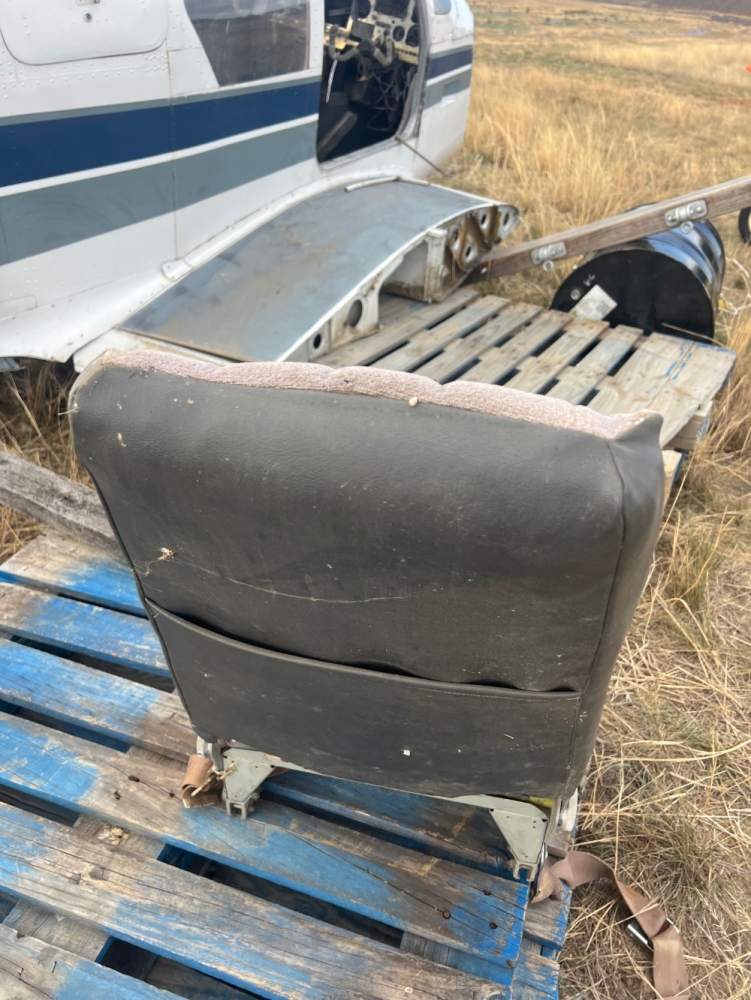
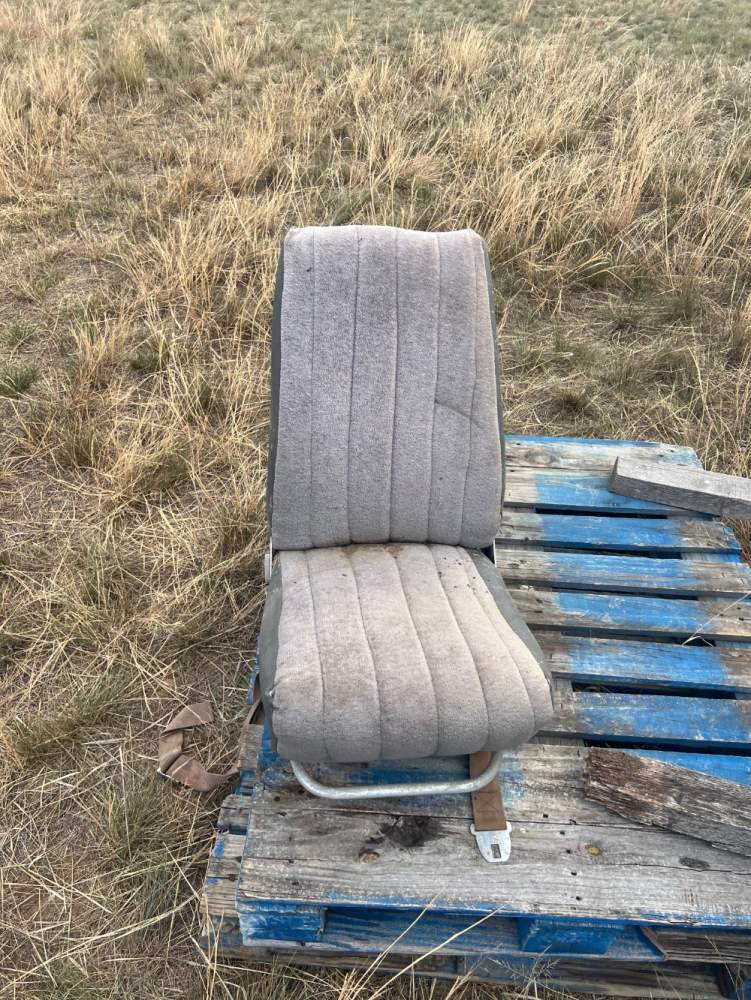
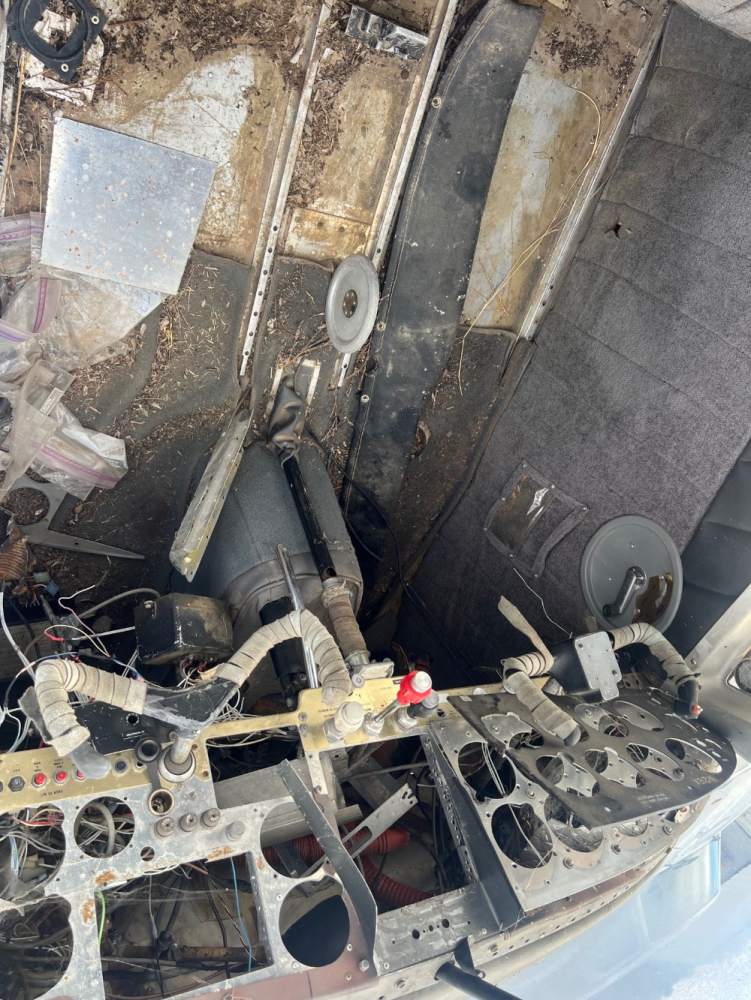
Have a 63 m20c that I’m scrapping/play forting
takair replied to saltydecimator's topic in General Mooney Talk
There are two common locations to remove the tail, so no cutting required. The entire tail comes off with only a few bolts . You will see some covers just below the front edge of the tail. That would also give you nice mounting points and may save the tail in case you find a buyer later for another airplane.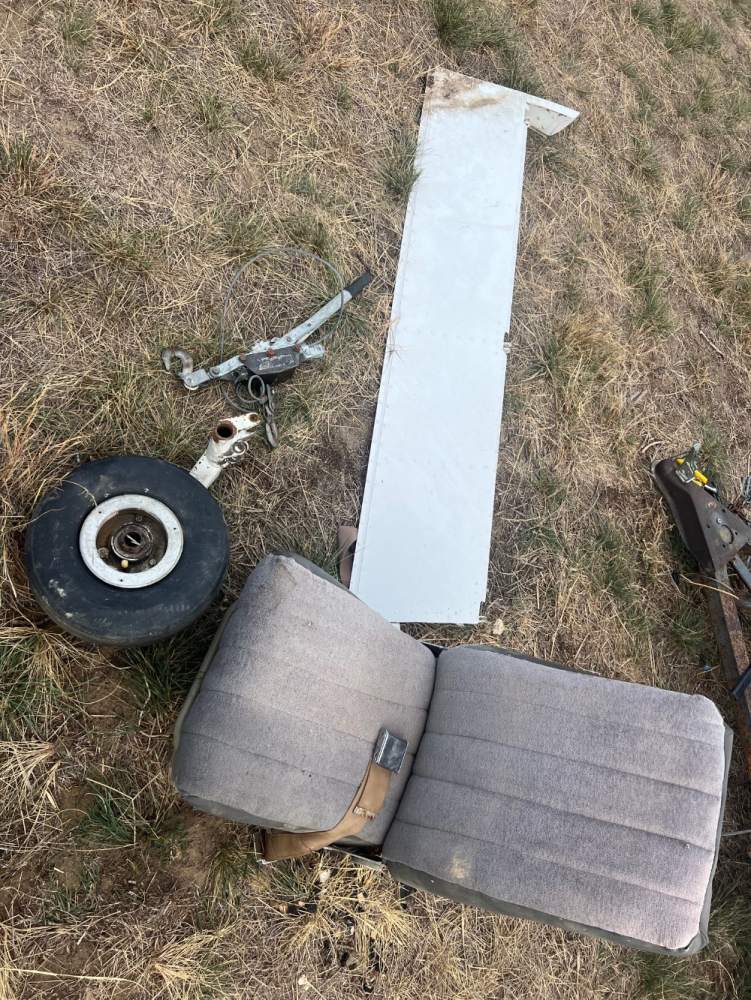

-
I misunderstood the question. The actuator theoretically handle over 60 lbs, but the pullley system reduces this to about half. A bunch of that is to overcome friction, so I would keep any additional spring force light….under 2lbs…at top of travel. LASAR used to sell the OEM spring pretty cheap and I have a different type available.
-
As I recall, on the Ovation, the number two battery is trickle charged. I wonder if this might not be enough to run the Surefly in flight AND keep the battery charged.
-
It is very light, almost too light. I don’t have my data here but I recall it is under 2lbs. It just assists gravity, assuming a clean shaft. I sell a coil spring for the old crank systems when converting to electric, it has a little more pull.
-
Pm sent