

jamesm
-
Posts
892 -
Joined
-
Last visited
Content Type
Profiles
Forums
Blogs
Gallery
Downloads
Events
Store
Everything posted by jamesm
-
C models with fuel flow instrument installed ?
jamesm replied to Lionudakis's topic in Vintage Mooneys (pre-J models)
Here is installation of an Insight G3 fuel flow transducer in a '67 M20C with a Lycoming O-360A1D wide deck engine. http://mooneyspace.com/gallery/album/13736-/ -
-
-
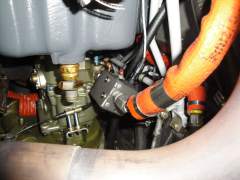
From the album: installations
-

From the album: installations
-
C models with fuel flow instrument installed ?
jamesm replied to Lionudakis's topic in Vintage Mooneys (pre-J models)
I have installed an Insight G3 in my '67 M20C with fuel flow transducer. The hardest problem I had was getting / finding the correct AN straight male nipple pipe fitting between Carburetor and fuel flow transducer. The part number had changed and I am sorry I can't what it is off the top of my head. I think I went with stainless if my memory serves me correctly. I didn't have to shorten the fuel line and I didn't remove the angle fitting from the fuel line either. I don't know how or where you would mount fuel transducer other wise. I upgraded to the new software (2.46) If it is new you probably won't have to about software update. When I flew it the other day @ 2500' fuel flow seem pretty close (less than a gph) to the POH. The version of software that I had previously the fuel flow was way off. I did call Insight about fire sleeve insulation around the fuel flow transducer Because I was told that either JPI or EI required it but Insight said it wasn't necessary that Insight built their own transducers. Also I do believe I did ask Insight about the"no angled fittings" comment but I don't recall them giving me a straight answer other than They knew that their were Mooney's in service with their fuel flow transducer are installed in them . Which of course could mean any thing. Hope this helps James '67 M20C -
Installing a PlanePower Alternator Need help
jamesm replied to JetSet1967's topic in Vintage Mooneys (pre-J models)
I don't understand your comment regarding relation between the new/old field wire and the ammeter. The ammeter is essentially a voltmeter but rather than connecting one end meter to ground you are measuring voltage drop over known /calibrated resistance (aka a shunt) which gives you a voltage deference between the battery output and the alternator output in normal conditions would be relative a small voltage. So on ammeter gauge it is labeled amps because of Ohm's law I=V/R (R= known resistance or shunt). According to the schematic that I am looking at, that is what I see. I can't say too much about the "old" field wire in your situation without knowing where the other end of the "old" field wire goes or was/ is connected to. I would make darn sure you know where the other end of the "old" field wire(s) go like ohm it out (continuity check) or remove it all together would be the best. The field circuit of the alternator is important part of the electrical charging system and you want to make sure it is functioning properly. Because you sure is heck don't want to have in-flight electrical fire and have no way shutting off alternator output and / or isolating the electrical system if by chance alternator overvoltages and /or smoke in the cockpit or some other malfunction occurs. But in I my particular case, the field wire comes from the Alternator goes through one set of the contacts of the mater switch (DPST) to the Zeftronics voltage regulator while the other set contacts on the Master switch provides ground for the power relay. So what "type" of voltage regulator you have determines how / where the field wire(s) are connected up. Enough of my ranting about the importance of field circuit on the alternator/generator. James '67M20C -
Installing a PlanePower Alternator Need help
jamesm replied to JetSet1967's topic in Vintage Mooneys (pre-J models)
What is year is your M20C ? I have a '67 M20C which has a plane power alternator installed. I did this conversion several years ago. This was done a few months before Plane Power had come out with their generator to alternator kit . I used a Zeftronics voltage regulator for my Alternator installation. I didn't have to touch the Ammeter wiring for 6 pack engine instrument cluster gauges, The ammeter it is still in the circuit. However I did wind-up replacing all the wires in the field circuit since they were the original wires and very frail at terminal end(s). The original fat "BAT" and "GEN" wire(s) that went to the generator voltage regulator terminal(s) on the firewall . I mounted a inline RF filter (Mooney P/N 880014-501) used on later model (1968ish ) Mooney's that had the Prestolite Alternator installation. So one end of the RF filter has the "BAT wire and the other end of the filter has the old "GEN" wire. My Alternator voltage regulator is now mounted inside the cabin just off front passenger left knee behind plastic interior cover. Hope this helps, James '67M20C -
Six pack gauge cluster install
jamesm replied to Sabremech's topic in Vintage Mooneys (pre-J models)
I installed a Insight G3 inplace of the single Alcor EGT it is hard to see from the pilot seat from the original EGT location. Are you moving the Engine six pack ? or are you keeping it below the MP/FP gauge? James '67C -
Don't rule out the ignition circuit breaker either I had an intermittent circuit breaker took me a little while to find. :-( The Garwin SOS (p/n 31-324) broke so I but replaced with Bendix SOS (p/n 10-176487-121) that I bought from aircraft spruce and yeah i the was expensive for the components inside of it. i think it was $200 to $300 about 5 years ago.
-
Hartzell Top Prop Spinner Break up
jamesm replied to JetSet1967's topic in Vintage Mooneys (pre-J models)
You guys do realize there is a what Hartzell calls an Alert Service Bulletin for this very issue Some where in this web site someone (sorry don't recall who) brought it to my attention and I appreciate them sharing the information, advice and wisdom. http://www.hartzellp...pport.php?id=80 HC-ASB-61-332 Full Document Dec 13, 2011 Propeller - Spinner Assembly 835-54(P) installed on Mooney M20( ) aircraft under Hartzell STC SA02414CH-D, 1 The details are in the ASB but to briefly summarize you cut the part/serial number section out of metal spinner dome assembly sent it to Hartzell. You get 3 types of finishes to chose from ( I think it is white ,Sliver it isn't really silver looking more of dull gray, unfinished) and they send you new composite spinner at no charge but I don't know if this offer still valid. I did my spinner dome back in February / March 2012 but just recently got the airplane flying again since I was doing other stuff to it. You have to modify metal adapter ring assembly by adding 2 nutplates on each side. these nutplates hold/support the new composite filer plates. I have about 12 hrs on it now no complaints on the installation. The spinner dome sticks out further than metal spinner dome and the composite weight is a wash if I recall correctly however the new scimitar prop is about 4 lbs heavier. James '67C -
M20C Questions from a Potential Buyer
jamesm replied to cfipilot80's topic in Vintage Mooneys (pre-J models)
In my'67 M20C I had added the micro/head phone jacks for the rear seat passengers in the same location where the ash tray use to be. My manual gear it has both "gear unlock" and "down lock" lights and horn. To intentionally land a Mooney with gear up you really really have to work at it (yes it can be done ) but you will have excess speed in the pattern it will be really hard to slow down the Mooney with gear up. Good luck your search. James -
How often doyou open the cowling between annuals ?
jamesm replied to OR75's topic in General Mooney Talk
Like a snowflakes all being different ( so they say). I can never change my oil same way every time doesn't seem to matter which technique I use. I am jealous of those you that can change oil and oil filter without spilling a drop. I tried similar technique using a piece of angle iron ( in my case it was aluminum ) for the oil filter I haven't perfected that technique yet. -
M20C Questions from a Potential Buyer
jamesm replied to cfipilot80's topic in Vintage Mooneys (pre-J models)
I have a '67 M20C and range isn't a problem, given the 2 hrs that you have mentioned above. I am low balling my range at 4 hrs of range but I probably have really more like 5 hrs or so, especially if I lean the mixture back. I am probably one of the slower C's out there but file for about 130 mph for cruise ( with mixture not leaned back). I recently had my ASI re-calibrated it was slow in my cruise range. I haven't checked out yet. I may be going on limb with my statement/opinion but I am sure that the other Mooney owners/pilots out there would probably agree with me, but as far aircraft payload per horsepower and if you add in a good cruise speed not to mention the fuel economy. Mooney really got one of best out there. My payload is roughly 600lbs plus ( I am low balling my payload it probably more like 630 lbs. or so ) and has pretty good weight / Moment CG envelope. My Dad was roughly 5'8" sort of short legged I don't recall it the seat positioning being a problem for him. I am some where around 5'10" to 6' fatty (about 195lbs plus and unfortunately I am not low balling my weight :-( ) and not excessive long legs but don't have to much problems with the seat positioning. I can get in the backseat and have been backseat not the most comfortable but do able. I think there are Pedal extensions out there should you need them. Somebody like LASAR ( Lake Areo Style And Repair) and many others out there are very helpful and knowledgeable would know more. Mooney's are slippery so you don't want to point the nose at the runway if you want to slow down for the approach. My "magic number" or approach speed is about 80 mph on final. Stating the obvious: Too much speed you will float. Hope this helps. James -
Has anyone actually block out the GPS antenna on the D1 to see how the ADI portion functions with no GPS reference once the ADI is initialize ? I realize the D1 may need the GPS to initialize the ADI but after initialization is done. I am curious to see how well it preforms. I would expect to lose Heading,Altitude,Airspeed. Thanks, James M. '67C
-
Did you have to modify the new thorttle for the micro switches used for sensing throttle position?
-
Firewall forward recommendations while engine out
jamesm replied to Shadow722's topic in General Mooney Talk
Depending on you engine mount paint condition you might want to consider having your mount powder coated. if you use light color it is easier the cracks. -
If you go to Zefttonics web site http://www.zeftronics.com/ and have the right web browser and virtual machine combination. They have an excellent troubleshooting guide and give specification for resistance(s). Make sure the resistance falls with the Specification that Zeftronics calls out for the generator control unit (GCU), if you are going go with Zeftronics . I had to send back a rebuilt generator because the generator resistance were out of tolerance for the GCU to work correctly. The GCU does have a terminal bus bar for the connection no cannon type plug between the GCU and your generator. You might want to consider plane power alternator conversion you save about 8 to 9 pounds on the front of your engine and your batterey will charge at a lower RPM. http://www.plane-power.com. I went the expensive route prior to Plane Power's conversion kit. I had to replace the starter support assembly (aka Ring gear) since the alternator belt is narrower and the belt pulley diameter are different. I put in the Plane power alternator with Zeftronics voltage regulator since Plane Power's Voltage regulator wasn't available at the time I did my switch to alternator. So far no trouble. Hope this helps. James '67M20C
-
Thanks for sharing. Wish the both of you well , may you have a safe and happy flying adventure.
-
painting the engine mount, polishing the firewall.
jamesm replied to jetdriven's topic in General Mooney Talk
I had my engine mount powder coated on my '67 M20C it looks nice. I used light color so cracks could be seen easier at least in theory. -
Question #1. How do I have the transponder checked to make sure it is operating properly? The method I use depends your surrounding airspace, but (Hopefully ATC isn't listening :-O) I will transition through a class D aka ATA which has radar capabilities they will let you know if your altimeter is not in agreement there altitude reading. I believe most Altitude encoders use Grey code method to transmit your altitude back down to the ground. What this means is should one of the data lines becomes open or shorted your Altitude is going to magnitude off . So hypothetically speaking if you were to transition an airspace at say 2000 ft and your encoder has a shorted data line ATC would see something like 6800ft. So it like having a form of error checking. other wise how would really know what your Altitude is reporting. To do a complete check out Altimeter / encoder system you would need lot$ of money for exp$ive test equipment which has to be calibrated frequently. Question #2. What shop does one recommend if the transponder needs to be removed for service? I have use Avionics Unlimited in Texas So far really happy with there service but I waiting for the finial check once the plane gets back together. I heard great things about Avionics Unlimited from other Mooney people. Question #3. I have a Master Switch and a Radio Master switch. Different points of view (POV) on this. POV 1.) by adding or by having avionics master switch there is a now a single point of failure in your avionics bus circuit so should the avionics master fail so now all your avionics are INOP. Yes someone could add backup method to help alleviate this problem but you are more than likely going to add weight and complexities to the Avionics circuit. POV. 2.) you can turn on/off your avionics from switch. I am not sure why this good Idea but someone thought it was good. However by doing this and leaving the avionics turned on you now have large on rush current which can be sometimes detrimental to the avionics. May be it looks cool by having one switch I don't know what the real reason is. This is my 2 cents. James '67M20C
-
p { margin-bottom: 0.08in; } Playing devil's advocate.... Many of posts have been based on the assumption you can still pass the 3rd class physical and you would buy new as pose to used or perhaps could go the E-LSA route which be a little cheaper. I don't know about you all, but I can not justify my flying expense(s) but I don't try to either. Beside the great and friendly people in aviation with stories to share and the wisdom and experience they provide. My passion for aviation and the freedom that it provides is what keeps me pursuing my passion for the flying dream. I prefer not to think of time where I can no longer fly whether be too cost prohibitive or regulation bounding or lack of fuel availability or some misuse federal authority to revoke license (s) or misinterpret the spirit of the law or some physical condition or physical ailment that could take the flying dream all away. :-( Just a different prospective.
-
Big bad shimmy on nose gear after landing
jamesm replied to Patterman's topic in Vintage Mooneys (pre-J models)
It is possible the tire is out balance. When I had shimmy nose wheel on take off usually when I felt it is most, I replaced the nose tube and tire that solve my problem. Check the nose wheel bearing. It could be nose gear steering bushing . Hope this helps, James '67 M20C -
prop sag--new mounts or shim existing mounts?
jamesm replied to rbridges's topic in General Mooney Talk
One more thing.... Should you decide to replace your engine mount/mounting hardware and if you have a O-360 A1D wide deck engine like mine make Darn sure that the engine mount nut are 5/8" wrench size and NOT 11/16" wrench size I am told that they come both wrench sizes for the same part number. I found out the hard way and had 11/16" wrench size nuts and I doubt that I would have been able to pull the bolts with larger engine mounting nuts. fortunately I had the engine off for other reasons though it was still a real stinker to the nuts off even with the engine off the airplane. Lycoming engine case have litte wells / depression (well is what I call them) where the engine mount nuts are located it can be a real bastard to get a wrench on the engine mounting nuts in the first place and the larger wrench size makes thougher. Not metion that these are nuts that hold the engine to the engine mount. I had to grind / make harbor frieght wrench to fit into engine case to get to the engine mounting nuts. James M. '67 M20C -
prop sag--new mounts or shim existing mounts?
jamesm replied to rbridges's topic in General Mooney Talk
p { margin-bottom: 0.08in; } Well .... I am going to take the opposite side of what most others are saying. I have a 67 M20C that has same symptoms of what you have described. Since the Lord mounts, rubber gives and metal shims don't typically the engine vibration(s) and could cause problems prop balance and I would think that the engine baffles are more pron to cracking if the engine was shimmed whereas rubber gives. In my case the engine was shimmed prior to the cowl enclosure installation. I wound up paying for the engine being shimmed later. The cowl enclosure had been rubbing from the spinner on lower right side of the cowl enclosure. About ten years ago, My IA and I were able to change the lord (engine) mounts without having to pull the engine and I think we did in about 4 hours. One thought would be to replace the lord mounts this year say and if decide to replace/overhaul the engine in two years just reuse the mounts that you replaced this year. I had to repair the cowl enclosure a couple years ago since I had the engine overhauled otherwise I would have had to buy a new cowl enclosure and start all over with the painting hole drilling and .... which would have been a real pain and time consuming. Nothing is cheap in aviation anymore... :-( James M. -
I had the same problem with my '67C model. What someone told, me especial for the front cylinders where baffles are either real close or touching in my case. If you either put bead RTV bead on the baskside of the baffle facing cylinder cooling fins or you could add a piece of baffle material between backside of baffle and cooling fins. I believe I used RTV glue the baffle material to the backside of the baffle. This way you get a gap beteen baffling and cylinder cooling fins. This method works pretty good. Hope this helps. James '67 M20C