

1980Mooney
-
Posts
3,766 -
Joined
-
Last visited
-
Days Won
7
Content Type
Profiles
Forums
Blogs
Gallery
Downloads
Events
Store
Everything posted by 1980Mooney
-
I bet if the Commercial Pilot/CFI had just told the FAA that "I forgot to put the gear down", that this probably would not have turned into a NTSB Investigation. It probably would have just been a fleeting posting without any detail in the FAA ASIAS (Preliminary Accident and Incident Reports). His identity would remain anonymous. It would be between him and his insurance company. If any of you have searched the FAA "Accident and Incident Report" database you know that the FAA stopped providing any information after December 2019. https://www.asias.faa.gov/apex/f?p=100:12:::::: There are 3,394 Mooney accidents and incidents in the database from January 1, 1978 to December 31, 2019. The last Mooney incident listed is December 30, 2019. https://www.asias.faa.gov/apex/f?p=100:18:::NO::AP_BRIEF_RPT_VAR:20191230019769I There is nothing after that for any brand of GA aircraft. Instead, everyone now knows he screwed up. His name is shown in the Accident Report in the NTSB Docket.
-
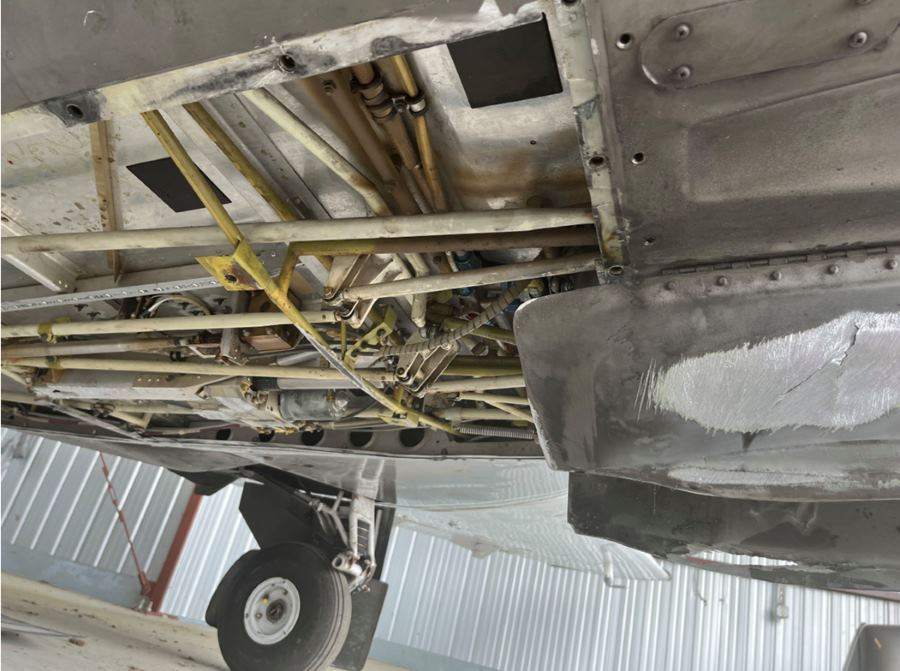
Final is out on N3777, a 1985 M20K. The report shows that it was converted by Rocket Engineering to a Rocket 305 with the TSIO-520. The written Accident Report notes that the plane had just completed Annual after having been idle for a long time. The last shown flight on FlightAware is in April, 2021. On May 3, 2024 the 4,850 hour pilot (75 hours in an M20K) flew the plane for the first time after the Annual as a test flight at Conway Horry, SC (KHYW). On approach to land he told the investigators that he landed "with both the flaps and landing gear extended". "A post-accident examination of the airplane revealed minor damage to the nose landing gear door and no damage to the main landing gear doors. The landing gear was subsequently cycled several times using both normal and emergency methods. No evidence of any pre-impact mechanical malfunctions or failures were noted that would have precluded normal operation of the landing gear system. Based on this information, it is most likely that the pilot landed the airplane with the landing gear still retracted." Probable Cause and Findings The National Transportation Safety Board determines the probable cause(s) of this accident to be: The pilot’s failure to extend the landing gear before landing. Findings Aircraft Gear extension and retract sys - Not used/operated Personnel issues Forgotten action/omission - Pilot https://data.ntsb.gov/carol-repgen/api/Aviation/ReportMain/GenerateNewestReport/194268/pdf The steel frame, lower tubular is nearly ground through. You don't usually see that. He must have landed really hot in order to grind completely through the belly skins.

-
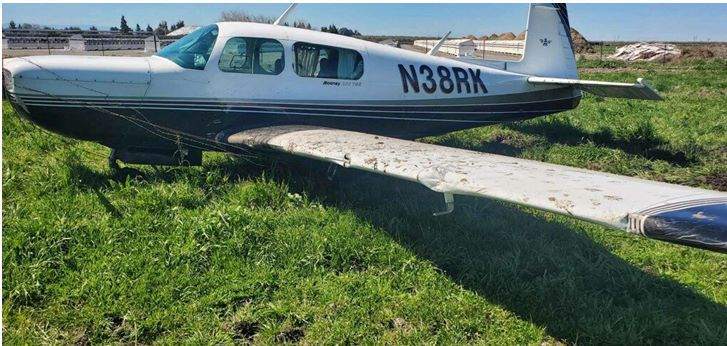
Not much to learn here except that the pilot/long-time owner somehow thought 1/4 tank of fuel in one wing was equal to 20 gallons. In his Accident Report, he told the NTSB that he thought that should have lasted 1.5 hours (his other tank was on Empty and the Low Fuel light was lit). The pilot stated that he is risk averse, and conservative in nature and has never departed with the low fuel light on before but, he surmised, the cheaper fuel at the destination likely influenced his decision to proceed with the flight. https://data.ntsb.gov/carol-repgen/api/Aviation/ReportMain/GenerateNewestReport/193957/pdf Per Final: The pilot reported that he intended to service the airplane with fuel at the destination airport, which had cheaper fuel and was a short distance away. During the preflight inspection he observed that the low fuel indicator was illuminated for one tank, and the panel gauge for the other indicated it was ¼ full, which he estimated would equate to about 20 about gallons. He cross-checked the levels with the airplanes fuel totalizer system, which indicated 20 gallons of fuel remained. While enroute, the pilot noticed the fuel gauge level dropping faster than he anticipated, and a short time later the engine lost all power due to fuel exhaustion. The pilot performed a forced landing onto a dirt road in farmland, after maneuvering the airplane under a power line. The airplane struck fence on roll-out and sustained substantial damage to both wings. The pilot and passenger were not injured. The pilot reported there were no preaccident mechanical failures or malfunctions with the airplane that would have precluded normal operation. The airplanes low fuel indicators illuminate when about 2 ½ gallons of fuel remain in their respective tanks. Each tank holds about 9 gallons of fuel when ¼ full, rather than the 20 gallons the pilot had estimated. The pilot stated that he had mistakenly used the airplanes total fuel capacity of about 76 gallons when making that calculation, rather than half the value that a single tank could hold. He also stated that he may not have properly adjusted the totalizer the last time he serviced the airplane with fuel, hence its reading was not accurate. He stated that because the totalizer and fuel tank gauge readings were similar, due to confirmation bias he concluded that sufficient fuel remained. Landed through a fence and wire:

-
I liked these quotes: On the ground "run ups", the prototypes could reportedly be heard 25 miles (40 km) away. The shock wave was actually powerful enough to knock a man down; an unfortunate crew chief who was inside a nearby C-47 was severely incapacitated during a 30-minute ground run. Coupled with the already considerable noise from the subsonic aspect of the propeller and the T40's dual turbine sections, the aircraft was notorious for inducing severe nausea and headaches among ground crews. In one report, a Republic engineer suffered a seizure after close range exposure to the shock waves emanating from a powered-up XF-84H.
-
Electric gear not fully retracting
1980Mooney replied to Fred Rhodes's topic in Modern Mooney Discussion
That is a Dukes actuator on the '77 M20J - right? If it is more than just the motor then Don Maxwell or Lasar AD 75-23-04: SB M20-190 | Mysite (donmaxwell.com) -
To intercool or not to intercool?
1980Mooney replied to T. Peterson's topic in Modern Mooney Discussion
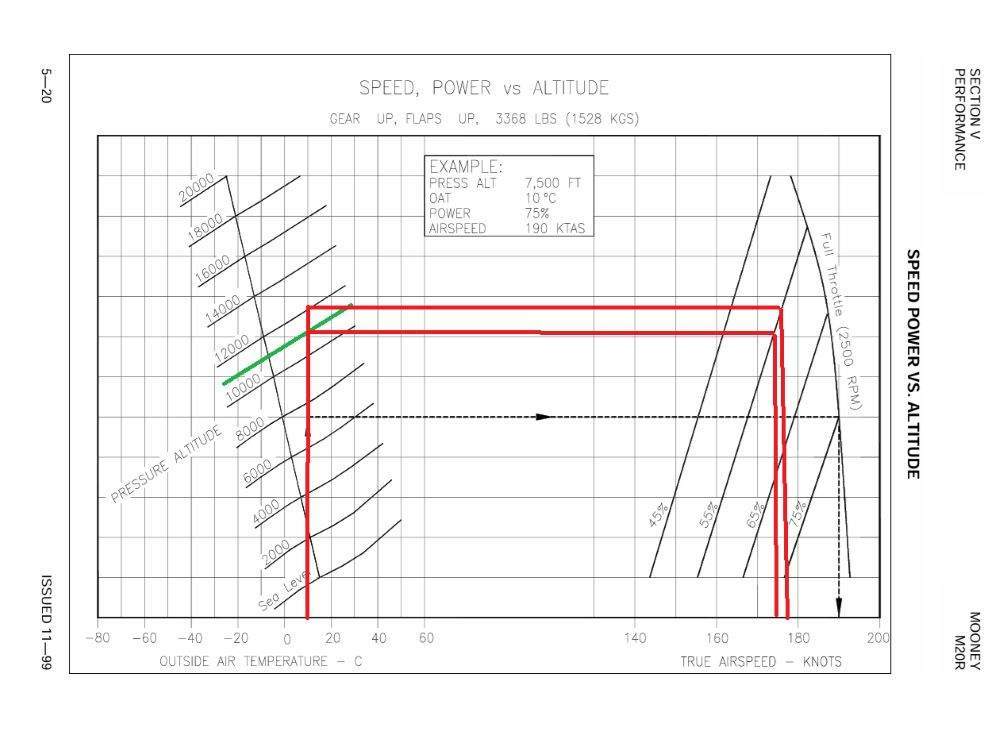
As @A64Pilot points out the turbo and intercooler increase charge density. The intercooler has the added benefit of reducing charge temperature which helps control engine temperature, TIT and detonation. But as he also points out more charge means more fuel. And while more charge density will produce more HP and will deliver a higher critical altitude, the OP wants only to fly at 11-12,000 ft. And he wants a bit more speed (165 kn) while burning a bit less fuel (12.0 gph). I am not sure that the added weight, cost and complexity of the intercoolers alone will actually deliver higher engine efficiency at 11,000 - 12,000 ft. (he is getting an overhaul, discussing LOP which may in themselves deliver the efficiency - he won't be able to tell the effect of the intercooler on fuel consumption). This might be a case of the wrong plane for the owner's primary mission. @T. Peterson previously posted that an exchange engine from Western Skyways was $55,000. When you add in shipping, engine mount possible repair, mounts, accessories not included in O/H like fuel pump, new fuel lines, prop O/H, installation, maybe tax plus the cost of intercooler kit and install plus cutting lower cowl and paint, I bet that you will be close to $100,000. You might be better served to sell your plane as is, take the proceeds and that additional $100,000 and buy an Ovation. The Ovation will meet and exceed your requirements with greater simplicity and likely lower maintenance costs. And you will get more space. The original Ovation is perfect for what you want. The Ovation2 is better. Original Ovation Ovation2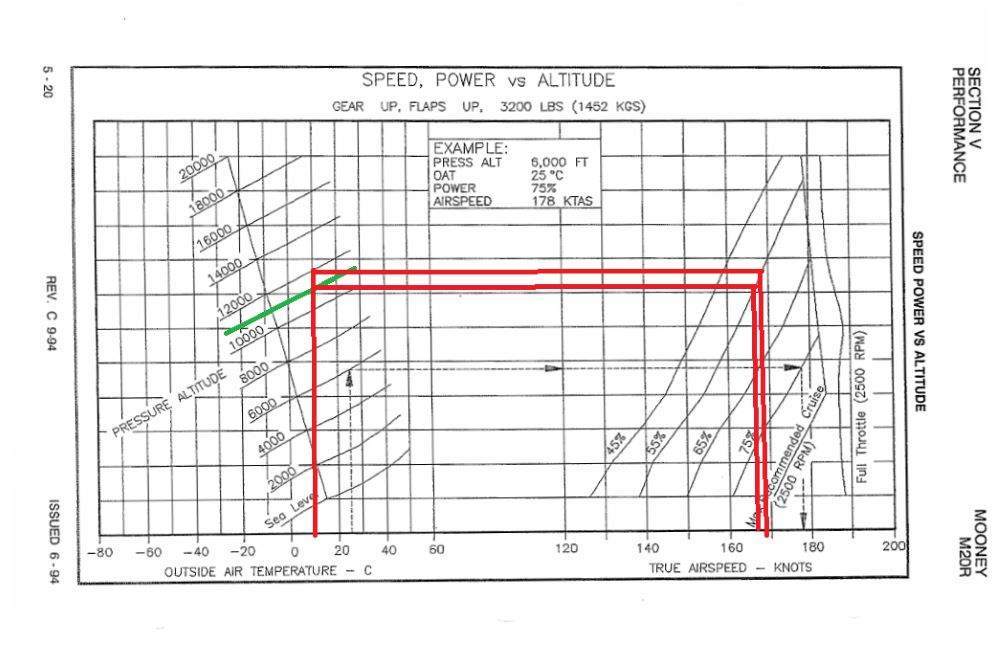
-
I suspect that there is damage to the belly. You just need to look more closely. That looks like the typical damage when landing a Mooney fully gear up. If the nose gear linkage breaks due to a massive porpoise then the bottom of the cowl is scraped and the propellor much more bent. And it would not be sitting on its nose gear. I know someone who landed his J fully gear up twice. If you do it with half flaps and land level and straight it tears up the prop, nose gear door, the belly and usually rides on the flap hinges. And usually the step snaps off or is ground down. If it is with full flaps, then the flaps are usually damaged. In most Mooney cases, when they lift the plane, the gear can be lowered normally. The stories of "gear collapsed on touchdown" are usually BS for Mooneys - they are more common for Cessna, Beech and Piper. Look at these Underwriters Salvage Company - N201JW - 1976 Mooney M20J Underwriters Salvage Company - N201BH - 1976 Mooney M20J Here is one where the nose gear linkage broke.
-
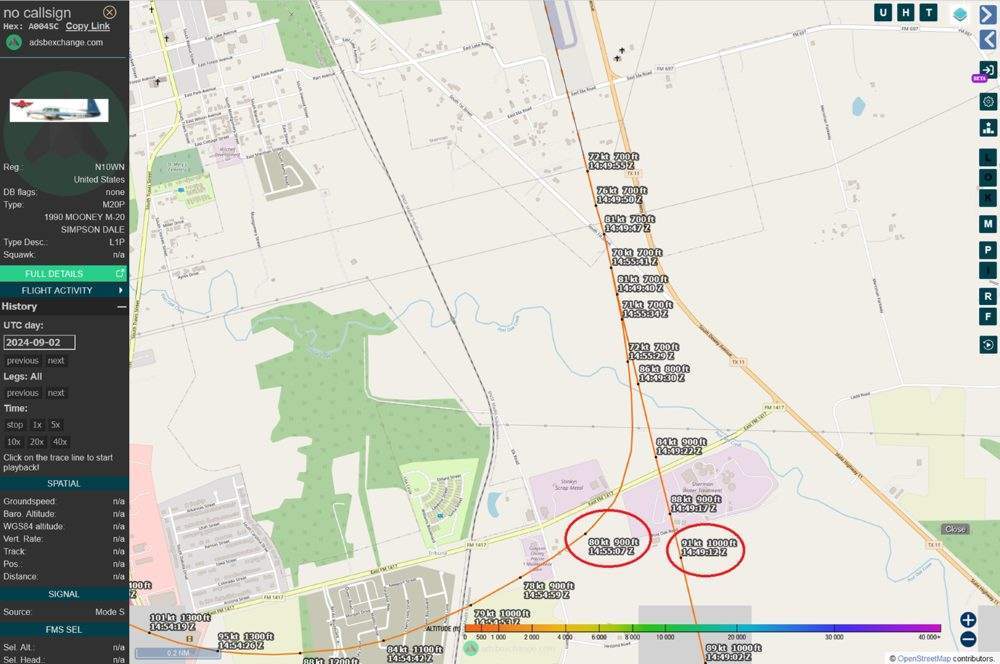
It is not just a prop strike. It is a classic gear-up landing while conducting "touch and goes". N10WN, a 1990 M20J, registered to a long time owner. Yes it is a later model, Serial No. 24-3203, sold as a MSE. His first touch and go was a straight in approach. If you look at his second pass (when he geared up) he was slower than the first pass. He must have thought his gear were down (and slowing him down). There is no way for one landing gear to collapse independently of the others without breaking or bending the tubular rod linkages and/or tearing apart the turnbuckles. It would be a mangled mess under the belly skins and there is no way it would be sitting on its landing gear now. Watch the YouTube below. Link from Aviaton Safety Network post: Gear-up landing Incident Mooney M20J N10WN, Monday 2 September 2024 (flightsafety.org) Per FAA ASIAS "Narrative: The Mooney M20J landed gear up while conducting touch-and-goes." N10WN Flight Tracking and History 02-Sep-2024 (KADS-KSWI) - FlightAware https://globe.adsbexchange.com/?icao=a0045c&lat=33.607&lon=-96.588&zoom=15.4&showTrace=2024-09-02&trackLabels×tamp=1635703215
-
Is this a temporary move where you return to Minnesota in 2026 or are you permanently leaving, giving up your current hangar in Minn., establishing residency in Florida etc? If temporary I assume you will be paying to keep your current hangar in order to avoid being unable to find a hangar back at your home drone upon return.
-
Uhhh.....you might want to check your sources.
-
You just made the case for Lasar to raise the price even more. Heck it would still be a bargain at $6,000 or even $12,000 for the spring given the price to repair or replace the geared up Mooney. But that logic and reality is exactly what is driving Private Equity to buy up general aviation suppliers. and raise prices. Hartzell/Arcline Investment acquisition and price increase has been discussed here. Vance Street Capital Partners bought McFarlane, Tempest, Marvel-Schebler, AirForms, PMA Parts, Precision Airmotive, Alcor, CFS Fuel Systems, etc and call is VS Victor Sierra Aviation Holdings. Lesser know is Warburg Pincus's early move to acquire and consolidate aviation avionics suppliers primarily to the Department of Defense - it is called Extant Aerospace and now owned by TransDigm. They bought the old Goodrich/L3 Harris line for instance. They are not shy about jacking prices and screwing everyone including the DOD. If you have a WX-500 for instance, they are now selling it for $23,000.
-
This raises a couple points. In "the good old days" (before ADS-B), sellers could be more "creative" in describing where their planes were located during their life. Maintenance log entries and the Seller's FAA Registration address were about all you had. Now a perspective buyer can fairly easily search the location history. At some airports, ADS-B tracks are so good that you can trace the taxi to a hangar building vs. a tie down area. And while the OP has focused on finding a tie down/hangar, he needs to be asking about finding an A&P for his next Annual. He said he would be there all of 2025 and maybe more. Registration shows that he is an almost 2 decade long term owner. I bet he has been using the same A&P at his home drome for years. Finding a new A&P for an Annual can be traumatic. Also a "new set of eyes" could result in an "Annual from Hell".
-
There are four (4) cases of NBS No-back Spring failure in the FAA ASIAS database. M20J Sept. 15, 1991 M20R July 5, 2003 M20S Oct. 30, 2002 M20J May 15, 2005 The problem is that it does not distinguish Plessey actuator failures from Eaton actuator failures. The Eaton actuator NBS is the subject of this topic. As you all know the Plessey actuator is on longer supported. Tom Rouch, in the same Mooney Flyer article said: "I have dealt with planes that have a broken no-back clutch spring. Most of these had Plessey actuators, which were used in the late 90s. These use a slightly different spring from all other actuators. The Plesseys are now obsolete and their no-back clutch springs are not available." https://themooneyflyer.com/issues/2017-AugTMF.pdf p. 17-19 FAA ASIAS NBS Failures https://www.asias.faa.gov/apex/f?p=100:18:::NO::AP_BRIEF_RPT_VAR:19910915046159I https://www.asias.faa.gov/apex/f?p=100:18:::NO::AP_BRIEF_RPT_VAR:20030705013639I https://www.asias.faa.gov/apex/f?p=100:18:::NO::AP_BRIEF_RPT_VAR:20031030030799I https://www.asias.faa.gov/apex/f?p=100:18:::NO::AP_BRIEF_RPT_VAR:20050515016429I
-
I don't know if it happens more on retraction or during extension but you have the danger backwards. Per Tom Rouch, who used to run Top Gun Aviation Mooney Service Center before he retired: "If the no-back clutch spring breaks while retracting the gear, the gear will not go down for landing. If it breaks during extension, the gear will go down, and probably hold the gear down. You probably won't know that the no-back clutch spring is broken until the next flight when the gear won't retract. The main defect in this gear system is that the emergency extension depends on an intact no-back clutch spring. " See Mooney Flyer August 2017, page 17-19 https://themooneyflyer.com/issues/2017-AugTMF.pdf
-
When you say "similar to a Mooney", do you mean a fuselage with "steel frame and essentially non-loadbearing aluminum skin"? The spirit of the post would be that you would not do it. Even Mooney, when they designed the pressurized M22 Mustang, ditched the steel frame and went with conventional aluminum alloy semi-monocoque structure like everyone else. https://1000aircraftphotos.com/Contributions/WestinLarry/12817.htm
-
Pressurized, PT6, Scratch build, no modification of tired old existing design. It is called the Epic LT which became the Epic E1000. Spot on.
-
Do You Pull Obsolete Equipment or Leave it Be?
1980Mooney replied to bigmo's topic in General Mooney Talk
When looking dead on you may be right. But it is the flashing on and off that catches your attention peripherally when scanning off center. Also if at night with bright stars/planet or also over a city with a lot of light pollution, the flashing better separates you from all that. -
Do You Pull Obsolete Equipment or Leave it Be?
1980Mooney replied to bigmo's topic in General Mooney Talk
Does your LED landing light have a built in flashing feature? Thereby making your built-in Pulselite redundant ? Is that the issue? About 25 years ago I had a Pulselite installed due to the heavy wattage load and short life of the 12 volt GE incandescents. Eventually went with LED when they got better. Power consumption no longer an issue. But know I use the Pulselite with the LED landing lights practically all the time for recognition in and around Houston airspace. You might think twice before ripping the Pulselite and wiring out. Also your new LED’s are on that same breaker and rely on that wiring most likely. -
Lasar taking deposits on no-back spring kits
1980Mooney replied to flyingscot's topic in General Mooney Talk
Actually you have it backwards. If they don't get the required 45 orders with advance payment of $1,250, I suspect they will charge more. That means that they need a set-up fee of $56,250 cash in hand to start. Fewer orders means the same fixed cost spread over however many orders they get. If you plane is sitting AOG for months waiting for them to place the" 32 week" order for springs (and if it is the first batch don't be surprised if there are hiccups which stretch that way out) and Lasar calls and says "We need you to pay another $1,000 now and $4,000 in total to get the wheels rolling and make this happen" - just what are you going to do? -
They are delivering engines. They may have gotten more orders than planned. And they may have some suppler delays. That expands their backlog. But they have everyone’s deposit. And if they need to tie more money up in inventory longer than expected, they will just get a cash advance from Textron Corp - think of it as an interest free loan. That’s how they keep the lights on. And when they ship then they realize big cash and big profits. It’s just a timing issue. Granted a painful one for a plane owner that needs to buy one.
-
Sorry to hear that your plane will be down for such a long time. But this just highlights as previously discussed that Lycoming sees this as a temporary demand aberration that they will work off as best they can with their current manufacturing plant and workforce. As Textron allocates capital to all its businesses and (Lycoming has to compete for it) investing in additional automated production capacity and hiring more unionized labor this just doesn't rise to the level that makes sense. If they committed now to additional production capacity, it probably would not be functional until 2026 just at demand falls back. Demand just isn't there. To survive the brutal downturn in demand for engines starting in the late 80's, Lycoming aggressively outsourced manufacturing of many critical parts and reduced capacity. The Lycoming plant became more of an engine assembler and with less and less competitive advantage from independent engine shops. Outsourcing, while cutting cost, sacrificed quality control. The crankshaft debacle of the late 90's/early 2000's was due to botched heat treating by a vendor. As @PT20J noted, Lycoming brought manufacturing of jugs back in house just before Covid. Piston manufacturing also returned. These are huge "additions" to manufacturing at Williamsport and very disruptive. Covid brought more disruption. Bottom line, you can get in line and wait at Lycoming or you can have independents like Jewell in Kennett do your overhaul. more quickly.... Lycoming Takes Piston Manufacturing Back In-House - AVweb
-
We have had this conversation many times over the last few years. @Sabremech said the same thing 3 years ago. @Pinecone and others weighed in with pros and cons 2 years ago. This conversation has been going on for 13 years.....

-
Lasar taking deposits on no-back spring kits
1980Mooney replied to flyingscot's topic in General Mooney Talk
Can someone definitively clarify: Is Lasar going to stock and sell NBS made by (or sourced by) Eaton? (marked as made by Eaton) OR Is Lasar going to commission manufacture of NBS using Mooney? Eaton? design/material/heat treatment procedures, etc? (marked as a Lasar brand equivalent) Because if it is the former, it is no different than Lasar selling Champion spark plugs. If the plug fails then the liability is with Champion. If Lasar is just selling the part (or plug) and not installing, there is minimal risk of liability. If it is the latter then they probably need insurance since we won't know if their springs will stand up for quite some time. Either way, I think everyone involved knows that they have a monopoly and that they can charge whatever they want. It's not like they are going to risk future sales to or jeopardize their relationship with. Mooney. There is little threat of being "designed out" in the future. It is unlikely that Mooney will ever build another retract. Lasar/Eaton know that they can milk it for all they can get. The odd thing is that Mooney could not front enough cash to get their hand in to grab some of that $3K as a middle man. -
Yes. I think that is the only reason that we have a Service Bulletin.
-
Lasar posted on their website: LASAR INC is pleased to return to market the crucial Eaton "no-back" clutch spring, as specified in Mooney SB M20-282. Initial quantities are limited with a manufacturing lead time of 32 weeks. Can someone with knowledge explain exactly what happened? Lasar says it is selling the "Eaton" spring. It sounds like they are just marketing a spring the comes from Eaton (That Eaton sources from one of Eaton's suppliers). Lasar are not saying they are selling a compatible replacement spring, not a PMA part - they are selling the Eaton spring People here are talking OPP and PMA People note that Eaton probably owns the drawings/IP/Knowhow/testing People are saying "Jonny gave Lasar authority to order" - that does not sound like IP/drawings/material specs where transferred. That sounds like a contractual arrangement to just sell directly to a MSC. Do some think that Lasar is going to find a spring supplier and fabricate a compatible spring? Who is going to life cycle test it? Or is that why the first ones to buy will be getting it at a Discount?