

philiplane
-
Posts
1,280 -
Joined
-
Last visited
-
Days Won
1
Content Type
Profiles
Forums
Blogs
Gallery
Downloads
Events
Store
Everything posted by philiplane
-
Continental has some problems with counterweights in the IO-550 series engines shipped since June 1, 2021. Cirrus has announced they are suspending deliveries pending a resolution. And they are not flying anything in their possession until further notice. This affects all IO-550 and TSIO-550K engines, which means it will also affect any 550/520/470/360 series engines produced or overhauled by Continental from that date, regardless of what plane it went into. Word has it that the counterweight pin retaining clips were improperly assembled. They can be inspected and replaced without a tear down, by removing the back two cylinders. Three failures apparently reported, in low time engines, and none were in Cirrus. So Mooney, Baron, Bonanza and Cessna owners with 550's and 360's should pay close attention as this develops. Plane & Pilot - https://www.planeandpilotmag.com/news/the-latest/2023/02/09/cirrus-grounds-its-planes-continental-has-big-problem/ 42
-
The easy way to install the LED's is to use the existing three conductor strobe wire. One will be the sync wire, one will be strobe power, and the third is not used. You use the existing nav light wire for the new LED nav light function. You make the strobe power and sync connections at the site of the removed strobe power supply.
-
This is a fuel issue. It's either one or both of these: The servo is not sensing the power request and sending more fuel (leaks in upper deck reference line, incorrectly set mixture control, faulty servo diaphragm) There isn't enough fuel available to send (low pressure, low flow, or blocked fuel tank vents).
-
HID's do not need cooling, they run cooler than an LED. LED's have to shed the heat generated by the diodes through the mounting base, so you need some airflow. HID's emit most of their heat from the lens, same as an incandescent. The remaining heat comes from the remote mounted ballast, and it is a fraction of what comes from an LED assembly. The biggest problems with LED's is heat. The chart I posted shows the degradation of light output, and this is due to heat soak of the assembly reducing the light output. So anytime you choose an LED over an HID, check the output after 10 minutes of run time. And the better LED's have better diodes and heat sinks. Whelen has the best LED's right now, and Xevision is working on an even better solution. They've both invested in the right components to make commercial grade lights. Cheap LED's are a waste of time and money. I want the best light so I can see and avoid the deer crossing the dark runway at night. Any HID will have at least 500,000 CP, those are 35 watt rated units. 50 and 85 watt versions are also available.
-
Some of the Xevision products are OEM lights on Kodiak and Diamond aircraft. I have used them to convert Mooneys via FAA Field Approvals. These HID lights have 550,000 or greater candlepower, so they are five times brighter than the incandescent lamps they replace. FWIW, even the early Cirrus Aircraft (2001-2013) used Lopresti HID's, which are just rebranded Phillips automotive products. In 2014, Cirrus switched to dual rectangular Whelen LED's which have six LED's per light. Which were half as bright. And didn't last very long. Individual LED's burned out in less than 2 years in service. I've replaced many of them, with the WAT HID kit. Most were just beyond the 3 year warranty. $$$$
-
I'm wondering how they could screw up replacing the elastomer portion of the coupling. That's the only thing they replace. They re-use the gear and the main body. What could go wrong that could trash an alternator other than imbalance? Alternators do spin at 6000-8000 rpm at full power.
-
The Bravo lamps are behind a lens in the wing with no cooling airflow. Heat rejection is a problem in this application.
-
I usually install the Xevision HID lights. But the new Whelen Parmetheus Pro is a good second choice. While the G3 initially has a few more lumens, the Pro maintains a higher lever after 5 minutes of run time. You'll find the comparisons in the "output data" tab here: https://flywat.com/products/parmetheus™-g3 The yellow line is the G3 and the white line is the Pro. When you compare lumens, it's important to compare after the lamp has been on for 10-15 minutes. Most LED's lose lumens the longer they run, due to heat sink issues. Cheaper LED's get hot and lose brightness faster. That's why the Pro costs more than the G3. It's intended for more commercial applications where it will be on longer.

-
Bad news for anyone who got a reman drive coupling from Quality Aircraft Accessories from August 2018 to September 2021. Not only is the coupling bad, but you have to destroy the alternator it’s mounted to. Before further flight! https://www.qaa.com/wp-content/uploads/QAA-ASB_021-1.pdf
-
You should replace the pump if it's that old. The diaphragms get brittle with age and fail at the worst moment. There are two diaphragms, the upper keeps the engine oil off the lower one. When the upper fails, you will see oil dripping from the drain hose. Not long after that, the fuel diaphragm will fail, and if it does, fuel can go overboard, or into the engine.
-
Impressive Non-Stop Mooney Flight Today
philiplane replied to RoundTwo's topic in General Mooney Talk
going to take a lot longer to get home now though-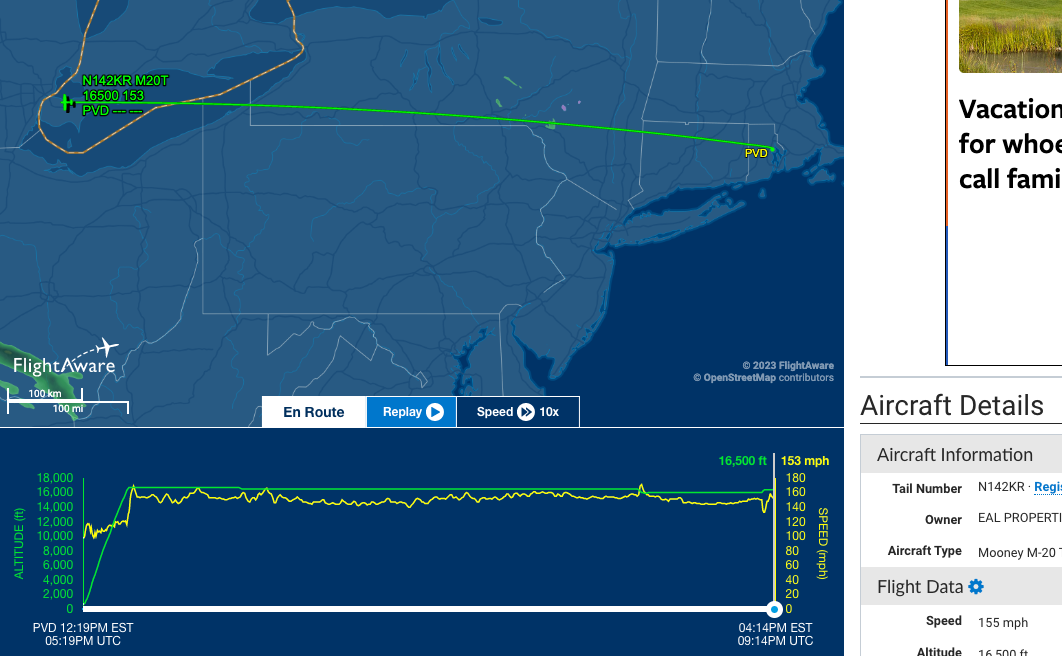
-
Don't worry about turbo spool up during taxi.... unless you're using at least low cruise power to taxi. In which case you'll be airborne and have other things to worry about.
-
It's cooling down on approach and landing. Taxi in without using excess power and shut it down. Idling while stationary is just heating it back up.
-
M20M 115 cu ft oxygen system missing high pressure line
philiplane replied to Roger M's topic in General Mooney Talk
most local Swagelok distributors do custom fabrication too. Or they can order it from the factory. Mountain High Aero will do custom lines as well. the high pressure oxygen plumbing from the fill port and pressure gauge is always copper, but sometimes stainless. Never aluminum. -
State of single engine prices - Thoughts?
philiplane replied to WildBlue's topic in General Mooney Talk
Yes, the number of planes is shrinking, but the number of owners is also shrinking, so there is no real support for the current pricing. It will decline rapidly next year as the recession takes hold. Inflated asset prices of all types will drop. -
Airparts in Fort Lauderdale sells them for $145, they have 26 in stock. airpartsco.com Dial John Giles on the salesperson menu when you call in.
-
brakes with old fluid will feel hard. Bleed the system with fresh fluid. Fluid older than 5 years will cause problems, it turns gummy, and yellow. Fresh fluid will flow easily and be red in color. Aeroshell Fluid 41 is recommended over the old 5606 formula. The caliper pins need cleaning and greasing at each annual. Rusty/sticky calipers will not retract the pistons properly and they can also jam if the pins/guides are worn and dry.
-
A whiskey compass is remarkably easy to maintain wings level once you realize the lubber line really represents the tail, not the nose. Swing the tail to the heading you want. I instruct pilots to control the plane using needle, ball, airspeed, altimeter, and compass only. If they have an attitude indicator failure in IMC, it is a non-event.
-
The backup power requirements for a remote magnetic direction indicator usually drive the retention of a standard compass, for simplicity. For example, the Garmin G5 has a remote compass, which works fine, until the G5 goes to battery backup. Then it loses power to the CANBUS that powers the remote compass, and you lose heading information. Quite a large oversight on Garmin's part. All CANBUS style systems suffer this basic flaw. And there is no approved way to power the CANBUS from backup batteries. So they require a standard compass.
-
Help Diagnose Engine Problem - M20K TSIO-360-MB
philiplane replied to Z W's topic in Modern Mooney Discussion
Never fly a plane in the hopes that it will get better in the air. If it's not right on the ground, it's not right. Don't be afraid to tell your mechanic that lots of crashes happen in these situations. -
Yes, of course. A total loss pays the agreed upon value of the hull. Which is different from auto insurance, which pays the market value of the vehicle at the time of the loss.
-
No. They pay for retrieval of the airplane, and any damages to the plane as a result of the accident. But the engine is completely on you.
-
you can generally get one inch more MP by using a Donaldson (cellulose media, AKA paper) filter, instead of an oiled gauze (K&N, Challenger) or an oiled foam (Brackett) filter.
-
Those systems are certified to a higher level than the retrofit avionics are, so the standby equipment rules are different.
-
You have to retain the magnetic compass for the eventuality of glass panel failure, or electrical system failure.