


201er
-
Posts
5,061 -
Joined
-
Last visited
-
Days Won
69
Content Type
Profiles
Forums
Blogs
Gallery
Downloads
Events
Store
Everything posted by 201er
-
Quote: jetdriven
-
I don't think that would work because there is airflow pressure against the springs/bungees in the elevator trim system. This is why I can't figure out if the elevator deflection by trimming on the ground is cancelled out by airflow in the air or not.
-
You're the instructor, shouldn't you be teaching us about it? =p
-
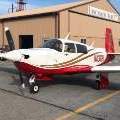
Where are you flying this Weekend (Nov 11-13)
201er replied to DrBill's topic in Miscellaneous Aviation Talk
Flying with some friends to Cape Cod for seafood on Saturday. Sunday trying to stage a local fly in with some New Jersey Mooneyators. -
Quote: eaglebkh Not sure where the cut-over was. I suspect it was slightly different when they went from the short body to the F/201. It seems that the 231 actaully has an elevator downspring and bobweight. In any case, the maintenance manual contains rigging instructions for both the stabilizer and elevator. Not sure what it is for the 201. On the short bodies you can actually see the bungees from the outside, where the elevators meet. They are part of the elevator pushrod system and each elevator has one. When you move the elevator you will see the mechanism. Can't recall the 201 geometry. In my E model, I can look back and just see the elevaotr counter weight, so I can tell that it does not streamline in flight. I suspect it adds some drag, but that's the way the rigging works out. That is one reason that the aircraft picks up a little speed with aft CG, less downforce (drag) and less drag from more streamlined elevator.
-
Quote: takair The older planes work different than the new ones. Older Mooneys have a spring/bungee that couples the elevator to the trim system. For example, in take-off configuration, an older Mooney will actually have the elevator trailing edge up....significantly. Newer ones are not coupled and will dangle. When airloads are applied the older Mooney's elevator tend to remain where the bungee moves it while the newer will tend to streamline. My 64 E does not completely streamline even in cruise. With full down trim it barely streamlines. I suspect the bungee was to provide a form of artificial feel. Many other aircraft use weights or springs as well. I seem to recall piper having a large bob weight on the stabilator. I suspect the newer long bodies have been optimized such that they no longer need the bungee which results in a pretty heavy feel. I think they did away with it somewhere in the 201 series.
-
Quote: jlunseth This is an interesting question, hadn't thought about it. I think in the K, the elevator just hangs there and is brought into alignment with the horizontal stabilizer by air flow unless the pilot uses the yoke to move the elevator. What makes me say that is that the elevator on the K hangs down (yoke falls full forward) when the aircraft is at rest, but comes up into alignment with the horiz. stab. when the engine is started and there is an airflow over the tail. I believe (going from memory here) the elevator on the J stays level with the horiz. stabilizer when the aircraft is at rest on the ground.
-
But it appears that the elevator also comes in play while trimming the Mooney tail. How does that come into play and what drag effect does that create?
-
I understand that the trim pitches the entire tail. But what I'm curious about is why it also moves the elevator and how this takes place in flight. Changing the trim on the ground will not only pitch the tail but also move the elevator (much like the trim on a simlpe airplane without any tabs or real trimming). My guess is that the reason it moves the elevator is to provide stick feedback to the pilot rather than actually setting the position of the elevator for trim purposes. Otherwise it wouldn't make sense to change the angle of the horizontal stabilizer all together. But in flight, is the airflow strong enough to keep the elevator level and simlpy provide force feedback to the pilot or does the elevator stay in the same position as seen on the ground at that trim setting? In that case, what's the point of moving the entire tail rather than just using a spring to hold the stick where you want it? What else can you tell me about the Mooney trim system? How come they didn't make some sort of rudder or aileron trim to balance the plane with uneven loading?
-
Prospective Mooney buyer in need of advice
201er replied to NotarPilot's topic in General Mooney Talk
I just popped onto controller to see this 1978 20J for $65k out of sheer curiosity. I don't see a single 1978 listed for under $90k and the only 201 for $65k is the 1977 model 201 Gynocologist (N201GN). If this is the one you are reffering to I'd like to just point a couple things out since I looked at that ad when I was looking into buying my Mooney. First of all there are some substantial differences between the 1977 and 1978+ models that I hope you are aware of. Second, I've seen that plane listed for over a year now for about the same price which is a bit strange cause all the good ones would go off the market within 3-6 months. Just a heads up and something to keep in mind from someone else who just went through what you're going for. -
1978 201 POH says "VFE Maximum Flap Extended Speed - 116KIAS - Do not exceed these speeds with the given flap settings." So I'd say it applies to the use of flaps regardless of setting. I wouldn't see any point nor desire for using the flaps at a higher speed anyway. I always check that I am within white arc before extending flaps.
-
It's giberish to mask the spam link posted in the signature. Just attempting to drive traffic and search engines to that site. I recommend the forum admin remove that post/user.
-
After I topped off to 100 gallons of gas, I took back off the same runway at near gross weight (done it in the summer too).
-
Quote: jetdriven I'm 5'10" and with the seat in the first stop had trouble applying full rudder and brake. M20J. 3" Pedal extensiosn fixed that.
-
Quote: M016576 I'm roughly your size and have no problems fitting in a mid-body mooney. You won't have any issues... The front cockpit is actually pretty long, just slightly more snug than the brand c or p in the side by side department.
-
Quote: Hank I never "take the active," I "depart from 26" or whatever, but at uncontrolled fields I do report "clear of the active" to let other folks know I'm off the runway.
-
Quote: PilotDerek
-
Still shows my last major flight from September. I thought it was a factor of departing an airport with a clearance delivery (B/C/D).
-
I don't know where this whole "taking the active phrase came from" especially cause I only hear it at uncontrolled airports. At towered airports I never hear anything about an active besides the ATIS. All ATC instructions and read backs involve saying the actual runway. I always reply with ident but it usually includes a full host of information like altimeter, code, remain clear of bravo, etc. And although I call it flight following when talking to other pilots, I have never requested "flight following, radar services, or advisories." Why waste time? I just state where I am and where I'm going: "New York Approach Mooney 4361H departed Linden one thousand for six thousand five hundred direct Kilo Lima Echo Xray." To which they'd respond "cleared into the bravo 6,500 on course, traffic 3 o'clock 5 miles 767." =) What does surprise me though is that a lot of the time they'll come back and ask me aircraft type because I always say "mooney" in front of my N number anyway. I didn't spend this kind of effort to be called mister thank you very much. I say "Mooney M20J." But I wonder if it would be better to say "Mooney Mike Two Zero Juliet?" Meanwhile I'll find out from flight aware that some controllers feel generous and upgrade me to an M20R while others jip me and call it an M20C. Does type really matter though? They're all M20s you know.
-
tried LOP for the first time - have some questions
201er replied to bd32322's topic in Modern Mooney Discussion
Quote: JimR I do believe that LOP operations have improved my consumption a bit, but where I can really see an improvement is in the number of hours that it takes the oil to darken. It used to just take a couple of hours. Now operating LOP it takes more like 15 or maybe even 20 hours. Jim -
Particularly at lower altitudes there are many different configurations to achieve 75% power but does % power always equate to the same airspeed? From POH at 2000ft: 23.3"/2700, 24.4"/2600, 26.8"/2400 all yield 159ktas. The POH gives the same speed value across all of these settings and it remains the same between best power and best economy mixtures. What I'd like to know is from your experience how true this is? I was led to believe that in theory the higher RPM settings for equal power yield higher speeds while lower RPMs yield better gas savings. Between best power and best economy, I thought best power should yield a few more knots. Is 75% power based on actual power at best power, best economy, or peak? In other words do you get true 75% at best power and a little less at best economy? Or do you end up getting a boost of slightly more than 75% at best power? The POH does not compensate power variations based on mixture as the MP/RPM values are identical between best and economy powers. So how much power and speed difference is it in reality? Also, I'm curious how LOP pertains to this. Everyone says LOP is slower. Is that just because for the same configuration it sacrifices power? But if you set power by GPH while LOP to provide 75% power, does it yield the same speed as ROP or is it still slower for some other reason?
-
tried LOP for the first time - have some questions
201er replied to bd32322's topic in Modern Mooney Discussion
Sorry to beat this topic to death but I still have questions left unanswered. I understand that for a turbo or putting power back in things can get a little complicated, but LOP strictly as a leaning technique for a normally aspirated IO360... Lycoming (as well as mechs and other pilots I've talked to) say that leaning LOP is difficult for the average pilot and especially under heavy workload. Is it really THAT hard or is the average pilot a really sad excuse for an aviator? Except for holding two buttons to switch the engine monitor into LOP mode for leaning, it really seems no different than leaning ROP except the bars go the other way. Lycoming's position summed up is: Operating an engine “on the edge” is possible provided the pilot is extremely precise, has good instrumentation, and monitors the engine condition full time. For 98% of the pilots, it is an invitation to potential trouble. It only takes one brief episode of mismanagement to incur deep internal damage that will cost money later. A) How is LOP on the edge? The edge of what? Peak? Peak is recommended. The too lean edge? How does that do harm? Why does LOP have to be extremely precise? How does it require being precise any more than "50 ROP"? C) How does ROP not require good instrumentation? D) Why is it so critical to monitor the engine condition full time when LOP? I honestly don't understand the significance of this one. Set the mixture in cruise. As long as power, altitude, or air temp don't change, the mixture doesn't need to be touched either. During longer flights I would decide to relean the engine after time to find peak and set again and just return to the same place confirming it was right all along. LOP ends up being cooler so I'd almost think ROP requires closer monitoring of temps than LOP. What am I missing here? Why does it require "full time" monitoring? E) What kind of trouble does LOP invite that Peak or ROP does not? F) What is a "brief episode of mismanagement?" Going too lean would just make the engine start to sputter but no harm. Going too rich would bring you closer to peak and raise temps but no more than peak or ROP. So it really doesn't make sense to me how LOP can be more difficult or more damaging than ROP? G) What kind of deep internal damage and how does LOP lead to it? Every time I start to feel like I am understanding the theory and process of operating LOP, I am reminded by skeptics of how difficult/dangerous LOP is but I really can't understand how or why. Can anyone justify Lycoming positions for each of my points? Can anyone explain to what special care is needed for LOP that I may have been missing? -
Mike, 1 to 3, N4361H, either date, GED, VFR only It's a bit far out for me to be sure that nothing else comes up or how many people will join me. However, if able I'd like to come and will keep this fly in in mind. This is why I don't mind the date too much either way. As for location, doesn't matter too much either cause I haven't been to both and from the distance I'm flying it doesn't change much. Not interested in gas unless it's below $5.10 but if it helps your wholesale barter, I can probably take 50-80 gallons depending on what I run it down to by that point. Keep me posted.
-
It appears that there is a clone of the mooneyspace.com site by some spammer. Seems to be a complete copy of the site but with some links to drug companies on it. Stumbled across it when googling a post on mooneyspace. Is mooneyspace.org legit but hacked or is someone trying to copy the site and benefit off spam revenue? You can see what I'm talking about by googling "201er mooney space"
-
Unless I'm going to the airport next door, I use flight following on practically every flight. Getting cleared through bravo direct 3000ft sure beats going around and staying under the layers! NY approach has been very accomodating and I don't think I've been rejected once since flying a Mooney =)