
Shadrach
-
Posts
12,239 -
Joined
-
Last visited
-
Days Won
170
Content Type
Profiles
Forums
Blogs
Gallery
Downloads
Events
Store
Everything posted by Shadrach
-
That’s about what I guessed. So about ~10lbs per HP. So typical weight for me, 4hrs of fuel and a bag is ~ 2150lbs (1680lb + 470lb) which works out to ~10.75lbs per hp. Not exactly an earth shattering difference. Thrust to drag however is a “whole nother”calculation and is quite a bit more impressive.
-
If you calculate the power to weight ratios of both aircraft under typical load, you might be surprised. Your Rocket probably has most favorable of the breed. What’s the dry weight?
-
Yeah, I can’t envision an in flight fire that I’d be able to extinguish with an ABC from the cabin. However, I allow for the fact that airplanes sometimes do things that I’ve not thought of.
-
Agreed. My guess is that it was initially stowed elsewhere and then migrated to the hat rack. 8lbs of steel to the back of the head would be a bad deal. I keep a fire extinguisher behind right seat when I don’t have rear pax. When loaded with four and bags there just isn’t a good place for it.
-
The TIT limits and the inherent imbalances in the fuel/intake system are what cost you speed. Not your mixture setting. Most applications were not designed with an eye towards the precision needed for LOP operations. Many turbocharged applications run fine on the lean side of peak. However, turbonormalized applications are better suited because their higher compression ratios generate lower TITs. See two TN’d IO540s below making same horsepower at the same RPM. Manifold pressure and TIT is lower on ROP engine (L side) while CHTs and fuel burn are higher. Manifold pressure and TIT is higher on LOP engine (R engine) while fuel burn and CHTs are reduced.


-
I saw a Mooney on the ramp at FDK with a single use, metal, fire extinguisher in the hat rack. It looked it was just waiting to become a projectile.
-
I have had four adults plus an infant and bags to the ceiling. I was uncomfortable with bags above seat level but everything was soft and light. I’m more conservative now and would like a retainer separating the cargo from the soft squishy bits.
-
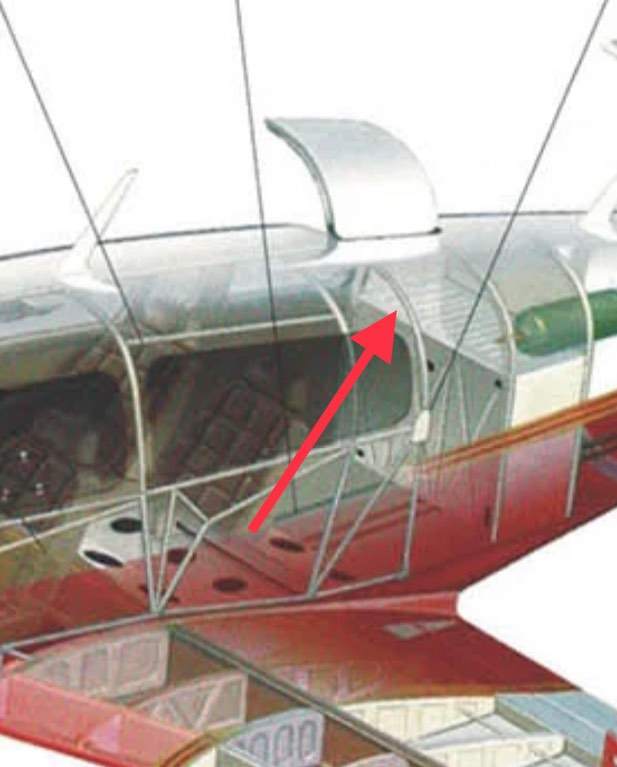
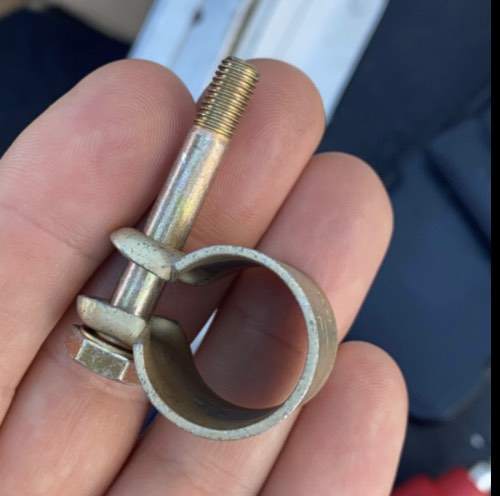
No welding needed. Adel clamps around the top steel tube could be made to work. Any vintage Mooney with shoulder harnesses uses a beefy steel clamp as a hard point for mounting the hardness. These would work just as well or better.
-
They all stall at high deck angles under full power.
-
I did not add them, but I am sure you could easily duplicate what the factory did in 67. There are two pairs of straps in my baggage compartment. Each each strap has single sewn in d-ring on the mount side. Each pair has double d-rings on one strap to lash them together. They used AN bolts and nuts through the baggage floor with a large washer to affix the single D- ring to the floor. If I were adding them, I would use a clip lie this. https://www.strapworks.com/1-inch-stainless-steel-dring-with-clip
-
I like it but I want something that goes to the ceiling.
-
My 67 came with cargo straps. I replaced them over a decade ago. I do secure cargo. I have often thought about the best way to secure a net above the rear seats.
-

Anyone ever purchased a discounted battery from Simms?
Shadrach replied to Shadrach's topic in General Mooney Talk
No doubt…and fresh off the heels of the most recent LOP thread no less. It’s early in the year, there’s still time to turn things around! -
Anyone ever purchased a discounted battery from Simms?
Shadrach replied to Shadrach's topic in General Mooney Talk
I emailed them several weeks ago just for $hit$ and giggles. No reply -
Anyone ever purchased a discounted battery from Simms?
Shadrach replied to Shadrach's topic in General Mooney Talk
A fishing store, headquartered in a shed, that brands itself as fishing fashion(?) outlet for ladies of all sizes, that sells aircraft batteries at an 80% discount? What’s not to like? There is a real Simms fishing store with an identical logo. They do not offer such deep discounts nor do they sell aircraft batteries. Also they sell through multiple retailers and are not based in a shed in Fayetteville, AR. -
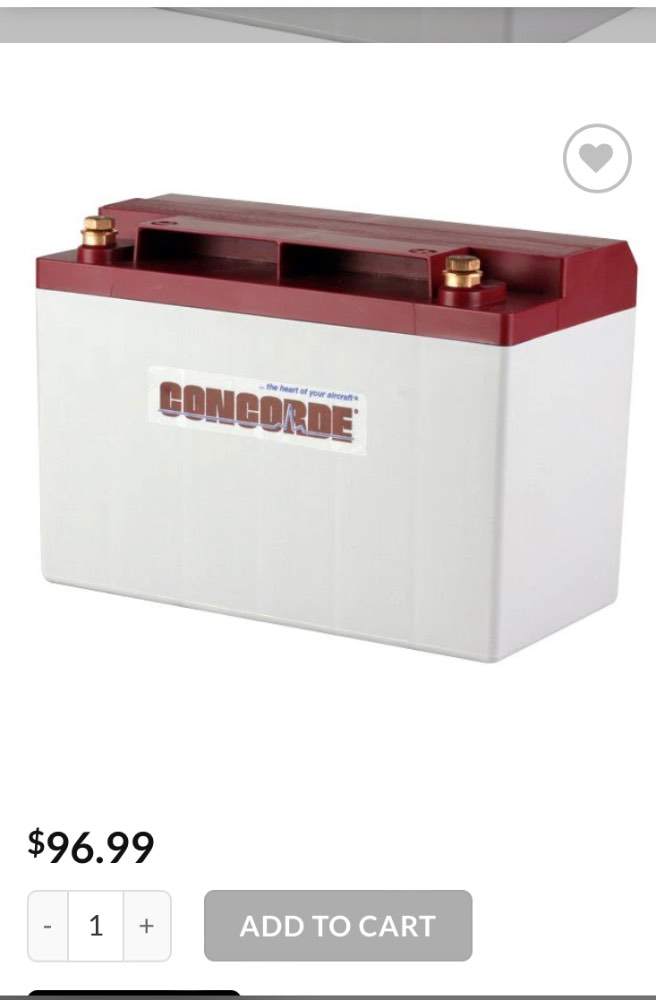
This seems legitimate… https://www.storeweatherstrip.com/concorde-battery-concorde-rg-35a-recombinant-gas-sealed-lead-acid-battery-12v/ While I was looking, Rosalía and Aniya each bought a RG-35A….And who could blame them for just $96.99. With such great prices, I thought I might make a trip to their facility to see what other bargains they might have. However, I don’t think they receive customers in person at their expansive facility. I thought there were consumer laws against this sort of thing.



-
I have tried to provide counter points to what I consider to be misstatements made in this thread that are not supported by well understood data. This has happened in other engine management threads as well. If anyone has questions or corrections regarding anything I have said here, feel free to pm me. I’m going to stop banging my head against this particular wall.
-
If you lug an old car Into detonation for a long enough period of time, you can hole a piston. Your brother didn’t beat up that IO550 because he was too lean. He beat it up because he wasn’t sufficiently lean nor sufficiently rich. When I first started reading aviation literature in my teens (1990s), 50ROP was a popular mixture setting. The thinking being that it was a nice “compromise” between best power (100ROP) and best economy (peak). If detonation is the goal, 50 ROP is good starting point.
-
Agreed. I like to think that a full complement of CHT information would have given the pilot the cues they needed to prevent permanent damage.
-
No apologies. I would’ve done the same. Imagine if you threaded in your new tiedowns only to find that you compromised your long range tanks.
-
So this whole thing was a goat rope based on the previous owner’s ignorance? I feel silly for entertaining the premise that an STC would be approved in such a way.
-
If indeed the tie down boss is located in part of an extended wet wing compartment, then the above recommendation is likely the only way to ensure a good seal. I wonder if the bolt could be shortened enough to avoid breaching the tank while still retaining adequate thread engagement to secure the aircraft.
-
I believe we operate in a range that is considerably lower than the max flow of the pump. Do recall that the narrator said that a single high-pressure pump could feed both engines of an Aztec at max power.
-
I don’t recall any fall off in pressure. IIRC, it’s reliably constant from taxi to cruise.
-
Stumped on 4 and 12 across.