
Shadrach
-
Posts
12,240 -
Joined
-
Last visited
-
Days Won
170
Content Type
Profiles
Forums
Blogs
Gallery
Downloads
Events
Store
Everything posted by Shadrach
-
The only thing I would add to this is that in addition to using a new screw, it would also be a good idea to gently clean the nut plate threads of old sealant. Cautious use of a thread chaser and compressed air is usually sufficient.
-
What’s the metal switch(?) to the left of the ignition?
-
I very much like the look of that. .Reminds me of my old man’s 78 XJ6L. Just needs a few flakey Smith’s gauges and you’re there.
-
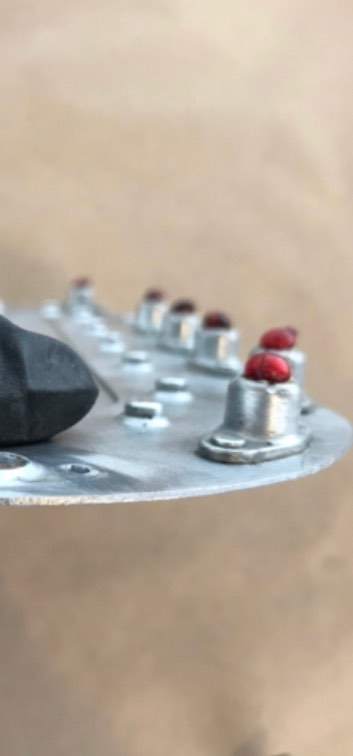
On the vintage birds at least, the nut plate is sealed with a fuel proof cap during manufacture. It’s not hard to push them off the nut plate by pressurizing the screw hole with 3330 or 3204. The sealant will squeeze out around the cap like grease around a bushing. It will then leak for sure until the nut plate is replaced or resealed with with 3204 from the backside.
-
Or sometimes someone tried to stop a leak by putting too much 3330 or 3204 in the screw hole and then when the screw was tightened it pushed the sealed caps off the back of the nut plate. I’ve opened tanks and seen sealant stalagmites and stalactites where sealant was pushed through the nut plates.
-
It will seal a leaking screw, so yes. However, suitable and ideal are not the same. Living with wet wings means having to open the tanks every now and again. I dislike the residual sealant that it leaves on the threads of the nut plate. If it were on the underside of the wing, I would use CS3330 access door sealant it is “non adhesive” and easier to remove.
-
It is most certainly the same. After years of wet wing ownership, I personally prefer non-setting sealer where appropriate. These types of sealants tend to work pretty well on the top of the wing. I don’t like gluing screws in with 3204 unless I have no other option.
-
Humid, seaside, environment. That airframe looks bad but that does not mean all of the surface corrosion is an airworthiness issue. However, the wing has areas of inter-granular corrosion that make it a likely throw away. Pitted and chalky surfaces need to be cleaned an analyzed. There is guidance regarding allowable levels of corrosion.
-
I’ve had pretty good luck with Hylomar Blue. Does not take much.
-

Replacing Gear Pucks on M20-E
Shadrach replied to nevadabandit's topic in Vintage Mooneys (pre-J models)
Can you upload a picture of the problem you’re having. Hundreds of vintage birds have had their discs replaced without having to cut off the shock dampener boss. -
Need help identifying part and purpose
Shadrach replied to shawnd's topic in Modern Mooney Discussion
Do you have the W&B revision? I’d be interested to know the net weight difference between the original manual system and electric. -
Is cruising at lower power bad for the engine?
Shadrach replied to RescueMunchkin's topic in General Mooney Talk
I’ve always felt like 2500 was optimal for noise, speed and N, V & H. -
Is cruising at lower power bad for the engine?
Shadrach replied to RescueMunchkin's topic in General Mooney Talk
@DCarlton it’s not as low as some would think according to the POH.

-
Is cruising at lower power bad for the engine?
Shadrach replied to RescueMunchkin's topic in General Mooney Talk
I’m not doubting your statement, but I am curious where you found this information? -
Need help identifying part and purpose
Shadrach replied to shawnd's topic in Modern Mooney Discussion
Was it retrofitted? I thought the early electric gear Mooneys had squat switches. Was your bird a manual gear that was converted later in life to electric. -
The process is broken. I try to remain positive but there is little evidence to suggest it is warranted.
-
Tight Landings, Take Offs, and Close Calls!
Shadrach replied to Tim-37419's topic in General Mooney Talk
I could probably find some configurations I have not explored. I have done full cross controlled, forward slips at under 70KIAS with full flaps…at altitude. That being said, there’s rarely an operational need for an aggressive slip at that speed, and when there is, it’s likely that an alternative correction could have been done earlier. I’ve been guilty several times of having to take more aggressive measures to correct what could have been mitigated gently just a few moments prior. -
Tight Landings, Take Offs, and Close Calls!
Shadrach replied to Tim-37419's topic in General Mooney Talk
I think most Mooneys of any length take a lot of nose up trim when light and slow. I have had mine against the aft trim stop of short fins more than once. That being said, I have never been able to induce a tail stall in my F.l -
Tight Landings, Take Offs, and Close Calls!
Shadrach replied to Tim-37419's topic in General Mooney Talk
Grass is kind of a crap shoot. So it would depend on the specific location/conditions. I’ve had my bird on grass many times, It certainly shortens landing roll and increases take off distances, whether it’s enough to reverse the tendency of my airplane to take off shorter than it lands will depend. At 2300lbs (heavier than I would be for short field work) the book says landing at SL should take 640’ and take off should take 595’. I’m confident that most of us are going to have an easier time with achieving something like book takeoff numbers over than on landing. I’m not saying one cant get into something they can’t get out of. I’m saying it’s not easy. -
Tight Landings, Take Offs, and Close Calls!
Shadrach replied to Tim-37419's topic in General Mooney Talk
I see and hear this frequently, but I just don't see how the numbers add up. Book take off roll is almost always significantly less than landing roll. Even the 50' calculations for both show that significantly more is needed for landing. Your average weekend warrior is going to have a much harder time approximating book landing numbers than the will book take off numbers. I fly into many sub 2000' strips and indeed some that are sub 1800'. I am relatively proficient at spot and stop in well under 1000'. If you haven't taken some time to become proficient, it's not so easy. Once you get comfortable, it's a skill that does not tend to atrophy as much as other skillsets. However, max performance landings are kind of hairy business that most are not performing. If done correctly, ALL of the aft elevator travel is used (and needed) in the flare to ensure a soft touch down. It is most definitely not "easy" to get a Mooney into a strip that the airplane can't get out of, but it becomes more possible at higher weights and DAs. Prudent to avoid short, back country, strips at DAs above 5,000 with the airplane at max gross. I doubt that it'll much trouble for most Mooney owners to avoid such conditions. -
Looking to “Borrow” an IO-360-A3B6D Case
Shadrach replied to RoundTwo's topic in General Mooney Talk
That depends on whether you’re planning on keeping the plane or selling. Buyers use SMOH as a proxy for engine health and expected remaining time in service. It’s not a great proxy, but it’s one of many metrics we use. When we had our case overhauled in 2011 the engine was ~900SMOH and 10 years old. I was prepared to do a major depending on what we found inside. What we found was an engine that was well above service limits across everything we inspected, though we did not take measurements. The main bearings were in good shape visually but replaced as the OHd case had been line bored. We are about 650 since IRAN and I have as much confidence in the engine as one can have in a piston recip. IRAN for operational utility Overhaul for valuation. -
Operationally, I felt zero difference between old and new. However, my old disks tested fine until I jacked up the plane on a winter day (high 20s). Lots of slop in the gear for about ten minutes then they were tight again. Mine were still soft and only slightly compressed when replaced. I “think” the new ones expand better in cold weather, but I’ve not had the plane on jacks in sub freezing temps to verify
-
I used to subscribe to the “partial flap” philosophy but I don’t sweat it anymore. I typically crab down final and transition to a slip as I enter the runway environment. I have always had adequate control authority.
-
Interesting. Clearly they were made in 1969. Maybe my old ones were -5s. I’ll look this week.
-
I believe Mooney switched from using J11968-5s to 3 J11968-14s in 1967. My 67F came with -14s from the factory. I’m pretty sure your revised IPC calls for -14s all around. I’d be curious to learn the date code on your main gear discs.