
Shadrach
-
Posts
12,227 -
Joined
-
Last visited
-
Days Won
170
Content Type
Profiles
Forums
Blogs
Gallery
Downloads
Events
Store
Everything posted by Shadrach
-

Open Door In Flight training?
Shadrach replied to wombat's topic in Mooney Safety & Accident Discussion
Closing the door from the right seat is not ideal on the ground with the airplane shut down. Very little leverage with your left arm crossed over your chest and your elbow bent. I’m not surprised you weren’t able to get it closed in the air. If it ever happens again, the best course of action is to have the right seater do the flying and the left seater reach across and pull the door closed. -
I’m not a fan either. I think it just muddies the water. I’ve also found that if one leans too fast, one can trick the system into identifying the wrong cylinder. The richest and leanest cylinder of a power plant should be consistent on every flight unless something physically changes. If this weren’t the case, GAMI would not be able to tune a fuel system for consistent air/fuel delivery to each cylinder. A pilot endeavoring to understand their power plant should know which cylinder is leanest and which is richest. This should only need to be done once. It should be done carefully and methodically. From that point forward the pilot knows which cylinder to reference for leaning, depending on whether or not he wishes to run ROP or LOP. Why would you need to use a lean fine function if you know which cylinder is which? What I have written below is well understood by most of the pilots on this board, but it bears mentioning for the few that may not yet fully understand engine management using EGT. My intent is to be helpful, not pedantic… If a pilot wishes to run lean of peak EGT, using the richest cylinder (last to peak) as a reference is the only way to ensure all other cylinders are as lean or leaner than the cylinder being used to set power. Conversely, if a pilot wishes to run rich of peak EGT, using the leanest cylinder (first to peak) as a reference is the only way to ensure that all other cylinders are richer than the cylinder being used to set power. If a pilot is operating a turbocharged power plant, knowing how peak EGT on the leanest and richest cylinder correlate to peak TIT is necessary to setting power precisely using TIT. TIT is simply a collective reading of all the heat energy in the exhaust at the turbine inlet. It may be that peak TIT is a reasonable proxy for peak EGT on all cylinders if the fuel/air ratios are well matched. But that is not guaranteed, if it were, there would be no need for tuned injectors. The goal is to ensure that all cylinders are set within the desired mixture range while also ensuring TIT is significant margin from redline to ensure maximum turbo service life. Compromises must sometimes be made regarding power, temperature and fuel flow to ensure longevity of the engines components. A well conforming power plant with minimal FF delta between EGT peaks will require the least amount of compromise. It’s worth considering that the manufactures are not nearly this detailed when determining POH power recommendations. The factory power settings are guided by performance simplicity and minimizing warranty claims. Anyone who wishes to extract more performance and longer service life from their power plant will likely need to dig a little deeper than the POH.
-
He sure sounded calm and confident in the radio transmissions. Did not sound bothered in the least. I thought maybe a base to final stall but the impact does not look like it followed a stalling turn at low altitude.
-
Open Door In Flight training?
Shadrach replied to wombat's topic in Mooney Safety & Accident Discussion
I am ashamed to say that in 25 years of Mooney flying I have had two baggage door "pops"...which is to say the Schmuck in the left seat did not ensure the door was latched. Both times were caused by pilot distraction during preflight/loading by passengers. It's why I try to load and preflight the plane without passengers present. In both door "pops" the door started flying long before the plane. No problem to stop and taxi back, just embarrassing. If unsure about the latch, one can always open the passenger door before departure and take a look...I can say from experience that it's a good idea to remove a ball cap before doing so... -
Open Door In Flight training?
Shadrach replied to wombat's topic in Mooney Safety & Accident Discussion
Climb to a safe altitude and practice closing the door at safe but low indicated airspeed (Something 1.4xVs). I once inadvertently closed the tail of the passenger seatbelt in the door. I heard a slapping sound to my right on climb out. When I moved the pax seat aft to investigate, I could see the seat belt tail caught in the rear part of door. I leveled at something like 3,500' and trimmed for 80MIAS. When the plane was stable, I reached over and unlatched the door, retrieved and stowed the seatbelt. I then latched the door and continued to my climb. It was easier to close than expected. Given all of the stories that I have read here about it being "impossible", I was pretty aggressive with my pull. That was overkill. A firm pull was all that was really necessary. I think the whole thing took less than 30 seconds from the time I let go of the yoke to resuming my climb. Not a big deal. -
Open Door In Flight training?
Shadrach replied to wombat's topic in Mooney Safety & Accident Discussion
Not true. How much did you slow down. I've opened and closed the door in my F in flight with no trouble. I slowed to about 80MIAS before I even attempted to close it. -
My arc changes if I change props. Some will eliminate the arc all together.
-
Of course he is...Can't you see the "Power Boost" control is in the full aft position. That's got to be good for at least .012" of manifold pressure at that altitude and indicated airspeed.
-
The worn and stained grip tape on the yoke really gives that photo a 1940s feel that is spoiled only by the moving map on the 430. @Immelman has had his naturally aspirated E to 21.5 many years ago. There was a video from the cockpit but it has since been made private.
-
Thanks for completing the series!
-
Nope...I's clearly read just like the one in my plane running two blade Hartzell on your arc is narrower.
-
Indeed and those installations should come with revisions to the limitations section of the operating manual/POH as well as a placard for the tach with a revised yellow/red arc.
-
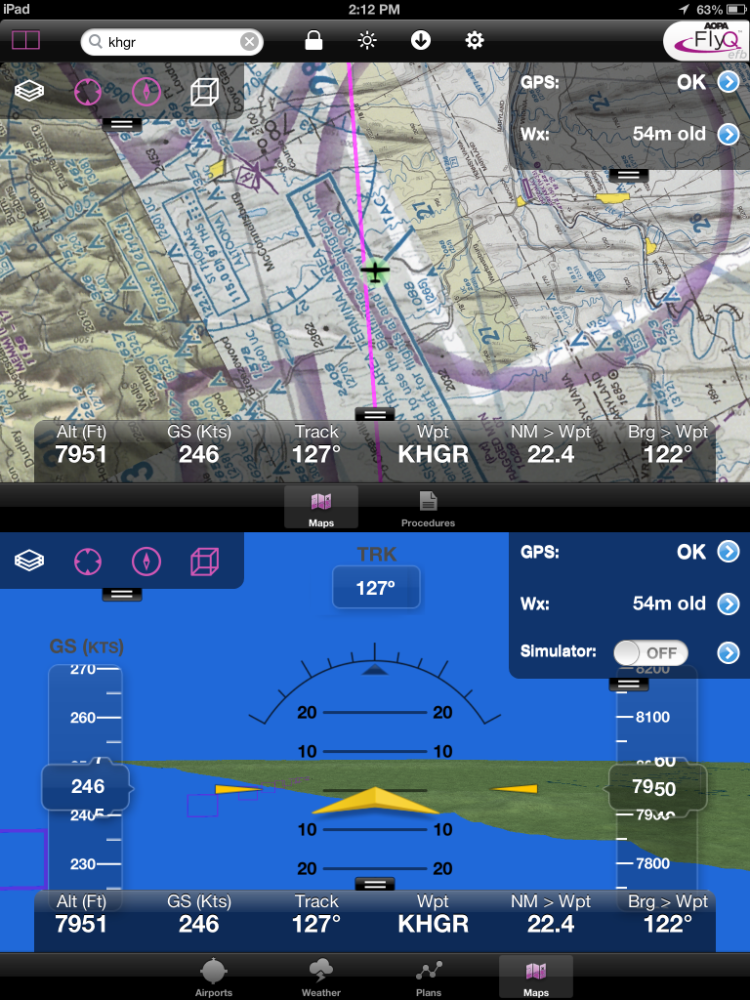
my little F model doing its best impression of an Acclaim at 25,000 feet. Except for I’m burning under 10 gallons an hour and I don’t have a hose in my nose. I should’ve gone higher just to see how fast it would go but I was only 22 miles from my destination.
-
I frequently cruise 11.5 or 12.5 on long cross countries. I’ve seen ground speeds over 200kts more times than I can count and on few occasions topped 240. Throttle is set wide-open from takeoff until I have some reason to reduce manifold pressure (rough air, non-standard descent profile or slowing down to enter the pattern for landing) I only fly lean of peak EGT at DAs below 5000 feet where there’s a surplus of air to make good power. Starting at about 5000 feet I run much closer to peak EGT until I get to 10,000 or above where I run 100 Rich of Peak EGT. This works out great for flight planning purposes as the delta in fuel burn from say 2500 feet (LOP) to 11,500 (100ROP) is relatively small. The same can be said for TAS. There really is not much reason to run a normally aspirated Lycoming, lean of peak EGT when peak is sufficient to keep CHTs in check. I set RPM around 2500 because it feels like the sweet spot in terms of smoothness and noise. I’ve also been told that’s where my prop is most efficient. I have found this to be the simplest way to manage the power plant. It yields good speed, good efficiency and cool CHTs with minimal effort.
-
To add to what @Fly Boomer has recommended, The articles below or a good primer for anyone operating turbo charged or turbo normalized engine. breathing-turbos-part-1/ https://www.avweb.com/features/pelicans-perch-33those-fire-breathing-turbos-part-3/ https://www.avweb.com/features_old/pelicans-perch-32those-fire-breathing-turbos-part-2/ https://www.avweb.com/features_old/pelicans-perch-34those-fire-breathing-turbos-part-4/
-
Should be required post check ride reading for all private pilots. The fact that I remember reading them when they were originally released, makes me feel very old. I miss John’s presence in aviation. Not only was the fountain useful information, he was good at communicating that information in a thoughtful and entertaining way.
-
Process of elimination suggests the passenger door. It’s also the door that is more likely to be improperly closed. It’s possible the upper latch was not properly engaged but that it was not detected until after departure. Or it’s possible he tried to close the door in flight and was only able to engage the aft pin. We’ll never know for sure. The NTSB did not come right out in say the baggage door was closed, but made it clear that a when the baggage door was in the closed position, a crease in the baggage door skin aligned with a crease in the fuselage skin, suggesting energy transfer through the door while in the closed position. The baggage door latch mechanism was found closed with the pins extended and the key lock was in the locked position. Gouges in the striker plates are consistent with the pins digging into the metal as the baggage door was forced open on impact
-
Have you verified that TIT is a good proxy for EGT? It works fine for as long as all cylinders peak sufficiently close to the same FF. This is to say that it would be good to know which cylinder is leanest and which is richest and roughly where they peak relative to peak TIT.
-
When on the lean side, at a constant fuel flow, more air slows the combustion event. This makes for lower peak pressure in the cylinder. There is a point on the lean side of peak for any fuel flow at which the combustion event gets so slow that both power and efficiency start to decrease
-
Congratulations! 1968 was a great year for the F model. They built over 200 of them that year. If the condition is as good as has been stated, I think you will be amazed at how much this airframe gives while asking comparatively little in return.
-
The way I read the report, all physical evidence suggests that the baggage door was down and locked and only opened under the force of impact. Reread the second paragraph on page 3 and I think you will change your view.
-
I had my cracked case repaired and overhauled by this shop in 2010. Antiquated website but top notch service. http://www.crankcaseservices.com
-
Why not just measure the ID of the old hose or the OD of the male input on the muffler?
-
201 MT Propeller vs 3-Blade Macauley "Blackmac"
Shadrach replied to 1001001's topic in General Mooney Talk
Optimal propeller application was explained to me thusly. The most efficient choice is the prop with the minimum number of blades required to convert available power into thrust. Blade length, profile and RPM will determine how much power each blade can convert into thrust before it begins to lose efficiency. Once the the power delivered exceeds the capacity of the current blade configuration, it is advantageous to add another blade. If a prop is well matched to the the power plant and rpm range, and all parameters are held constant, each additional blade will decrease efficiency. At the power range, RPM range and and blade length of most any Mooney, two blades seems to be optimal. I am dubious of the climb and acceleration claims as I do not see how a less efficient prop yields more performance. Perhaps there are some scenarios where there is a momentary advantage. There are certainly other factors to be considered. NV&H, weight and aesthetics are all important considerations. The 4 blade MT looks absolutely menacing on a Mooney, but I have yet to see any hard data that shows it is a step up in performance. Seems like it is mostly marketing. I am willing to be educated, but I have not found a lot of easily digestible technical information on the subject that is centered on powerplants of 300HP or less. -
Why did you regret the IRAN?