
cliffy
-
Posts
4,785 -
Joined
-
Last visited
-
Days Won
39
Content Type
Profiles
Forums
Blogs
Gallery
Downloads
Events
Store
Everything posted by cliffy
-
Just talked to my Ford buddy and he just last week changed a motor in a 2023 F 350 He said it took him 3 1/2 hrs each way for the cab/bed removal and install He said the rig has to come off and be suspended above in order to change the motor. I guess I'm "lucky" as I can't sit in the airplane longer than about 2+30 so running low on fuel is no problem for me. I ALWAYS have lot on landing. :-)
-
100K is just getting started in a big truck today
-
Cut up a $100,000 truck for a $400 PUMP? :-) And Ford dealers won't do it that way. My local dealer does a lot of them. Now maybe here is an opening for a good after market product!
-
On newer Ford trucks (250,350) if the tank pump fails you have to remove the entire body and bed by hanging it above the chassis to get access to the pump in the top of the tank Can't be done any other way that I know of. Can't just drop the tank out. No back to our regularly scheduled program-
-
I flew a Navajo for a few years and we would fly the aux tanks (at cruise) until empty by watching the fuel pressure gauge to see when it started to fluctuate (air being drawn into the system-empty tank). Never lost power doing it that way and the aux tanks were completely empty. Tank valves were right by our right hand below the seat so they were easy to get to and we were watching the FP gauge like a hawk. In a couple thousand hours never had an issue. Had a friend who did the same thing in a Twin Beech with its 5 tanks also. Running them dry can be done without problems IF you watch what you are doing. I wouldn't make it a practice to run them dry to the point of engine shutdown though. Besides it scares the crap out of the passengers. In the case of the Mooney I have no idea why one would need to run a tank that dry on a regular basis. I can see in it in an emergency where you might need to do that but then you've got other problems to deal with lack of planning for contingencies or say ferry across the ocean! If you have regular flights where the fuel required is so close to the limit that you need to always run a tank dry then again you're pushing the envelope too close. IMO Someday that will bite you. I've flown a Mooney with one tank empty and one full for maintenance (tank patch) and you really can't tell the difference between that and both full. Just because its legal to plan a 30 min reserve doesn't make it a smart idea.
-
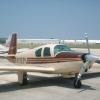
1976 Mooney M20C Gas Colator
cliffy replied to IndianaBrad's topic in Vintage Mooneys (pre-J models)
What am I missing here? He's asking about the quick drain gascolator not the wing quick drains I think -
It could be done It would be unique- one of a kind As much work (or more ) than a quick build homebuilt The Mooney caveat prevails- corrosion Would need someone who enjoys building more than flying
-
If you wash and wax them probably @ 10kts!!!
-
I can agree on that. Some just fly a little faster than others. It was well known decades ago that being hand built some just were "better" than others in cruise speed. I've found that CG and correct overall trim account for the most gain in speed. Some being made by the "in between years" companies flew slower than those built before. Lots of things can align and put one into the 145+ kt speed range. You have a good one. Also all the claims about "speed mods" and what each adds to the total speed one has to understand that the numbers are not cumulative. I think the 3 best were the cowl closure, the windshield and the flap gap seals.
-
I agree 100%
-
After 60 years as an A&P no one can come close to me in matching scars on the hands! :-) :-) Its a woosie job if you don't walk away dripping some blood.
-
Had a friend flying an unfamiliar 172 (he owned a Cherokee) takeoff after casually switching tanks just before takeoff. Seems the tank selector went to the off position instead of the opposite tank. He got through the run up and takeoff all the way to 100' before it quit. Unfortunately he didn;t have any runway left and put it down off field. With good orings (4) on the tank caps the chances of water ingress from rain is slight- condensation another matter. Many Mooney have bad orings. I see it all the time out in the field. That is the way large amounts of water get in the tank. I haven't had water in mine in a decade or more and then only a slight amount. I switch tanks every 10 gallons (Dynon announcement) I usually start and run up and take off on the left tank as being right handed its easier to switch tanks with one finger to push to the right tank that way in an emergency. Some of us are physically challenged to reach down and turn the recessed valve especially from right to left.. I have a 1 foot long PVC pipe with notches for the selector handle that I use to ease the effort leaning over to switch tanks. :-) As 98% of the time I always leave with full tanks I know I have enough in the left tank after using 10 gallons that if it didn't work when switched to the other tank, I've still got enough to get somewhere. I guess I'm of the opinion that even if you check it to make sure it works it only tells you it worked that time. No guarantee that it will work the next time even if you check before takeoff. As I'm the only one flying my airplane, the last time I swapped tanks it worked fine. Check complete. Its a purely a simple mechanical valve. Electric valves like in the Boeing are a different animal.
-
Latex vacuum hoses for Brittain AP/PC
cliffy replied to Shadrach's topic in Vintage Mooneys (pre-J models)
I was told by Brittain many years ago they use regular auto vacuum hose. It works fine and is relatively cheap. The colored plastic lines also crack and leak Check with a hand vacuum pump to find the ones leaking. Vinyl clear tubing slid over the broken line and clamped with the correct size Corbin clamps saves replacing the long runs of colored tubing if broken mid-run. Regular nylon instrument line works fine as a replacement Color the ends to match old line color. -
1st- Don't believe those cruise speed numbers! The factory book was very optimistic C models (no mods) reliably do 135 -140 kts TRUE airspeed An occasional one does 5 kts faster E models add 5-8 kts to TRUE a/s numbers (200 hp vs 180 hp) Some mods add a few knots to each A very few cruise 155 kts TRUE. Fuel burns vary according to your flight style. Some with Es and Fs go lean of leak and get the flows down a gallon or 2/hr beyond what the carbed models can do. All early model Mooneys (up through G) have the same AD list (varies between manual gear and electric gear models) Fs and Gs the same as C and Ds except for more room aft of pilot seats. Speeds similar. You are better off getting the best one you can afford, equipped the way YOU want rather than buying cheap thinking you'll remake it the way you want. Its ALWAYS more expensive doing it yourself. You have enough flight time to use the Mooney as your IFR trainer Decide what YOU need as far as an autopilot goes for your training. Many of us got our IFR ticket in airplanes without any autopilot. Autopilots in Mooneys are a tough subject. Mostly old, many do not work Parts are hard to find as is shops to work on them. It can be done but know the subject before you buy. My mantra to all looking to buy an airplane- Trust nothing an aircraft salesman is saying. Check EVERYTHING out yourself and have a real good pre-buy inspection done by someone who knows Mooneys. Preferably have an annual done as a pre-buy by the shop going to sign off the annual so you don't have any surprises at the next annual. We have seen many many new buyers wind up with 25% of what thy spent for the airplane as a cost for their first annual. Secondly- Never buy the first airplane you look at. Get out now even at your local airports and look at all the Mooneys you can with a critical eye to learn what looks good and what doesn't, Even if you can't get into them just looking at the outsides of many will give you an idea of what you feel god about as you learn the market Dig into this forum to learn what to, look for in a pre-buy inspection Mooneys are unique. Take your time and enjoy the search I have a C and mine always does 135-140 kts TRUE at 9500 at about 9.5 -10.0 GPH Has been this way for 2,000 hrs I've flown it. AN aft CG will help the speed by maybe 5 kts opposed to the CG sitting at the front edge (2 heavy pilots and no baggage) Some carry lead shot in the baggage compartment (if GW allows) to shift the CG aft for better cruise speeds.
-
A cheap Mooney could be the most expensive Mooney you can buy. Many have come here with tales of buying a "cheaper" Mooney even with a pre-buy and then investing $10-20,000 more at the next annual There is a reason why it is cheaper- its up to YOU to find out why NOW In this case NOTHING but a full signed off annual would suffice for a "pre-buy" and NOT by the shop the present owner has been using. Spending $3000 or so now on just the annual inspection (no servicing or repairs) will save you many thousands later. Find ALL of the airworthy items now and a list of the "fix later" by the guy who will sign off the books. With the sitting for 7 years your chances of having the cam/lifter paradigm come to light are highly enhanced. Then it will be upwards of $20-25,000 when it happens. This is a roll of the dice- Do ya feel lucky? My mantra for 50 years in this business- Never trust anything someone selling an airplane says- Check EVERYTHING Yourself! AND NEVER buy the first airplane you look at. Take your time and actually go out and look at Mooneys at your local airport to get an idea of what looks good and what looks bad. Education before buying is your friend. Including the serial numbers of the engine and prop by looking at them on the airplane and comparing to what is in the log book and TCDS Airplanes have been sold with non compliant engine models differing from what is in the logs or TCDS Check every switch, light, motor, control cable, instrument and radio for proper condition and operation. You are not buying a 10 year old Toyota This is A 60 YEAR OLD ANTIQUE AIRPLANE Walk down the path of aircraft ownership carefully
-
Replacement Elevator Weights - Can't Find
cliffy replied to BenP's topic in Vintage Mooneys (pre-J models)
By "perfectly balanced " you do mean the correct trailing edge heavy weight required- correct? I think to be correct we would need to see what was called for on the Mooney drawings- lead, linotype lead, babbitt lead. etc. Strength is only one of the design requirements that would be called out on the required reference material. There is an FAA webinar on the 20th dealing with the currently approved ways to keep our vintage aircraft supplied with parts. I intend to listen in "Pro Tips for Maintenance Vintage Aircraft Replacement and Modification Article VARMA" Topic: Do you fly or maintain Vintage aircraft? This webinar can help with how you maintain the aircraft along with part substitution. On Wednesday, December 20, 2023 at 19:00 Central Standard Time (17:00 PST; 18:00 MST; 20:00 EST; 15:00 HST; 16:00 AKST; 18:00 Arizona; Thursday, December 21, 2023 01:00 GMT) -
Replacement Elevator Weights - Can't Find
cliffy replied to BenP's topic in Vintage Mooneys (pre-J models)
Just curious about the legality of making your own without any applicable drawings of how it was made originally? We are just "assuming" its poured pure lead. There are many alloys of lead and strength varies with each one. Which alloy do we need to use? Without the original drawing we have no idea. And that is part of the OPP route. We're talking about maybe the most critical part on the airplane as far as flutter mitigation goes and we want to guess at what we are doing? Weight is only one component of the part, strength is the other and without the correct alloy we have no idea what the strength required is. Now chemical analysis and a DER sign off would be the correct way to go OPP in this case I do believe. Thoughts? -
YUP just ask your shop to do a capacity check on it then you'll know for sure
-
If you hear the click its the impulse coupling driving the magneto If you don't you have Shower of Sparks ignition (going in normal rotation direction_ I've seen 2 people hit by props One just moved it a few degrees. Ain't pretty if it connects with human tissue Be VERY cautious when ever your hand is even just on the prop and not moving it It can happen with 1 degree of prop movement.
-
That's interesting never heard of that happening Congrats!!! Same here! Glad it worked easier for you than my friend recently But he had a nice work log book in the end :-)
-
To go the "experience" route instead of school you have to log two years time (hrs) in a log book with what you did along with an A&P sign off on each page. My friend just did it . FAA requirements. You have to set it up with the FSDO ahead of time. As mentioned the A&P school is what I would recommend ( I did mine 55 years ago) You can do either but the school will give you a better overall outcome. Forgot to add- a lot of the time required is also to "weed out" those not dedicated to doing things the right way. Remember, when you get your A&P you can go out on your own with no supervision. Only your own code of responsibility to do things correctly.
-
Heat not that hot. Later E model.
cliffy replied to BloodRedSkies's topic in Vintage Mooneys (pre-J models)
2 issues- hot air coming in and cabin air going out I found that the cabin on my D sucks air from the tail cone into the baggage area in great volumes (cold air wanted in the summer but not the winter) As a test I made a foam (3") plug that goes on the top of the rear seat and seals the headliner fully left to right It works great in the winter and even better after I sealed all the holes in the rear baggage bulkhead from inside the tailcone. Make sure you are not losing LOTS of air out of the main cabin door seal Use a tissue in flight to see if it is sucked up into the door jam around the seal areas. You can lose lots of heated air here. I would postulate that if the door seal leaks -- that is why the air is drawn from the tailcone to the cabin The shape of the fuselage around the windshield/door area leads me to think it is a low pressure area just ripe to suck air out of the cabin and bring in cold air from the tailcone faster than it can be replaced by the hot air coming in. -
Be careful on the little one in the center hole when you remove it. Use a brass tool to work it out Using a steel screw driver may/will gouge the grove it sets in so it won't seal good The blue orings are the only way to go but If you do use the black ones replace the big one every year especially if the airplane sits outside on a tie down. Lube the little one in its hole before you assemble the pieces. Adjust the cap lever and then use a new cotter pin on the nut.
-
Any old time speedometer shop can make them up Of course that was decades ago when we had mechanical speedos :-) Same as a speedometer drive cable in classic cars
-
Can the panel lights rheostat be cleaned or replaced?
cliffy replied to AndreiC's topic in Vintage Mooneys (pre-J models)
Yes try some contact cleaner in it and rotate it a few times Let the CC dry for a while before you turn on power