Marc_B
-
Posts
1,414 -
Joined
-
Last visited
-
Days Won
11
Content Type
Profiles
Forums
Blogs
Gallery
Downloads
Events
Store
Everything posted by Marc_B
-
 I think that's the crux of learning and training advanced avionics, GPS units, and navigators...There are a lot of procedures that you may not use regularly and aren't trained regularly. Some things are time critical, whereas others you can request delay vectors, or just put the unit in heading mode while you set things up. So the big question, is what's the "right" mix of simulation, Garmin Aviation Trainer knobology type computer work, and flight training. What items need to be included in an "Understanding your panel" guide book. What list of training tasks should be routinely exercised and understood. Even your basic steam gauge panel will have GPS Nav/Coms that require experience, understanding and education (and I've not yet flown a VOR approach that I thought would be my choice if weather was bad). Some of these tasks need to be trained with an instructor, but a lot of them are just process tasks that can easily be exercised in the air or at a desk chair. i.e. if you've never been asked to remove a hold do you default to "direct to" hold exit or do you just remove the hold by clicking on the hold and then remove, or do you try to reload the procedure and say "no" when it asks if you want to load the hold? @midlifeflyer I like your list as it's something that we all can work on independently as well as with an instructor.
 -
Curious if any of you have put together a flight simulator with RealSimGear equipment and your experience and set up. I have X-plane 11 on my old laptop and a honeycomb alpha yoke. But have tossed around with the idea of putting together a little better setup for some emergency and instrument scenarios. The biggest limitations to ease of use with my current set up is the screen (hard to put everything in to easy see what you need to without panning a lot), and the avionics interface where I'm not "plugged in" to the cockpit the same way you are typically. Seems like a large curved monitor and a set up like RealSimGear bundle would go a long way towards that but wondering if it's worth the investment, what equipment is optimal, and how well it replicates your workflow IRL. equipment list/pics/details would be helpful! Marc.
-
https://www.eaa.org/eaa/pilots/eaa-pilot-proficiency I've always wanted to stop by for these at Oshkosh, but haven't had the opportunity. Has anyone gone to the EAA Pilot Proficiency Center for a session or for more comprehensive training workshops? If you could choose customized Redbird simulators with this, that would be pretty awesome! "Our current programming includes: Self-guided, one-hour Redbird Pro Simulation Sessions: With your current Redbird Pro App subscription (or 30-day free trial), you can schedule time for a baseline skills assessment and then receive a customized and on-going training plan. Customizable IFR and VFR proficiency-based trainings: Trainings can range from two hours in length to multi-day or a full week in length and can be tailored to your group’s training needs. Fully-immersive certificate-based training: The ultimate in proficiency training, explore new or additional pilot certifications in a safe, hands-on experience with multi-screen, wrap- around visual panels, realistic controls, and even specific environments. For example, our Sport Pilot Academy for new pilots, which can take you from pedestrian to pilot in three weeks. (More offerings coming in 2023!)"
-
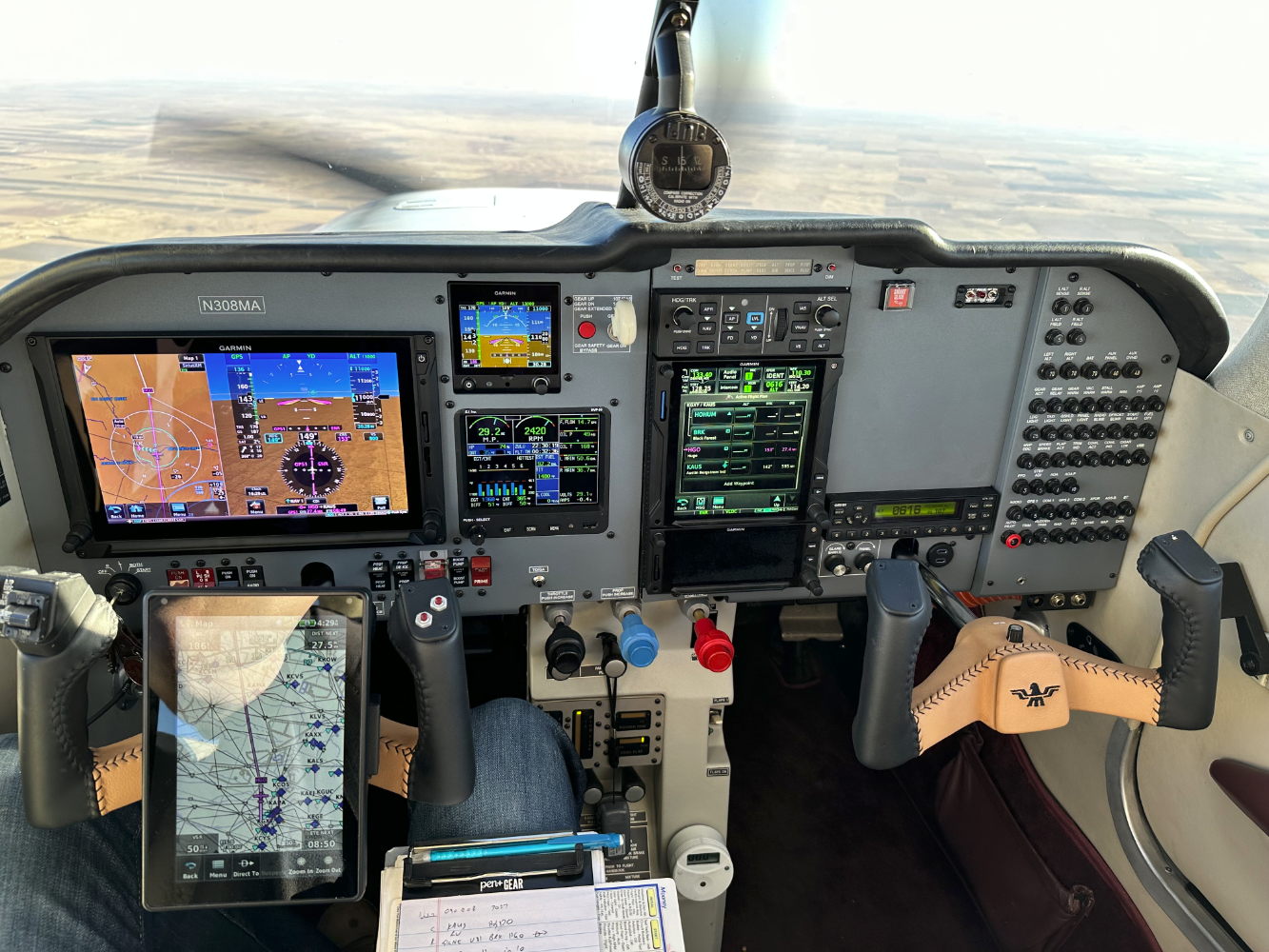
my $0.02 after going though this. I had the legacy G500 and when I was having issues with my King AP, I upgraded to the GFC500. Took that time to finish the panel the way I wanted it for the foreseeable future. So my thoughts: 1) G500TXi is much better than the legacy and I feel there are a few format items, placement, and more similarity to the GTNs with the TXi vs the G3X. I like the format of the AP scoreboard on the TXi better. A little brighter screen. But you'd be happy with either. If you are going with a Big screen PFD and the GTNs, no need to cram more data into the standby. So I chose the G5 standby. For all the square screens, it seems to match better. And personally I feel the GI275 was trying to put too much into a too small of hole. Also the battery life of the G5 is much better which is what I'd be using the standby instrument for anyways. When I did my upgrade, the G5 was available immediately (275 backlog) and it was cheaper. 2) I started with an EI MVP-50 engine monitor, and I really like it and kept it with the upgrade. EI is very easy to deal with when I upgraded the screen and when they had new probes that had better life and they switched them out with my current probes. Personally I have gotten used to, and enjoy having, engine data separate from the PFD. It is also super easy to button through the screens for all my data at the end of a flight and a USB jump drive to download all engine data. 3) Agreed, the GTN750Xi is a great unit. I have the GTN650Xi below it and think they work well together...but I do most of the work from the GTN750. For me this is one more place to put traffic, default nav page for all my data, and if I had any issues with GTN750, they are clones of each other so same buttonology. I like having two Nav/coms for IFR, and everything crossfills and talks between the GTNs. So I can use the TXi or either GTN to send freqs to both. So I routinely use wx/ground/clearance freqs on 2 and com1 use active airborne freqs. 3a) Not sure what you're doing with audio panel, but I have the GMA35 remote audio panel and it's all controlled from the GTN750. I prefer it that way and really enjoy the Garmin Telligence, 3D audio (when on comm1 and monitoring comm2 then 1 comes out of left ear and 2 comes out of right ear in headphone), and it all seems pretty easy to use from the GTN. If you're not sure, I'd see if you can demo/check out someone with a PS engineering audio panel and someone with the GMA35/35c. 4) For me another screen on the right side just didn't make sense. My "copilot" most of the time is watching a movie or reading. Instead I have an Aera 760 yoke mount on the left yoke. This is a super fast and easy way to control music, keep on traffic page around the airport, see weather en route, put on terrain in mountains (I like the terrain page of the 760 better than the terrain page on the panel...760 has a profile view with flight path projection like Foreflight as well as the overhead view with colors), and view charts/airport data/etc independently of the GTN screen and closer to me. In my mind, a second PFD/MFD on the copilot side makes sense with a throw over yoke (i.e. some bonanzas) or with larger aircraft where you have your copilot flying the entire flight sometimes. Personally I didn't feel it was a benefit for me. Hindsight) about the only thing that I might have considered was having the transponder changed to a remote...but it's out of the way and I do actually use the buttons to turn off, on, alt, etc. Its quicker for me to do this from the transponder when flying formation. But putting squawk codes I do from the GTN. I really enjoy my panel, and the biggest part is whatever you do get plenty of training and make sure you understand the quirks, buttonology, and how to set it all up. A solid instructor and an onsite Garmin course go a LONG way, but reading the pilot guides completely through several times is a must.
-
Where to buy quality Mooney SWAG in 2024?
Marc_B replied to BlueSky247's topic in General Mooney Talk
The other option is to check out your local uniform, sports and medical scrub shops. They're use to doing embroidery, screen print and customization. I've had screen print shirt made, my hat customized with tail number, and things embroidered. i.e. here is the local shop I've used here in Northern CO. https://encoreuniform.com/ -
@Pinecone I attended the Garmin onsite course for the TXi/Xi this spring. Great reps on standard stuff. But not really any reps on EPs, what things look like when they fail (I was surprised at this one), and not much about some of the more nuanced aspects of VNAV and transitions to approaches (especially ILS). I had about 6 months in my current panel when I attended, and almost 2 years with legacy G500/GTNs, so most of the tasks being taught were basic, but a few different ways to do things and a few things that I haven't done before, i.e. building user waypoints through a MOA based on Radial/distance and radial/radial created waypoints. I also don't frequently change the course on the direct to field so it was good to learn about that. But I think that if you are getting one of those panels put in and don't have any experience, it's a definite must do. Plus it was cool to tour Garmin aviation and I always love flying into MKC (took me right over MCI heading east then turned south towards the city for a straight in to MKC. Highly recommended! (plus had to stop by Jack Stack for some BBQ). But the Garmin kiosks just run on autopilot and only work on knobology. Would be sweet to have a full sim like a Redbird, but that was adaptable to the equipment you use...that you could check out time at your local flight school. I've thought about putting together a RealSimGear avionics package based on my aircraft but would probably be 6AMU+ (all in, avionics, computer, yoke, etc.) and I think at that point it would be better to have someone (CFI/II) walk you though scenarios, equipment failures, complicated approaches, etc. in order to really make it a TRAINING experience. 6AMU is quite a bit of fuel with a CFI/II in the right seat! That book was one of the drivers for me getting my commercial...my thinking is that if I can get myself over an airport, there is no reason I shouldn't be able to set her down safely...but without the reps and experience it was more of a "hope" than a skill! Good reminder to add that in routinely so that muscle memory doesn't atrophy! I find that they are pretty easy to deal with as well...I frequently fly to Centennial and ask to cut the bravo around BJC each time...usually get it direct to APA so I can streamline my descent without worrying about the shelf. And I finally figured out if I file YOKES (coming in from east) as the waypoint prior to GXY (home base) that they won't give me a reroute STAR that they are going to vector me off after 1-2 waypoints anyways.
-
This is one of the best reasons for a non-commercial pilot to get their commercial rating. It’s all about energy management, emergency descents, better control around points, and target engine out 180s. I think that reps with these with an instructor will be WAY easier than trying to figure out yourself.
-
Where to buy quality Mooney SWAG in 2024?
Marc_B replied to BlueSky247's topic in General Mooney Talk
If you want Yeti items, you can upload graphics for personal use and your name or tail number, etc. Yeti also offers a discount if you have an ID.me account. I've had them make mugs, tumblers, water bottles. https://flyboytoys.com/ Flyboy Toys also has some stuff you can customize like mugs, shirts, etc. -
@Dmax The initial MooneyMax website showed Mooney factory tour on Wednesday, but just checked the website and an agenda is listed showing the tour on Saturday. Does anyone know if tours are offered both days or just on Saturday?? Also looks like RightSeatReady moved from Friday to Thursday for anyone interested. https://www.mooneymax.com/
-
LF: CFI for Insurance Check and Endorsement (Colorado)
Marc_B replied to wolfbyte's topic in General Mooney Talk
I know of two CFI's in Colorado that both own and fly M20K 252's regularly (one at KCOS, the other at KBJC) I'll send you a DM. edit: both have M20E time. My comment was that they are CFis but they owns Mooneys as well. @MarcJohnson @gsxrpilot -
Certainly I can understand the role of unexpected failures to simulate the randomness of emergencies. But I wonder if there would be a good way to build a solid framework of ADMs and aviation prior to poking holes to highlight the weaknesses. Personally I don't think that private, instrument or commercial ratings go though emergency procedures and failures enough for them to be deeply engrained. Probably military and airline pilots get much more of this than your typical GA pilot ever will. @Vance Harral have you gotten a sense for what background and prior training the pilots who do well with this have? Or maybe a process of identifying weaknesses and then building a prescription for improvement? Basically building with the idea that we're not only trying to make pilots think, but we're trying to make them build better muscle memory and more appropriate reactions each time. i.e. engine failure on take off needing to push the nose forward to prevent stalling... My point is, outside of the BFR, IPC or a new rating, the education is up to the pilot to improve. What type of exercises can we prescribe to work on with friends, while solo, with an instructor...to help them improve, highlight and work on weaknesses, and continue on a progression of safety? The problem with ground AATD/BATD with advanced avionics is that most of them are very basic with steam gauges and usually the "advanced ones" are centered only around the G1000. I'd love to see a flight simulation center (hello Cessna Flight Center, Gleim, King Schools), come up with a weekend flight course that is customizable to your avionics (or as closely as they can get) that has a curriculum of training. How amazing of a PPP/BFR/IPC adjunct would that be!
-
Curious if any of you have come up with structured must work on procedures, EPs, or have specific workflows (for the CFI/CFII's in the group) that you find are 1) more challenging for most pilots, 2) don't seem to get worked out enough, or 3) are basic things that should be trained frequently. This would be super helpful not just in general, but specifically where you've found that advanced avionics have been a hurdle. Hopefully this can be a constructive thread where we all share issues you've seen on BFR's/IPC's, learning point, and suggestion for improvement. I'm sure that most of the pilots active on MooneySpace are a cut above your general aviation pilot. Perhaps we can all share ideas for tasks to work on, how to structure these into our routine flying, and how to exercise the legs we don't use enough. I try to occasionally go out and work on things like approaches, commercial maneuvers, steep turns, etc. But some of these seem like they many not be highlighting weaknesses, introducing new procedures or requests I might find in other areas, or exercising muscle memory for all the emergency procedures that might need to be ingrained. What tasks do you all feel don't get worked enough, but would help decrease accidents or improve safety and how would you recommend working on them? Ideal format would be identified deficiency, set up for exercise, and how often to include this in your flights?? Ideas?
-
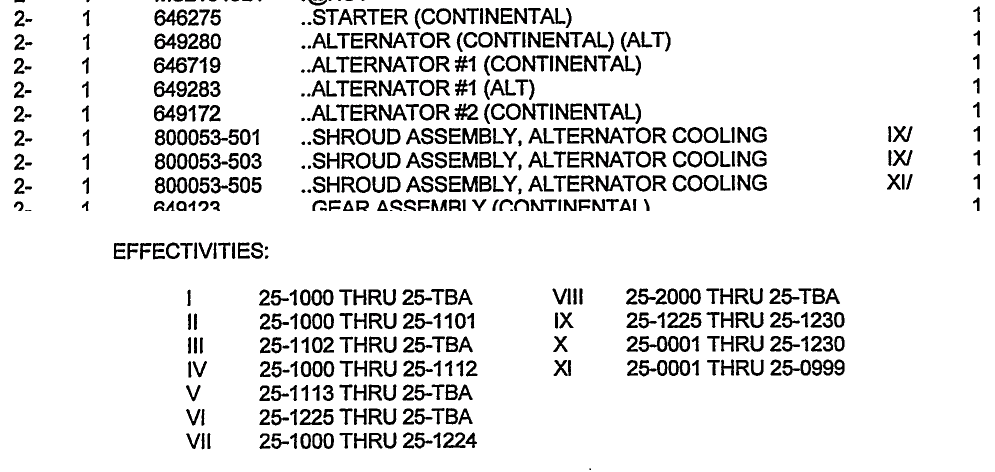
Alternator cooling shroud assembly pn: 800053-501, -503, or -505. I'm not sure what the differences are between them (I suspect they fit the profile for different alternators). I added the effectivities to the screen shot above. This was from the M20K IPC. And it's interesting that you have #653344 alternator mounted? The TCM parts catalog shows that as the gear drive alternator, and #649283 as the belt drive alternator. I looked back and couldn't find a picture on my computer showing of my belt drive part number. I'll have to take a look next time the cowl is off.
-
Has the Mooney Caravan abandoned Mooneyspace?
Marc_B replied to Rick Junkin's topic in Mooney Caravan
Weather/taxiing on grass during Osh (for any participant) could be a concern as there is typically weather that rolls through at some point every year. 2022/2023 had some crazy rain storms that passed through Saturday night/Sunday after the Mooney Caravan arrived. We found that quality outdoor tents were a nonissue, but the el cheapo Walmart special tents got turned into to flattened bath tubs! That year the Caravan vehicles and board went to the local outdoor store and picked up all the tents they had for the unfortunate fishies. This year rain rolled through and I think everyone was unscathed. It never lasts long, and the HUGE Caravan circus tent is a great place to congregate, drink a cold one, and chat with your fellow Mooney pilots as the bugs get washed off your wings. The taxi marshallers do a good job of placing cones on low spots and the grounds dry out pretty quickly as the remaining days are typically SUNNY. I still taxi decently slow/carefully, yoke pulled back to my chest, and they do a great job of rolling the grass smooth for the show. The three times I've been at Osh, I had no problem taxiing where I was being directed. We did have a pilot this year peel off after landing and go to general aviation parking area; he wasn't staying/camping at Osh but wanted to come with the Caravan. So it is possible to park somewhere else...although I think it's WAY more fun to camp beside your Mooney! Securing Aircraft: This is probably one of the benefits of the Caravan. You're surrounded by mass arrivals and I think that most mass arrivals are ahead of the curve in terms of Osh camping! These are the aircraft that usually have LED solar lights, cutting boards under the wheels, the Claw type tie downs, canopy covers, camp seating, etc. Given that most of the Caravan are seasoned vets, you can be sure none of the aircraft around you are going anywhere for most weather that would be coming through. I've found that the Claw is a great tiedown to use, works well, and easy to place and remove. Leaving Osh: Most pilots bring wooden or plastic cutting boards for the wheels; it distributes the weight over a larger footprint to keep from sinking into the grass as much. I picked up 3 cutting boards from Sam's that I reuse every year. Still, it takes more than just you to pull your aircraft out, but fortunately you have a whole group of Mooney friends to help make it easy! Food: The caravan always plans a group dinner every year under the tent. There are also several group meals that get planned in Madison as well as at Osh. Breakfasts are included Sunday - Wednesday under the tent each morning (part of the small Caravan registration fee). Lunches you are on your own. This year there were several that brought coleman stoves and we cooked out steaks or hotdogs. Food is definitely something that seems to get refined every year! At the clinic I attended there was one pilot who had some issues with feeling comfortable with engine management and trusting that his engine settings were fine (they were). But after a couple sorties with a seasoned safety pilot in the right seat he wasn't quite ready...and he wasn't signed off. But despite that there was never a problem with safety of flight, and that pilot has the opportunity to continue to learn and attend a future clinic to continue training. Hopefully as he improves, formation flight will gel and he'll join us. But if not, we still had a great time meeting another Mooney pilot and I'm sure he learned a lot in the process. Sometimes Formation flight may not be for you, but you don't know that till you try. If at any time a pilot feels unsafe, they can always call knock it off...for any reason. This is ingrained into the training both for your safety and the safety of others. BTW, we also have had a Beech pilot that joined that didn't get signed off. So it's not a gimme to get approved to fly in the Caravan. And if not for formation flying...how else are you supposed to get cool pictures!!
-
Nice! I think this is one job that new definitely doesn't = better. Probably the glue/epoxy will be stronger than the thin material this is made out of. The heat cycles under the cowl have to be taxing on thin plastic materials! Edit: And if you do ever replace it, post back up where you found a part available and cost!!
-
This guy is an embarrassment to Mooney pilots.
Marc_B replied to Brandt's topic in Mooney Safety & Accident Discussion
https://www.planeandpilotmag.com/article/is-glass-safer/ https://www.ntsb.gov/safety/safety-studies/Documents/SS1001.pdf "Advanced avionics and electronic displays can increase the safety potential of general aviation aircraft operations by providing pilots with more operational and safety-related information and functionality, but more effort is needed to ensure that pilots are prepared to realize that potential." NTSB But the discussion is more nuanced than the broad brush strokes being painted of advanced equipment is unsafe. Consider that the majority of GA pilots today learned to fly with conventional equipment, the FAA knowledge exams are steeped in round dials and have limited testing pertaining to glass panels, the lion share of training aircraft are round dials, and the vast majority of AATD/BATDs are based on round dials. Familarity and uniformity go a long way. Once we actually start comparing apples to apples and review how pilots are trained and tested, then we can actually have better data to compare the variations of equipment. The silver bullet to safety is pilot training and proficiency with whatever equipment you're using. -
This guy is an embarrassment to Mooney pilots.
Marc_B replied to Brandt's topic in Mooney Safety & Accident Discussion
What I think would decrease accident rates: High fidelity simulation, more routine and structured training, and better testing/assessment of skill and deficiencies. For 121 ops this is a given. For GA pilots it's not mandated, easy, or inexpensive....and it's almost 100% self (pilot) driven. -
This guy is an embarrassment to Mooney pilots.
Marc_B replied to Brandt's topic in Mooney Safety & Accident Discussion
I hear what you're saying Vance. But poor pilot skills, lack of education, hazardous attitudes, and poor ADM has nothing to do with equipment and everything to do with the person. And this is why the accident rate remains unchanged despite technological advances. Over 2/3 of accidents are "attributed to" pilot-related. (link is attached). edit: see below posts doesn't include "unknown" that were likely pilot-related as well. But maybe what you're trying to point out is that capability and safety are not synonymous. Completely agree. -
Common occurrence I think and I couldn’t find a replacement. But JB Plastic Weld works like a charm to glue it back securely and just check it with each oil change. If you take your time and glue it well it’s good to go! It’s just a cooling shroud so doesn’t need to be perfect and pretty to do its job. EDIT: 653344 is the gear drive alternator part number, but you're right that belt driven alt considered #1 alternator. IIIRC, I couldn't find the cooling shroud PN on the TCM parts catalog, and from the Mooney IPC it appears to be a Mooney part number? I can't seem to find an email or details but I keep thinking that perhaps Mooney or LASAR could get them for around $600-700...or perhaps I just couldn't find one at all so I just glued it and still solid 2 annuals later.
-
This guy is an embarrassment to Mooney pilots.
Marc_B replied to Brandt's topic in Mooney Safety & Accident Discussion
Modern glass panel allows increased situational awareness for navigation as well as on screen traffic and terrain. Most have ADS-b weather and some have XM weather. Most have easy access to the comprehensive list of diversion fields with weather, frequencies, runway lengths and currently favored runways, as well as the full database of what IFR procedures exist. Loading a different approach is very easy whether that's due to downgraded approach, NOTAM out of service, equipment issue, or a simple change in winds resulting in a change in airport flow. Glass panels have a clear graphic display of TFRs, airspace boundaries, and changeovers for ATC/Center freqs. Many glass panels allow you to set up altitude constraints at distances to a fix so that if VFR you can pre-plan altitude descents to make sure you don't accidentally bust airspace boundaries. They can use inflight data to help calculate fuel burn and reserves, calculate ETAs, instantly show all your position report data. Full screen panels can show your entire route to quickly see if you had a fix misspelled and it jumps off course unexpectedly later in your route. Regarding weather, I wouldn't use XM or ADS-B weather to navigate storm cells, but on a 3-5 hr flight, how accurate was that weather brief you got a hour before departure? If you were checking wx enroute and saw a change, perhaps you might have just stopped for fuel and a pitstop short of the destination. Or maybe your planned approach/runway from your brief changed en route and you can anticipate what your plan is on arrival...and perhaps do a better job of briefing the missed and already having plan B solidified in your mind. Regarding a modern autopilot, single pilot IFR can be a large workload but with a properly functioning AP it allows the pilot to monitor the big picture and not just focus on vertical and horizontal flight. Incidental VFR into IMC or an episode of spatial disorientation, just press the blue LVL button and let the AP help you regain control. AP allows you to fly more precisely and sometimes more smoothly than you'd typically hand fly (of course some times, i.e. turbulence, I'd rather hand fly). With a GPS and coupled AP it opens the complete list of fixes within the FAA database and even allows you to create user fixes on radials, DME/radial, and radial/radial pretty quickly and easily. You can easily set up a course around MOAs, TFRs, or airspaces you'd like to avoid. The addition of smart glide gives you assistance at a critical phase of an emergency so that hopefully you minimize altitude loss and distance to your closest field, and maximize the time and glide distance you have to fly the aircraft and work the problem. It also allows you to easily squawk emergency, tune 121.5, and gives you info about the closest airport to you. Regarding failure rates...Rate of vacuum failure much higher than glass panel failure. A failing vacuum system much harder to quickly and clearly identify rather than a red X. Glass panels have more integrated alerting for a variety of things from stabilized approach alerts, terrain alerts, sink rate alerts, traffic alerts, etc. Accidents happen and lots of them happen due to the pilot. No equipment, no matter how safe, is going to protect the pilot from themself. But to deny the added ability and safety margin just because someone might not take the time to learn the equipment doesn't make sense to me. But you are right to say that equipment alone doesn't = safety by itself. Shortly after I purchased 8MA, I was flying VFR (didn't have IR yet) into KDAL (Dallas Love), had filed a flight plan, spoken with FBO at DAL, and had flight following. Thirty nm north of destination, ATC tells me "Dallas Love isn't accepting VFR traffic, say intentions." I quickly pulled up my map screen, had previously considered KADS (Addison), so told ATC "I'll divert to Addison if that works." Within minutes I had new destination plugged in, frequencies set, had the wx & NOTAMs, and already knew what runway I'd be using. For a relatively new Mooney pilot flying into a busy airspace it was really seamless and allowed me to focus on flying the aircraft and not digging though charts or having to memorize all the areas in my preflight. It was not just safer for me, but all the traffic in the area as well as being smooth and efficient with ATC and avoiding having to circle in a busy airspace while I came up with a plan B if I didn't already have one or needed to go to plan C. -
Major versus minor alteration; voltage regulator
Marc_B replied to Jetrn's topic in Modern Mooney Discussion
I suspect you mean Kenneth Snowden. I hope he's okay, but suspect that he may be close to retirement anyways as he's been with IAI for a LONG time! I hope IAI has another service tech in training, as when I was dealing with the same issue for 28V dual regulator there was nothing PMA'd for this and I was told by Don Maxwell that they could service VR's but if it was an IAI regulator it would have to go back to them. -
This guy is an embarrassment to Mooney pilots.
Marc_B replied to Brandt's topic in Mooney Safety & Accident Discussion
My personal opinion is that is a characteristic of the pilot, and not inherent or a characteristic of the machine. I'm sure there are pilots that don't understand vacuum system failures and won't be able to recognize their AI failed and how to crosscheck. But in my mind, I expect from myself more than a rudimentary knowledge of the equipment. The comment above could be said about any aspect of the aircraft...retractable gear vs fixed, constant speed prop, etc. Like I mentioned, the minimum price of entry to the air is actually quite low and the standard training aircraft are designed to be the most easy to fly. But you're right...basic experience and education gives you basic skill at best. You have to continue to work at it to improve. -
Instrument Approach Gear and Flap Sequence - A survey
Marc_B replied to midlifeflyer's topic in General Mooney Talk
One other tidbit picked up during instrument training: When I drop gear the Mooney wants to balloon a little; I can easily control that tendency, but it's easier to do this under the GP/GS then "at" the FAF as it allows me to be better stabilized by the FAF and verify "Glidepath captured, altitude checks, setting missed approach altitude." Being configured a little before the FAF makes those mental checks for proper baro/altitude, setting altitude bug, etc all the more easy to do. When I'm juggling too much right at the FAF it makes that not quite as smooth/finessed. Also good to hear of @donkaye & @PT20J's SJC flow. This fits similar to what I've found in my K, that gear drops speed about the same degree as speed brakes, both around 20-25 kts each; and all in around ~5miles. -
Instrument Approach Gear and Flap Sequence - A survey
Marc_B replied to midlifeflyer's topic in General Mooney Talk
For me, before the FAF has variability due to "keep best forward speed for traffic" or "slow to final speed for traffic" and everything in between depending on what ATC and traffic dictate. But I've found that pulling throttle back and leveling off takes ~5 miles and 2.5 min to equilibrate the speed with new configuration from a fast descent. So I have to drop throttle at least 5+ miles before the FAF to make sure I'm below 140kts for gear if I'm "best forward speed" for the first part of an approach especially if also descending. (I've also found that dropping gear drops my speed by about 20-25 kts if everything else stayed the same) If trying to slow down from the IAF, then I'll usually drop to 20" MP...this keeps the engine warm enough, but the aircraft slow enough to feel like I have lots of time for the approach. During instrument training I was taught to drop gear when the GP/GS is one dot above on the VDI. So for a standard approach to land, gear down one dot above, then throttle to 15" MP (90 kts) on the GP/GS, and flaps 10 deg checking to make sure I'm below 112 KIAS. On most instrument approaches I land with 10 deg of flaps only. Usually the runway is plenty long, and this avoids a big trim force/pitch up with go around. I usually don't start dialing back throttle until I'm roughly around ILS/LPV minimums with intent to land. -
This guy is an embarrassment to Mooney pilots.
Marc_B replied to Brandt's topic in Mooney Safety & Accident Discussion
Maybe the solution is to have the personal minimum that "I'm not going to fly into situations that I wouldn't feel comfortable hand flying." The only problem is that weather is dynamic and a lot of these situations weren't "intentional" choices. So the follow up is "I will try to leave myself an out if things change and I don't like the way it is developing."