
Tcraft938
-
Posts
201 -
Joined
-
Last visited
-
Days Won
1
Content Type
Profiles
Forums
Blogs
Gallery
Downloads
Events
Store
Everything posted by Tcraft938
-
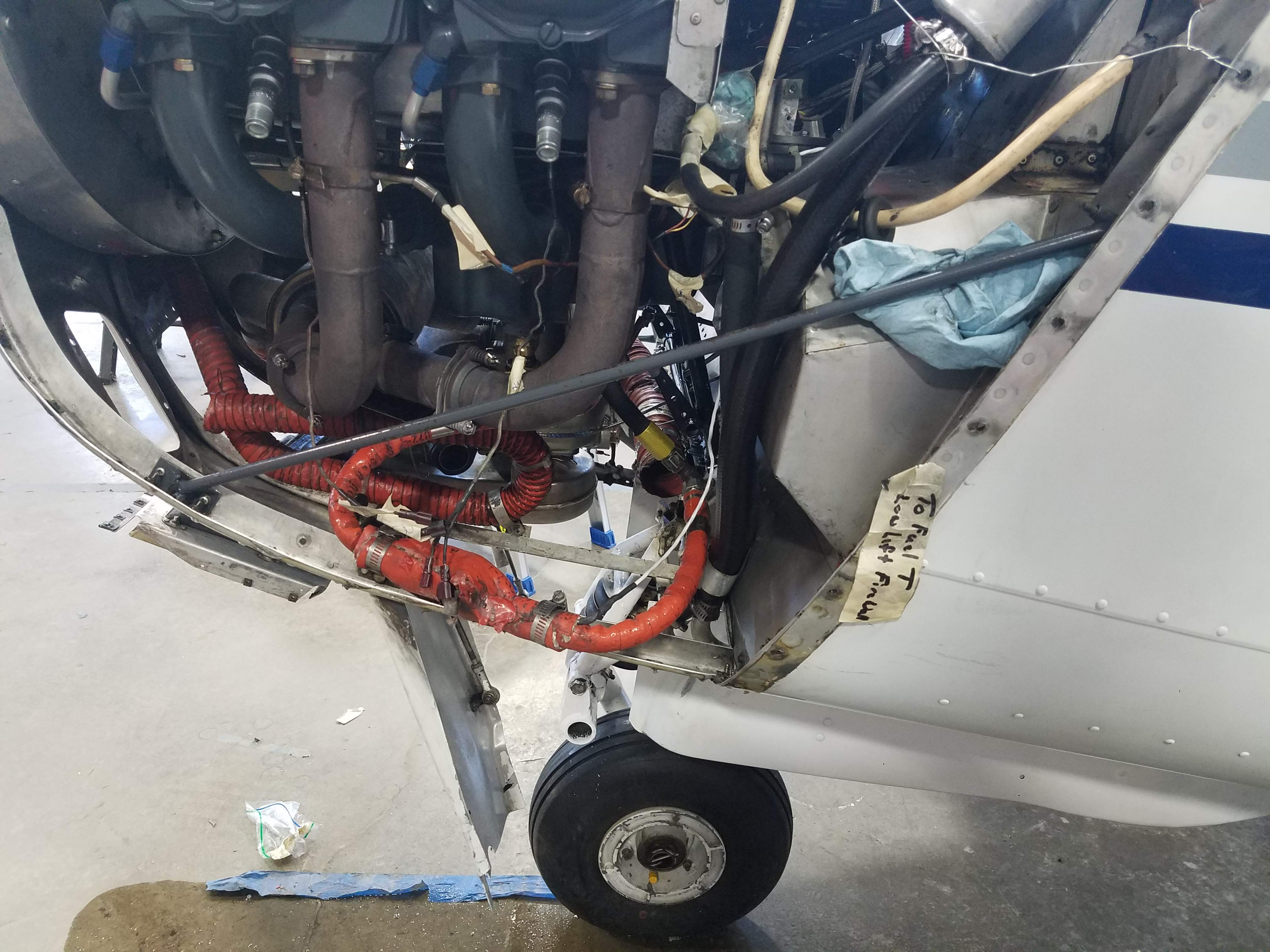
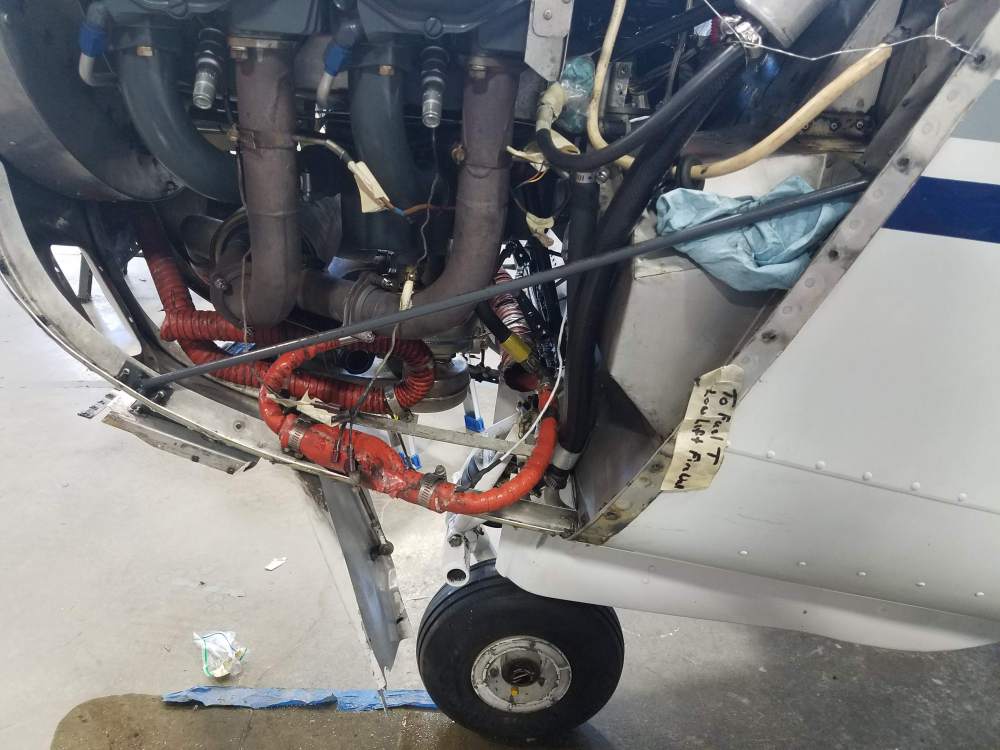
Anyone have suggestions on where I might find the bottom cowl brace that goes diagonally to the firewall? Mine has a week bottom attach point. It maybe could be welded but angle would need to be perfect. Thank you for the help
-
That's a great tip. Thank you
-
even with your example, that's still 80 lbs under gross, so I guess throw in some luggage. Getting 4 in a C would be a challenge especially the ladies in the back seat. Sure to be a cold dinner conversation LOL
-
When I went shopping one of the first questions I'd ask before going to see the plane was what the useful was. My AP told me that a heavy plane that can't be explained by equipment may be indicative of repairs from mishaps. I believe the post originator previously mentioned in another post that his new E has long range 77gal tanks, so that would solve the mystery additional 150 lbs 77 gal - std 52 gal. Also don't forget that not all of that fuel is "usable" so it becomes part of the planes empty weight. If it has bladders there will be more unusable fuel = more weight = less useful. The plane has had some nice panel upgrades that should have saved some weight. However perhaps some of the speed mods added a few lbs. Not entirely comparable because mine is a C model, but my useful load is 1,028.45 lbs with a CG of 44.17" with two blade scimitar prop. My batter is in the cowl and nose weight is almost 100 lbs less than yours and somehow you still have an aft CG. If you do a pre-purchase inspection, you may want to request an actual weight & balance or do it at annual. Last year I sold a plane and buyer at pre-buy said didn't want it because it was more than 300 lbs heavier than I said. I asked to see the W&B his mechanic did and I realized the difference was divisible by 9 indicating a number transposition. Sure enough a number was transposed (no way the right wing was 270 lbs heavier than the left). His Mech was embarrassed when he weighed again and was within 2lbs of my certificate. The point is often W&Bs use the previous as a starting point and get adjusted for equipment in/out. If someone made an error along the way it just gets carried forward and compounded if not caught. My question..... so how does one get 1,028 # into a Mooney 20C anyway? LOL. I guess true meaning of, "if you get it in the plane, you can haul it".
-
Thank you for the reply and review. I have been unsuccessful in finding pictures of how it attaches on a Mooney. It's pretty clear it must have a post that goes through the trunnion hole like factory tow bar, but the Sidewinder requires a way to lock it in place to counteract the torque of the roller, so where does that attach? Also did you buy the handle extension, or is the standard sufficient? Unlike a Bonanza where the gear is at the forward portion of the cowl, our Mooneys are at the firewall and further aft. Thanks
-
I'm curious if anyone owns or has used a Redline Sidewinder portable power tug/towbar on their M20? If so, are you happy with it, pluses, minuses, etc? Also did you purchase the extender since the nose gear on our birds is set back behind the cowl? I did s search and didn't find similar topics. Thanks for the help/info.
-
They look great. Did you have to do a 337 or FAA approval since they are a replacement for Beechcraft yoke? Thanks
-
2 blade vs 3 blade on a O-360?
Tcraft938 replied to jakearey's topic in Vintage Mooneys (pre-J models)
When looking to purchase a 20c I flew a few. One had a 2 blade McCauley the other two were hartzell one 3 blade the other new 2 blade scimitar. The slowest of the bunch was the two blade McCauley and worse climb. The 3 blade looked cool was nose heavy in landing but that could be other factors as well. Due to aircraft specifics I went with the new 2 blade scimitar aircraft. It was smooth and similar speed and climb as three blade. Got it home after the prebuy and my AP did a lot of research with Don Maxwell prior to my getting home. First oil change he checked and corrected engine alignment and did a repair on the dog house as well as aileron rig check. Maybe my imagination but that made it smoother, faster and better climb. I would say I have to be within 25fpm of the three blade I flew. But this all leads me to the question. "What did those other planes also need that was not prop related?" No matter what, it was still 3 different airframes. I would love more ground clearance, not for grass but because I'm new to mooney and just nervous/respectful of narrow margins. If you're curious about performance data, a flight with full fuel and one 170lb human ballast at 6500 msl 30.17" baro 52F MP 23" almost wide open prop 2425 true airspeed 150.8 kts. GPS ground speed data on 10 mile leg triangle confirmed the above with .6 kts. The flight home from purchase was similar conditions, cooler and I thought the 146kts I was getting was good on a little more than 9 gph! Look out wife, i have a mistress and I'm going to tell you all about her. Lol. Seriously i really appreciate the AP taking his own time to research the plane and not do what many AP told (they are hell to work on, you're going to pay me a lot). Ed researched and as he worked, he found a lot about the plane he liked, thought superior, "if you stop, think plan, execute it's not bad at all, if you insist on working on it like a Cherokee you have problems, the biggest of which, you're a lousy mechanic". I really appreciate him letting me get involved "learn your airplane. If you're somewhere and need an AP I want you to know your plane chances are he wont". He gives me the bill and theres no labor on it, just filter, oil, and some misc hardware $65, then fuel $400. I ask if fuel was supposed to be labor, he said, "no the labor is my plane warming gift to you. I would rather see you fly it and that's the fuel charge, I dont want this thing to be the typical mooney around here that flies 5 hours a year. I want you to have no excuse to not fly it at least 6 hours a month. Shes solid now, fly her she will be kind, neglect her she will bite you hard". Then he went back to work on the MIG 17 he is chief mechanic on. Would engine alignment and doghouse make that much diffrrence? -
My 20C had the PC system removed prior to me. In it's place is an electric trim with a rocker switch and indicator on the panel. The left aileron has a 3/4" by 5" tab on the trailing edge with a thin wire pushrod that goes into the aileron. So far, albeit the plane new to me, the system is not really necessary, it barely gets an imbalance. I've operated the system to make sure it works, it's pretty effective and does not impact speed at all. Then again, I have not looked for the Gerbils. :-)
-
HRM good point. I have the 100mph flap extend speed and that can be ungodly low to get to so need the gear at 120 to help. I'm curious what the change was to a the few years later models where flap speed increased to 120. The 100 can be a teasing number on the airspeed indicator.
-
Thank you for the comments everyone. Please understand, while new to the 20C, I am by no way admonishing the J-bar system. Still a little awkward with it but I like feeling what's going on. Maybe it's just in my mind, no pun intended, but it's comforting to feel like you're linked to the process, rather than flipping a switch and holding your breath. I'm also someone that figures "its going to happen to me first" so I was just intrigued by the simply wire and as a backup. However if flying an instrument approach, swinging ones head side to side to look out windows would not be a good thing regardless if have manual or electric gear. My checkout was with an experienced CFI, Air Force test pilot and long time vintage Mooney driver. His phrase was watch what you do, trust what you feel confirm with the light, or really just use the light more as a reminder you should have done the other two". My initial checkout with a different instructor was simply give the bar a tug aft on base to confirm it doesn't pop out. The better (more experienced) instructor taught me about the pulling the collar straight down without pushing the release button with thumb was a more confirming and indicative check. I'm sure there are opinions for and against. Personally I think the weakest part in the J-Bar chain is a complacent or inattentive brain. I will work hard to leave that failed part on the ground.
-
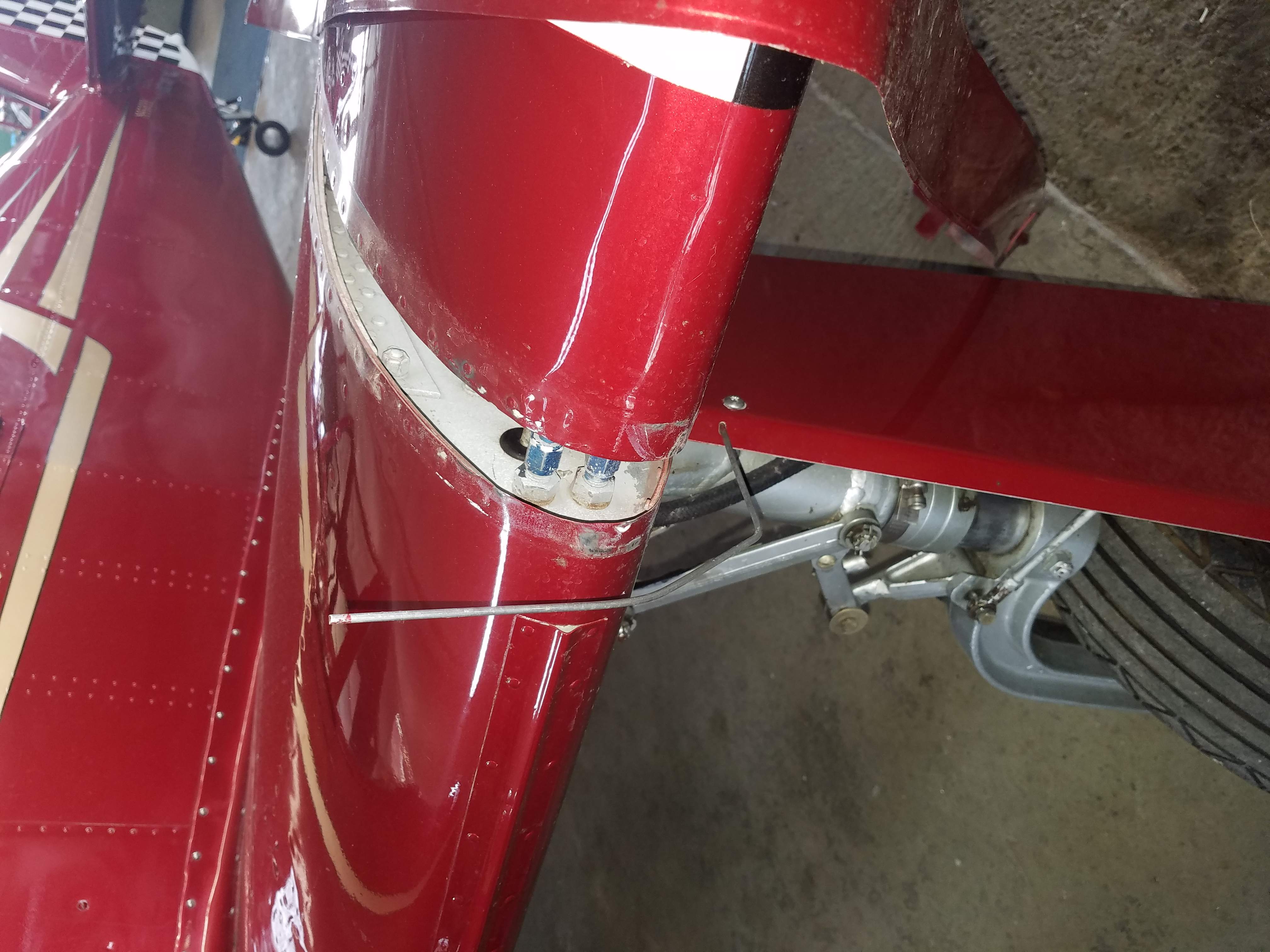
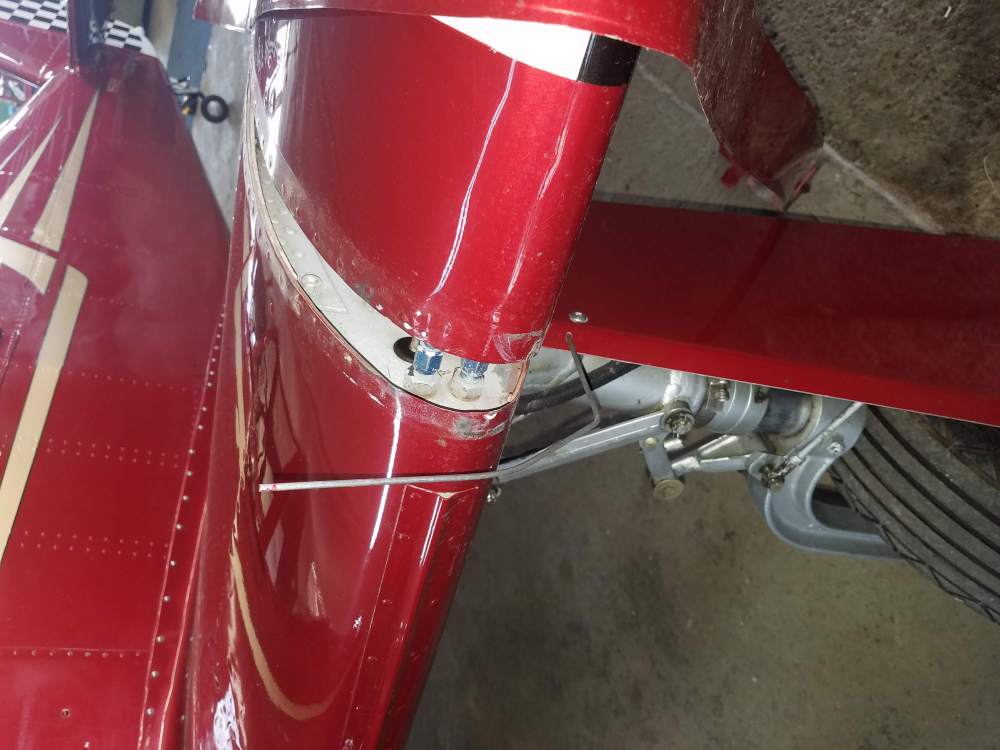
I recently saw a swift getting an annual inspection and noticed something that I thought was a cool idea and dirt simple. A wire rod that attached to the gear door extending forward to just forward of the leading edge and then bent upward to be above and perpendicular to the leading edge when landing gear is extended. When gear is retracted it's parallel to the wing about 1/2" below it. Much more informative than a green light that is connected to a switch that holds the J-Bar. Just look left and right and if see that wire sticking up, you know your mains are down and locked. I jokingly said, "hey lets do that to the 20C!!" He took me serious, told me it would require 337 and FAA approval and a bunch of other things he told me. I'm thinking, really? for a wire and two screws? Then he does his best to act serious and angry, but the smirk gave him away..... "now look you're a new Mooney owner so I will cut you some slack this one time, but you fail to see the huge reason why you can't do such a thing. You have a Mooney for cripe sake, a paragon of speed and efficiency, you do that it will be 1/2 kt slower and kill the clean aesthetics and that my boy is Mooney Blasphemy. Now wash your mouth Philips XC, say ten hail Lycomings, put $5 my poor box and your grounded from the Mooney for ten days, and oh, give me the keys I'll exercise her for you". Geez you'd think I wanted to bolt a big mirror on it. :-) So of course at annual I'm going to have to come up with something else I want to do, just to get him going. Any suggestions? Maybe review mirrors or turn signals? Hope no one minded the levity. However, the wire is a simple and effective indicator.
-
Unbaffling the 200 horse Lycoming
Tcraft938 replied to DJ67's topic in Vintage Mooneys (pre-J models)
I wish someone would design a composite clamshell type doghouse like many homebuilt have. Much better directing of air and easier on/off. They would probably cost $10,000 though, $9,000 to get it approved. -
Thank you very much everyone, very helpful. I have my access panel off now to install the engine. I think my favorite response was from an avionics technician "if you want to keep the rain out, you have nice IFR avionics, just leave the cabin cover on. It's cost effective, fast and simple, in other words a Mooney Solution". LOL
-
Anyone have suggestions on how best to seal the what I call, "the avionics bay panel"? While I like the look of the 201 STC, I like the ease of access to avionics, engine mount bolts, etc. I know my luck, two weeks after I installed a 201 windshield STC every piece of electrical equipment will have an issue, one at a time. :-)
-
Another IO360 with hosed Lifters/CAM
Tcraft938 replied to Stephen's topic in Vintage Mooneys (pre-J models)
I probably will get shot for this, but my recent readings on Lycoming recommendation for overhaul is 2000 hours OR 12 years. A good example, I know someone that had a mid time engine running fine, no metal in the oil good compressions etc. Had a very minor prop strike with a rubber construction cone. Damage to the prop was enough that it had to be pulled and overhauled. There's an AD that triggers in this instance that basically equates to might as well landed gear up, the engine needs to be pulled and tear down inspected. If it goes to a Lycoming certified shop they are going to say, "it needs to be overhauled because of the Lycoming Service Bulletin that says 12 years and your last OH was in 2001". So now he had a big decision, take it to a non Lycoming center for just the tear down inspection, get most of it covered by insurance, or put about $10,000 of his own money into it now and get a fresh factory new limits OH with 3 year warranty. What would you do? For him, he went with the overhaul and probably good he did because issues with the case and cam were found that would not likely have made it anywhere near TBO. In looking back through the logs there was 8 years of spiritic little use, some years with no use, then him purchasing and flying on average 80 hours per year for 3 years.. Could that be the culprit? No one knows for sure, but it didn't do the engine any favors. In the end it worked out for him, fresh OH engine for less than half price. More importantly maybe saved from a potential engine failure. However fresh overhauls seem to fail more often than regularly flown mid-time ones, but a discussion for another day. -
Jake, If you are an AOPA member work through them and they will shop for rate based on the plane and your particulars. They sometimes have some pull with the finance companies because they can bundle the loans. Pilot Bank will finance a 1962. Depending on the amount financed will affect the rate, term and down payment. Usually under $30,000 means max term of 10 years and 20% down, rate around 7.5%. $30,000 to $50,000 term can be 15 years 15% down and rate around 6.5%. I would also offer to save initial interest you may want to proceed with buying it outright and then down the road if you need financing to assist with big ticket items such as engine overhaul, you contact them and finance that. They usually will allow you to finance up to 85% of the value of the plane for engine and avionics, and those improvements increase the value. In essence you are using the equity in the plane to improve the plane. Bottom-line to answer your questions, you need to get on the phone and e-mail and make some contacts, or work through AOPA Finance or broker to do it for you.
-
James, you comments sound very familiar. My A&P until very recently was the maintenance crew chief on a B-17 and Mig 17, and was on the restoration of both. So of course as we worked on the Dog House I could tell his wheel were turning. He suggested nut plates as well and said, "let's make template now while it's easy and good learning experience for you and I'll teach you about making replacement parts for ones that look most likely to fail. Something for you to do while you're going nuts waiting for the engine to come back". All the other A&P's in my area reacted with "OMG an old little Mooney?!!!! I hate them". This guy said, "I worked on a Mig 17 where you have to remove the tail and half the fuselage to work on the engine, this is just sheet metal and screws, very doable". That's the attitude I want. However, he laughed when he looked at the covers over the spark plugs and commented, must be mooney technology had never heard of hinges, or they just had a lot of surplus screws".
-
Thank you everyone for all the help and diagrams. You were right, it came off pretty easy once logically went at it. Many portions didn't have to be taken apart and that way came off in three large sections. No cracks noted. Thanks again
-
Thank you very much. Granted it's not apart yet, but I did look for cracks, none so far. There's a couple of locations where previous hole were and are now riveted covers. I'm amazed that there's not some sort of fiberglass or composite plenum cover to replace it. Because it's for a certified aircraft, it's not supposed to be easy and would cost $10,000 for a $200 part.
-
I have a 1963 Mooney M20C. Will be removing the engine for overhaul, so it all has to come off and more importantly go back on. A&P said to go ahead and get the cowl and doghouse off "that will keep you real busy" he said. I have the side and top cowl off, the bottom cowl looks real fun (not) and I have not started the doghouse/baffle. Maybe I will just leave it to him. I thought he was sarcastic, but maybe more serious than I know, when he said, "once you get at the engine the getting the engine off is the easy part".
-
Does anyone have a video, instructions or advice on process for removing the dog house? There are a thousand screws and I'm betting a knowing person knows which ones and the order to make the job easier. Thanks
-
Unless I'm misunderstanding your write up I would be concerned another fault may pop up down the road regarding the engine, accessories and hoses if it's only flown 4 hours in the last few years. You commented it had 4 hours since overhaul and owner didn't fly it for few years due to loss of medical. In instances such as that, my A&P recommended I tell a broker/dealer, you fly it 25 hours, I'll have a pre-purchase inspection then. You could say similar to the broker, say $68,000 everything works and they fly it at least 25 hours prior to your pre-buy inspection, or you do the $50,000 or whatever you're comfortable with and will take it tomorrow. To many sellers, especially with these faults, there is great value to a quick and easy sale v getting asking price but potentially running the pre-buy gauntlet. :-)
-
Which Cowling Enclosure Mod?
Tcraft938 replied to Tcraft938's topic in Vintage Mooneys (pre-J models)
Thank you for clearing up my misunderstanding. -
I am about to have the engine overhauled, so I got to thinking while the engine is out and cowl off, this might be a good time to think about the cowling enclosure that makes the air inlet smaller. My primary reason is, new engine/cylinders would be a good idea to have improved and more efficient cooling. I have seen a number of 20C's like mine with the LASAR mod, but I recently saw online the ARI enclosure https://aeroresourcesinc.com/proj98-ci/WebContent/product_category/product_detail/998 I have not seen one in person, and I was wondering if anyone in the group has one or knowledge and how it stacks up compared to the LASAR. The ARI has a fairing at the top of the cowl as well as the bottom so it looks more like a 20J cowl. However, it requires shimming the backplate to move the prop forward to receive a 20J spinner. So the ARI appears to be more $, more complicated to install, would likely change the CG a little moving an approx. 70 lb prop & spinner 2" farther forward on the forward most extreme of the aircraft. So is the performance in cooling and/or speed worth it, or is more an issue of aesthetics? Thank you for your help and advice.