
0TreeLemur
-
Posts
3,268 -
Joined
-
Last visited
-
Days Won
8
Content Type
Profiles
Forums
Blogs
Gallery
Downloads
Events
Store
Everything posted by 0TreeLemur
-

Propeller Flange Bushing Replacement
0TreeLemur replied to 0TreeLemur's topic in Vintage Mooneys (pre-J models)
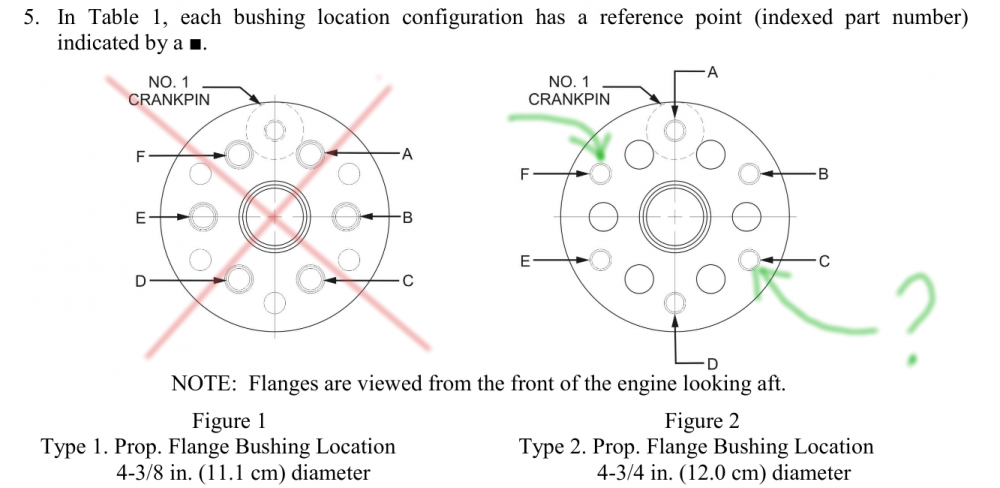
Skip, you are on the same page as my A&P. He said the same thing. That can be tested with a 1/2x20 bolt in that bushing and turning it with a torque wrench? Should see the rotation if that is the problem. It probably is turning given that the threads appear mostly intact. Not smooth at all in appearance, which would indicate stripped threads BTW- I removed the prop today. The prop shop where I bought it is going to replace all six studs. After removing it, I measured the bushing dimensions, and it is definitely the "F" bushing, because it is about 0.03" larger diameter at the flange face than the "C" bushing. -Fred -
Propeller Flange Bushing Replacement
0TreeLemur replied to 0TreeLemur's topic in Vintage Mooneys (pre-J models)
Thanks @PT20J. Question No. 2: after doing some research about how to extract propeller flange bushings, there seem to be two methods. (1) an expensive tool that is made solely for this purpose, and (2) an approach using two sockets and a threaded rod/bolt to exert force on the bushing and force it out of its hole. Does anyone have an expensive tool they would be willing to share or lease? My A&P IA doesn't have one. Any thoughts on the likelihood of a good outcome using sockets? Risk of damage to the flange? Anyone done this? How hard are the bushings to extract? As always, any input appreciated. I love the power of the MS community. -Fred -
Propeller RPM control issues
0TreeLemur replied to Flybeech21's topic in Vintage Mooneys (pre-J models)
If you search google with "soil screen removal site:mooneyspace.com" you'll find a couple of great videos showing how it is done, blood and all. It is doable. Being a small handed contortionist helps. -
That was 1981, so class B didn't yet exist. More correctly, I was not in the Stapleton TCA. That said, even today the DEN class B has a nice corridor about 10 miles wide running north-south along the front of the Rockies. Mountains repel class B airspace. The controller was very understanding, and I was very clueless. Unforgettable experience.
-
Propeller Flange Bushing Replacement
0TreeLemur replied to 0TreeLemur's topic in Vintage Mooneys (pre-J models)
A data point from my trip to the aircraft this afternoon. I pulled the spark plug on cyl #1, and turned the prop to TDC. The prop was oriented 1:30 to 7:30, with the offending bushing being at the 7:30 position. I saw the mark on the ring gear you mention but it had what looked like a 25 next to it, so I wasn't sure if that was a BTDC indicator. Based on what you wrote Skip, this suggests that the bad bushing is in position F. Conversely if I hold up a figure showing the orientation of my propeller from roughly 1:30-7:30 and rotate it 90-degrees CW, as opposed to rotating the above figure 90-degrees CCW, it seems to confirm F. Do you agree? Thanks a bunch for your help. -Fred -
In late summer I took my old Hartzell prop in for overhaul, and the blade roots were found barely out of spec. Rather than wait for parts or buy used, we decided to upgrade to a Top Prop. After 20 hours flight time, the paint started coming off the new prop. Last week I returned it to my favorite local prop shop where they applied a new paint job. So far so good. Saturday while reinstalling it with my favorite A&P IA, one of the prop flange bushings would not achieve the specified 60-70 ft lb of torque. So I need to replace that bushing. Looking at Lycoming SI 1098Q, I see that it is one of three unique part numbers. It's not one of the four long ones that all have the same part number and protrude from the flange face. It's one of the two short ones that do not protrude. Replacements are about $150 each so I am not going to order two and use the one that matches what we remove. According to the SI, if I can identify the No. 1 crank pin, then I can identify the p/n. See figure. Help: How do I identify the No. 1 crank pin on the flange? The prop is still on the aircraft. With reference to the figure from the Lycoming SI, it is one of either F or C. How can I tell Which without removing the prop? Yes, I know it is easy if the prop is off, but it isn't yet. Guess, is the No. 1 crankpin the one that is vertical when cyl #1 is at TDC? Is there a marking on the back of the flange that I might see with a scope? Thanks. -Fred
-
A long time ago in a land far-far-away, I flew a 152 from southeast Colorado to Boulder/Jefferson County (BJC) airport to take the PPL written. My instructor told me to fly to southwest Denver, then north up the corridor between the Stapleton TCA and the front range. I was 16. After flying VFR through the Arapahoe County approach path and scaring anyone on final to death (if they saw me), and then turning north, I contacted BJC tower and told them that I was a student pilot, but I couldn't find the airport. He asked me to look for big blue water tanks on the ground. Me: I see the tanks, I'm a few miles south. BJC TWR: You're on left base for the active runway. Clear to land. Everyone else stay out of the way.
-
He FLEW!
-
Can't wait to see the press coverage after the first malfunction and crash. I speculate that this would make the MAX fiasco seem comparatively calm. Better yet, when in the AI flown ops center they see on their terminals: ALL YOUR PLANES ARE BELONG TO US. SENT $100BILLION BITCOIN TO ACCOUNT A2641EG14772D3 OR THEY GO DOWN.
-
NORDO?
-
M20C Rudder Trim Adjustment
0TreeLemur replied to 0TreeLemur's topic in Vintage Mooneys (pre-J models)
Affirmative. Just as you describe. I see what you are saying about how the S&MM shows the rivets. I'm not about to go bending no rudder! So, I was misreading the S&MM, and I can bend that little aluminum tab more? I think if I bend it maybe 1/4" or so, it might trim the rudder at cruise. Anybody know? -
M20C Rudder Trim Adjustment
0TreeLemur replied to 0TreeLemur's topic in Vintage Mooneys (pre-J models)
Sunday I used straight-edges, calipers, etc. to adjust the rudder trim tab as described in the S&MM with the objective of adding right rudder trim in cruise. The tab was bent slightly to the left at the top, and slightly to the right at the bottom. Using the sheet metal bending tool, I went ahead and to the best of my ability bent it all to the left by the maximum published amount, 0.08". Then I went flying. Flight report: In cruise the ball is maybe slightly more centered. It helped a little, but not much. The most obvious difference is that before adjustment, when holding right rudder in to center the ball in cruise, when I would take my foot off the rudder pedal, there would be some tail wagging as it adjusted to the lack of trim. It doesn't wag as much now, so it seems to help. I conclude that the maximum 0.08" deflection of the tab provides insufficient trim, but making it more uniform along the tab helped. -
ditto
-
P. Bertorelli wrote a really interesting piece on artificial intelligence replacing organic flight personnel that appeared in today's AVFlash. Fantastic article. The largest artificial neural network in existence today (late 2020) consists about 100 billion neurons. That runs on hot racks of GPU's weighing thousands of pounds and consuming 20 to 100 kW of electric power. Our brains contain about 100 trillion neurons. In electronics, increases in component count proceeds on an exponential curve. Getting all that compute power into a low-power and light weight flight ready package represents some pretty grand technological challenges. As an engineer, I believe solution of these will take a while. Secondly, deep machine learning of the type that the computer scientists feel can mimic or surpass the human brain in learning tasks exhibits great skill when tested within the range of the training data. The challenge arises outside the range of training data, where the machine learning algorithm is forced to extrapolate. The human pilot relies on experience, often with good outcomes, sometimes not. How will HAL deal with the unanticipated? I suspect in a similar fashion to its organic counterparts. The campy and way ahead of its time 1970's sci. fi. flick "Dark Star" provides an entertaining example of where I'm coming from. Link to article here: https://www.avweb.com/insider/can-a-computer-think-like-a-pilot-its-a-trivial-question
-
Nothing else going on in the world...
-
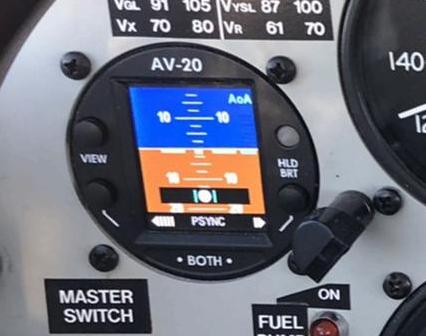
The AV-20 actually does contain a clock I just didn't show that view. The iPad always shows the accurate time and date and is easy to read. I've got a Davtron Zulu, local, & timer in the yoke (see earlier in this thread) that I can use to verify Zulu time. I can cross check it quickly using the GPS, and the engine monitor. As shown the timers on the AV-20 indicate seconds. The automatic flight time I find really helpful for fuel management. The battery backed-up AI provides a lot of redundancy that I think makes it the most useful thing to put in a 2-1/4" hole. I'd rather be looking at that when partial panel in the soup than an 8-day clock doing its happy second-hand sweep.
-
From the FAA I get a special issuance that includes a pixelated digital signature. I could scan/copy double sided and it would be impossible for anyone to tell. If they digitally sign a medical certificate, I don't think they are too worried about copies. That suggests that the focus on whether or not it is valid. A ramp inspection giving you a bad time about a photocopy just seems unlikely.
-
Best clock/timer I've found so far, with a really useful secondary function. Shows seconds in all views.

-
M20C Rudder Trim Adjustment
0TreeLemur replied to 0TreeLemur's topic in Vintage Mooneys (pre-J models)
-
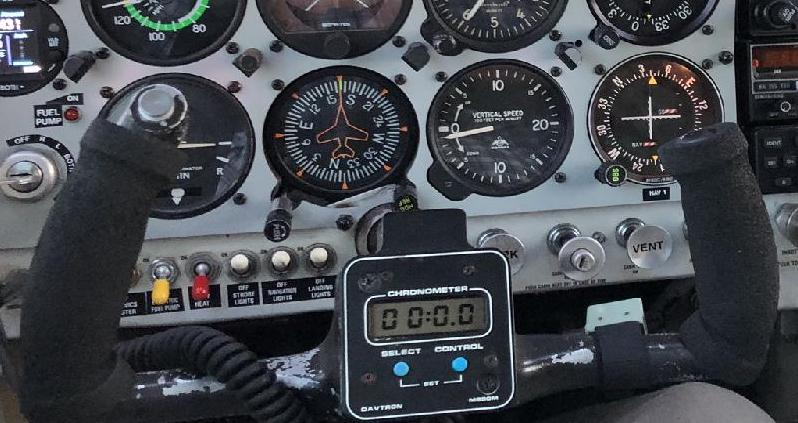
My yoke has one of these. The select button switches between Zulu, local time, and timer. A bit retro but works.
-
M20C Rudder Trim Adjustment
0TreeLemur replied to 0TreeLemur's topic in Vintage Mooneys (pre-J models)
S&MM says 1-degree right ± 2 degrees right, which I guess means 0-3 degrees right. Seems about right. -
M20C Rudder Trim Adjustment
0TreeLemur replied to 0TreeLemur's topic in Vintage Mooneys (pre-J models)
No, I don't have any access to travel boards. I've searched these hallowed pages. Lots of discussion of travel boards, I remember seeing CADD pages and stories about folks making them. I came away from my research with the impression that travel boards are good for getting things close as @RobertGary1 wrote above, but actual final adjustment requires flight testing. While taxiing, I think it is hard to tell with our ankles if the rudder pedals are exactly the same point when traveling in a straight line. I'll look over at the passengers side when I taxi this weekend. Interesting idea. I'm going to make a silly little travel board to fit the now-unbent rudder trim tab so I can measure my deflection as I adjust it. That way I can measure the change. I'm really curious to learn how much effect that tiny little strip of aluminum exerts on the rudder position in cruise. I'll file a report. -
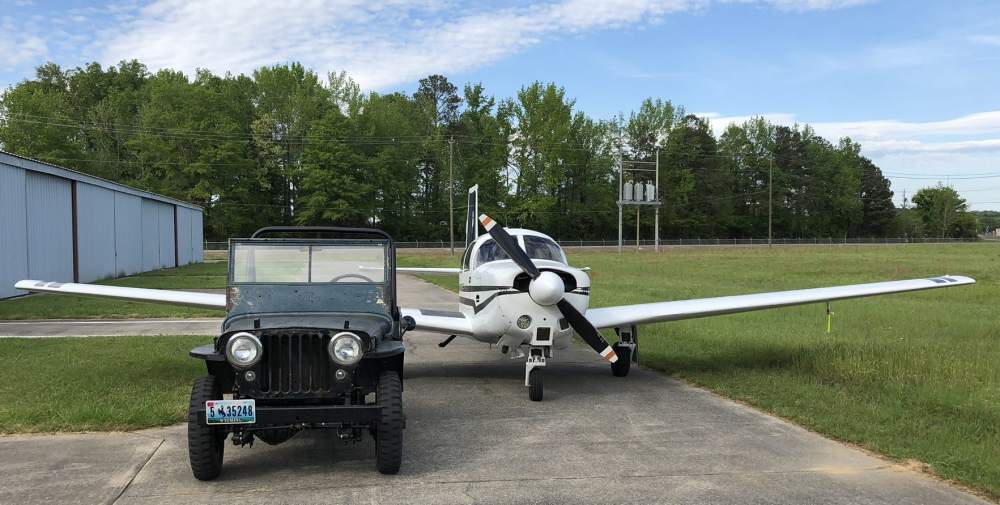
M20C Rudder Trim Adjustment
0TreeLemur replied to 0TreeLemur's topic in Vintage Mooneys (pre-J models)
In every way she flies true, except requiring a bit of right rudder in cruise. I've checked the ailerons and flaps in accordance with the S&MM. They are fine. She's a stock C except for a few speed mods: flap-gap seals, closed bottom-half of guppy mouth and ADF removed. Still has the Willy's CJ2A jeep-style windshield and original cowl. All gear doors close nicely. According the TAS tool in the 430W using POH CAS values, she trues out at 138-143 knots depending on altitude and phase of the moon at 2400 rpm with a 2-blade Hartzell prop. I find cruising at 2400 rpm quieter and more tranquil than 2500, with no detectable difference in speed. When I level out and trim w/o right rudder, the ball is slightly deflected to the right. When I center the ball, she starts to climb. That tells me that the application of that little bit of right rudder cleans her up just a bit more. My original question was answered by @N201MKTurbo who wrote above that a bit of a trial and error helps to improve rudder trim. I'll post my results after I incrementally bend the tab to the left and observe the effect. At cruise I don't expect it to affect anything other than required rudder input and if it does I'll be really surprised. Finally, I don't expect that w&b has a significant effect on the yaw axis. As I wrote before, I have experience flying around with one tank empty and one tank full, and didn't notice anything particularly unusual regarding required rudder input. Of course the PC system could partially mask that. -
M20C Rudder Trim Adjustment
0TreeLemur replied to 0TreeLemur's topic in Vintage Mooneys (pre-J models)
While on a big trip out west in the summer of 2018 the left tank suddenly decided to stop weeping and start leaking. It would lose over 1 gallon overnight into bucket. For the most of that trip, I would use the left tank in its entirety first, then switch to the right. I didn't notice a big effect on the behavior of the aircraft in cruise. The PC system helped to compensate, and I was reliant on the relatively hard-to-read TC100 because had not yet installed the AV-20. I think the PC system masks a lot of behavior. The sensitivity of the AV-20 is what showed me that there was something amiss. -
M20C Rudder Trim Adjustment
0TreeLemur replied to 0TreeLemur's topic in Vintage Mooneys (pre-J models)
New panel installed in 2018 with new shock mounts. Both balls center during straight taxi and 30 psi in all tires. In cruise, trimmed for level flight with no rudder input, the tendency to climb after centering the ball indicates an increase in energy (speed). I think it is a rudder trim issue.