

flyingcheesehead
-
Posts
147 -
Joined
-
Last visited
Content Type
Profiles
Forums
Blogs
Gallery
Downloads
Events
Store
Everything posted by flyingcheesehead
-
Thanks - Good thoughts. Any idea as to why it would have manifested previously only when the right tank was full? What is "FT101 data"? Engine monitor? Unfortunately, we only have the Insight 602, which doesn't log anything.
-
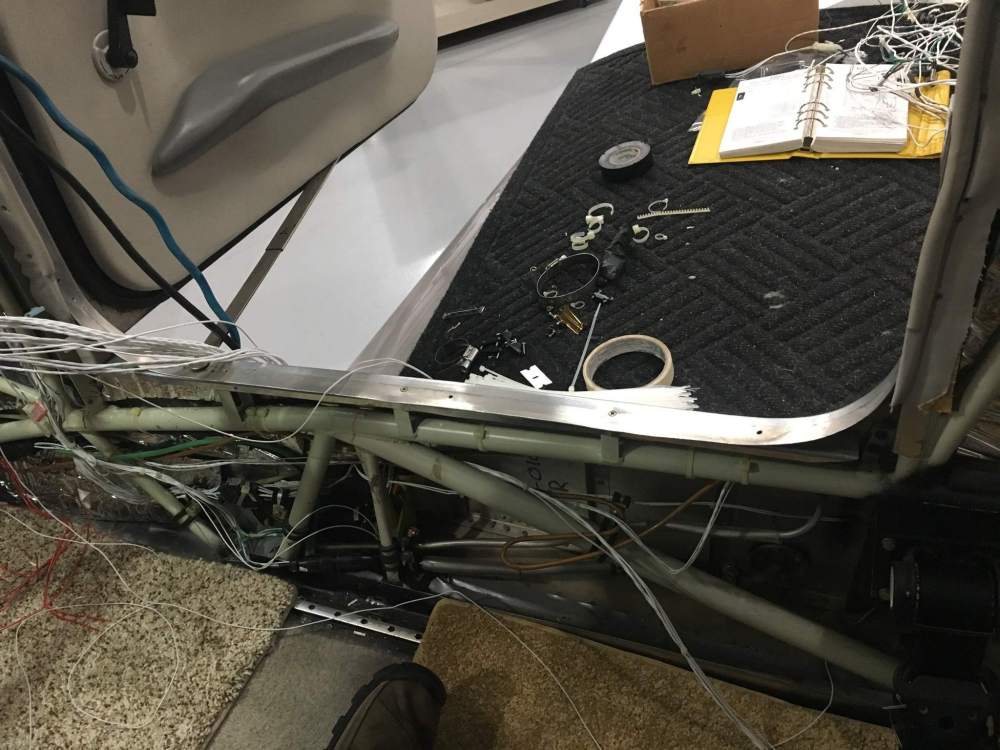
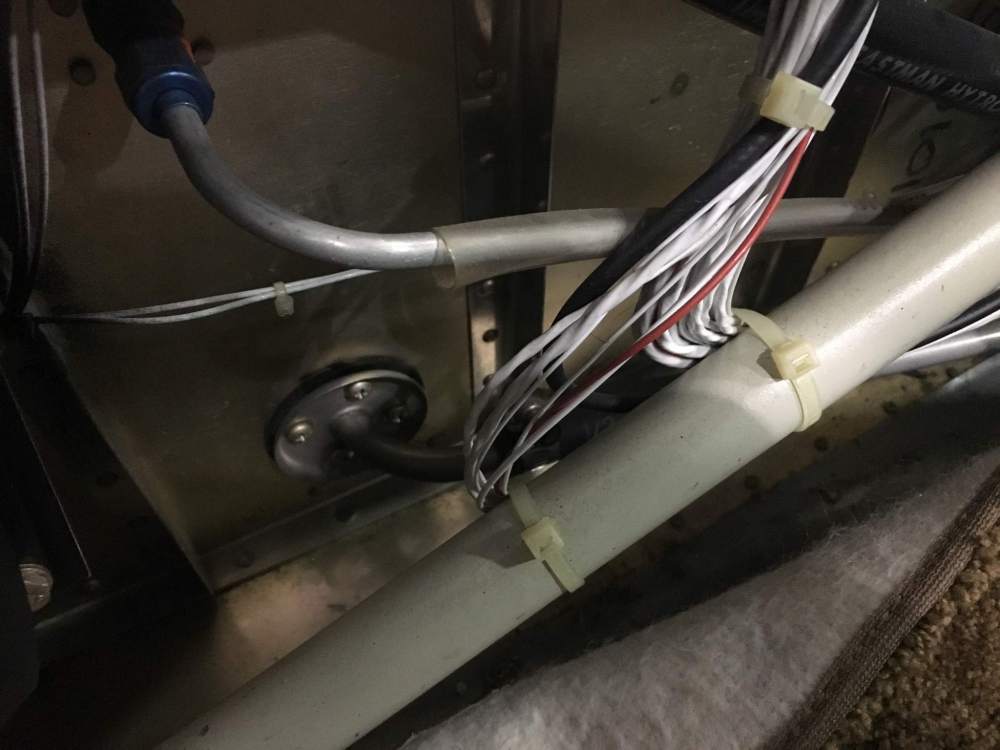
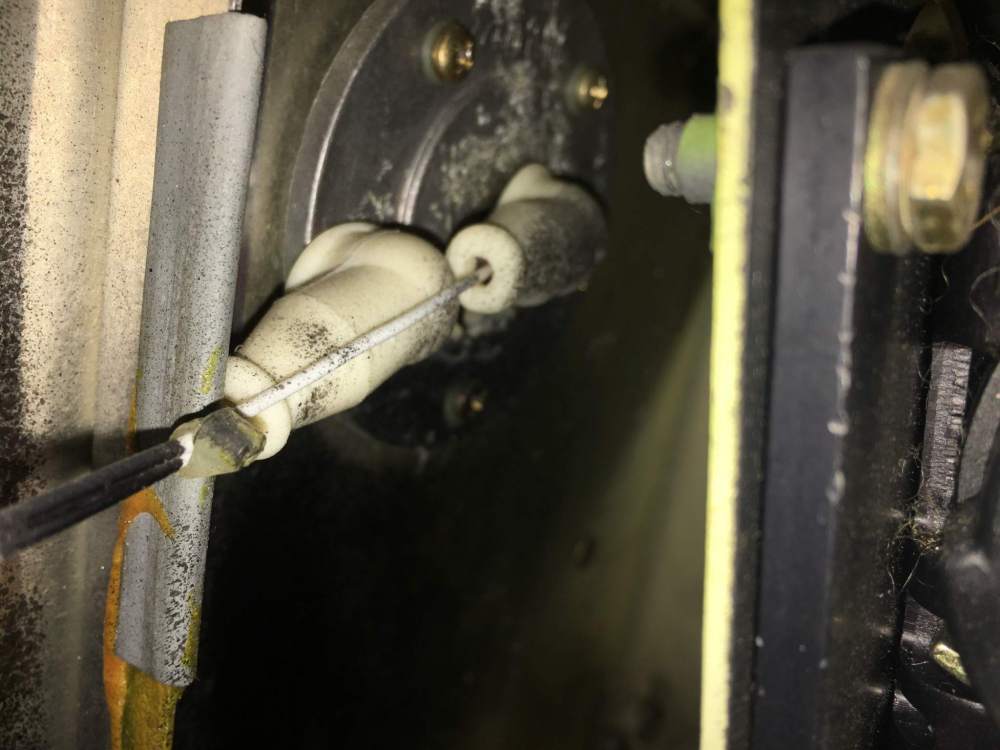
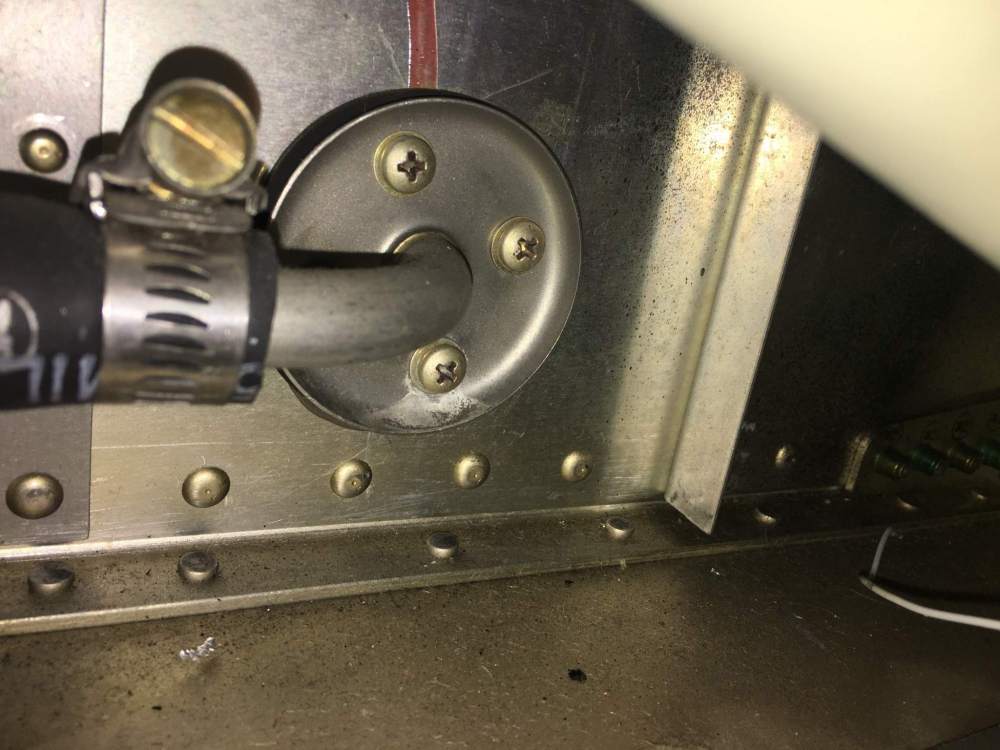
Hi all, I own (with a partner) a 1997 Ovation. For the past few years, we've noticed an occasional fuel odor in the cabin in the winter. It didn't seem strong enough to be concerning, and it seemed to be limited to when the right tank was full, so we generally just tried to burn fuel from the right tank first after refueling. When we had it in for an avionics upgrade a bit over a year ago, I looked carefully at the right wing root and everything was pristine - No leaks, no sign that there had ever been any leaks (pics attached). Today, my partner noticed the fuel odor and found that it seemed to only happen when he was burning from the right tank *and* had the cabin heat on. Is there some location where fuel could possibly be leaking from only one side and having the odor sucked into the ventilation system? What else would cause this particular failure mode? I don't relish the thought of paying someone to pull the plane apart again and find nothing.
-
Winner, winner, chicken dinner. Sorry for the necropost, but I figured I'd follow up now that I ran across this again. Avionics shop finally was able to get the trim servo to show a fault (about 2 years ago now). They went looking for a replacement - Honeywell wanted $9600 for an overhaul exchange! And even at that price, they didn't have any. Luckily, our avionics shop has a fantastic component-level repair guy who went in and was able to repair it himself for under half an AMU, and it's been working perfectly ever since. However, with Honeywell's "fuck you" pricing, we're done with the KFC 150. If it ever fails again, it's getting ripped out and replaced with a GFC 500. I did, however, find out that you can buy a warranty on them, even after they fail, so if someone has a reason they can't or don't want to replace the autopilot, you can do that instead.
-
Every glass panel works this way. It’s not disturbing at all to me, it’s the electronic equivalent of “pendulous vanes.” The KA-310 is required even for the KFC-230. Face. Palm. I use my CWS button for a few things: 1) Activating the flight director after takeoff. Quicker to do it with CWS on the left hand and reach directly for the AP button on the right hand. Does the GFC500 even require the FD to be active before pushing AP? 2) Correcting altitude every so often. Sometimes I use the DN/UP rocker, sometimes I use CWS. With a digital autopilot, I don’t think I’ll need to do this any more anyway. 3) Momentarily deviating to take a look at something. Easy enough to just disengage and re-engage. I don’t think I’m going to miss it. I might even move some things on my left yoke horn. Currently it’s home to trim, A/P Disconnect, PTT, PTC, speed brakes, and CWS!
-
There won't be another Sloshkosh this year, even if it rains a lot. In 2010 we had a lot of snow the previous winter and a lot of rain in the spring and summer so the ground was saturated and the large amount of rain in the last few days before the show just had nowhere to go, resulting in a highly unusual level of flooding. This year, we've had a pretty normal precipitation year, in fact just a hair drier than average. So, the rain will soak into the ground just fine.
-
I still have the original recognition lights... But they're next. Durn things are $138 apiece, a pain to install (A&P required), and not all that bright. They're now both burned out, I plan to search for deals at Oshkosh. So far the most likely contender, due to size, is the AeroLEDs MicroSun. http://aeroleds.com/shop/microsun/ If anyone has switched the recognition lights to LED, I'd sure love to hear about it! Here's a pic of the Ovation with all of its lights (as currently installed) operating:

-
I have a pair of XeVision 50W HIDs for the landing lights and a pair of Whelen Parmetheus Plus for the taxi lights. I like both, though I often leave the landing lights on for taxiing when not near other planes or people because of the wide spread of the Parmetheus Plus taxi lights - I think of the HID's as "high beams" when taxiing. I figure that, compared with the 1000 watts worth of GE 4596's that used to be in the wing, that if my alternator is 66% efficient, I should have an extra 1.75hp going to the prop now and that should be worth an extra half knot, too.
-
Affirmative.
-
Some real-world Ovation numbers for you: I see 25 gph at takeoff in the Ovation. In the climb, I'll be down to 18gph at 10,000 feet. Cruise, I get a hair over 12gph (about 12.2) at lower altitudes, 24"/WOT and 2300RPM LOP. Last weekend at 11,000 I was seeing 10.6 gph. My favorite leg I ever flew in the Mooney performance-wise was Santa Fe back to WI in 4:37 at 13,000 feet burning 10.1 gph and truing 172 KTAS.
-
To expand on my turbo thoughts, and specifically where I get the 150nm-ish figure from: As I stated, I fly the normally-aspirated M20R Ovation, which has a 280hp Continental IO-550. The Acclaim uses the turbocharged version of the same engine, while the Bravo used a 270hp turbocharged Lycoming TIO-540. Other than that, the three planes are very similar. Even with the normally aspirated bird, I climb to 10,000 feet in under 10 minutes at the book 120 KIAS cruise climb speed, though I'm starting to do my climbs in the 135-140 KIAS "Vz" range these days. At 120 knots, that means that I'm 20nm downrange (actually a little more due to increasing true airspeed) in a zero-wind situation by the time I get to 10,000 feet. I tend to do descents at 500 fpm both to be nice to my passengers' ears and so I can keep power up without building up too much speed (I don't like to use speed brakes unless I have to). I'm doing about 180 KIAS in the descent. So, in the climb I'm doing 2 miles per 1000 feet and in the descent I'm doing 6 miles per 1000 feet. With 8nm per thousand feet used up in the climb and descent, one could theoretically go up a thousand feet for each 8nm traveled, but in reality it's pretty inefficient to climb until you have to descend to get to your destination! Some rough calculations I've done indicate that it's good to spend at least half of your flight in cruise. Thus, it makes sense to have a cruising altitude close to 1000 feet above field elevations for every 16nm or so traveled. The real performance advantages of a turbocharged or turbonormalized airplane come above 10,000 feet. At 11,000 feet a normally aspirated airplane cannot make more than 65% power, so unless there is some other operational reason (terrain, weather, over water, etc) it doesn't make sense to climb higher than that in a normally aspirated airplane. However, a turbocharged airplane can make close to 100% power up to its critical altitude. At FL180, a turbocharged airplane can cruise about 40% faster than it can cruise at sea level. If I had a turbo, I could theoretically be pushing 200 knots at 65% power in the low 20's. Let's look at a 300nm leg, normally aspirated vs. turbo. In the Ovation, I would plan on 10 minutes (and 20nm) to climb to altitude, 20 minutes (and 60nm) to descend. That leaves me 220nm in cruise at about 175 KTAS, or 1 hour and 16 minutes for a total trip time of 1:46. If I had a turbo and climbed to 20,000 feet, I'd plan on 20 min/40nm in the climb, 40 min/120nm to descend, leaving 140nm in cruise at around 210 knots for 40 minutes in cruise and a total trip time of 1:40 - A savings of only six minutes! For a 150nm leg, both planes would be cruising around 10,000 feet and there would be NO speed advantage for the turbo unless you used a higher percent power than the normally aspirated plane was capable of producing! For a 500nm leg, I would expect a trip time of 2:54 normally aspirated and 2:31 turbocharged (at 25,000 feet). For a 1000nm leg, I would expect 5:55 normally aspirated and 4:37 turbocharged. With legs of less than 150nm, there's no point to a turbo unless there's an operational reason as previously stated. There's a slight advantage between 150nm and 400nm, with the turbo'd airplane flying at ever-increasing altitudes. Greater than 400nm, the turbo will be cruising at or near its maximum altitude (generally 25,000 feet) and it starts to pick up a larger and larger advantage over its normally aspirated brethren.
-
Rookie, I think a better question is "Which Mooney?" There are short (C,E), medium (F,J,K), and long (M,R,S,TN) body Mooneys. The more stuff you have to carry, the more space you'll want. The short body ones have a reputation for having an almost unusable back seat. Of course, all Mooneys have an undeserved reputation for being "small and cramped" (Al Mooney was 6'5", I'm 6'4" and 300# and only the Comanche is even in the same class of comfort for 4-seat singles I've flown.) There are 180hp ©, 200hp (E,F,J,K) and higher powered (M,R,S,TN) Mooneys. More stuff, more speed, more power (and more fuel burn). There are normally aspirated (C,E,F,J,R,S) and turbocharged (K,M,TN) Mooneys. There are two use cases where turbos are good: Operating from higher-altitude airports or flying IFR over terrain, or frequent long trips. Remember that it takes time to get up and down, so an M won't beat an R on a trip of less than about 150nm for example. I fly an M20R Ovation. I have a useful load of about 1020 lb, long body that I can stuff a lot of stuff into, and I plan on 170KTAS on 12gph in cruise, though I can get 175 up around 9000 feet on that fuel burn. My full fuel payload is just under 500 pounds. If I wanted to, I could fly over 1000nm nonstop with that payload, though I don't particularly enjoy legs that long. I like the flexibility of being able to go far by myself or with my wife and bags, or trade fuel for passenger weight and go for a shorter trip. There are times that I've wanted a turbo - Mainly to climb above weather or terrain - But I would only really use it a handful of times a year, while I have frequent shorter trips. I do have built-in oxygen and I've used it on quite a few occasions - I've gone up to FL190 once and I've gone to the mid-teens several times to climb over weather on a long trip or fly over Lake Michigan. Given the performance I get from the normally-aspirated IO-550 and the fact that the turbo would really only give me a benefit every other month or so, it doesn't make sense for me to pay the extra maintenance and fuel costs of the turbo models. BTW, one of my favorite legs in this bird was from New Mexico to Wisconsin. 4:37 in flight, 172 KTAS on 10gph at 13,000 feet, burned a total of 52 gallons including the climb. There are very few certified airplanes capable of those kinds of numbers. Hope this helps, hope you find and enjoy whatever airplane best fits your mission, Mooney or otherwise!
-
Love my Mooney, but...
flyingcheesehead replied to Guitarmaster's topic in Vintage Mooneys (pre-J models)
We have a 182RG in a club that I'm in. 150 knots, yes, but not at 12gph. You'll burn more like 14-15 normally. We can, however, take full fuel (75 gallons) *and* 770 pounds of "meat" and bags. -
Foreflight. Bumping the map in flight
flyingcheesehead replied to RobertGary1's topic in General Mooney Talk
Go into Settings and set the "Auto Center Deactivate" to "Manual". That's the lock you're looking for - You'll have to tap the Center button again to turn centering off to be able to pan with your finger, but you'll never accidentally pan. You can still pinch-zoom in this mode. I have it set to Automatic (and that's the default) because the number of times I've ever bumped it unintentionally in flight I can count on one hand, and it's easy enough to re-center by hitting the Center (target) button, while I will pan to look at things ahead on nearly every flight. But, that's why there's a setting for it, so we can both be happy. -
Hi all, I have an Ovation with a KFC150 that's been a bit of a pain. There have been two main problems with it: Bad roll servo and computer failing the test at startup. Right now, I'm shopping for a roll servo. The motor has fallen apart. I had it repaired a few years ago, but that repair was highly questionable and the motor has fallen apart again. According to my avionics shop, Honeywell (Bendix/King) wants $7K for the motor and $10K for a new servo! They're quoting me about $3400 for an overhauled servo from another (reputable) source. With installation, that'll cost more than my last annual! Is there a reputable place to get a servo overhauled, or find a used, serviceable one for less? As for the computer (KC192), it has had issues passing its test occasionally, but we haven't nailed down a cause. Last time it was in the avionics shop, they hooked up the test rig, they saw it fail (so they know I'm not crazy), but while they were messing with it, it just started working and they couldn't get it to fail again. I'd noticed it seems to fail the test more often in the winter so they stuck it in the freezer for a day, but it still worked just fine when cold-soaked. Now it's back in the plane and working fine, but I'm expecting it to start to fail again at some point. Has anyone else had this issue? How did you resolve it? Thanks in advance for any help or guidance! Kent
-
ForeFlight integration with Garmin GTN?
flyingcheesehead replied to DXB's topic in Avionics/Panel Discussion
That's not it... Once you get off the coasts, you almost never get airways. Here in the Midwest, the only thing I have to worry about is staying away from Chicago Approach's airspace, easy to do using T265 or V9/128 for a portion of my route. Coming from Madison and going east, it's direct KELSI direct. Coming from Milwaukee, I usually go direct BULLZ, T265 as far as I need, direct destination. With the exception of going around Chicago, I file and am cleared direct everywhere I go, except if I'm headed east. Pretty much once I cross the OH/PA state line, I'm gonna get stuck on airways. Of course, my favorite way to get "around" Chicago, weather permitting, is to shoot down the lakeshore right past downtown VFR under the Bravo while laughing at all the ground pounders stuck in traffic below. If I need to be IFR later in the trip, I simply file from Gary and pick up my clearance from Approach after passing downtown.