John Mininger
-
Posts
205 -
Joined
-
Last visited
Content Type
Profiles
Forums
Blogs
Gallery
Downloads
Events
Store
Everything posted by John Mininger
-
I'm getting to the point where I'm going to need schedule a tank reseal. The last reseal was done by Wet Wingologist in 11/1994. The consensus seems to be Weep No More in Willmar MN. But Wet Wingologist in Fort Lauderdale is much more convenient to the areas that I normally fly. This is a job that I would hope would last another 31 years. So, I really want to go to the best shop. What are the current recommendations? Thanks John
-

SureFly with EAREM37HE plugs? Slick failure?
John Mininger replied to John Mininger's topic in General Mooney Talk
SureFly is also about as explicit as it can be about installing the unit itself at TDC#1. -
SureFly with EAREM37HE plugs? Slick failure?
John Mininger replied to John Mininger's topic in General Mooney Talk
I have a G3X with EIS. I never let the CHTs go much past 400 before I did something about it. They rarely went much past 400 with the cowl flaps open. With the cowl flaps closed however, about 8.8 GPH was about all the power you could make without the CHTs going crazy. I once let it go to about 425 before I started leaning. That was about 9.5 GPH. Maybe it would have gone to 600! -
SureFly with EAREM37HE plugs? Slick failure?
John Mininger replied to John Mininger's topic in General Mooney Talk
Good advice from both Ross and Skip. I should have followed their advice and verified the timing much earlier. As it turned out, the A&P who originally installed the SureFly off field in 8/2024, installed it with the DIP switches positioned correctly to advance to 20 degrees BTDC. But he installed the unit as one would a mag, at the 20-degree BTDC mark on the front sprocket, not at 0-degree TDC. I was actually starting the engine at 20 BTDC and then at 400 RPM, the SureFly unit was than advancing the timing to another 20 BTDC! I was flying the plane at 40 degrees BTDC! The vacuum advance was never hooked up. I was well aware of the high CHT issue and kept them under 400 by leaning. But no wonder I was only able to get about 65% power without the CHTs going through the roof. I finally took the plane to a SureFly dealer last Monday, 8/25 and they quickly found the problem. We borescoped the top of the pistons and saw no indication of detonation. I called SureFly and told them of my experience. They said that they used to hear of this happening when the units were first out on the market. But they haven't heard of it happening in a while. So, the moral of the story? If you have a SureFly installed and you're seeing usually high CHTs, the first thing to do is verify the timing by making sure the unit was installed correctly. John -
On my way out to Oshkosh this year from eastern Pennsylvania, my engine started running a little rough. I initially thought it might be my leaning technique, but the slight roughness persisted. I finally did an inflight mag check and found that my left mag was dead. Long story short, I landed at AGC, rented a car, drove to Oshkosh, and had the Slick 4372 replaced with a SureFly which I bought from Spruce at Airventure and had overnighted to the A&P at AGC. The engine is a IO360-A3B6. In the interest of simplifying the away from home installation, I did not have the manifold pressure line installed. The timing is fixed at 20 degrees BTDC. So far, so good, but my CHTs are running higher even with the fixed timing. I can't get close to POH 75% power numbers without the CHTs going over 400 degrees. I have to be either way rich, or way lean. I'll play around with that in the coming colder months. Two questions: My Slick 4372 only had about 400 hours on it since new. I bought the factory rebuilt IO360 A3B6 with the new mags in late 2019. Has anyone else experienced premature Slick failures? I talked to two other guys just on my airport alone that have. One guy had two failures! Both with lower time mags than what mine were! And my other question is: Is anyone using Tempest EAREM37HE plugs with their SureFly SIMs? Those plugs were originally developed for Electroair, but SureFly will tell you that they're OK to use if "your engine is approved for them". Frustrating stuff. I was planning to replace the Slick 4372 at 500 hours anyway. But not at the beginning of a trip, away from the home field at 400 hours. Thanks, John
-
Will streaming video of the sessions be available for purchase again this year?
-
Lehigh Valley Mooney CFI Checkout
John Mininger replied to cruiserflyer's topic in General Mooney Talk
Ace at ABE still lists a M20C in their fleet. -
I recently talked with J owner who said that she had a SureFly with variable timing installed. She said that her CHTs were 25-30 degrees higher on climb with the SureFly, then with the mags. She said that she had the SureFly SIM reset to fixed timing and the problem went away. I asked her what power setting she used on climb and she said usually around 26 squared. I didn't think that the variable timing kicked in unless the MP was less than 25 inches. Has anyone else experienced this? And good to hear from you Chris. I was beginning to wonder if you were still around. I haven't really spoken to Jack since he sold his C. John
-
On a little bit of a sidenote, I remember Mike Busch saying one time that one of his clients had a pre-ignition event. It turned out the electrodes on one of the plugs heated up and became red-hot, because there wasn’t sufficient heat transfer to the head, because the plug had not been torqued correctly. Turned out it was only finger tight.
-
Interesting. The last time that I asked this question to the SureFly guys at Sun N Fun or Oshkosh they said that even though the SIM could handle a wider gap, the plugs should still only be gapped to the mag spec. But when I looked at the current SureFly installation manual, it says up to .035. Third page: f0684a_5c901873262249e59c4cb300f0fc8bbb.pdf (surefly.net) My Slicks only have about 350 hours on them. I was going to wait until they hit around 500 to change over to SureFly. So I haven't really been following the latest SureFly news. Has recommending a .022 to .035 sparkplug gap been a fairly new change? Thanks John
-
I'm just curious Skip. Just hypothetically, what do you think the optimum gap would be for UREM37BY plugs running on SureFly? Again, just hypothetically of course. Say, you were running an IO-360-A3B6 in an RV-7 with a SureFly ignition system. John
-
Mechanic/shop recommendations; minimalist or Savvy-friendly?
John Mininger replied to dkkim73's topic in General Mooney Talk
And thankfully Kerry's articles are still available on his website: ShopTalk Index (knr-inc.com) It would be great if an archive of all Jerry Manthey's articles were available. I have to think that MAPA still has them. -
The top cowling on my 1977 J is going to need some fiberglass work in the not-too-distant future. It has a lot of spyder cracks, and the holes for the Camlock (or in my case, CLoc) fasteners are getting rather enlarged. I talked to a local aircraft paint shop. They said that it would be a very labor-intensive job. If I’m looking at thousands of dollars anyway, I might consider a Lopresti cowling. But I have no idea what they cost, or if they’re even available anymore. Anyone have any suggestions?
-
It does seem that with all the Cies senders being installed now, the time to do a fuel stick calibration is when the new senders are calibrated.
-
Mooney rocker switch replacement with something else
John Mininger replied to shawnd's topic in General Mooney Talk
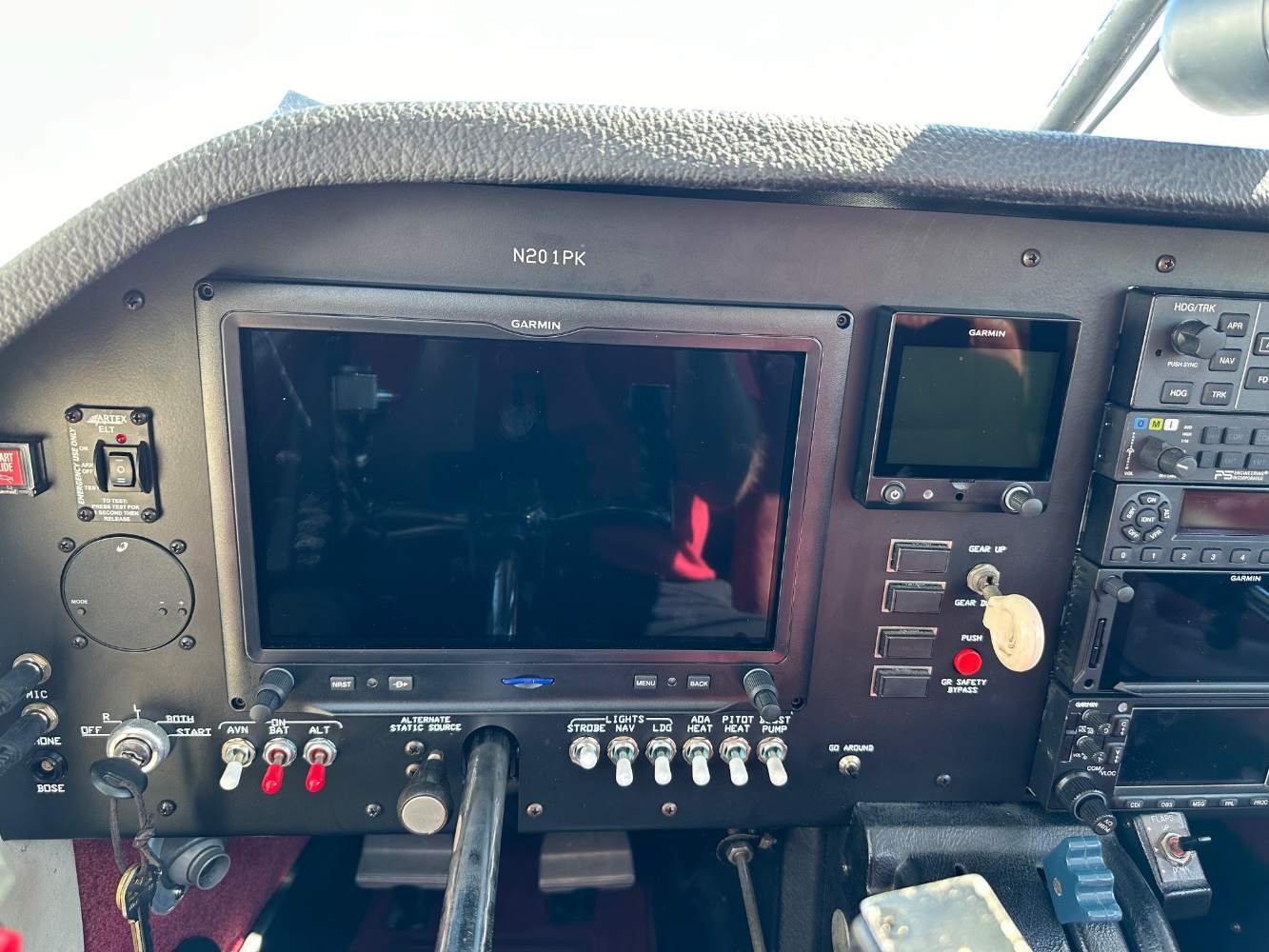
I had my panel replaced a few months ago and I had my old Klixon switch/breakers replaced with Tyco switch/breakers. Tyco Circuit Breaker W31 Series | Aircraft Spruce

-
What was the other 50%? We did spray some avgas on the threads of the jackscrew as best we could to clean it. We then put some grease back on it. That didn't seem to help much. John
-
Interesting. I have to admit, I've never tried going stop to stop on the ground. I noticed the problem when triming up on short final. And it doesn't just slow down, it stops. My serial is 24-0278, 77 J. I'm going to PM you. Thanks John
-
Thanks Skip. Do you know if you release the trim switch and then trim-up again, does the 24 second timer re-set for another 24 seconds? Because when I do that, the servo still has trouble moving the trim up on the second try. John
-
Thanks. He was going to call Garmin. But I haven't heard back from him yet. John
-
A few months ago, I had a major avionics upgrade done on my J. Overall I am more than pleased with the install. One chronic issue that I’m having though is the pitch trim servo on the GFC-500 is not moving the trim up much past the take-off indication point before it just stops. The old autopilot that was removed was an S-Tec 55 and that pitch trim servo had no problem moving the trim to wherever I wanted it. So, I’m not sure if there’s a problem with the GFC-500 servo itself, or there just too much friction in my trim system that the Garmin servo can’t handle it. It does seem tight with the hand wheel when it goes much past the take-off indication. The tech who installed GFC-500 said that it does feel tight, but not as tight as some of the Saratogas that he’s worked on. He said the GFC-500 servo works OK on them. He suspects a bad servo. Anyone else run into this problem? John
-
Don/Paul, Last year there was streaming video (and recorded, I believe) of the sessions available for purchase. Will video be offered again for 2024? Thanks John
-
Plane crash near me in Plano
John Mininger replied to hammdo's topic in Mooney Safety & Accident Discussion
I remember the late, great Ron Blum saying one time that in his investigations of accidents in the traffic pattern, something like 80% occurred while in the take-off or go-around phase. Not the infamous base-to-final turn. I can believe it. I've practiced go-arounds and loss of engine during take-off procedures while at a safe altitude. You learn to PUSH real quick! -
I had a leak in my right tank repaired at Air-Mods and Repair Inc at Trenton-Robbinsville NJ (N87). They also repaired a couple broken rivets on the landing gear spring bracket while they were in the tank. They did an excellent job with both. A little far from the Rochester area though. I have no idea what their current status is. airmodsflightcenter.com 609.259.2400
-
I'm planning some flights around New England next month. Does anyone know if Basin Harbor VT (B06) and Plymouth Muni NH (1P1) are suitable grass fields for a J with outer gear doors? Thanks
-
Being that it will be in the avionics shop in about 10 days, that’s what I’m thinking. Thanks Eric