

wombat
-
Posts
847 -
Joined
-
Last visited
-
Days Won
4
Content Type
Profiles
Forums
Blogs
Gallery
Downloads
Events
Store
Everything posted by wombat
-
A speaker is a not-large expense, but it provides a not-large value. Priceless? Not hardly. Useless? Closer, but not quite. The failure mode that it protects against is extremely rare (I'm making that assertion, feel free to prove me wrong with data) and we have procedures in place (Lost comms) that will work as well. The equipment required for IFR flight can be found in 91.205(d) and a speaker and/or microphone is not listed other than as part of "Two-way radio communication... equipment suitable for the route to be flown". And if you want to claim that requires a speaker and microphone... Well, just don't. The aircraft's certification might require, but removing it is not a major alteration (as defined by part 43 appendix A, section (a)). So I assert that there is no legal requirement to keep it and welcome anyone who is willing to show me a regulation that says otherwise. As @bcg says, the ounces add up. On my 182 my mechanic and I pulled out 29 pounds worth of old wire and avionics. The heaviest single item was about 6 pounds. The plane is way better because of it. Interesting idea about the speaker button being marked 'INOP' if you remove it. I've seen a ton of planes flying around with Garmin GMA 340's that don't have DMEs, ADF's, or a COM3. Why would we need to mark the speaker as INOP but those others would not need to be marked INOP? The same for KMA-24 audio panels. Reminds me of the people who say you *MUST* placard your plane saying that the nav lights need to be on at all times because of the wingtip or tailbeacon ADS-B. Where is the placard requirement for the transponder, which must be on during all the same operations?
-
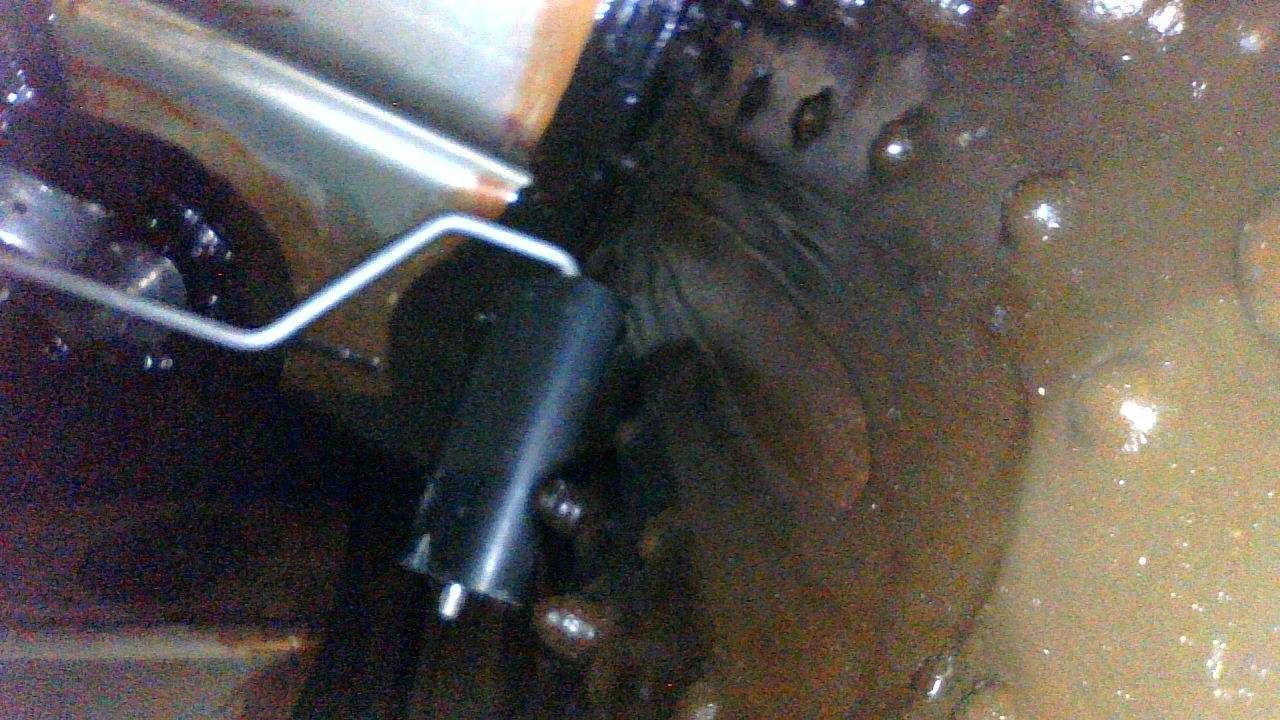
Finally got into the copilot side tank with a borescope and found the float was jammed tight up against one of the screw covers. Got another piece of wire in there with a *almost* 90 degree bend at the very end and was able to pull the float off. It was actually kind of scary how hard I had to pull to get it free. I could see it moving, but the arm the float is on was flexing a lot. Anyway, both tanks now report levels from both senders. So it's time to move on and fix other issues with the plane!
-
I deal with and have dealt with a lot more dangerous stuff. Avgas is not scary. While some of the panels are obvious which ones they are before looking too close, but some are not.
-
I'll probably do something similar, but also use the MVP-50's calibration process. And a bunch of 5 gallons buckets are way cheaper, plus I can re-use them for other things later. CB Club for the win.
-
Yeah, I'm aware of how this all works. Now it's just a matter of getting the fuel gauges calibrated. I think I'm going to buy myself 11 5 gallon buckets, a 1 gallon jug, and a funnel. Then I can add one gallon at a time, wait for things to level, measure with a stick and measure resistance, then put in the calibration points I want.
-
So I got a borescope into the left tank using a metal since the borescope neck was floppy. Then I could see the outboard fuel sender, and was able to take a second rod and go lift it up. It didn't seem to be stuck down at all, but hard to tell since I'm working past the fuel filler flap as well as through a hole in the rib. I held it up for 30+ seconds with the engine monitor on and the fuel gauges still read 0. But then when I went and filled the tank up the fuel gauge was reading 'normal' again, reading roughly the capacity of the main tank only. The right tank is still reading 15 gallons maximum, but once I get it emptied out I'll go and poke the floats in there and I expect it'll work like normal again too. Funny thing, I put 27 gallons into the left tank which was completely dry because needed an extra 150# of useful load, so I was leaving 25 gallons empty and while at the very first it showed about 25 gallons, during the flight I didn't burn any from that tank and an hour later it was showing about 19 gallons left. I guess the fuel was flowing into the long-range tank.
-

Power settings and performance for rocket (Not cruise)
wombat replied to wombat's topic in General Mooney Talk
When I'm at idle on the ground it's showing about 13" to 15" MP. I got some advice to double-check my fuel flow at the 27" MP level flight, to make sure it's really producing the expected power. So next time I go fly solo I'll check that out. @Fly Boomer The title on that page is misleading, on the previous page they have M20K 231, and the next page is M20K 252 so I think they should have titled this page "M20K 305 Rocket (Converted from either 231 or 252)" or something like that. -
Power settings and performance for rocket (Not cruise)
wombat replied to wombat's topic in General Mooney Talk
Thanks, @redbaron1982 that doc and @Austintatious for your info and to @SteveB for joining in! The climb and cruise numbers match for me fairly well, but that IFR/MDA Level number is just way off. 20" MP with flaps and gear down will probably result in a stall if I try to maintain level flight. Do any of you have a power setting you use for a downwind traffic pattern leg with the gear out? Or the descent portion of the traffic pattern? I personally like having a number I try to use consistently so that way if I'm off on performance I can tell it immediately. So far I'm obeying all of the instructions from the Mooney performance chart like the 1" per minute reduction, minimum 25" on descent, cruise power and fuel flow settings and temps. And while the last time I flew I didn't quite get the climb performance in the chart, the ambient temperatures were quite high. The cruise performance is within what I would consider a normal range (about 190KTAS to 205KTAS at 31" 2,300 RPM at 12,500 to 17,500) When I get more time available, I'll test out the other performance numbers. The chart I am talking about is the one from @Jsavage3 here.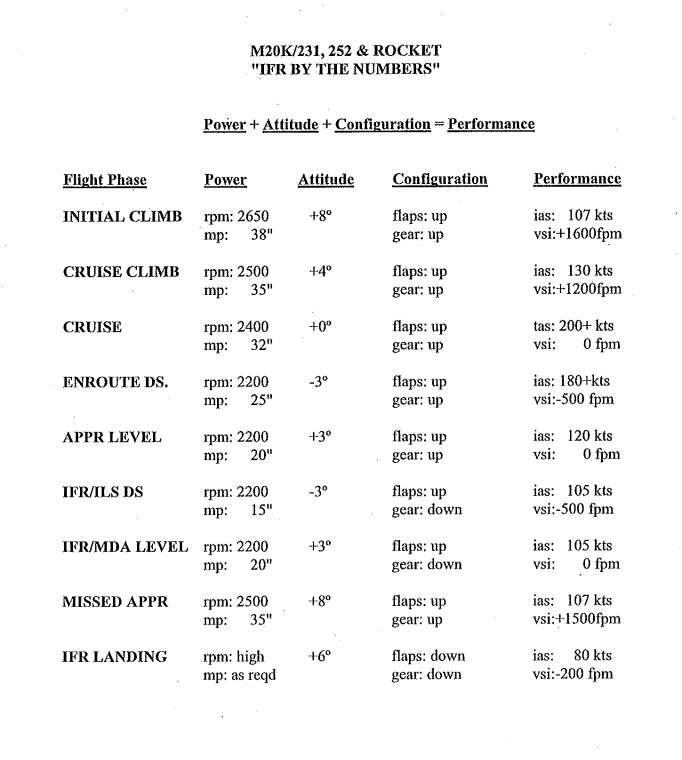
-
Now that I think about it..... I wonder if I can get them both rekeyed so I have only a single key for both planes...
-
On a previous plane I removed the door lock and luggage lock and had them rekeyed to match the ignition key. They were all the same style as the common office file cabinet. My Cessna is a single-key machine too. Such a pleasure to never again put the wrong key in the ignition.
-
I got into the wing tank with a borescope and a thin flexible metal rod (filed smooth and round at the end) this morning and was able to lift the outboard sender about halfway up; the fuel gauge did not change after 30+ seconds. I'm even more confident that it's a wiring problem.
-
Trying to solve the dreaded Jeppesen Navadata chip monthly update
wombat replied to 231LV's topic in Modern Mooney Discussion
@Marc_BThanks, I'll try that out. There is an option in the garmin DB manager to try to fit everything on a single card, so I'll give that a shot next time I'm up there. -
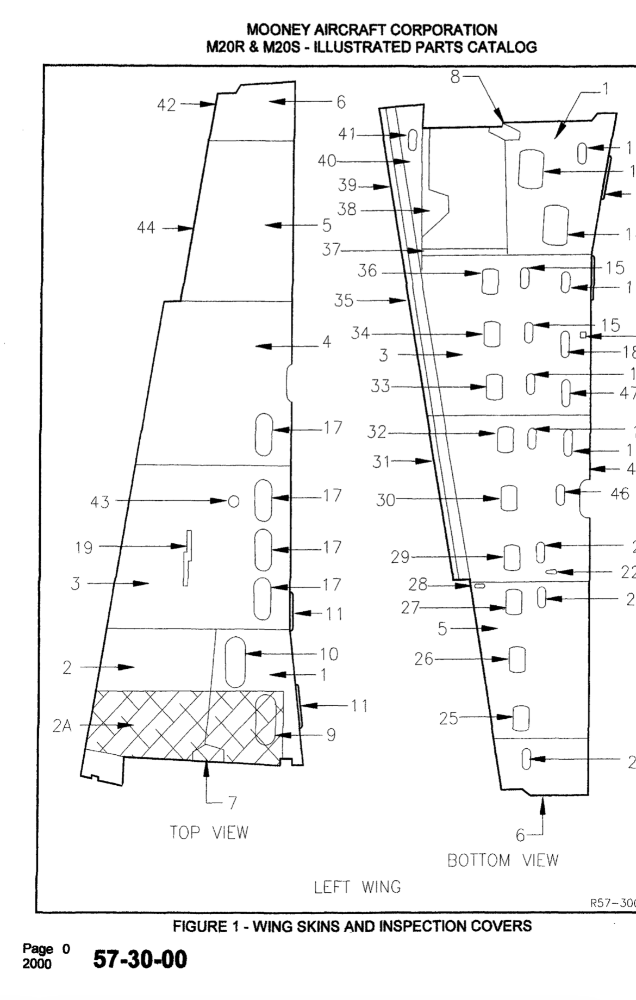
@ShadrachShould I just start pulling lower access panels until I find the right one? Is it immediately obvious when I pull the nearest panel? Can you identify which one it would be from this diagram? Sorry to be so needy. I'm kind of paranoid about accidentally pulling one of the ones from the fuel tank. Twice shortly after landing I noticed the fuel gauges reading "full" for a little bit. On taxi-back to the start of the runway I looked over and they were at 30+ gallons, then I look back a few seconds later and they were low again. This leads me to believe that there is a disconnected or poorly connected wire somewhere.
-
Trying to solve the dreaded Jeppesen Navadata chip monthly update
wombat replied to 231LV's topic in Modern Mooney Discussion
I'm struggling to get the terrain DB updated for my G500. The Garmin DB update manager puts it on the top card, but the G500 seems to want it on the bottom card. The G500 says "DB found in top card, move to bottom slot" or something similar, but if I do that, all of the other DBs get removed. -
@Pinecone Do you know where to access the wires for the outboard sensor? I'd love to do that but I don't know how to get to them. I'm like 90% convinced it's an electrical problem and not a sticking float problem, but I don't want to try to tear up the interior to get at the wiring on the inboard ones and took off a couple of the panels under the wing but didn't see anything that looked like the back side of a fuel sender.
-
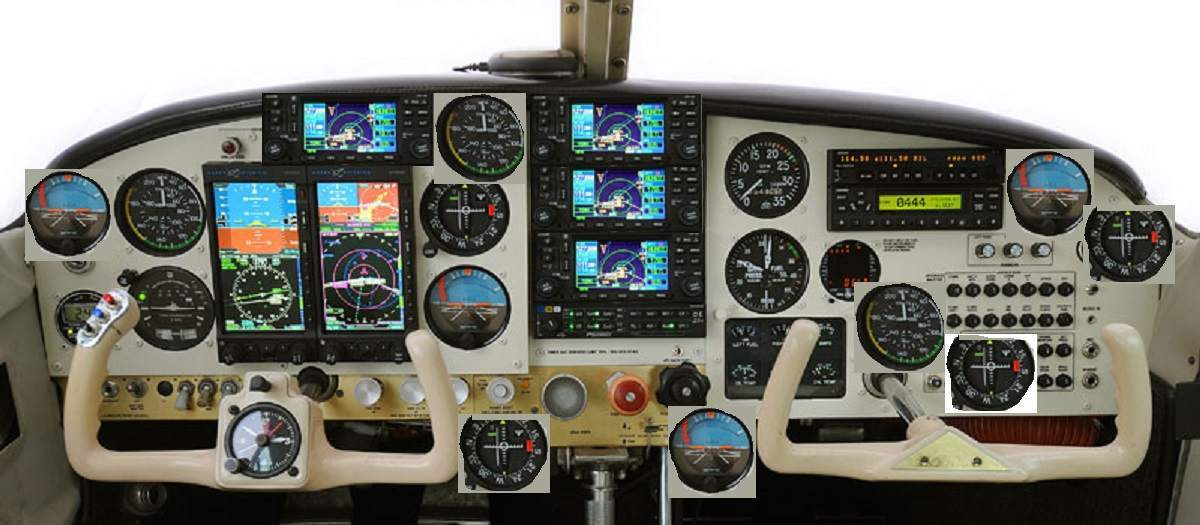
And since it seems that @bcg is still following along, I'll say I vote for the second layout. My reasoning is that having the right-hand side more closely match a standard 6-pack is easier for relatively new pilots. This is a a pretty minor preference though. Both layouts will be perfectly fine.
-
Don't take this *too* personal, anyone. But some of you should take it a little personal. I drafted up what I think is the ideal MooneySpace ideal(*) panel and added the picture to this post. It features two aspen units (for redundancy) so you have redundant attitude indicators, redundant airspeed indicator, redundant altimeters, and redundant navigation. The panel also had a redundant attitude indicator to the right of them, but I also added a redundant attitude indicator to the left, for redundancy. I then added a redundant airspeed indicator near the center top of the panel for some additional redundancy. I added a redundant CDI to the bottom center of the panel, because without that you don't have enough redundancy with the three that were already in the aircraft. To the bottom center right., I added another attitude indicator, so the right-seat pilot (now mandatory, for redundancy) has an AI near their left hand. And I added an airspeed indicator directly above their yoke, in case all of the four that are further left fail. And of course lower and to the right of that I added a redundant CDI in case all of the for further left fail. Then to the upper right I added another redundant AI and CDI. I also dropped in three more Garmin GNS-430's, for redundancy. Not shown in the picture, but I added 3 additional redundant alternators. And 4 batteries. And a deployable air-powered generator. And two venturi vacuum generators And a gas-powered generator in the luggage area. And a redundant engine near the tail. And a backup cockpit above the one pictured. I'm still working on getting the STCs and 337's done and I think I'm going to have a bit of a problem with the weight and balance but at least I'll be safe from the My point here is that you can keep adding more 'stuff' until you are out of budget and panel space. While I don't like telling other people what they "should" do any more, if you want to maximize your safety gains per dollar spent you should look at the causes of large percentages of aviation accidents (Hint: Not instrument failure or mid-air collisions) and mitigate those. (Yes, I added a redundant "ideal" on purpose)
- 50 replies
-
- 10
-

-

-
I got my plane back from Edison at Wet Wingologists early last month after a full reseal of the mains and the monroy long-range tanks. He was on time and on budget. The tanks don't leak. Edison was easy to communicate with over text and phone although I am the one that initiated all requests for updates. My paint is not great to begin with (See attached picture) so I can't tell if the paint is 'damaged' at all. There is an area over one tank that has a different sheen now than it did before, but I'm expecting to repaint in the next 3 to 5 years anyway so I don't care and he knew that before starting. I have encountered one problem that seems like it's a problem caused by Edison's work: Both fuel gauges are reading as if one of the floats in them is always at full travel down (empty) so they now read < 20 gallons even when they have 52.5 gallons in them. I don't know for sure if the problem is due to the floats being stuck down or an electrical problem; I am trying to get a borescope into the tank at the same time as a tool to try to move the float to see if that changes the indicated fuel. But getting through those flappers and then poking through rib holes is challenging and I don't have much time to devote to it. I'm pretty sure this is a result of Wet Wingologists's work but Edison has been great about providing advice and tips on how I can diagnose the problem and has said he'd be willing to work on it as necessary to fix it at no extra charge if I bring it back to him. That is kind of difficult for me since I'm 2,288 NM away from him, but this is something I knew could happen before I took the plane in. I decided to do a full reseal since I had at least 7 identified separate leaks and there could have been several more leaking into the interior of the wings. My tanks had the original seals from manufacture in 1984 and the long-range tank addition in (I think) 1990. If the new reseal lasts this long it'll probably outlast my capability to fly this airplane; I'll be shocked if I am still flying it in 32 more years. If I fly at all in my 80's it'll probably be something slow and simple. Like a C or a J.

-
Anyone here do night touch and goes at KSMF?
wombat replied to M20 Ogler's topic in General Mooney Talk
In theory this is true but many students are constrained by time and budget and doing T&Gs is faster than S&Gs. Sure, more training is always 'better', but at some point you have to say 'enough is enough' and that the student (or just any pilot) is good enough as they are. The FAA provides a minimum standard for this in the regulations. You can have personal minimums as a pilot and/or instructor that are higher. As an instructor I let my students know when they meet or fail to meet the FAA standards and I provide advice on the list of actions I think they can take to gain the most safety, happiness, or likelihood of passing a checkride for the lowest investment, but once they meet the standards, it's their decision. This is just the way *I* operate though. Some students are on the fine line between quitting because they can't afford the time or money for the training, and completing their training and getting their license. I personally like to promote general aviation and try to minimize the hurdles students and pilots have to overcome to become and continue to be safe and happy pilots. The difference between theory and practice is that in theory there is no difference between theory and practice.... -
Which plane would you rather buy? A plane where the owner won't let you take the plane out of their hangar for a prebuy, and won't let you or your mechanic remove the interior or open the engine enough to see anything inside? A plane that is missing logbooks prior to 1990? A plane that has only logbooks and AD Compliance, 337's, & STCs for documentation; no invoices or receipts or anything 'extra' ?
-
Anyone here do night touch and goes at KSMF?
wombat replied to M20 Ogler's topic in General Mooney Talk
Do you have a source you could share that spells out the requirement for the commercial cert night towered landings to be full stop? 61.109(a)(2)(ii) is very clear about the private pilot night takeoffs and landings needing to be full stop. it says "10 takeoffs and 10 landings to a full stop (with each landing involving a flight in the traffic pattern) at an airport.". So no just out doing them in the desert or great salt flats either! But 61.129(a)(4)(ii) only says "5 hours in night VFR conditions with 10 takeoffs and 10 landings (with each landing involving a flight in the traffic pattern) at an airport with an operating control tower" https://www.law.cornell.edu/cfr/text/14/61.109 https://www.law.cornell.edu/cfr/text/14/61.129 -
I have a similar problem in that the steam gauge ASI and the digital ones disagree by about 8 knots when I'm on final. At cruise speed they seem similar.
-
Bonanza landing the wrong way at Oshkosh.
-
High altitude flight (relatively speaking)
wombat replied to rickseeman's topic in General Mooney Talk
I'm relatively healthy (crossfit 3X to 5X a week, plus cardio workouts) and relatively young (less than 50), have never smoked, and I've always scored very well on anything physical or health related. So I figured I was fine right at the FAA limits on Oxygen. Don't have O2 with me? Just cruise at 12,500 for hours! It's fine to bump up to 14,000 for 30 minutes! Turns out that no, this is one way that my body lets me down. If I'm at 13,500 for 20 minutes, my O2 is in the lower 70's as measured by my pulse oximeter. I get really sleepy and really dumb. (Oddly enough the pulse oximeter I have is exactly the one pictured in this article: https://www.news-medical.net/health/What-is-Oxygen-Saturation.aspx) So now that I have built-in oxygen, life is way better. I like the concept of a O2 sensor that is attached to me so I don't have to remember to put it on every few minutes, and it has an alarm. That will make me a lot more comfortable at the lower flight levels (up to about FL230). -
So as I'm getting used to my new plane, I'm trying to find the power settings I like for some of the parts of the flight, like the traffic pattern, and final approach. I've got the "IFR By the Numbers" sheet for the rocket, and either my plane has issues or something, because at least one of the numbers doesn't match up at all. It claims that 2200 RPM and 20" of manifold pressure with gear down and flaps up will result in level flight at 105 Kts.... That's not even close for me. In order to achieve 105 Kts level flight with the gear down, I've got to have about 27" of manifold pressure. Does anyone else with a rocket have a list of these settings and performance numbers so I don't have to go out and figure them out for myself? Also, if you *do* get level flight @ 105 Kts with the gear extended at 20" of manifold pressure, please let me know because there is obviously something VERY wrong with my plane. Yikes! The plane seems to perform fine in cruise, getting 190KTAS to 200KTAS at the lower power cruise settings from the Rocket table on the visor in the 8,000' to 17,000' range. The power settings & airspeeds I would really like is for the traffic pattern downwind, base and final.