
Yooper Rocketman
-
Posts
1,616 -
Joined
-
Last visited
-
Days Won
32
Content Type
Profiles
Forums
Blogs
Gallery
Downloads
Events
Store
Everything posted by Yooper Rocketman
-
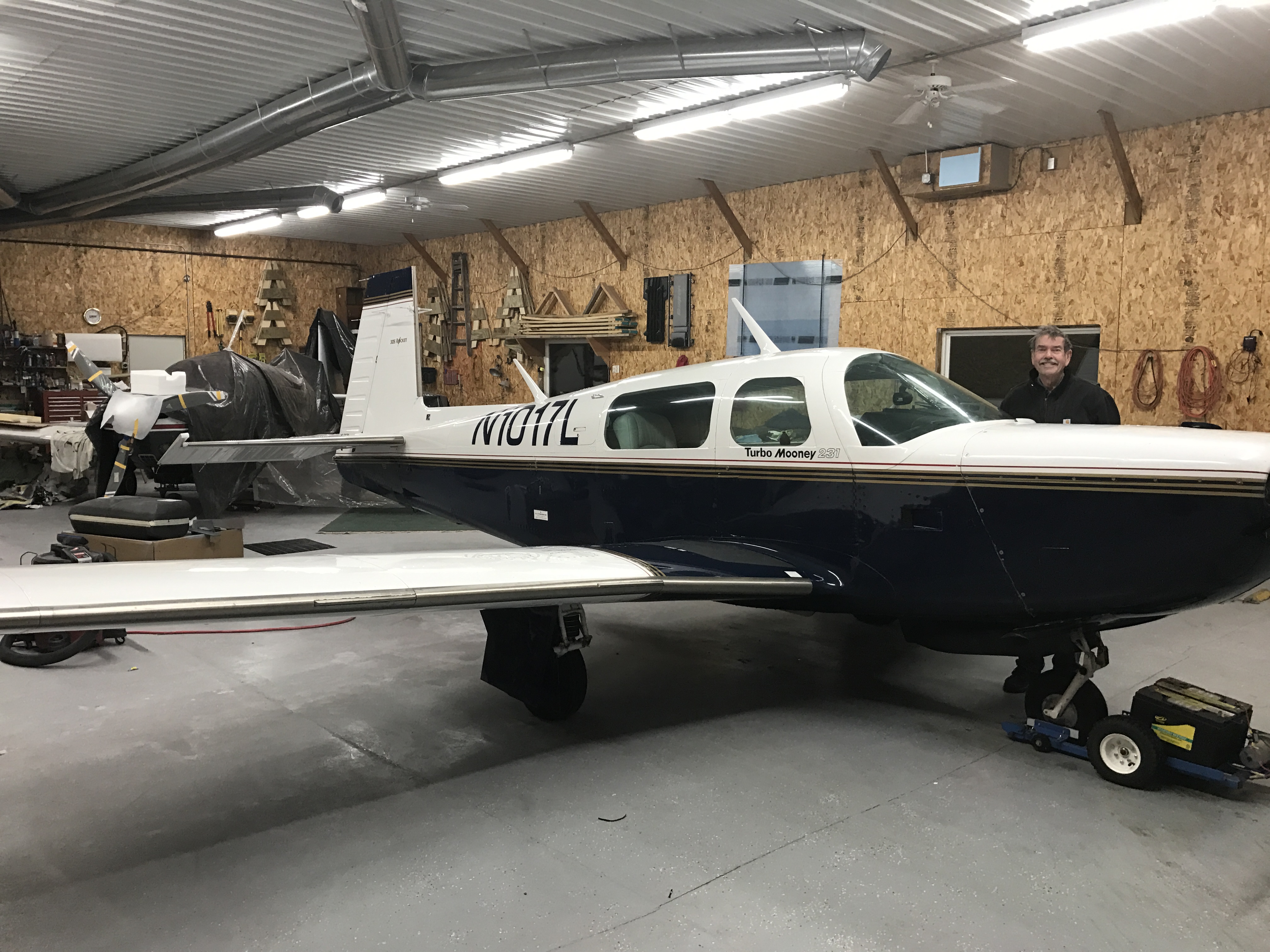
My wife and I headed out from the U.P. Of Michigan for Spruce Creek (just south of Daytona Beach) Florida yesterday, late due to fog at my home airport, destined for KMNV, Madisonville / Monroe County Airport in Tennessee for a fuel stop. This was the first flight after my left main tire on my Mooney Rocket had a new tube installed from a flat found and described in another thread. A new policy instilled in me by my IVPT instructor is to test the brakes as part of pre-landing checklist (which would come to haunt me on landing). Upon touch down, with a reasonable crosswind, I could hear light tire squeal which got progressively louder and the plane was a handful to keep on the runway as we slowed. My immediate thought was another freaking flat and I was wing low on the left side. I could NOT taxi at all once stopped so had the runway shut down. I shut down the engine and before we were out of the plane several locals ran out to see what was wrong. I gave my wife my handheld radio to monitor CTAF for traffic and then inspected the plane; a flat on the left main. After some research, while Cale from the FBO ran back for a jack, tools, and a dolly, it was determined the brake was locked. With the help of a bunch of locals we got the left tire on the dolly and, with help lifting the wing to reduce weight on this pretty questionable dolly, we got the plane pulled over to the ramp. The FBO's mechanic was on vacation in Texas and they had a part time guy on call. I told them get me some tools and I'll gladly pay whatever your FBO would charge but I was really needing to get this apart to see what I was dealing with. By the time I had the tire off (minutes) Cale found a serviceable used tire and tube. I got the tire off the rim and the serviceable one installed on the rim. Cale is a young man working on his A&P so helped where he could but I mostly did the repair. I installed the tire and when checking the brake found I couldn't compress the puck into the caliper. Cale got me a C clamp and it STILL wouldn't compress. I noticed as I worked the clamp the cup was turning so knew the cup wasn't seized to the caliper. I jumped into the plane and checked the left brake......looked fine. I then checked the parking brake knob and it was out about 1/2"????? I pushed it in and checked the caliper; the clamp had fallen off (brake had released) and the cup slid right in! I am pretty sure the park brake knob had not gotten pulled by mistake and I rarely use it (for sure didn't during any time that day). The knob pulls really easy so it may have been bumped. Not sure why I was lucky enough to only lock the left brake with a partial parking brake engagement but everything checked out after my repair and the subsequent take off there and landing in Spruce Creek were totally uneventful. The bill from the FBO: $50!!!! We dropped a $50 tip to Cale and the same to his boss. Service and hospitality like this needs to be rewarded! In the end it felt like a NASCAR pit stop as we were only delayed a little over an hour. Tom
- 14 replies
-
- 20
-

-
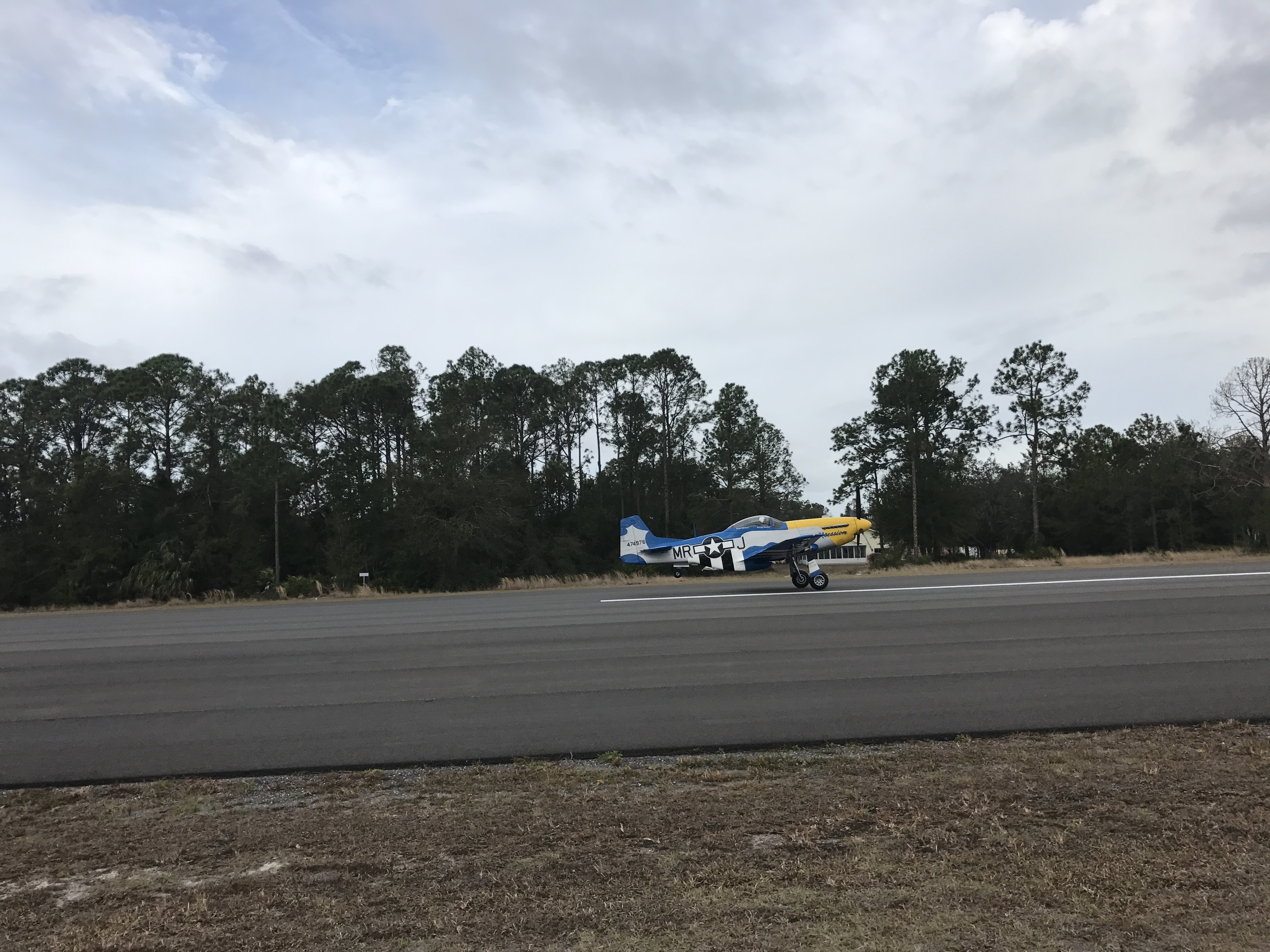
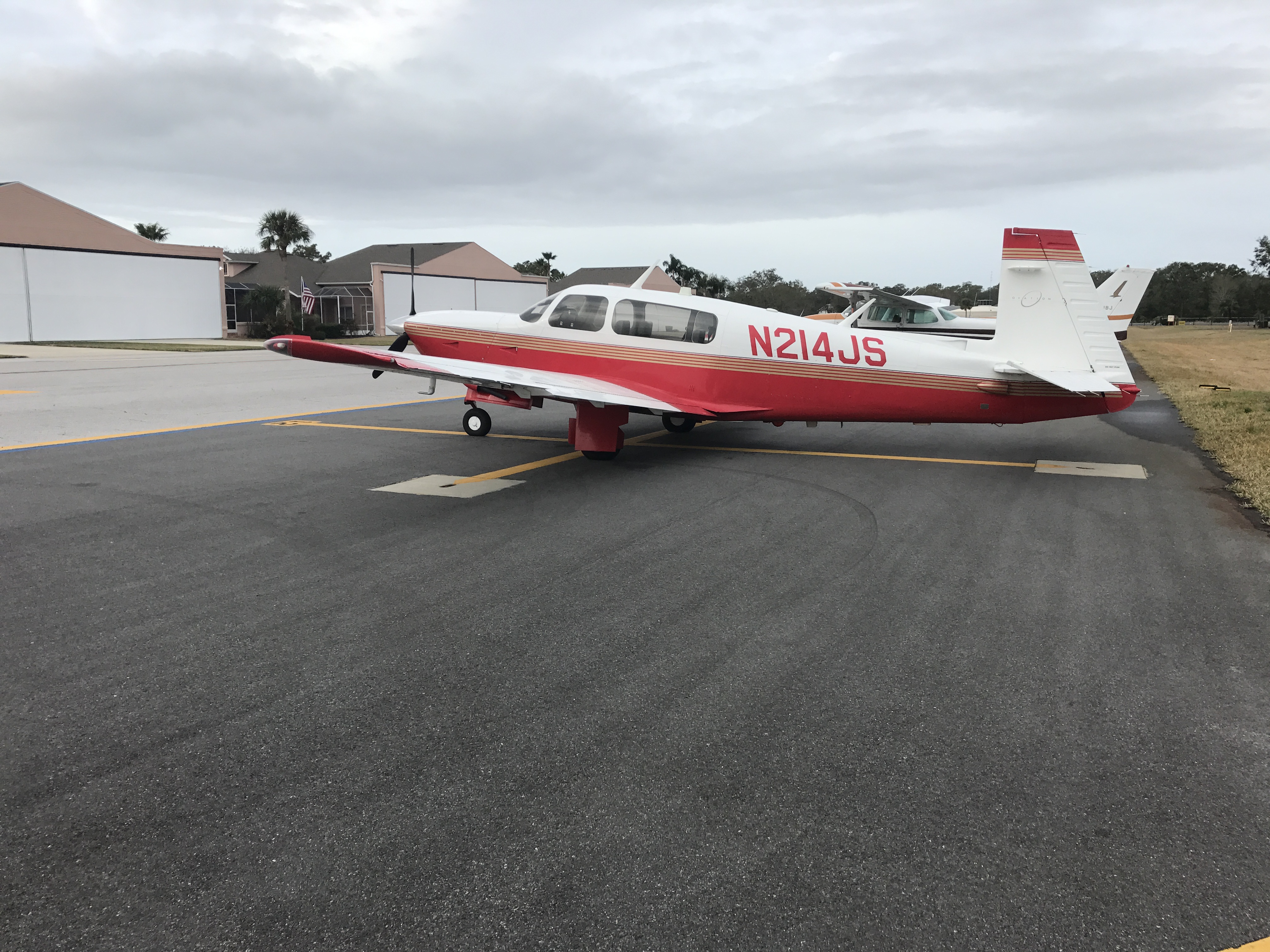
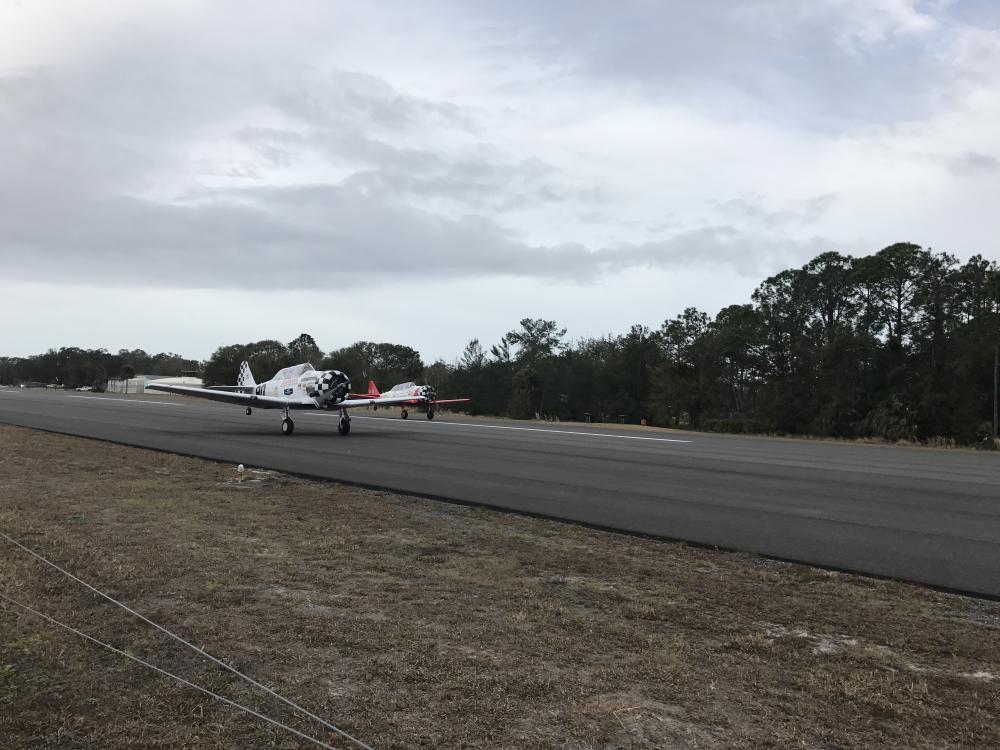
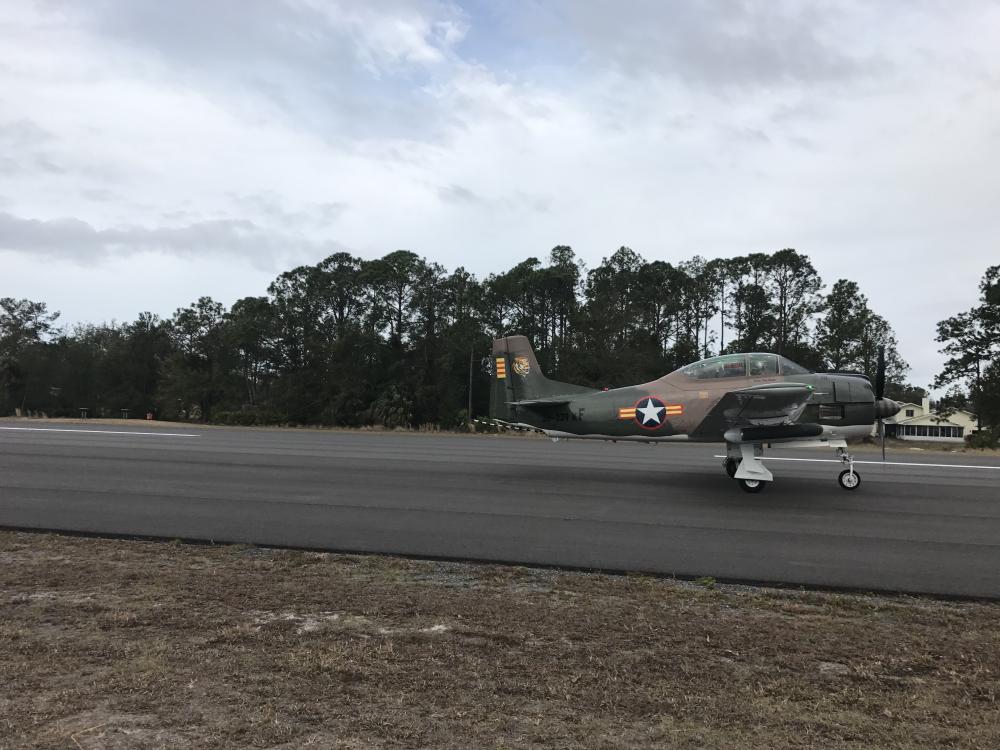
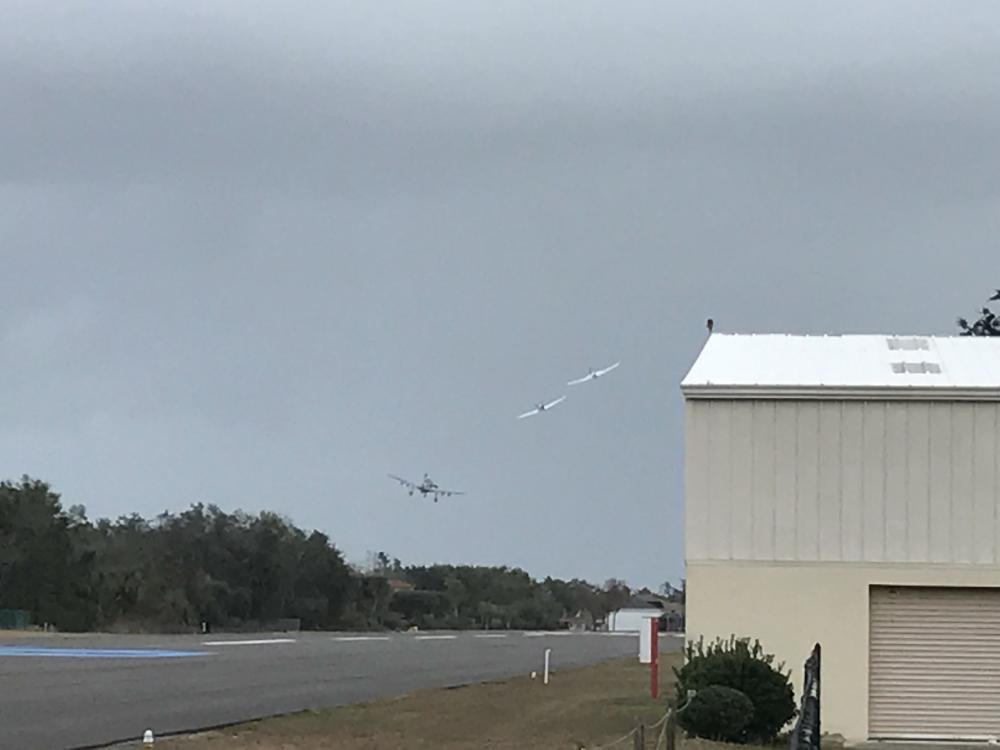
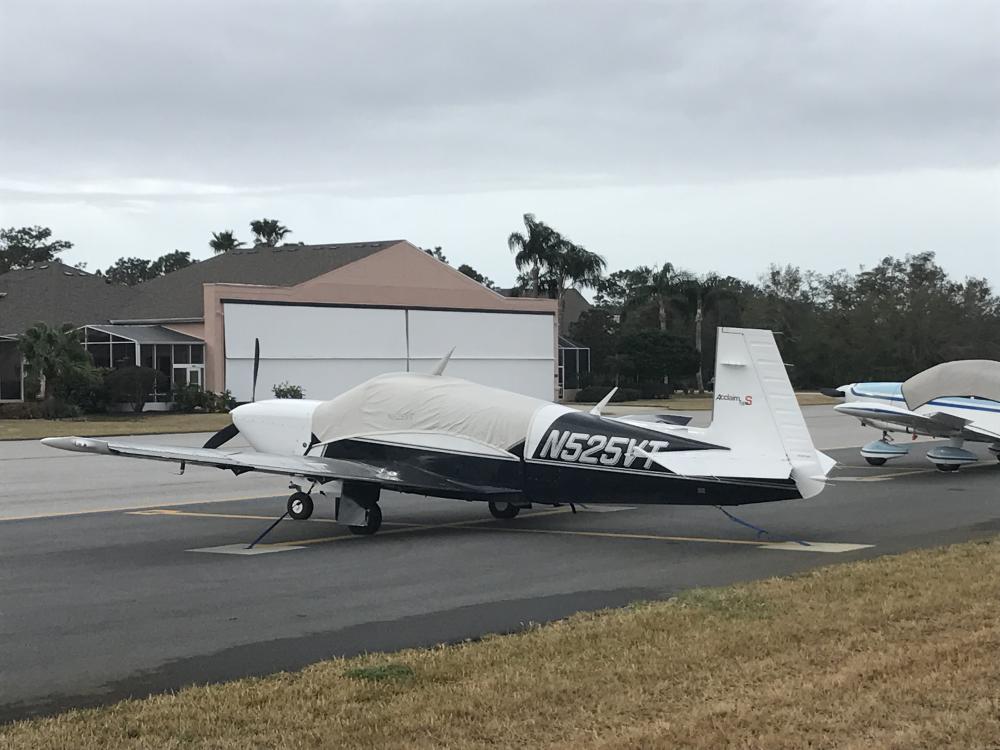
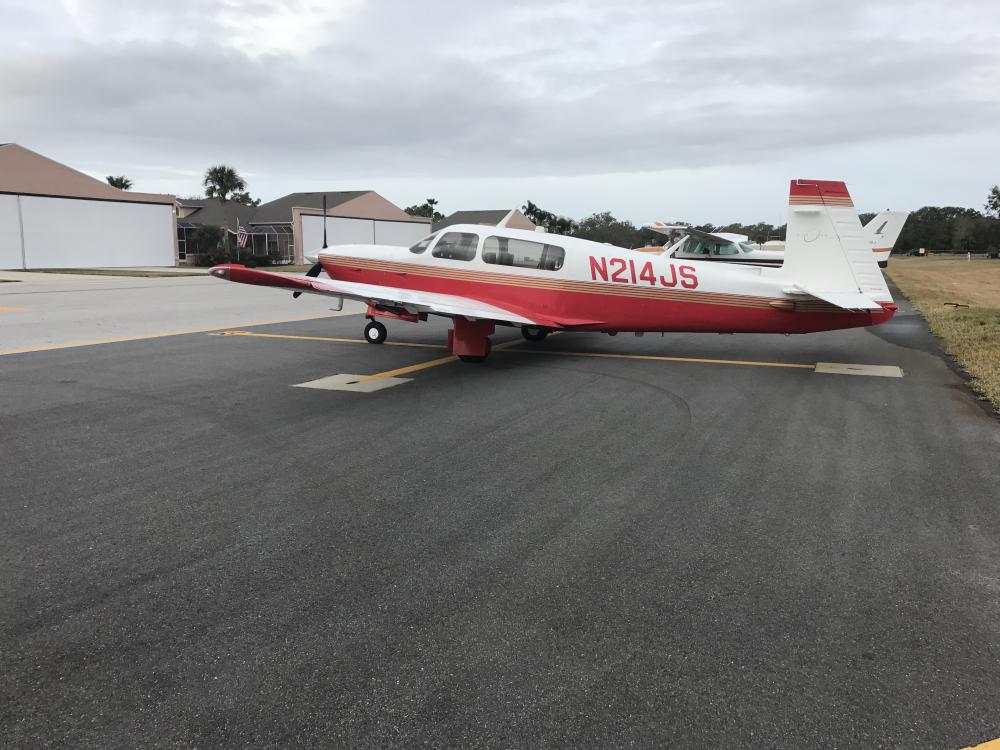
 My wife and I went for a walk this morning and got to watch a Warbird group take off. Also saw a couple Mooneys in the transient parking area. If anyone knows the owner of the red one ( N214JS) advise him to check his right main tire pressure. It looks a bit low. Tom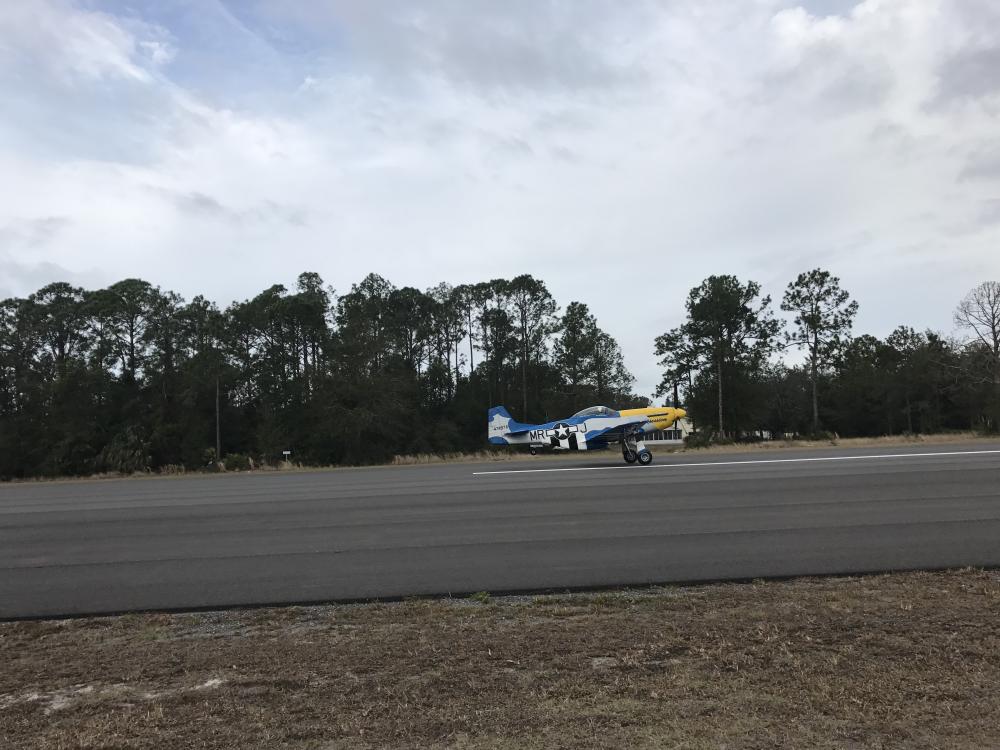
-
Same as my Rocket. It must have taken 5-10 minutes to wet out today on my trip to Florida. I hadn't used it in a while though either. The Lancar has a shorter wing, no spray bar on the prop ( heated prop, my engine guy was dead set against running the fluid through my engine), and the same size pump as the Mooney and Bonanza use. Tom
-
Hey Skates, you a bean counter? My daughter is a CPA. I thought, working for a dealership, you got your hands dirty at one point in your profession like me. I missed that one! Tom
-
TKS quantity indicating 0.0?
Yooper Rocketman replied to Rick Junkin's topic in Modern Mooney Discussion
They have a really cheap quantity indicating sensor. I had the exact same problem and got p.o.'ed and pulled the sender out to see what was wrong. Found the float was the problem. It's been enough years now I don't remember if there was a hole in it or if it wasn't attached to the sensor arm properly. Edit; I seem to remember the float had TKS fluid in it and I drained it and resealed it. Seems it was a hole and I used a special Locktite product (Hysol) I was using for fuel tank sealer on my Lancair wings. I could get you a bit of it if you find that's the issue. At any rate I was able to repair it, got my A&P's blessing to sign it off, and reinstalled the original sender with no cost other than my labor time and it's work fine since. I DO REMEMBER if I had replaced it with new, the problem would have resurfaced later. I recommend you pull it and inspect it before getting a bunch of money in it. One recollection; it was a real bitch separating the sender from the tank. I had to use a very thin scraper and worked at it for probably an hour to separate it without damaging it. It is sealed on there pretty good. Tom -
Great New Video On How to Manage Mixture & LOP
Yooper Rocketman replied to kortopates's topic in Miscellaneous Aviation Talk
Very useful video, Paul. I was taught LOP operations by one of Tornado Alley's test pilots. I flew into OKC via airline and he picked me up in our recently upgraded (normally aspirated) NWALL Bonanza (Northwoods Airlifeline) and had me fly it back to Ada. By the time I got KADH he and I were comfortable with my operation of the new engine. We did lunch and a short ground school and I then flew it back to the U.P. of Michigan, after a decent nap due to a very early start and afternoon ground temps in Ada in the summer time that were ungodly. I could never get my Rocket to run there though. By the time I cried uncle George had sent me 3 or 4 injector changes and I was getting concerned all the "TEST" time was spending too much time around peak and I had more likelihood of damaging the engine from "trying" to set up the engine for LOP ops. By that time George had admitted the TSIO520NB was a challenge to get running LOP nicely due to the upflow intake system. I DID keep the GAMA injectors though, and am over 2,000 hours on a 1600 hour TBO engine. Thanks for posting. I will be sharing with my NWALL pilots that DIDN'T get the hands on training for our Bonanza. Tom -
First known drone save.....pretty cool
Yooper Rocketman replied to Yooper Rocketman's topic in Miscellaneous Aviation Talk
This is scary! -
The wing is substantially shorter, no vertical panel and no prop TKS spray bars (heated prop to avoid fluid ingestion in engine). The same pump as the Mooneys and Bo's with a lot less places to put the fluid. I am really impressed with the operation on the Lancair. Tom
-
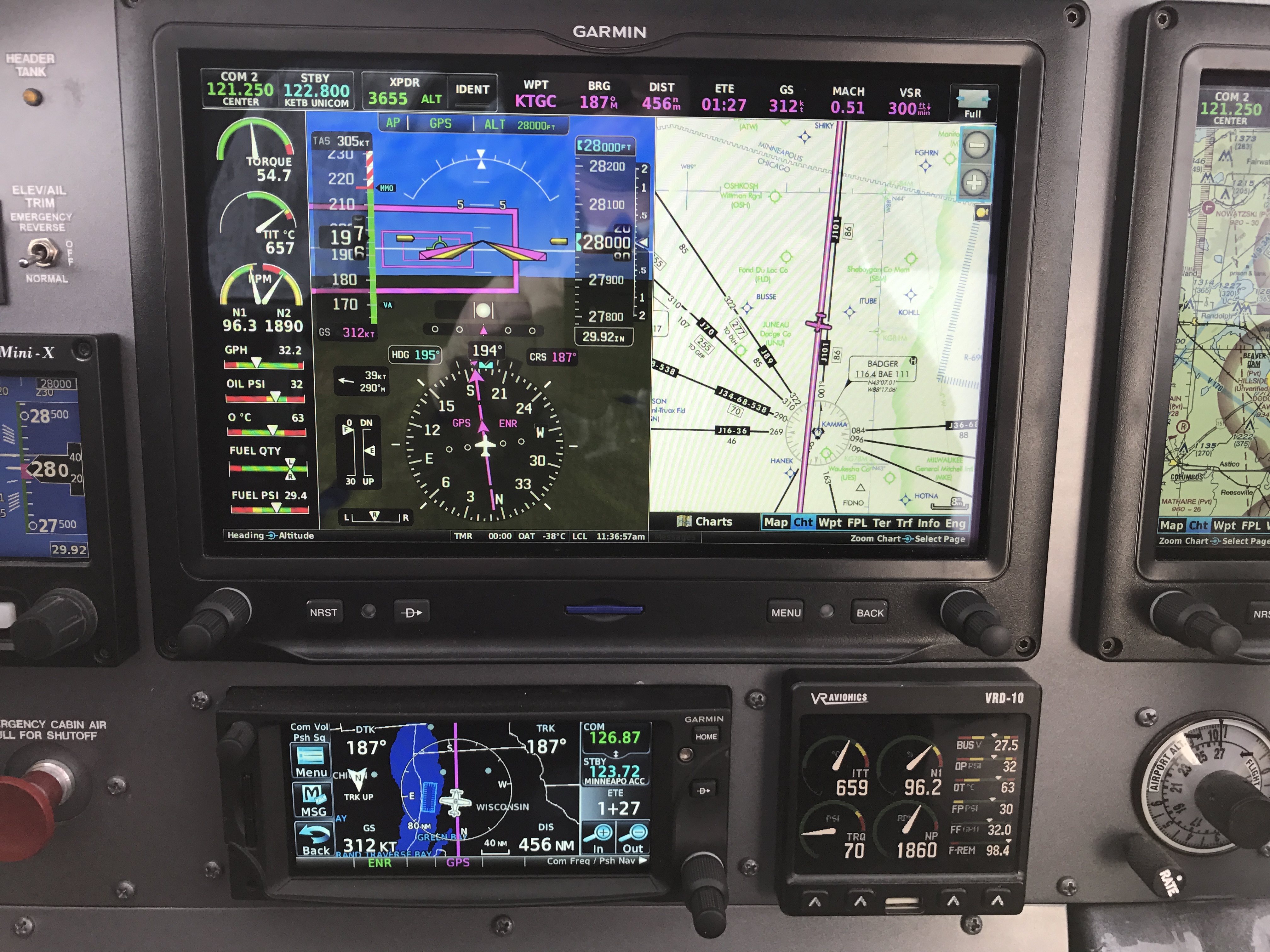
250 knots. That's indicated too! I was flying two charter pilots for my friend, local FBO owner, into Bismark ND last spring to purchase a C340 and during descent I commented I needed to slow down for the "speed limit" as we came through 10K. The 25,000 comercial pilot in the back seat says "what do you mean"? I said I need to get under 250 knots. He says you can fly this faster than 250 knots indicated? I said yes, VNE is 274. He comes back with "gee, I never have to worry about that in the Conquest, VNE is 247". He liked the plane enough he had the other pilot fly the C340 back and returned to home base with me! (well, there's more to that story, but this version sounds better). :>) Tom
-
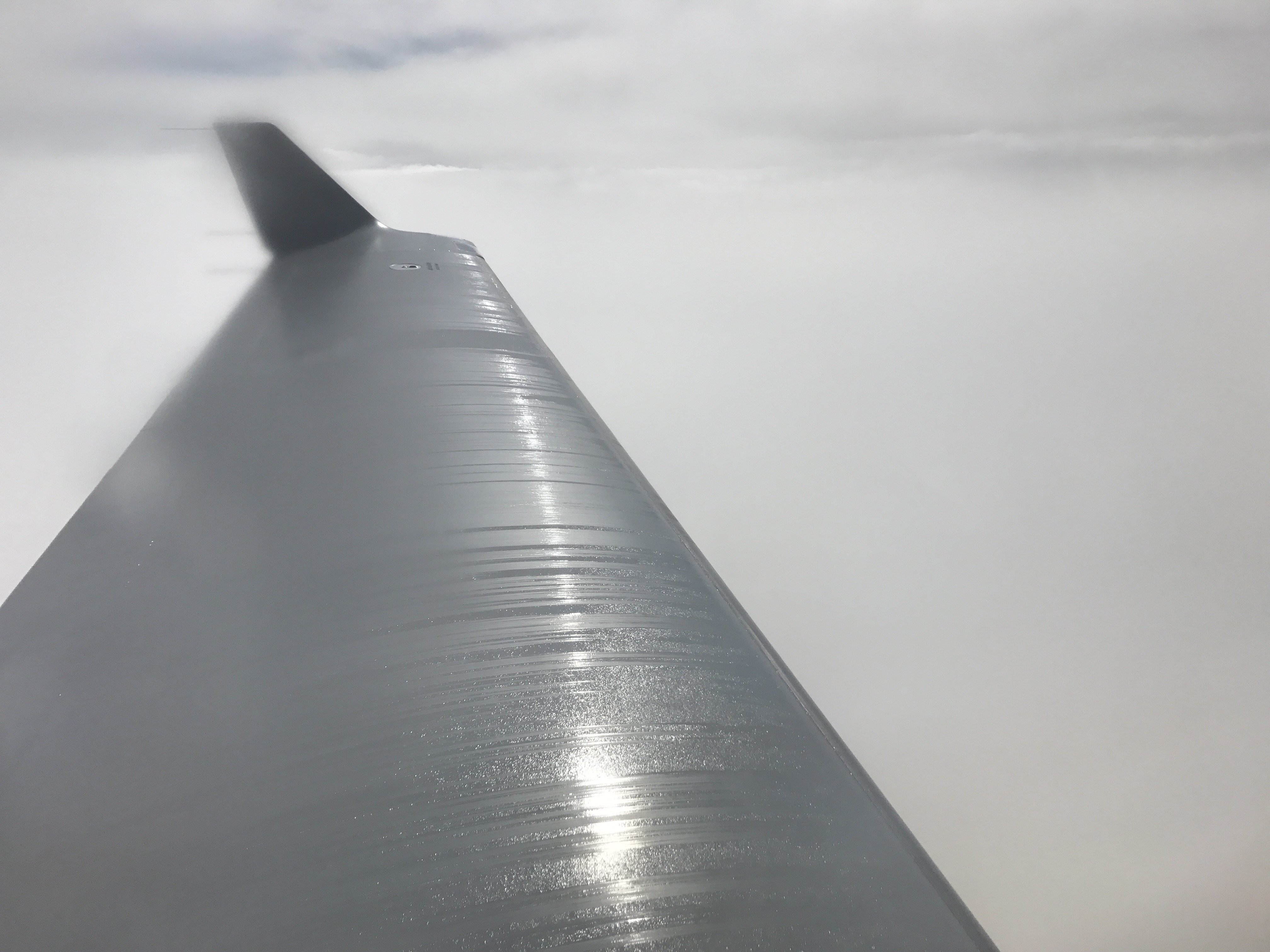
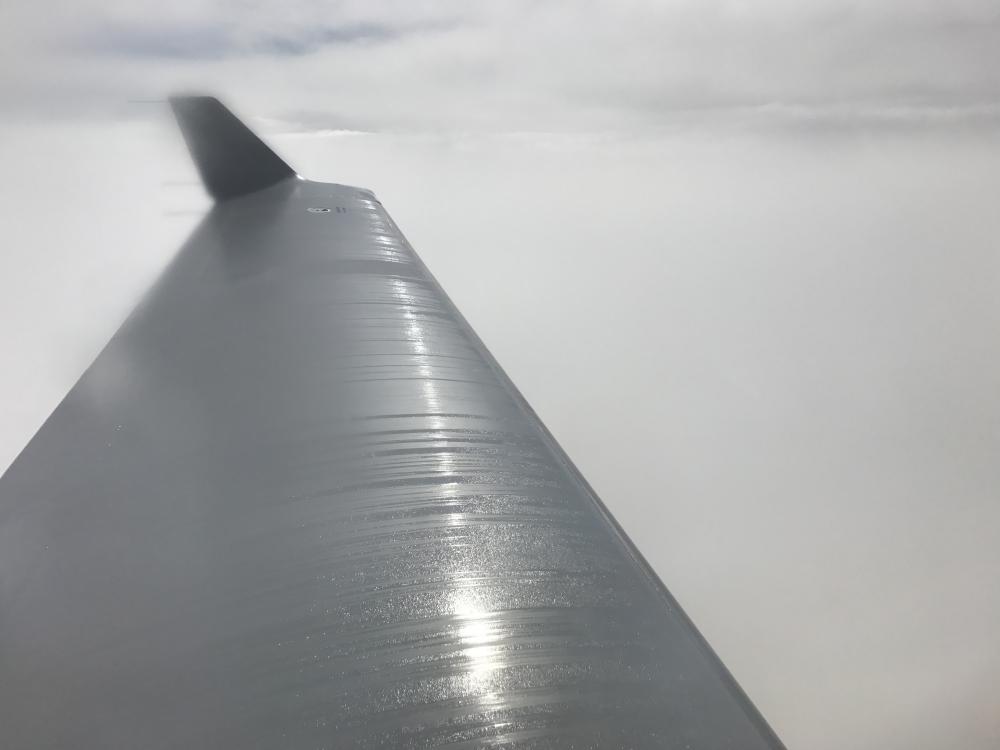
Here's my "non-FIKI" doing it's job on my Lancair. I had an 1/8" on it pretty quick and hit hi mode. It was flowing in 30 seconds and the ice was off in less than 2 minutes. WAY FASTER than the FIKI Bonanza I fly. Just to be clear, that was "un-forecast icing". If you look where I live, you will see I would give up 60% of my winter flying without TKS. To add another datum point; prior to my first TKS install I flew in a twin with "certified de-cing" in the way of boots. While we were slogging along picking up ice, the pilot (I'm not twin rated) noticed his side was not working. There we were in icing with the boots on the right wing popping ice and the left wing accumulating it. I hadn't thought of that until now, but that's another "certified system" that failed on me. My first icing encounter in 1999-2000 with TKS was over Cheyenne WY and in low mode I saw ice accumulating on the elevator counterweight (that was a known problem area on the Lancair I was building, so something I've always looked at). I turned it up to high mode and it washed the ice off the counterweight. You won't get that feature with boots. Needless to say, I'm not a fan of boots. Having a way to shed ice or keep it from accumulating on my airplane with a non-FIKI system is far better than not having de-ice at all. The biggest key for me is to assess my outs before launching. I declined a kidney transplant many years ago that the guy probably never got it, which means he's probably not with us anymore, due to icing conditions without safe outs. He was pretty upset, but it made no sense for both of us to die that night. I'm still here and he may be as well or, at the least, lived for some period of time after that lost opportunity. Assess your skills and equipment, then don't write a check for which you don't have both of those conditions covered. Tom
-
I have over 2000 hours in TKS equipped aircraft, probably 85% in non-FIKI. I've only had two failures in icing conditions and both were in the FIKI airplane. Sorry, you're not going to sell me on the huge safety advantage of FIKI. Tom
-
I sent an email to my Lancair AND Mooney buddy in Columbus OH. He is into these trips and might be able to do the northern half of the flight. Tom
-
There's at least 100 or more, with upgraded useful load too. A yah, they're called Mooney 305 Rockets. :>) Tom
-
What's with the freaking flat tires???
Yooper Rocketman replied to Yooper Rocketman's topic in Miscellaneous Aviation Talk
I don't think I had Michelin tubes installed on any of the flats. They WERE replaced with them though. I think Cyril hit the nail on the head. I need to get more consistent checking air pressure. Flying 3 different planes tends to complicate the memory on considering that maintenance item during my preflight. Will probably add it to my checklists! Tom -
I fly a Mooney Rocket and a Tornado Alley turbo normalized Bonanza. The Bonanza is a little slower but can run LOP so fuel burn is a bit better than my Rocket. The Rocket is using a de-rated 310 HP TSIO520 (305 HP) that is really tough to get running LOP. The Rocket is sort of a hot rod, at the expense of a bit less efficiency. I would think the 252 is the better efficiency of your turbo options, but would defer to Paul and others on that. The Bonanza is nice if you're hauling a crew with the 6 seats. For a fat wing, I find it surprisingly quick and efficient (LOP). That said, I get less excited flying it verses my Mooney. There's a lot less seat adjustment and you sit higher so my legs cramp on longer flights. You can't stretch them out like in the Mooney. I just flew a 3.5 hour leg on Friday in my Mooney and was not sore at all when we landed. After two hours in the Bo I'm ready to get out! Tom
-
What's with the freaking flat tires???
Yooper Rocketman replied to Yooper Rocketman's topic in Miscellaneous Aviation Talk
Appreciate the feedback but can guarantee none of the three flats derived from a puncture. I always mark the valve stem location so once tube leak is found I can inspect a specific area of the tire, inside and outside. This time I even rolled the tire under pressure with great lighting and absolutely found no evidence of a puncture. In addition, all three flats had leaks in sidewall, not a typical puncture area, especially on three consecutive ( but different location) flats. Also, the tires were reused without removing any puncture item and have held air fine since. Not sure why it's not possible for one grain of material to lodge at one spot between the tire and tube to create this hole? I have no evidence of widespread abrasions. I can't deny I'm stretching it with this theory but not finding too many reasonable conclusions to my and Chad's more recent experiences. His have been on a wide variety of airplanes, wide variety of times in service, and wide variety of airports (not just our home airport). The only common denominator we have found is the likelihood all the tires MAY have been down on air pressure from recommended spec. Tom -
Thanks Clarence!! Tom
-
What's with the freaking flat tires???
Yooper Rocketman replied to Yooper Rocketman's topic in Miscellaneous Aviation Talk
Came straight from Darwin Conrad after a prop strike taxing on a ramp ( just barely in excess of a file field dressing) and dropping the nose a bit going over a drainage grate (2" at the most) trying to avoid a dump truck working construction on the airport. Happened in the first year of ownership. I got several tips from him during that phone call. Taxi with yoke pulled full aft. Keep air pressures as specs noted above. Replace nose gear pucks every 5 years. Avoid any dips during taxi that can get a forward tipping motion going. That extra weight up front can be a challenge for the uninformed. I was lucky enough to have several conversations with Darwin about a multitude of Rocket specific tips. I bought my Rocket through Irv Fehr, who sold a lot at Rockets for Darwin and was the most loyal Rocket owner out there. Because of my obvious love of my Rocket, I was Irv's "reference" for a ton of prospective Rocket purchasers so he really liked me. He hooked me up with Darwin who never declined a call from me. Some day I'll share Darwin's story on the exhaust "heat muff" AD. There's probably a lot of owners and shops complying with an AD that doesn't apply to their airplane due to a terribly written AD by the FAA. Tom -
Never thought about that, but seems it is always on 030 now, powered up or not. Will check though! Tom
-
What's with the freaking flat tires???
Yooper Rocketman replied to Yooper Rocketman's topic in Miscellaneous Aviation Talk
I've always did all of that, talcum in tube and tire. Just finished the job and checked the other tires. Other main was at 30 PSI and spec for the Rocket is 45 PSI on the mains, 49 PSI on the nose. Nose was at 37 PSI. All tires were good in August and checked now in heated hangar, so not temperature related. So much for "Air Stop Tubes". I think it's tube to tire abrasion when the air pressure gets a little low. I wonder what the talc does after in there for a while, especially if used generously (which was my procedure before)? We actually lightened up on it this time so no excess was left in the tire. Concerned it might have been the source of the tiny grit found in the tire. The whole in the tube was amazingly small so suspect from something abrating like hardened rubber debris or the talc maybe balled into tiny grit particles because we know they were clean on original assembly. Tom -
We landed last night at 8 PM after my Mooney logged 7 hours yesterday flying to Tennessee and back. I was going to fly to Appleton WI for my annual USSF soccer referee recertification class and I had a flat left main tire; argh, $55 wasted because not enough time to drive. I aired it up and couldn't hear a leak but there was no way I was taking a chance. I pulled the wheel off and in an hour the pressure had dropped 4 pounds so pulled it apart. I found a tiny hole in the outer SIDE of the tube and nothing on the inside of the tire. This is the third flat in 3 years, all in different locations on my plane, and have never found an obvious reason for the flat other than a tiny hole in the tubes. In the last two cases I reused the tire with no further issue ( new Michelin Airstop tubes). Talking with Chad at Kubick Aviation on our field he says he's seen so many flats in the recent years he has spare tires and tubes in all his charter aircraft. Just last month we had to send our Airlifeline Bonanza down to Burke Lakefront in Cleveland with a tube for our Seneca. We were told by the ( hard to find) mechanic there was no place in a Cleveland to get a tube????? Talking over this issue with Chad and some other A&P's the only idea anyone has come up with low tire pressures, although we never have the valve stems torn off? On mine today it felt like I had "sand" between the tire and tube when I was pulling the tube out. Found it appeared to be tiny rubber particulate but was as hard as sand. Wondering if a low air pressure could cause abrasion between the tire and tube, especially on the side wall creating this grit. I've washed everything up good and will reassemble with original tire. Anyone heard of issues lately with flats like this? Tom
-
Yoopers Rocketman's Lancair
Yooper Rocketman replied to Yooper Rocketman's topic in Miscellaneous Aviation Talk
Yes, there are some programs but they require a yearly enrollment ($600 to $1000 a year if I recall). They also have a list of FBO's that participate and it's not any I ever fly into. Even if I did, I've seen the "private / unpublished pricing schedule" and on my volume it would never pay. They have a "free 6 month trial" but since I'm pretty sure I would never purchase the annual membership I don't feel right taking the free trial. Tom -
Yoopers Rocketman's Lancair
Yooper Rocketman replied to Yooper Rocketman's topic in Miscellaneous Aviation Talk
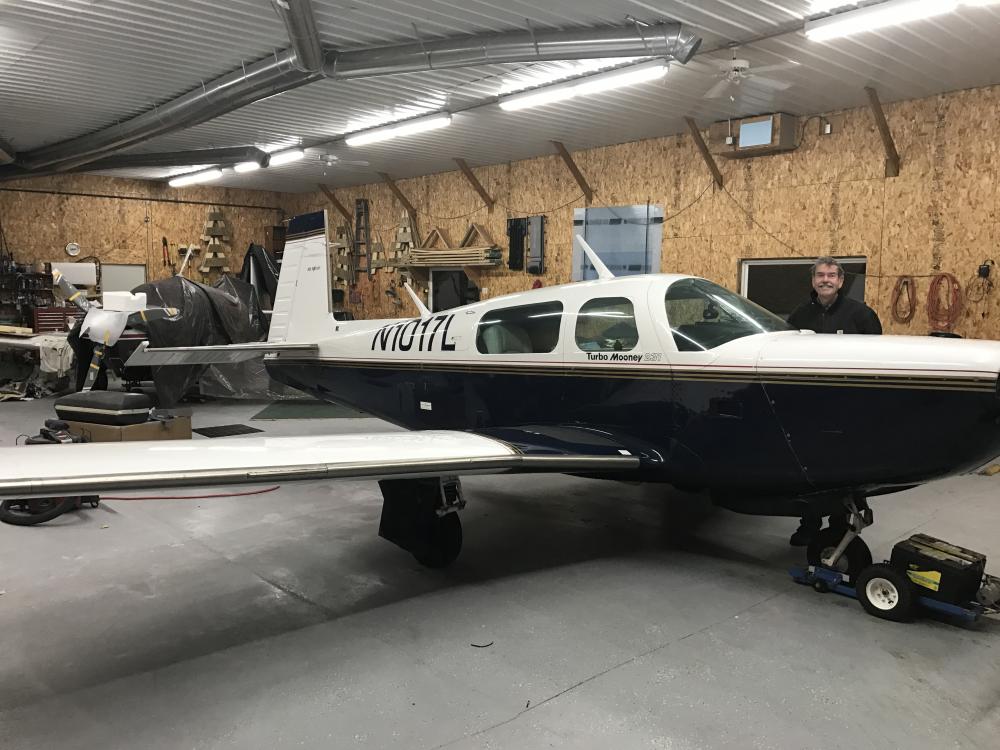
I flew the Lancair down to Milan TN to my paint shop yesterday. Just did my last flight in primer; pretty exciting! My next flight in that bird will be with new paint. Steve, my hangar partner and best friend, flew the Rocket down for me to fly back home with. Took 3.5 hours each way in the Rocket, 2 hours in the Lancair going down. I DID enjoy the Mooney though coming home. A bit more relaxing and less work during cruise at 120 knots slower. https://flightaware.com/live/flight/N1017L/history/20180119/2230Z/KTGC/KIMT https://flightaware.com/live/flight/N994PT When we got back Steve commented "our hangar is a Mooney Hangar again!" Tom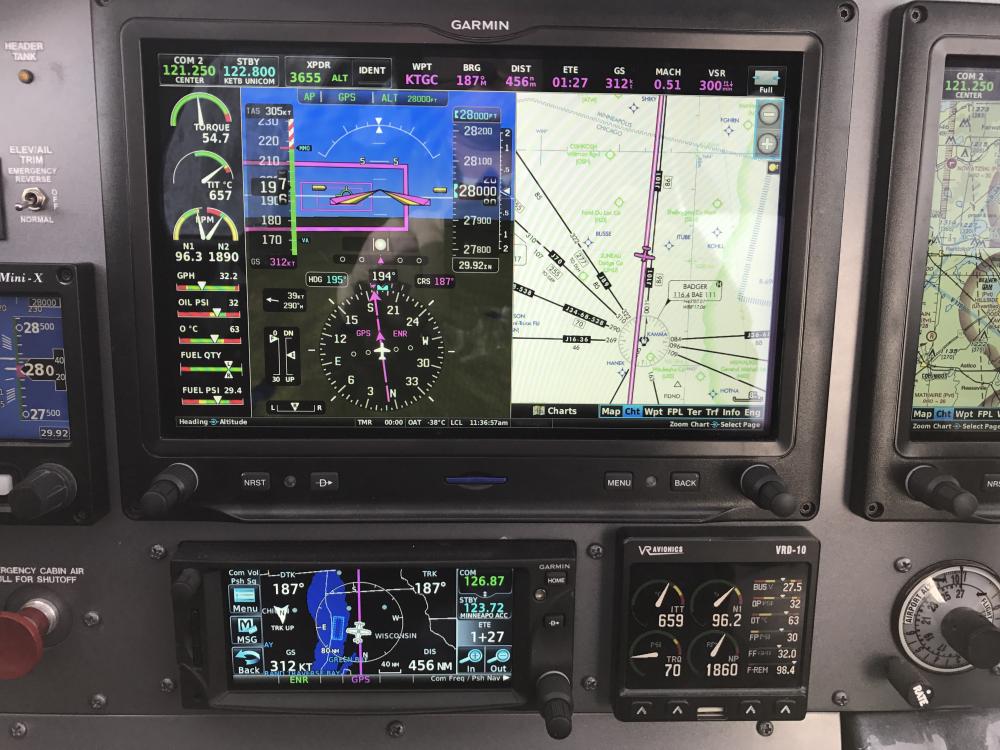
-
When I installed the last one, I swung it out on the ramp with it cradled in my hands. I introduced it to the airplane interior and got NO reaction to the airframe , even when I held it up to the mount tube above the glare shield. Installed, it seemed to work fine. The next day I taxied it out to swing it on the compass rose and it seems to REALLY like 030 degrees; pretty much is at that setting almost at any direction now. Maybe need to de-gaus (sic?) the plane? Clarence....any ideas? I hate to replace a brand new Airpath Compass. After just adding ADS-B upgrade on a plane I'm going to lose north of $100k on when I sell it, would rather not add more cost to that misery. Tom